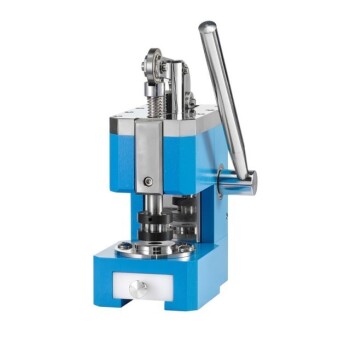
The primary advantages of electric linear drivers in Electro-Sinter-Forging (ESF) are significantly higher movement speeds and superior mechanical responsiveness. Unlike traditional hydraulic systems, electric drivers provide the agility required to strictly synchronize mechanical pressure with electromagnetic energy.
Core Takeaway The shift to electric drivers is driven by the need for temporal precision, not just raw force. By operating within a critical 20 to 30-millisecond window, these drivers unlock specific material behaviors that slower hydraulic systems cannot reliability achieve.
The Critical Role of Synchronization
Precision in the Time Domain
In ESF processes, applying force is not enough; the timing of that force is paramount.
Electric linear drivers offer the superior responsiveness required to align the mechanical pressure pulse exactly with the electromagnetic pulse.
The 20-30 Millisecond Window
The window for optimal processing is incredibly narrow.
The system must act within 20 to 30 milliseconds to be effective. Electric drivers can react and deliver force within this brief timeframe, whereas hydraulic systems often suffer from latency that causes them to miss this window.
Impact on Material Properties
Inducing Electroplastic Effects
The rapid response of electric drivers is essential for triggering electroplastic effects.
This phenomenon reduces the force required to deform the material, but it relies heavily on the simultaneous application of current and pressure.
Promoting Rapid Pore Collapse
To achieve high-density parts, internal voids (pores) must be closed quickly.
The high-speed movement of electric drivers ensures rapid pore collapse, leading to a denser and structurally sounder final product.
Understanding the Trade-offs: The Hydraulic Limitation
The Cost of Latency
While hydraulic systems are traditional workhorses known for high force, they lack the dynamic speed required for modern ESF applications.
Using a hydraulic drive introduces a risk of desynchronization. If the mechanical pressure arrives even slightly too late—outside that 30ms window—the electromagnetic pulse dissipates before the material can be properly forged, leading to suboptimal density and weak structural integrity.
Making the Right Choice for Your Goal
If your primary focus is Process Stability: Prioritize electric drivers to guarantee the synchronization of pressure and energy within the critical 20-30ms window.
If your primary focus is Part Density: Choose electric actuation to ensure the rapid movement necessary for immediate pore collapse and full material consolidation.
Electric linear drivers transform ESF from a brute-force process into a precision operation, enabling material properties that hydraulic systems simply cannot access.
Summary Table:
| Feature | Electric Linear Drivers | Hydraulic Drives |
|---|---|---|
| Movement Speed | Ultra-high for rapid response | Slower due to fluid dynamics |
| Response Time | Precision within 20-30ms | Higher latency/slower timing |
| Synchronization | Perfect alignment with EM pulse | Risk of desynchronization |
| Material Impact | Induces electroplastic effects | Limited by slower pressure cycles |
| Key Benefit | Maximum density & pore collapse | High force but lower precision |
Elevate Your Material Research with KINTEK
Maximize your laboratory's efficiency and process stability with KINTEK’s advanced pressing solutions. Whether you are focused on battery research or advanced material sintering, our comprehensive range—including manual, automatic, heated, and multifunctional models—is designed for the precision your work demands.
From glovebox-compatible presses to high-performance cold and warm isostatic presses, we provide the tools necessary to achieve rapid pore collapse and superior part density. Don't let mechanical latency hold back your innovation.
Contact KINTEK today to find your perfect pressing solution and see how our expertise in laboratory equipment can transform your results.
References
- Alessandro Fais. Advancements and Prospects in Electro-Sinter-Forging. DOI: 10.3390/met12050748
This article is also based on technical information from Kintek Solution Knowledge Base .
Related Products
- Automatic High Temperature Heated Hydraulic Press Machine with Heated Plates for Lab
- Electric Split Lab Cold Isostatic Pressing CIP Machine
- Laboratory Hydraulic Split Electric Lab Pellet Press
- Electric Lab Cold Isostatic Press CIP Machine
- Automatic Laboratory Hydraulic Press for XRF and KBR Pellet Pressing
People Also Ask
- Function of a Laboratory Hydraulic Press with Heated Platens in SSE? Enhance Battery Density & Conductivity
- What are the requirements for electrode pressing with high-viscosity ionic liquids like EMIM TFSI? Optimize Performance
- How does a laboratory heated hydraulic press facilitate PBN sample prep for WAXS? Achieve Precise X-Ray Scattering
- What are the industrial applications of heated hydraulic presses? Master Heat & Force for Precision Manufacturing
- Why is a laboratory hydraulic press with heating plates required for PLA/TEC films? Achieve Precise Sample Integrity