Digital twin technology revolutionizes the CIP process by constructing a precise virtual replica of your physical operations. By mirroring the physical environment digitally, this technology enables engineers to run predictive models and simulations, allowing for the rigorous optimization of process parameters before actual production begins.
The core value of digital twin technology lies in its ability to shift trial-and-error from the factory floor to a virtual environment. This preemptive optimization significantly reduces setup times and minimizes material waste.
The Mechanics of Virtual Optimization
Creating a Virtual Replica
The foundation of this application is the creation of a digital counterpart to the physical CIP process.
This virtual replica mirrors the real-world operation, providing a dynamic environment where engineers can observe and manipulate the system without physical risks.
Predictive Modeling and Simulation
Once the replica is established, the technology utilizes predictive modeling to forecast how the process will behave under various conditions.
Operators can run detailed simulations to test different scenarios. This reveals potential bottlenecks or inefficiencies that would otherwise remain hidden until production started.
Optimizing Parameters Pre-Production
The primary utility of these simulations is the ability to finalize setup configurations before any material is used.
By adjusting process parameters in the digital realm, manufacturers ensure that the physical machinery is primed for optimal performance immediately upon startup.
Understanding the Trade-offs
Dependence on Model Fidelity
While digital twins reduce physical trial-and-error, their success is entirely dependent on the accuracy of the virtual replica.
If the digital model does not perfectly align with the physical reality, the predictive simulations will yield flawed data. This can lead to a false sense of security regarding setup configurations.
Making the Right Choice for Your Goal
To effectively leverage digital twin technology in your CIP process, align your implementation with your specific operational targets:
- If your primary focus is Speed: Prioritize using simulations to reduce the physical setup time required between production runs.
- If your primary focus is Cost Reduction: Use predictive modeling to identify and eliminate configuration errors that lead to material waste.
By moving the learning curve into a virtual space, you ensure that your physical production is executed with precision from the very first cycle.
Summary Table:
| Feature | Application in CIP | Benefit |
|---|---|---|
| Virtual Replica | Digital mirroring of physical machinery | Risk-free process observation |
| Predictive Modeling | Forecasting behavior under varied conditions | Identifying bottlenecks early |
| Pre-production Simulation | Fine-tuning parameters before startup | Minimized material waste |
| Model Fidelity | Alignment between virtual and physical states | Ensured data accuracy |
Maximize Your Lab’s Precision with KINTEK
Transition from trial-and-error to data-driven excellence. KINTEK specializes in comprehensive laboratory pressing solutions, including manual, automatic, heated, multifunctional, and glovebox-compatible models, alongside advanced cold and warm isostatic presses essential for cutting-edge battery research.
By partnering with us, you gain access to high-fidelity equipment that integrates seamlessly into your digital workflow, ensuring your physical production matches your virtual optimization. Contact KINTEK today to discover how our pressing solutions can enhance your research efficiency and reduce operational waste.
Related Products
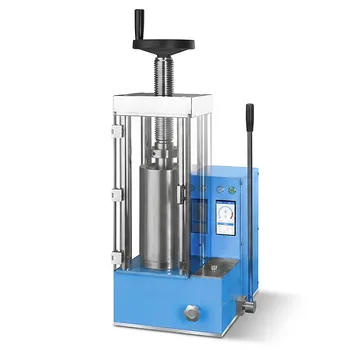
- Electric Lab Cold Isostatic Press CIP Machine
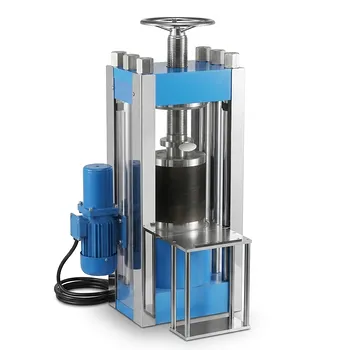
- Electric Split Lab Cold Isostatic Pressing CIP Machine
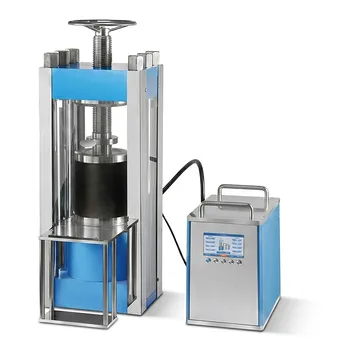
- Automatic Lab Cold Isostatic Pressing CIP Machine
- Manual Cold Isostatic Pressing CIP Machine Pellet Press
- Electric Isostatic Pressing Machine 40 Tons Automatic Laboratory Powder Compacting Press
People Also Ask
- What role do electric lab cold isostatic presses play in industrial contexts? Bridge R&D and Manufacturing with Precision
- What are the applications of electric lab cold isostatic presses in research settings? Advance Material R&D with High-Pressure CIPs
- How does electrical Cold Isostatic Pressing (CIP) contribute to cost savings? Unlock Efficiency and Reduce Expenses
- What are some research applications of electric lab CIPs? Unlock Uniform Powder Densification for Advanced Materials
- What are the characteristics of standard off-the-shelf electric lab CIP solutions? Achieve Immediate, Cost-Effective Processing