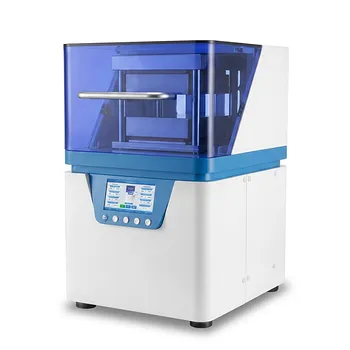
Strict calibration of integrated precision heating furnaces is mandatory because high-pressure environments distort the physical signals used to measure temperature.
In these extreme environments, high pressure alters the electromotive force (EMF) output of thermocouples, creating a discrepancy between the reported temperature and the actual thermal state. Calibrating the furnace eliminates this pressure-induced interference, ensuring that materials reach the exact equilibrium temperature required for structural integrity and scientific repeatability.
High-pressure calibration is the only way to ensure that measured data reflects reality rather than sensor error. By correcting for pressure-induced shifts in thermal sensors, researchers can achieve the precise equilibrium necessary for consistent, high-fidelity experimental results.
The Physics of Measurement Error Under Pressure
The Shift in Thermocouple Output
Thermocouples rely on the Seebeck effect to generate a voltage proportional to temperature, but mechanical pressure physically alters the wire's properties. This shift in electromotive force (EMF) means that a sensor might report 1000°C when the actual temperature is significantly higher or lower.
Eliminating Pressure-Induced Interference
Calibration acts as a corrective filter that accounts for the specific pressure being applied to the furnace. By establishing a calibration curve, researchers can subtract the "noise" of the high-pressure environment from the "signal" of the thermal data.
Ensuring Experimental Repeatability
In high-pressure physics, a difference of just a few degrees can lead to entirely different outcomes. Precise calibration ensures that an experiment conducted today can be perfectly replicated by another laboratory tomorrow.
Impact on Material Equilibrium and Phase Transitions
Achieving Structural Balance in Materials
For materials like borosilicate glass, achieving a specific structural balance requires treatment at an exact equilibrium temperature. If the furnace is not calibrated, the glass may fail to reach the necessary state of stability, leading to flawed material properties.
Mapping Planetary Geothermal Gradients
In geophysical research, precision heating allows for the simulation of mantle geothermal gradients. Precise thermal control is critical for observing how minerals like olivine transition into wadsleyite at depths of 410km or how ringwoodite shifts to bridgmanite at 660km.
Determining Dehydration Melting Points
The presence of moisture can shift mineral transition boundaries and dehydration melting temperatures. Only a strictly calibrated furnace can provide the resolution needed to identify these subtle shifts, which are vital for understanding the Earth's internal dynamics.
Understanding the Trade-offs and Risks
The Cost of Neglecting Calibration
The primary trade-off for strict calibration is the time and resource investment required before testing begins. However, neglecting this step results in "drift," where data becomes increasingly disconnected from physical reality as pressure levels fluctuate.
Error Propagation in Numerical Models
Inaccurate laboratory data flows directly into Bonded Block Models (BBM) and Finite Element Models (FEM). If the initial physical property data—such as cohesion or elastic modulus—is based on uncalibrated thermal readings, the resulting models will fail to accurately predict failure modes or crack propagation in underground structures.
Applying Calibration Standards to Your Research
Selecting the right calibration protocol depends on the specific requirements of your material or simulation.
- If your primary focus is material synthesis (e.g., Glass): Prioritize calibration at the specific equilibrium temperature points to ensure long-term structural stability and balance.
- If your primary focus is geophysical simulation: Focus on calibrating across a wide range of pressure-temperature (P-T) points to accurately map transition boundaries and dehydration melting.
- If your primary focus is structural engineering and modeling: Ensure furnace precision is high enough to produce the high-fidelity mechanical parameters (like internal friction angles) required for BBM or FEM validation.
A strictly calibrated furnace transforms a high-pressure environment from a source of measurement error into a precision tool for discovery.
Summary Table:
| Aspect | Impact of High Pressure | Benefit of Calibration |
|---|---|---|
| Temperature Sensing | Distorts EMF output (Seebeck effect) | Corrects pressure-induced measurement noise |
| Material Integrity | Causes structural instability/flaws | Ensures exact equilibrium temperature |
| Data Reliability | Leads to non-repeatable results | Guarantees scientific repeatability and accuracy |
| Numerical Modeling | Propagates errors in BBM/FEM models | Provides high-fidelity data for predictive models |
Elevate Your Research with KINTEK’s Precision Pressing Solutions
Don't let measurement errors compromise your experimental integrity. KINTEK specializes in comprehensive laboratory pressing solutions designed for the most demanding environments. Whether you are advancing battery research or simulating geophysical transitions, our range of equipment—including manual, automatic, heated, multifunctional, and glovebox-compatible models, as well as cold and warm isostatic presses—ensures the precision and stability your work requires.
Why choose KINTEK?
- Superior thermal control and calibration compatibility.
- Versatile solutions tailored for material synthesis and structural engineering.
- High-fidelity performance for accurate numerical model validation.
Contact KINTEK today to find the perfect laboratory pressing solution for your needs!
References
- Linfeng Ding, John C. Mauro. Volume relaxation in a borosilicate glass hot compressed by three different methods. DOI: 10.1111/jace.17482
This article is also based on technical information from Kintek Solution Knowledge Base .
Related Products
- Infrared Heating Quantitative Flat Plate Mold for Precise Temperature Control
- Automatic Hydraulic Heat Press Machine with Multi Stage Programmable Control and Integrated Water Cooling Plate Size 180x180mm
- Automatic Hydraulic Hot Press with Large Plate and Precision Temperature Control for Advanced Material Sample Preparation and Industrial Research
- Automatic Heated Hydraulic Lab Press with Programmable Touch Screen Controls and Precision Temperature Regulation
People Also Ask
- How do precision temperature-controlled heating plates function in electrolyte thermal stability storage experiments?
- What is the importance of a precision temperature-controlled heating module? Ensure Aluminum-Cadmium Thermal Stability
- How does heating platen precision affect rubber specimens? Achieve uniform density and reliable testing results.
- How are thin polymer films produced for spectroscopic analysis? Expert Guide to Heat and Low-Pressure Methods
- What accessories and field services can be used to optimize the capabilities of presses? Maximize Your Lab Performance