In the high-speed theater of industrial papermaking, the press nip is a moment of violent transformation.
In milliseconds, a slurry of saturated fibers is subjected to immense pressure. Water must leave. The web must densify. But between the intent of the machine and the reality of the material lies a complex psychological—and physical—resistance.
The fiber web "pushes back." To understand this resistance is to control the quality of the final product.
The Saturated Resistance
At the heart of papermaking research is a fundamental problem: a wet fiber web is not just a solid; it is a matrix of trapped fluid.
When you apply pressure, you aren't just squashing fibers. You are fighting the hydrodynamics of water trapped within cell walls. This creates a rate-dependent response.
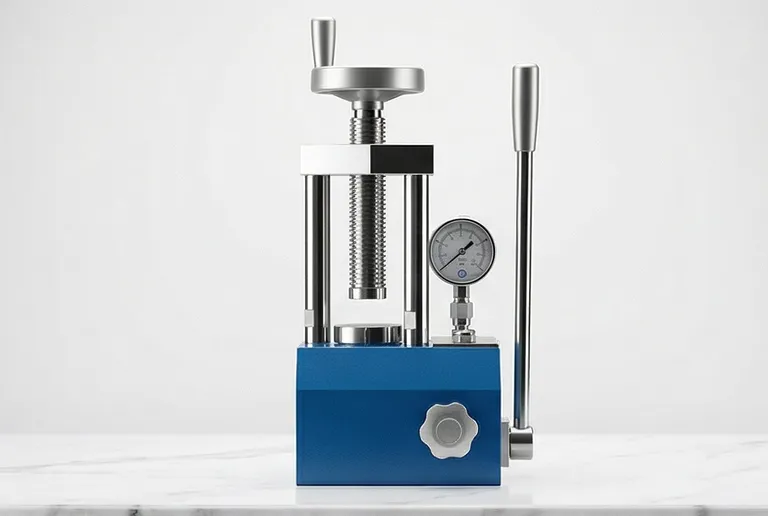
The faster you press, the harder the water resists. This is where the specialized laboratory uniaxial compression device becomes indispensable. It allows us to isolate this resistance, quantifying "structural pressure" as a distinct variable from total applied load.
Mapping the Geometry of Flow
The uniaxial device acts as a technical bridge. It takes the chaotic, multi-directional stresses of a thousand-meter-per-minute paper machine and simplifies them into a single, measurable axis.
By isolating force along this single vector, researchers can:
- Observe Flow Resistance: Track how water escapes the fiber matrix under specific pressure pulses.
- Identify Choke Points: Determine the exact moment when the density of the web prevents further water removal.
- Validate Rheology: Turn mathematical theories into empirical truths.
In the lab, we aren't just testing paper; we are simulating the "geometric foundation" of the material. We are watching how fibers coordinate under stress.
The Limits of a Single Axis
Every engineer knows that a model is a simplification. The uniaxial compression test is a high-fidelity map, but it is not the territory.
In a commercial press, factors like shear and multi-axial stress exist. Furthermore, boundary effects—friction between the fiber web and the steel container—can introduce noise into the data.
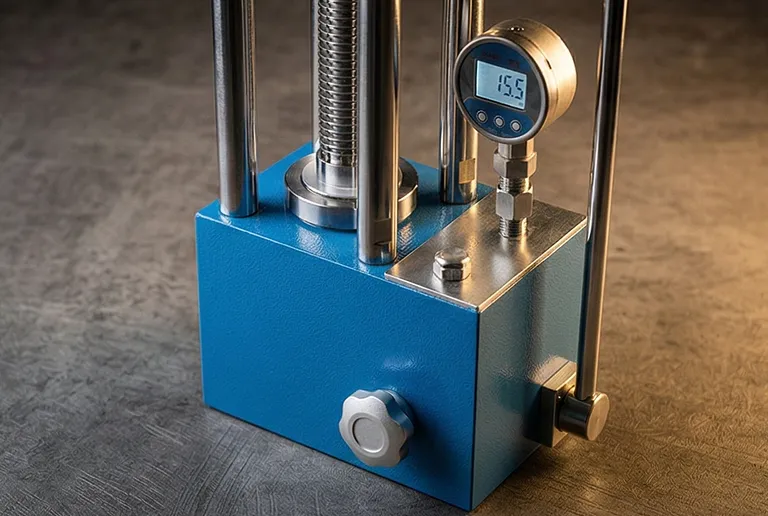
Precision requires acknowledging these constraints. High-strength materials, such as heavy-duty galvanized steel housings, are used to minimize wall deformation, ensuring that the pressure recorded is as close to internal structural pressure as possible.
Data as the Foundation of Process
Theoretical models in rheology are only as robust as the data that feeds them. Without empirical validation of structural pressure, industrial simulations are merely educated guesses.
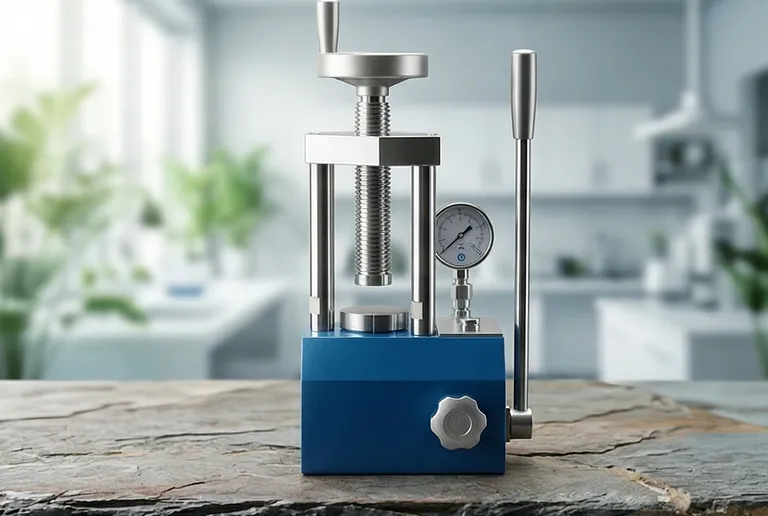
The uniaxial press provides the high-resolution displacement data necessary to verify mass transfer equations. It ensures that when a paper mill scales up, the physics scale with them.
| Metric | Research Impact | Industrial Utility |
|---|---|---|
| Structural Pressure | Quantifies web "push back" | Predicts required nip pressure |
| Flow Resistance | Maps water movement | Optimizes dewatering energy |
| Pulse Simulation | Mimics high-speed cycles | Pre-validates machine settings |
| Densification | Tracks fiber coordination | Ensures final sheet strength |
Engineering the Solution
Research is only as good as the tools that enable it. At KINTEK, we understand that the difference between an outlier and a breakthrough is the precision of your equipment.
Our laboratory solutions are designed to bridge the gap between microscopic fiber behavior and macroscopic production:
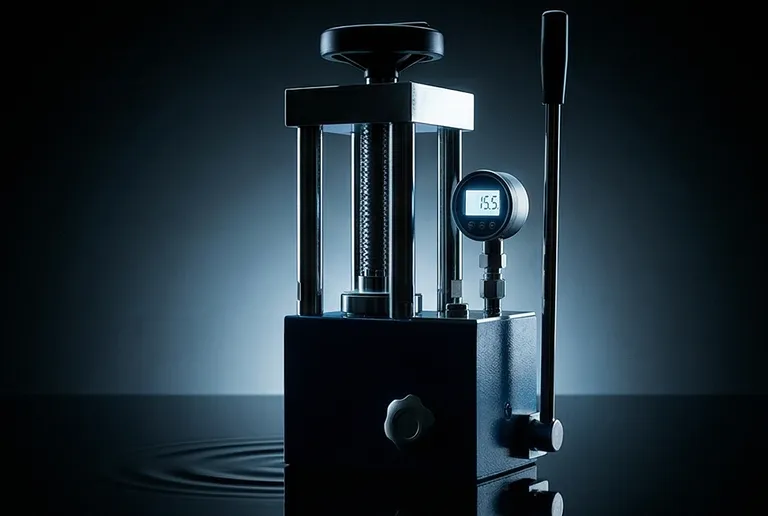
- Precision Pressing: Manual and automatic models designed for consistent, rate-controlled compression.
- Thermal Control: Heated and multifunctional units to simulate the heat-assisted pressing stages.
- Specialized Environments: Glovebox-compatible units for sensitive chemical or material research.
- Advanced Compaction: Cold and Warm Isostatic Presses (CIP/WIP) for high-density material research beyond standard papermaking.
Whether you are decoding the rheology of a saturated web or pioneering new energy storage materials, the goal remains the same: transforming the resistance of matter into predictable performance.
To find the precise pressing solution for your specific research pulse, Contact Our Experts.
Related Products
Related Articles
- The Geometry of Energy: Why Graphite is the Soul of Advanced Sintering
- Beyond the Part Number: The Psychology of Sourcing Lab Press Components
- The Glass Transition Ritual: Why Heat is the Secret Language of High-Density Materials
- The Architecture of Contact: Why 360 MPa is the Threshold of Truth in Battery Research
- The Tyranny of the Millimeter: Why Geometric Precision Dictates Fluoroelastomer Truth
