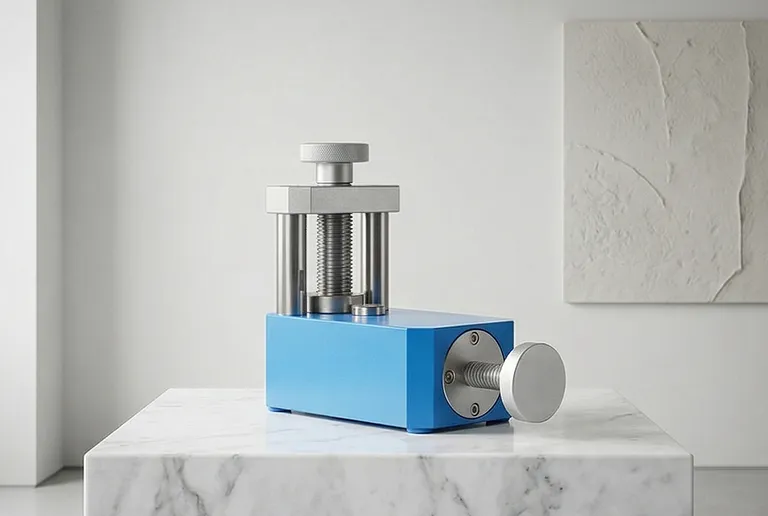
The Invisible Gradient
In the world of high-performance ceramics and battery synthesis, the greatest enemy is not the heat—it is the difference in heat.
Traditional sintering is a slow, external siege. You heat a furnace, and the energy crawls from the surface of the material toward its cold, stubborn core. This lag creates a "temperature gradient," a silent killer that leads to internal stresses, microscopic cracks, and structural failure.
To solve this, we don't just need a furnace. We need a system where the mold itself becomes the engine of energy.
The Dual-Identity Platen
At the heart of a specialized electric heating vacuum mold sit the high-purity graphite platens. In any other machine, a platen is a passive slab of metal meant to exert force. In a vacuum sintering environment, graphite changes the rules.
Mechanical Integrity Under Fire
Most materials soften as they approach 2,000°C. Graphite is an outlier; its strength actually increases with temperature. This allows it to act as a mechanical bridge, transferring tons of pressure from the press to the "green body" without deforming.
The Electrical Conduit
But its second identity is more critical. Graphite is a conductor. These platens serve as the primary electrical contact electrodes. They are the gateway through which pulsed or direct current enters the synthesis chamber, turning a mechanical press into a sophisticated circuit.
The Mesh: Precision in Distribution
If the platens are the gateway, the pyrolytic graphite mesh is the distribution network.
Using a solid block to deliver current often leads to "hot spots"—areas where electricity bunches up and melts the sample. The mesh solves this through geometry.
- Uniform Energy Injection: It distributes current across the entire surface area of the material.
- Direct Joule Heating: By forcing current through the resistive material of the sample itself, the system generates heat internally.
- Speed: Because the heat is generated within the "green body" rather than being absorbed from the outside, heating rates are orders of magnitude faster than traditional methods.
The Engineering of Homogenization
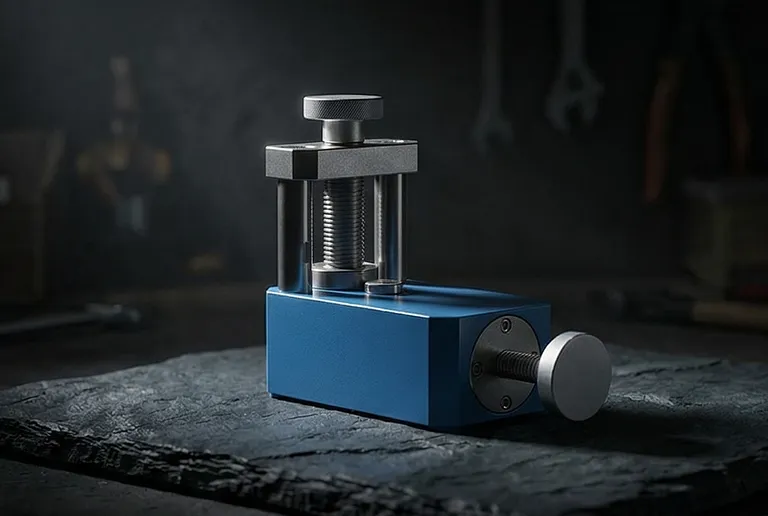
When you combine mechanical pressure with internal Joule heating, the physics of the material changes.
At the molecular level, this environment drives grain diffusion. The electrical pulses help atoms move across boundaries, closing pores and "healing" defects that would otherwise remain as structural weaknesses.
| Component | Role | Systemic Impact |
|---|---|---|
| Graphite Platens | Pressure + Electrical Lead | Ensures dimensional precision and power delivery. |
| Pyrolytic Mesh | Current Distribution | Prevents localized melting; ensures "Internal Heating." |
| Vacuum Environment | Protective Atmosphere | Prevents graphite oxidation and sample contamination. |
| Graphite Foil | Chemical Barrier | Protects the sample from carbon diffusion and sticking. |
The Psychological Trade-off: Precision vs. Protection
In engineering, there is no such thing as a free lunch. Graphite’s power comes with a temperamental nature.
Graphite is hungry for oxygen. Above 400°C, it begins to oxidize and vanish into gas. This forces the entire process into a high-vacuum or inert gas (Argon) environment. Furthermore, at extreme temperatures, carbon atoms may try to migrate into your sample.
The solution is a layer of flexible graphite foil. It acts as a sacrificial skin—a barrier that prevents chemical reactions while maintaining the electrical and thermal connection.
Defining the Future of Synthesis
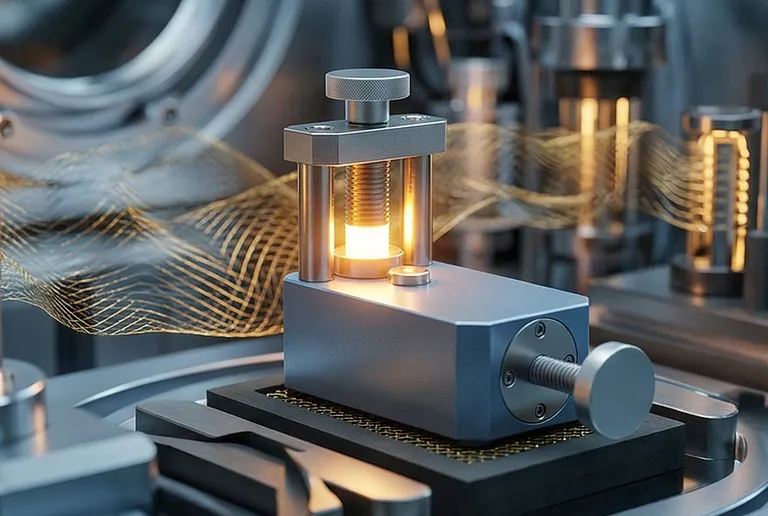
The goal of modern material science is total control. By using graphite components as both the "hammer" (pressure) and the "spark" (current), researchers can synthesize materials that were previously impossible to create without cracks or voids.
Whether you are developing the next generation of solid-state batteries or high-toughness ceramics, the equipment must do more than just push and heat. It must become an active participant in the material's transformation.
Why Research Leaders Choose KINTEK
Precision in the lab requires more than just a press; it requires a deep understanding of the thermal and mechanical synergies at play during sintering.
KINTEK provides the specialized infrastructure to master these variables:
- Advanced Vacuum Presses: Designed for seamless integration with graphite mold systems.
- Isostatic Solutions: Both cold and warm isostatic presses for high-density battery research.
- Glovebox Compatibility: Ensuring your materials stay pure from start to finish.
To optimize your sintering parameters and achieve superior structural homogenization, Contact Our Experts
Related Products
- Automatic High Temperature Heated Hydraulic Press Machine with Heated Plates for Lab
- Split Automatic Heated Hydraulic Press Machine with Heated Plates
- Lab Double Plate Heating Mold for Laboratory Use
- Infrared Heating Quantitative Flat Plate Mold for Precise Temperature Control
- Heated Hydraulic Press Machine With Heated Plates For Vacuum Box Laboratory Hot Press
Related Articles
- The Architecture of Slow: Why Physical Precision Dictates Chemical Destiny
- The Architecture of Certainty: Why the Laboratory Press is the Anchor of Material Science
- The Vanishing Boundary: The Hidden Thermodynamics of LTCC Lamination
- The Alchemy of 160°C: Why Precision Pressing is the Silent Backbone of Rubber Science
- The Invisible Forge: Why the Laboratory Press is the Soul of Nano-Composites



















