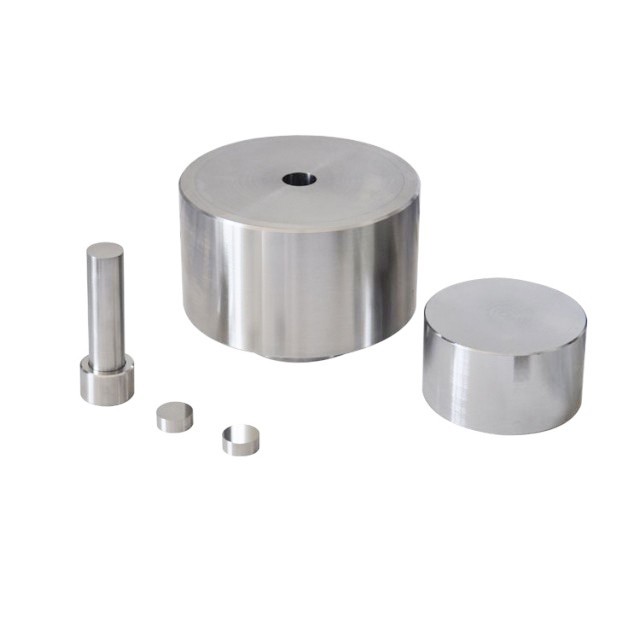
Molds & Accessories
Lab Anti-Cracking Press Mold
Item Number : PML
Price varies based on specs and customizations
- Die Material
- Alloy tool steel: Cr12MoV
- Indenter hardness
- HRC60-HRC62
- Sample size (Standard Options)
- Φ6mm, Φ8mm, Φ10mm, Φ15mm, Φ20mm (Customizable - M)

Shipping:
Contact us to get shipping details Enjoy On-time Dispatch Guarantee.
Why Choose Us
Easy ordering process, quality products, and dedicated support for your business success.
Anti-Cracking Press Mold: Precision Molding for Your Laboratory
At KINTEK, we specialize in providing high-quality lab press machines and accessories to meet diverse laboratory needs. Our Anti-Cracking Press Mold is expertly designed for researchers and technicians who require reliable and precise sample preparation, especially when dealing with materials under high pressure or forming samples with large cross-sectional areas or deep cavities.
Product Details & Components
Explore the robust construction and components of our Anti-Cracking Press Mold, designed for durability and ease of use in demanding laboratory environments.
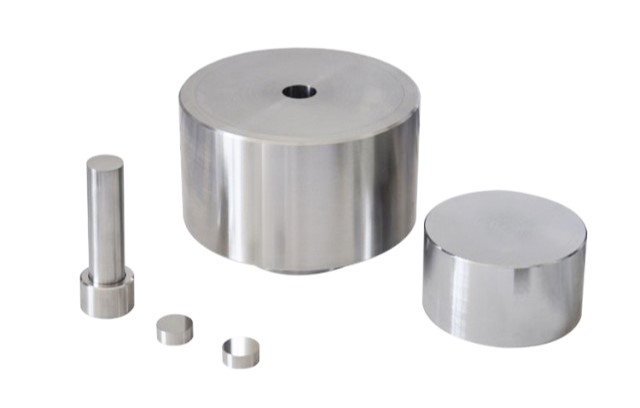
Technical Specifications
| Instrument model | PMT |
|---|---|
| Sample shape |  |
| Die Material | Alloy tool steel: Cr12MoV |
| Indenter hardness | HRC60-HRC62 |
| Sample size (Standard Options) | Φ6mm, Φ8mm, Φ10mm, Φ15mm, Φ20mm (Customizable - M) |
| Cavity depth | 40mm (Customizable - N) |
| Dimensions (Outer) | Φ98*120mm (L*H) |
| Weight | Approx. 5Kg |
| Diagram of hydraulic powder press size compatibility | 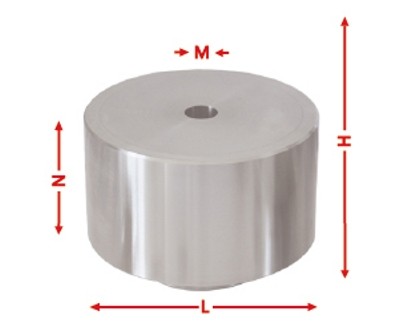 |
Key Features & Benefits
Our Anti-Cracking Press Mold is engineered to enhance your material processing and sample preparation workflows, offering:
-
Superior Anti-Cracking Performance: Specifically designed to prevent mold cracking when dealing with ultra-high pressures or deep cavity molding, ensuring longevity and reliable sample production.
-
High-Pressure Capability: Robust construction allows for molding materials requiring greater pressure, ideal for large cross-sectional areas and dense sample formation.
-
Versatile Sample Preparation: Capable of producing various sample shapes including round, square, rectangular, circular, hexagonal, and flat, offering flexibility for diverse research and testing requirements.
-
Durable Construction: Made from high-quality alloy tool steel (Cr12MoV) with excellent indenter hardness (HRC60-HRC62), guaranteeing durability and consistent performance.
-
Optimized for Heated Applications: Designed for use with electric heating systems, facilitating uniform temperature distribution. This is crucial for consistent curing, enhancing material properties, and preventing defects in heat-treated composites or polymers.
-
Precision Engineering: Ensures accurate dimensions and smooth surfaces for reliable and repeatable sample preparation, critical for material testing and analysis.
Operation Steps
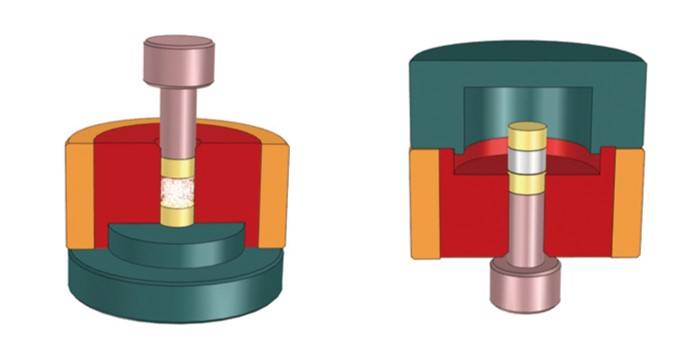
The anti-cracking die is primarily designed for applications involving ultra-high pressure or deep cavities where standard dies are prone to cracking during pressing. Follow these simple steps for optimal use:
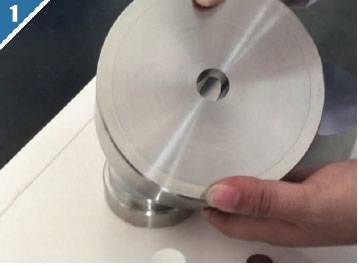
1. Assemble the die according to the operation diagram and place your sample material into the cavity.
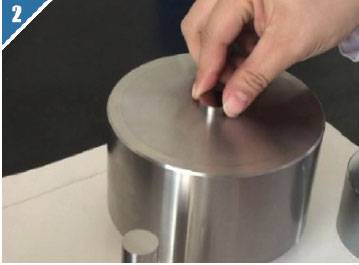
2. Place the assembled die in the center of your hydraulic press and carefully apply pressure up to the required level.

3. After pressing, release the pressure. Assemble the die according to the release diagram, then use the screw rod to gently eject the sample from the die bushing.
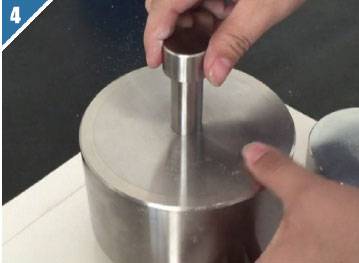
4. Take out the die from the hydraulic press and carefully remove your formed sample.
Applications in Laboratory Settings
KINTEK's Anti-Cracking Press Mold is an indispensable tool for various laboratory applications, enhancing research and development across multiple fields:
- Material Science Research: Essential for preparing powder metallurgy samples, ceramic green bodies, and composite materials for property testing and microstructural analysis.
- Pharmaceutical Development: Useful for compacting powders for tablet formulation studies and drug delivery research, requiring precise sample dimensions.
- Plastics and Polymers Testing: Ideal for creating standardized test specimens from plastic compounds or rubber for mechanical testing (e.g., tensile, compression).
- Geological and Catalysis Studies: Suitable for preparing pressed pellets of geological samples or catalyst powders for XRF, XRD, or FTIR analysis.
- Custom Component Prototyping: Enables laboratories to create small, precisely shaped components or prototypes from various materials before scaling up.
This mold supports processes involving the injection of powder materials (e.g., metal powder mixed with a matrix) into the mold, followed by compaction and optional heat treatment to enhance final properties.
Partner with KINTEK for Your Lab Press Needs
Choose KINTEK's Anti-Cracking Press Mold for reliable, precise, and durable sample preparation. Our commitment to quality ensures you receive equipment that enhances your laboratory's capabilities and efficiency.
Ready to improve your sample preparation process? Discuss your specific requirements with our experts or request a quote today. Please use the form below to get in touch!
For inquiries, please contact us using our contact form.
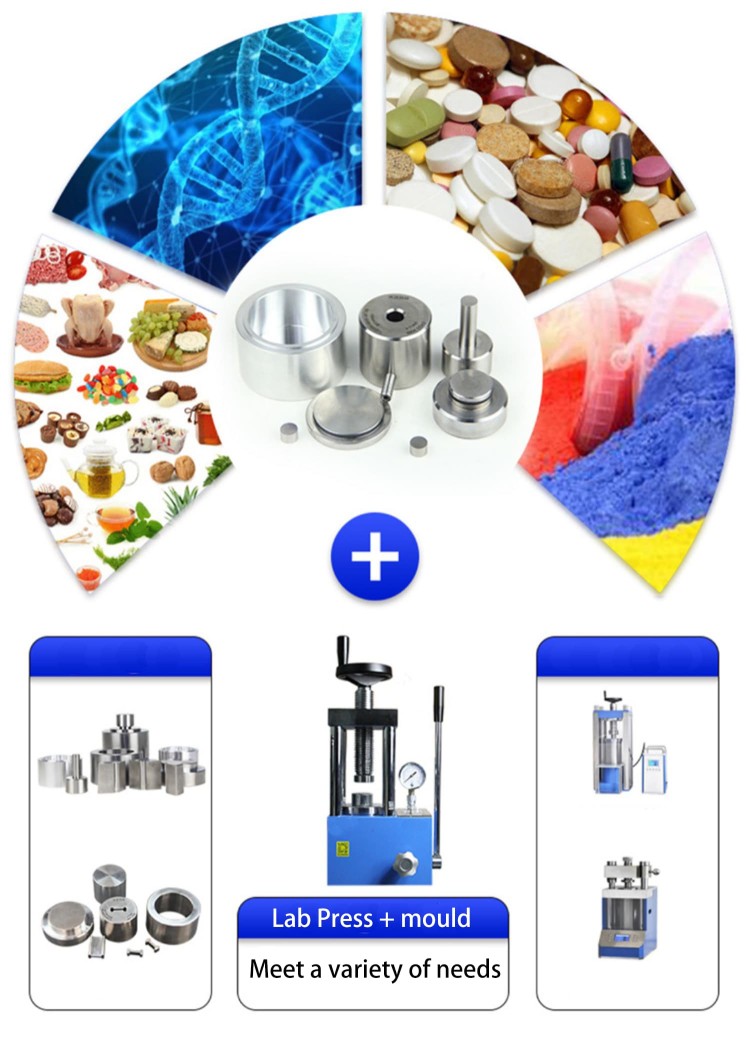
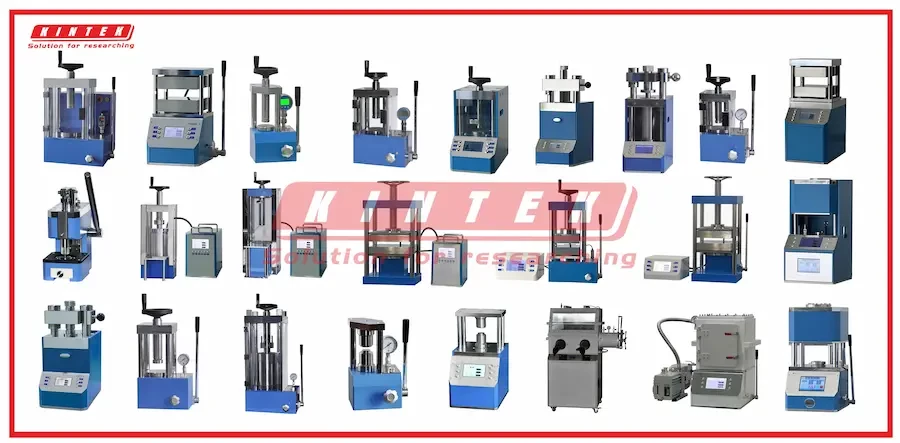
Full range of types of laboratory press molds
We have a full range of molds for you to choose from, and the molds fit the body perfectly.
If you need molds with special shapes, we can also customize them for you.
The Right Lab Press Awaits
Expert Advice? We're Here. Get in Touch!
Trusted by Industry Leaders

FAQ
What Are The Main Applications Of Press Molds In Laboratories?
What Types Of Press Molds Are Available For Laboratory Use?
What Are The Key Features Of Laboratory Press Molds?
What Materials Are Commonly Used To Make Press Molds?
What Are The Advantages Of Using Press Molds In Laboratories?
Can Press Molds Be Customized For Specific Laboratory Needs?
How Do Press Molds Ensure High-precision Sample Preparation?
What Are The Benefits Of Using Heated Press Molds?
How Do Press Molds Contribute To Efficient Laboratory Workflows?
What Should I Consider When Choosing A Press Mold For My Laboratory?
REQUEST A QUOTE
Our professional team will reply to you within one business day. Please feel free to contact us!
Related Products

Lab Infrared Press Mold for No Demolding
Streamline infrared sample prep with KINTEK's non-demountable molds—achieve high transmittance without demolding. Ideal for spectroscopy.

Lab Round Bidirectional Press Mold
Precision Round Bidirectional Press Mold for lab use, high-density compaction, Cr12MoV alloy steel. Ideal for powder metallurgy & ceramics.

Special Shape Lab Press Mold for Laboratory Applications
Special Shape Press Molds for precise lab applications. Customizable, high-pressure performance, and versatile shapes. Ideal for ceramics, pharmaceuticals, and more. Contact KINTEK today!

Lab Isostatic Pressing Molds for Isostatic Molding
High-quality isostatic pressing molds for lab presses - achieve uniform density, precision components, and advanced material research. Explore KINTEK's solutions now!

Lab Polygon Press Mold
Precision Polygon Press Mold for metal powders & materials. Custom shapes, high-pressure compaction, durable design. Ideal for labs & manufacturing.

Lab XRF Boric Acid Powder Pellet Pressing Mold for Laboratory Use
Precision XRF boric acid pellet pressing mold for accurate sample preparation. Durable, high-grade alloy tool steel, ensures reliable XRF spectrometry results.

Lab Ring Press Mold for Sample Preparation
High-precision Ring Press Dies for uniform pellets in labs & industry. Durable Cr12MoV alloy, sizes Φ3-80mm. Boost efficiency & accuracy today!

XRF KBR Plastic Ring Lab Powder Pellet Pressing Mold for FTIR
XRF Powder Pellet Pressing Mold with Plastic Rings for precise sample preparation. Achieve uniform pellets with durable alloy tool steel construction. Custom sizes available.

Lab Cylindrical Press Mold for Laboratory Use
Precision cylindrical press molds for lab sample prep. Durable, high-performance, and customizable for XRF, battery research, and material testing. Get yours today!

Lab Infrared Press Mold for Laboratory Applications
KINTEK's lab press molds ensure precise sample preparation with durable tungsten carbide construction. Ideal for FTIR, XRF, and battery research. Custom sizes available.

Assemble Square Lab Press Mold for Laboratory Use
KINTEK's Assemble Lab Press Mold ensures precise sample prep for delicate materials, preventing damage with quick-disassembly design. Ideal for thin strips & reliable demolding.

Square Lab Press Mold for Laboratory Use
KINTEK's Square Lab Press Molds create uniform strip samples with precision. Durable Cr12MoV steel, versatile sizes, ideal for lab applications. Enhance your sample prep today!

XRF KBR Steel Ring Lab Powder Pellet Pressing Mold for FTIR
Precision XRF steel ring pellet mold for lab sample prep. Durable, efficient, ensures accurate XRF analysis. Custom sizes available. Order now!

Lab Ball Press Mold
High-performance Ball Press Molds for precise lab material shaping. Durable, versatile designs for metal/ceramic compaction. Explore sizes Φ3-80mm. Contact KINTEK experts today!

Assemble Lab Cylindrical Press Mold for Laboratory Use
Premium lab cylindrical press mold for flawless sample prep. Prevents delamination, ultra-durable Japanese steel. Custom sizes available. Get yours now!

Carbide Lab Press Mold for Laboratory Sample Preparation
Premium carbide lab press molds for precise sample preparation. Durable, high-hardness YT15 material, customizable sizes. Ideal for XRF, battery research & more.

Lab Heat Press Special Mold
Precision KINTEK lab press molds for reliable sample prep. Durable, customizable, and ideal for diverse research needs. Enhance your lab's efficiency today!

Lab Button Battery Tablet Press Sealing Mold
Precision Sealing Die for button battery assembly & analysis. Durable hardened steel, CR16-CR30 compatible. Enhance battery integrity & performance. Get yours now!

Lab Cylindrical Press Mold with Scale
KINTEK's Cylindrical Press Mold ensures precision material processing with uniform pressure, versatile shapes, and optional heating. Ideal for labs and industries. Get expert advice now!

Cylindrical Lab Electric Heating Press Mold for Laboratory Use
KINTEK's Cylindrical Electric Heating Press Mold offers rapid heating (up to 500°C), precise control, and customizable sizes for lab sample preparation. Ideal for battery, ceramic, and material research.
Related Articles
The Geometry of Energy: Why Graphite is the Soul of Advanced Sintering
Explore how high-purity graphite platens and pyrolytic meshes transform passive molds into active heating elements, eliminating gradients in material synthesis.
Beyond the Part Number: The Psychology of Sourcing Lab Press Components
Sourcing lab press parts isn't just a transaction. It's a critical decision affecting safety, reliability, and your warranty. Learn why OEM is key.
The Glass Transition Ritual: Why Heat is the Secret Language of High-Density Materials
Discover how integrated heating in pressure molds transforms wood from brittle to ductile by reaching the lignin glass transition temperature.

The Architecture of Contact: Why 360 MPa is the Threshold of Truth in Battery Research
Discover why high-pressure molding is essential for cathode conductivity testing. Learn how eliminating interstitial voids reveals the intrinsic potential of battery materials.
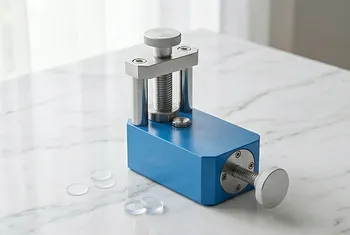
The Tyranny of the Millimeter: Why Geometric Precision Dictates Fluoroelastomer Truth
In fluoroelastomer analysis, geometry is destiny. Learn how precision metal molds eliminate hidden variables in thermal aging and mechanical testing.
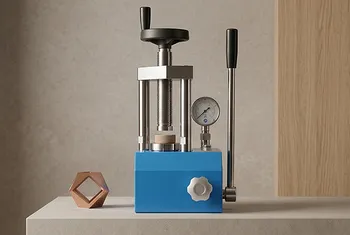
The Geometry of Resilience: Why High-Strength Molds Define Geopolymer Success
Geopolymer foam production demands a delicate balance of chemical resistance and physical rigidity. Discover how high-strength stainless steel molds eliminate hidden research costs.
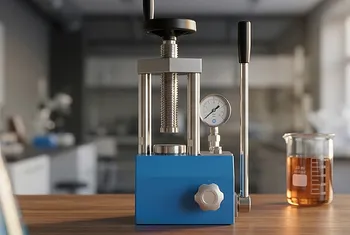
The Geometry of the Invisible: Forging Molecular Order in Cellulose Tribenzoate
Discover how high-performance hydraulic molding bridge the gap between liquid casting and crystalline precision in CTBe oriented films for chiral recognition.

The Geometry of Silence: Why Flexibility is the Ultimate Precision in Ti-6Al-4V Pressing
Explore the critical role of flexible rubber molds in isostatic pressing. Learn how they eliminate density gradients and protect Ti-6Al-4V alloy integrity.
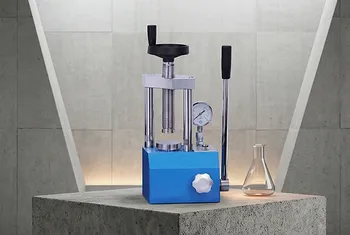
The Architecture of Intimacy: Why Solid-State Batteries Demand 375 MPa
Discover why extreme mechanical pressure is the fundamental mechanism for establishing functional solid-state interfaces and reducing interfacial impedance in SSB research.
The Geometry of Contact: Why the 400 MPa Barrier Defines the Future of Solid-State Batteries
An exploration of why extreme pressure is the critical catalyst for solid-state battery performance, bridging the gap between discrete powders and unified energy systems.
The Geometry of Uniformity: Why Isostatic Pressing is the Silent Architect of Memristor Reliability
Discover why isostatic pressing is essential for ferroelectric memristors, eliminating density gradients to ensure switching consistency and device longevity.
How Isostatic Pressing Delivers Superior Performance in Critical Industries
Isostatic pressing enhances material density uniformity for aerospace, medical, and industrial applications, improving performance and reducing costs.