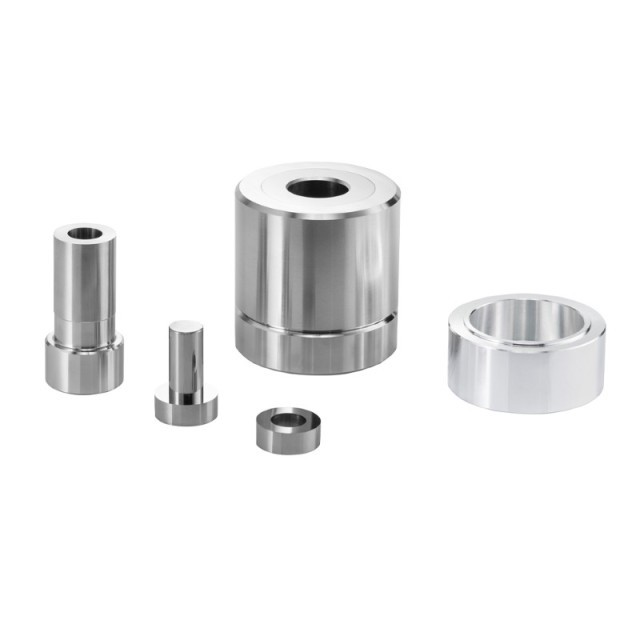
Molds & Accessories
Lab Ring Press Mold for Sample Preparation
Item Number : PMO
Price varies based on specs and customizations
- Die Material
- Alloy tool steel: Cr12MoV
- Indenter hardness
- HRC60-HRC62
- Sample size options
- Φ7-3, Φ10-5, Φ20-10 mm (M), Φ30-10, Φ50-20mm (D)

Shipping:
Contact us to get shipping details Enjoy On-time Dispatch Guarantee.
Why Choose Us
Easy ordering process, quality products, and dedicated support for your business success.
High-Precision Ring Press Dies for Your Laboratory and Industrial Needs
KINTEK specializes in advanced lab press machines, including automatic lab presses, lab isostatic presses, and heated lab presses, designed to meet diverse laboratory and industrial requirements. Our Ring Press Dies, also known as Circular Pellet Press Die Sets, are expertly engineered to create precise, uniform round pellets, essential for consistent results in your critical processes.
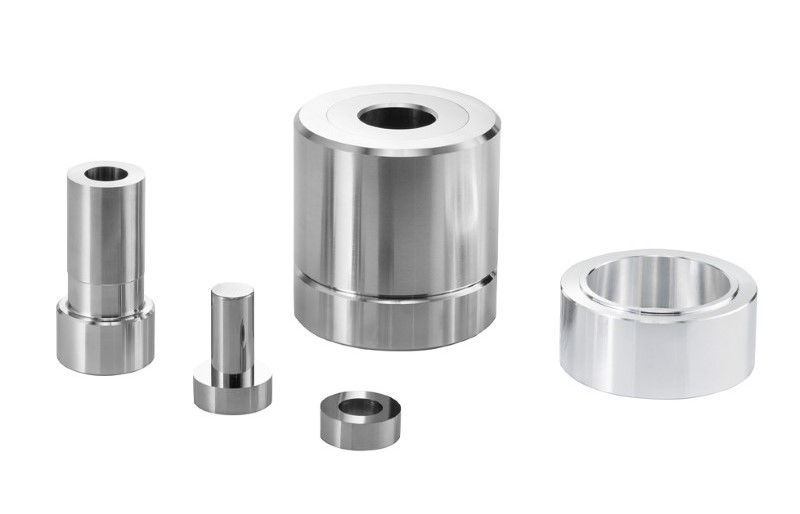
Product Details: Components and Specifications
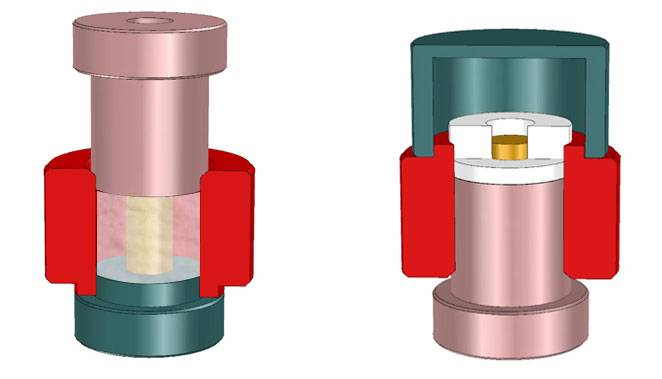
Our Ring Press Die Sets are designed for versatility and durability, enabling the creation of round pellets ranging from very thin to over 2 inches in length. Explore the detailed components and technical capabilities below.
Detailed Components Overview
![Ring mold [Φ3-40mm]](https://image.kinteksolution.com/images/products/98/omWshebdZ1ivwOGGUsVd.jpg)
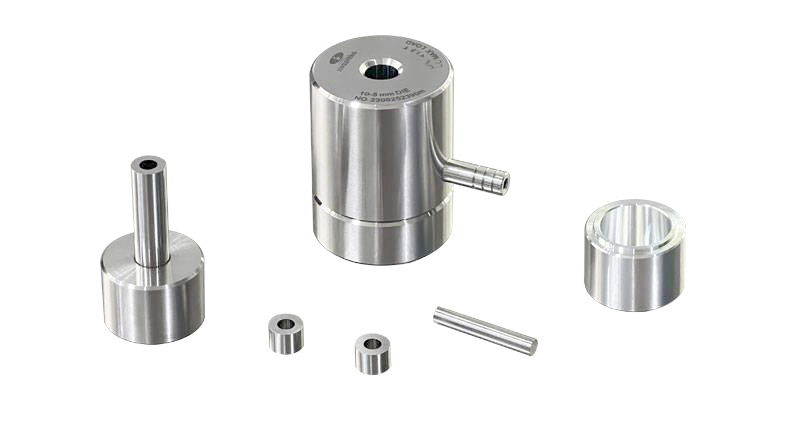
![Ring mold [Φ41-80mm]](https://image.kinteksolution.com/images/products/98/ods7QKhz8n2r4WHr5hGf.jpg)
Technical Specifications
| Instrument model | PMQ | |
|---|---|---|
| Sample shape | 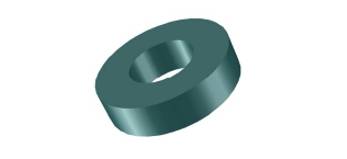 |
|
| Die Material | Alloy tool steel: Cr12MoV | |
| Indenter hardness | HRC60-HRC62 | |
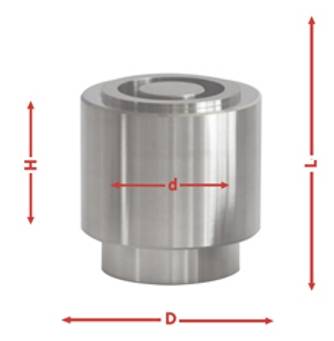
| Sample size options | Φ7-3, Φ10-5, Φ20-10 mm (M) | Φ30-10, Φ50-20mm (D) |
| Cavity depth | 40mm (N) | 45mm (D) |
| Dimensions | Φ53*120mm (L*H) | Φ72*100mm, Φ88*120mm (D*L) |
| Weight | 1.4Kg | 3.5kg, 5kg |
| Diagram of hydraulic powder press size | 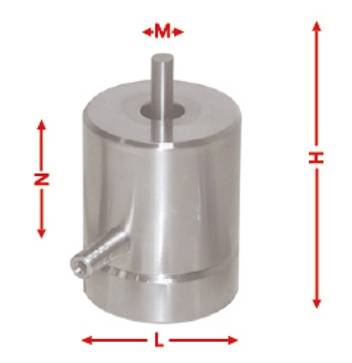 |
 |
Key Benefits of KINTEK Ring Press Dies
Investing in KINTEK Ring Press Dies brings significant advantages to your operations, enhancing precision, efficiency, and versatility.
- Unmatched Precision: Meticulously machined from high-quality Cr12MoV alloy tool steel (HRC60-HRC62 hardness), ensuring accurate pellet dimensions and consistent production, crucial for reliable results.
- Versatile Pellet Production: Capable of producing pellets with a wide range of diameters (from Φ3mm to Φ80mm) and lengths, adapting to diverse project requirements in both R&D and industrial settings.
- Enhanced Production Efficiency: Streamline your workflow with dies designed for ease of use and rapid sample preparation. High throughput capabilities allow for significant output, especially when integrated with rotary presses.
- Cost-Effective Solution: Durable construction and efficient design offer long-term value, reducing the need for frequent replacements and minimizing material wastage.
- Superior Material Quality: Built for longevity and consistent performance, our dies maintain their integrity even under demanding use, ensuring reliable pellet quality over time.
- Improved Setup Flexibility: Suitable for single die operations or series in transfer press stamping, offering adaptability for various project scales and complexities.
- Automation Compatibility: Designed to integrate with automatic transfer systems, further boosting productivity and reducing manual intervention in stamping processes.
Ready to enhance your material processing capabilities? Our Ring Press Dies are the solution for achieving precise and consistent results. Contact us today to discuss your specific requirements, get a quote, or learn more about how KINTEK can support your laboratory and production goals.
Versatile Applications Across Industries
KINTEK Ring Press Dies are integral to a multitude of processes, valued for their ability to create uniform pellets with high precision. Their versatility makes them indispensable in various sectors:
- Material Testing: Create uniform pellets essential for reliable material testing in laboratories, ensuring consistent results for properties like hardness and tensile strength.
- Automotive Industry: Key in manufacturing diverse components via die punch press processes, enhancing the precision and quality of automotive parts.
- Forging Processes: Widely used in hubbing, where patterns are pressed into die cavities, common in producing silverware and other intricate metal articles.
- Coin Production: Involved in manufacturing coins and small metal articles, leveraging precision and controlled compression for consistent quality.
- Industrial Manufacturing: Ideal for high-volume production where various sizes and shapes are needed with minimal scrap and high precision.
- Research and Development: Essential for preparing samples for diverse analyses, ensuring uniformity and accuracy for dependable experimental outcomes.
These applications highlight the critical role of Ring Press Dies in achieving precision, efficiency, and reliability in both industrial production and laboratory research.
Operating Principle
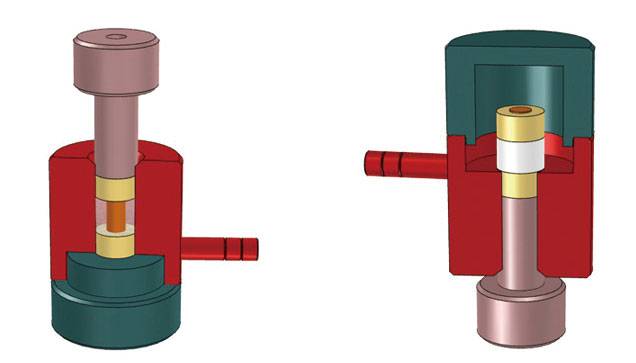
Ring Press Dies, or Circular Pellet Press Die Sets, operate by precisely compressing powdered or granular materials into solid, round pellets. The process involves the coordinated action of upper and lower punches moving within a central die cavity. This mechanism ensures even pressure distribution across the material, resulting in pellets with uniform density, shape, and size. Our dies are meticulously machined from high-quality tool steel to maintain dimensional accuracy and withstand the rigors of repeated pressing operations, ensuring consistent performance.
Operation Steps
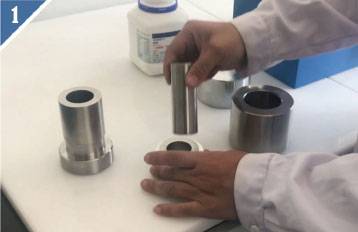
1. Assemble the die components securely.
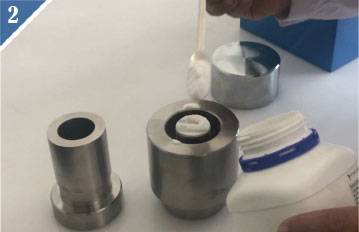
2. Load the sample material into the die cavity.
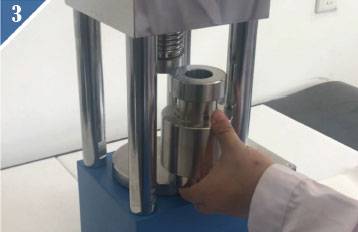
3. Carefully place the assembled die into the tablet press.
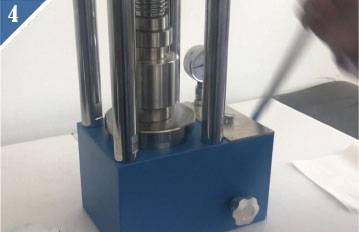
4. Apply pressure according to your material and desired pellet density.
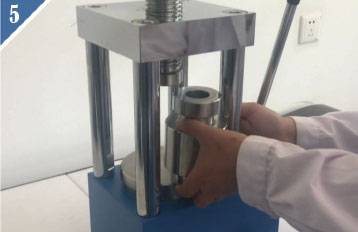
5. After pressing, carefully remove the die from the press.
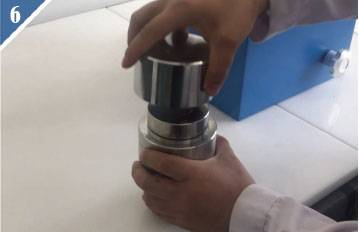
6. Assemble or use the appropriate demoulding tool/procedure.
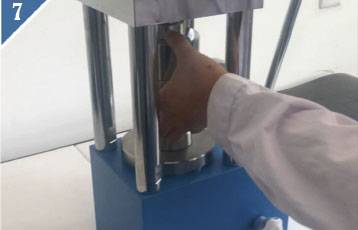
7. Eject the pressed sample (pellet) from the die.
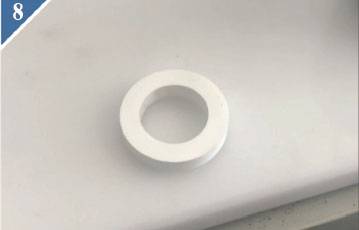
8. Carefully retrieve the finished pellet.
For detailed guidance tailored to your specific KINTEK lab press model and die set, please refer to your user manual or contact our support team.
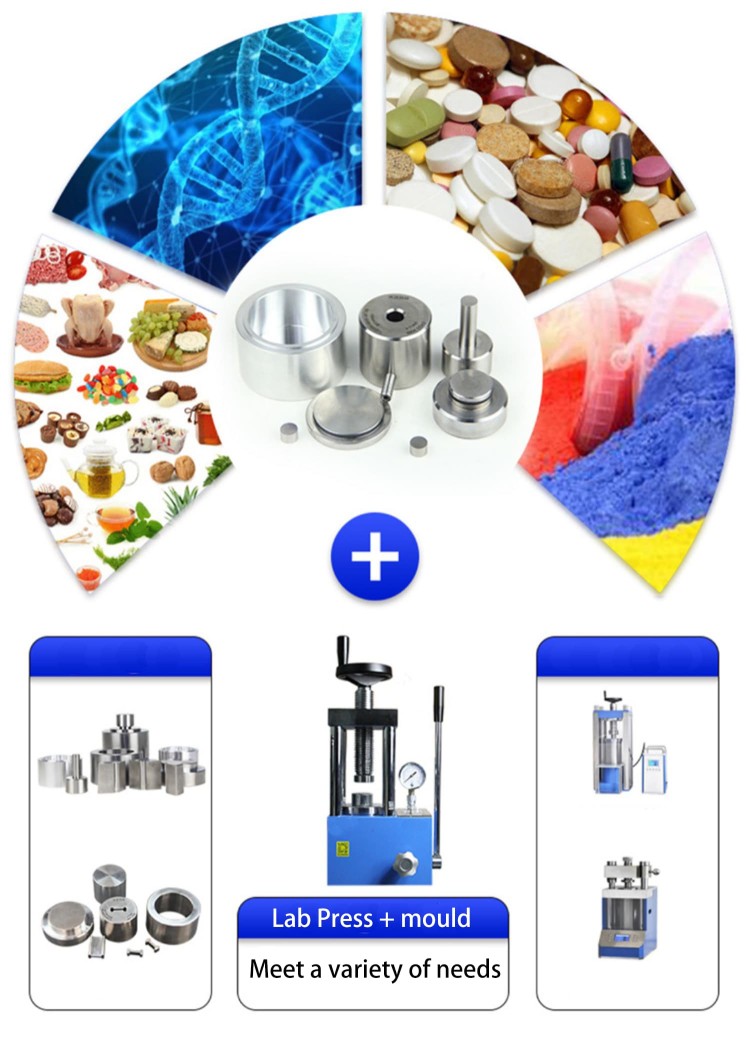
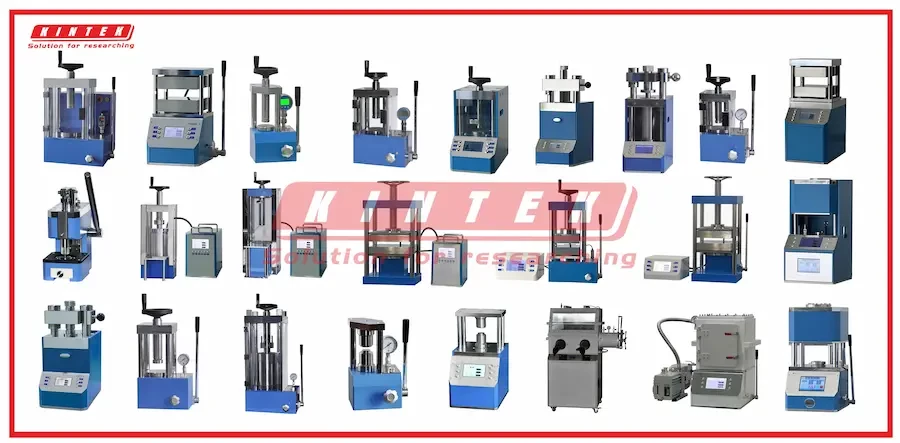
Full range of types of laboratory press molds
We have a full range of molds for you to choose from, and the molds fit the body perfectly.
If you need molds with special shapes, we can also customize them for you.
The Right Lab Press Awaits
Expert Advice? We're Here. Get in Touch!
Trusted by Industry Leaders

FAQ
What Are The Main Applications Of Press Molds In Laboratories?
What Types Of Press Molds Are Available For Laboratory Use?
What Are The Key Features Of Laboratory Press Molds?
What Materials Are Commonly Used To Make Press Molds?
What Are The Advantages Of Using Press Molds In Laboratories?
Can Press Molds Be Customized For Specific Laboratory Needs?
How Do Press Molds Ensure High-precision Sample Preparation?
What Are The Benefits Of Using Heated Press Molds?
How Do Press Molds Contribute To Efficient Laboratory Workflows?
What Should I Consider When Choosing A Press Mold For My Laboratory?
REQUEST A QUOTE
Our professional team will reply to you within one business day. Please feel free to contact us!
Related Products

Carbide Lab Press Mold for Laboratory Sample Preparation
Premium carbide lab press molds for precise sample preparation. Durable, high-hardness YT15 material, customizable sizes. Ideal for XRF, battery research & more.

XRF KBR Steel Ring Lab Powder Pellet Pressing Mold for FTIR
Precision XRF steel ring pellet mold for lab sample prep. Durable, efficient, ensures accurate XRF analysis. Custom sizes available. Order now!

XRF KBR Plastic Ring Lab Powder Pellet Pressing Mold for FTIR
XRF Powder Pellet Pressing Mold with Plastic Rings for precise sample preparation. Achieve uniform pellets with durable alloy tool steel construction. Custom sizes available.

Assemble Lab Cylindrical Press Mold for Laboratory Use
Premium lab cylindrical press mold for flawless sample prep. Prevents delamination, ultra-durable Japanese steel. Custom sizes available. Get yours now!

Lab Cylindrical Press Mold for Laboratory Use
Precision cylindrical press molds for lab sample prep. Durable, high-performance, and customizable for XRF, battery research, and material testing. Get yours today!

Assemble Square Lab Press Mold for Laboratory Use
KINTEK's Assemble Lab Press Mold ensures precise sample prep for delicate materials, preventing damage with quick-disassembly design. Ideal for thin strips & reliable demolding.

Lab Heat Press Special Mold
Precision KINTEK lab press molds for reliable sample prep. Durable, customizable, and ideal for diverse research needs. Enhance your lab's efficiency today!

Cylindrical Lab Electric Heating Press Mold for Laboratory Use
KINTEK's Cylindrical Electric Heating Press Mold offers rapid heating (up to 500°C), precise control, and customizable sizes for lab sample preparation. Ideal for battery, ceramic, and material research.

Square Lab Press Mold for Laboratory Use
KINTEK's Square Lab Press Molds create uniform strip samples with precision. Durable Cr12MoV steel, versatile sizes, ideal for lab applications. Enhance your sample prep today!

Lab XRF Boric Acid Powder Pellet Pressing Mold for Laboratory Use
Precision XRF boric acid pellet pressing mold for accurate sample preparation. Durable, high-grade alloy tool steel, ensures reliable XRF spectrometry results.

Special Shape Lab Press Mold for Laboratory Applications
Special Shape Press Molds for precise lab applications. Customizable, high-pressure performance, and versatile shapes. Ideal for ceramics, pharmaceuticals, and more. Contact KINTEK today!

Lab Round Bidirectional Press Mold
Precision Round Bidirectional Press Mold for lab use, high-density compaction, Cr12MoV alloy steel. Ideal for powder metallurgy & ceramics.

Lab Infrared Press Mold for Laboratory Applications
KINTEK's lab press molds ensure precise sample preparation with durable tungsten carbide construction. Ideal for FTIR, XRF, and battery research. Custom sizes available.

Lab Isostatic Pressing Molds for Isostatic Molding
High-quality isostatic pressing molds for lab presses - achieve uniform density, precision components, and advanced material research. Explore KINTEK's solutions now!

Lab Anti-Cracking Press Mold
Precision Anti-Cracking Press Mold for lab use. Durable Cr12MoV steel, high-pressure resistant, customizable sizes. Ideal for material testing. Get yours now!

Square Bidirectional Pressure Mold for Lab
Achieve high-precision powder molding with KINTEK's Square Bidirectional Pressure Mold for superior lab results. Explore now!

Lab Cylindrical Press Mold with Scale
KINTEK's Cylindrical Press Mold ensures precision material processing with uniform pressure, versatile shapes, and optional heating. Ideal for labs and industries. Get expert advice now!

Lab Polygon Press Mold
Precision Polygon Press Mold for metal powders & materials. Custom shapes, high-pressure compaction, durable design. Ideal for labs & manufacturing.

Lab Infrared Press Mold for No Demolding
Streamline infrared sample prep with KINTEK's non-demountable molds—achieve high transmittance without demolding. Ideal for spectroscopy.

Laboratory Hydraulic Pellet Press for XRF KBR FTIR Lab Press
KINTEK Lab Press Machines: Precision hydraulic presses for sample prep. Automatic, heated, and isostatic models for research labs. Get expert advice now!
Related Articles

The Three-Body Problem of Pellet Pressing: Material, Machine, and Method
A systems-thinking approach to lab press issues, focusing on the interplay between material, machine, and method for consistent, reliable results.
The Silent Symmetry: Why Homogeneity is the Soul of the Pressed Pellet
Explore how mixture homogeneity dictates the structural integrity and analytical reliability of micropore-confined organic solid pellets in laboratory pressing.

The Discipline of the Form Factor: Why Precision Assembly Dictates the Fate of Cellulose Membranes
An exploration of how standardized CR2032 assembly isolates the electrochemical performance of cellulose composite membranes (CCM) from mechanical noise.
The Glass Transition Ritual: Why Heat is the Secret Language of High-Density Materials
Discover how integrated heating in pressure molds transforms wood from brittle to ductile by reaching the lignin glass transition temperature.
From Chaos to Cohesion: The Physics and Psychology of a Perfect Sample Pellet
Perfecting sample preparation with a lab press is crucial. It's about eliminating physical chaos to reveal a material's true properties.

The Physics of Transparency: Mastering the Matrix in FTIR Starch Analysis
Explore the systemic technicalities of KBr pellet preparation in FTIR starch analysis and how precision pressing ensures spectral integrity.
From Powder to Power: The Physics and Psychology of Electrode Pressing
Electrode performance hinges on the pellet press. Explore how controlled pressure transforms powder into a dense, high-performance component.

The Geometry of Truth: Why Sample Architecture Dictates Analytical Certainty
Discover how high-precision laboratory pressing bridges the gap between raw coal powder and valid XPS data by eliminating physical noise and ensuring vacuum stability.

The Architecture of Contact: Why 360 MPa is the Threshold of Truth in Battery Research
Discover why high-pressure molding is essential for cathode conductivity testing. Learn how eliminating interstitial voids reveals the intrinsic potential of battery materials.
The Paradox of Pressure: Why 10 MPa Outperforms Force in Alumina Sintering
Discover why moderate pressure (10 MPa) is superior to high force in hot-pressing platelet alumina, preventing pore expansion and ensuring optical clarity.

The Geometry of Resilience: Why High-Strength Molds Define Geopolymer Success
Geopolymer foam production demands a delicate balance of chemical resistance and physical rigidity. Discover how high-strength stainless steel molds eliminate hidden research costs.

The Tyranny of the Millimeter: Why Geometric Precision Dictates Fluoroelastomer Truth
In fluoroelastomer analysis, geometry is destiny. Learn how precision metal molds eliminate hidden variables in thermal aging and mechanical testing.