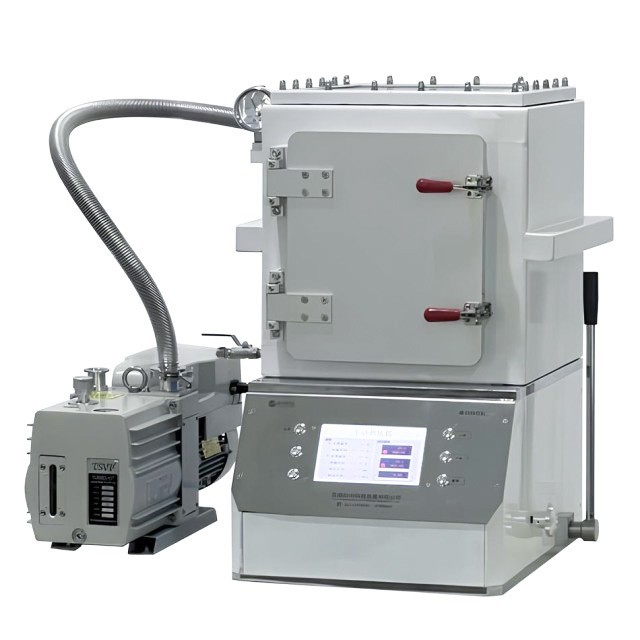
Vacuum Heated Lab Press
Heated Hydraulic Press Machine With Heated Plates For Vacuum Box Laboratory Hot Press
Item Number : PCVM
Price varies based on specs and customizations
- Pressure Range
- 0-10.0 tons
- Heating temperature
- Maximum 500°C
- Vacuum degree
- -0.1MPa

Shipping:
Contact us to get shipping details Enjoy On-time Dispatch Guarantee.
Why Choose Us
Easy ordering process, quality products, and dedicated support for your business success.
Elevate Your Laboratory Sample Preparation with KINTEK's Heated Vacuum Lab Press
Are you looking to achieve consistently high-quality pressed pills and powders in your laboratory? KINTEK's Lab Heated Press with Integrated Vacuum Box is engineered for precision, ensuring your samples are processed under optimal conditions. This specialized equipment is indispensable for laboratories where sample integrity, uniformity, and the elimination of environmental contaminants are critical.
By providing a controlled vacuum environment, our press effectively eliminates air pockets and minimizes oxidation or degradation. This means you get a more uniform, consistent end product, crucial for reliable research and material analysis. Whether you're working with sensitive materials or require the utmost precision, this press is designed to meet your demanding laboratory needs.
Ready to improve your sample pressing? Discuss your application with a KINTEK expert today!
Unlock Superior Results: Key Features & Benefits
Our Heated Vacuum Lab Press is packed with features designed to deliver tangible benefits to your laboratory workflow:
- Enhanced Sample Quality & Consistency:
- The integrated vacuum box is the standout feature, creating a controlled environment that eliminates air pockets for a more uniform end product.
- Minimize oxidation and degradation of sensitive samples by pressing in a vacuum.
- Precision Control for Reliable Outcomes:
- Achieve precise and controlled pressing with the high-precision digital pressure gauge (accuracy of 0.01MPa).
- Utilize programmable pressure settings; the hydraulic system automatically re-pressurizes if pressure drops below your set value, ensuring consistent application.
- Designed for Durability & Ease of Use:
- Robust Construction: Features a chrome-plated cylinder for a smooth, rust-resistant surface and excellent sealing to prevent oil leakage. The one-piece main board structure (integrating main board, oil pool, and oil cylinder) eliminates seal connections for enhanced durability and longevity.
- High-Quality Mold: Constructed from Japanese high-speed steel, known for its high hardness, ensuring a long service life and resistance to deformation.
- Portability: Its compact and lightweight design allows for easy transportation and placement within your laboratory.
- Easy Maintenance: The externally located oil pool simplifies oil replacement, and the hydraulic oil circuit includes a filtration device for straightforward upkeep.
Detailed View & Intuitive Controls
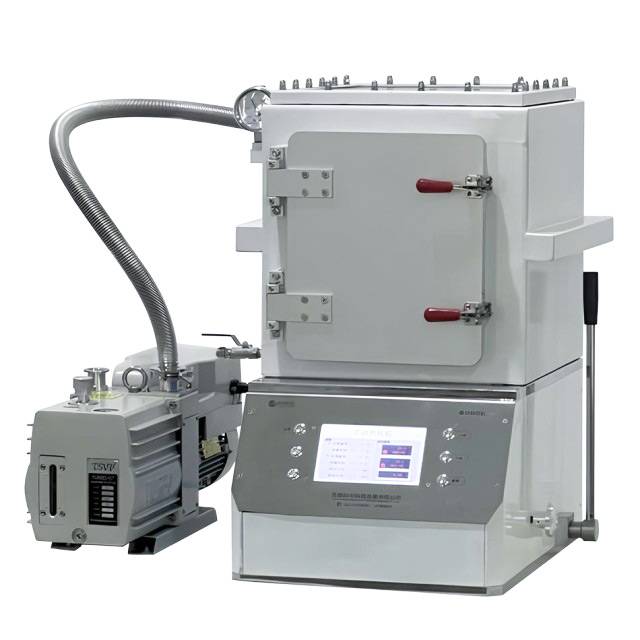
The user-friendly interface provides straightforward control over your pressing parameters:
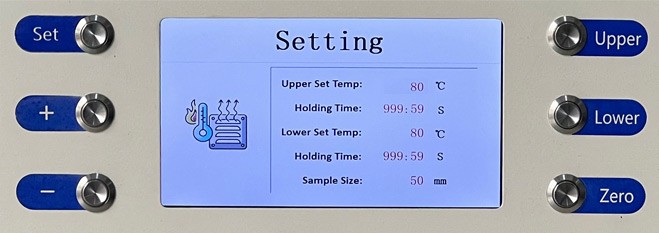
- Set: Access the settings interface to adjust parameters like mold diameter. Setting time to "0" enables continuous operation.
- +: Increase numerical settings.
- - : Decrease numerical settings.
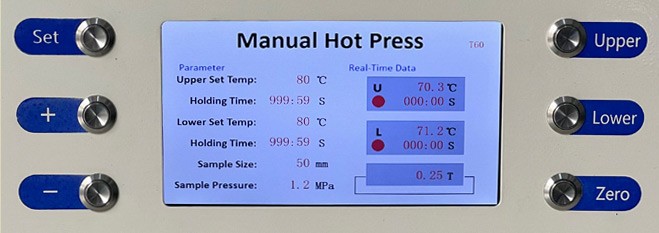
- Upper/Lower Plate Heating: Independently control the heating of the upper and lower plates. Heating stops automatically after the set time or can be manually stopped. Setting buttons are inactive during heating.
- Zero: Calibrate the pressure reading to zero, especially useful to tare the weight of the heating plate if no sample is present.
Technical Specifications
| Instrument model | PCVM-10T |
|---|---|
| Pressure Range | 0-10.0 tons |
| Pressurization process | Manual pressurization |
| Heating temperature | Maximum 500°C |
| Heating plate | 180x180mm, 200x200mm (customizable options may be available) |
| Vacuum box material | SUS 304 (stainless steel) |
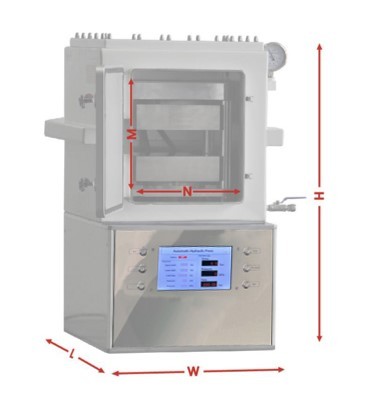
| Studio Size | 400x400x400mm |
| Door size | 300x350mm |
| Vacuum degree | -0.1MPa |
| Dimensions (LxWxH) | 450x550x850mm |
| Power supply | 220V 50Hz (110V option available) |
Simple Operation Steps for Efficient Use
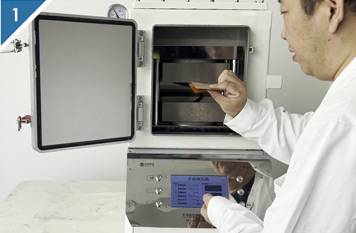
Step 1: Place the sample onto the heating plate.
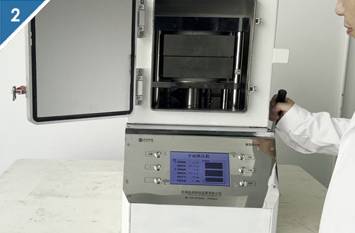
Step 2: Pre-press the sample, close the door, and initiate vacuuming.
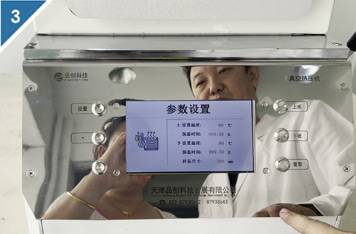
Step 3: Set the desired heating temperature and insulation time.
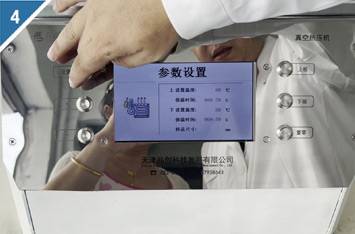
Step 4: Confirm settings and return to the main operation interface.
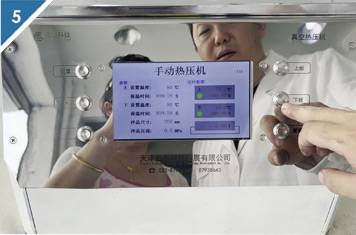
Step 5: On the operation interface, press the up and down plate buttons to begin heating.
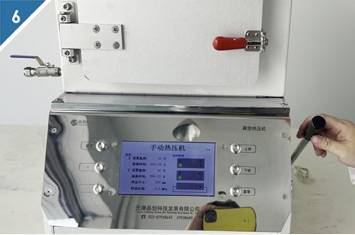
Step 6: Once the set temperature is reached, begin pressurization.
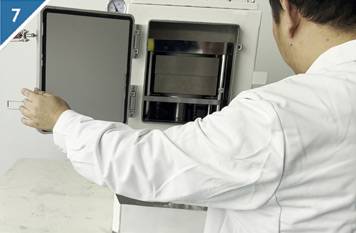
Step 7: After pressurization is complete, release the vent valve and open the compartment door.
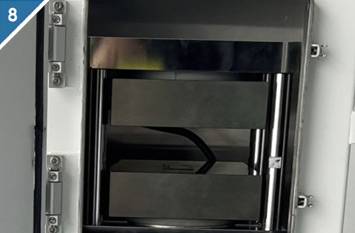
Step 8: Carefully remove the sample.
Partner with KINTEK for Your Lab Press Needs
At KINTEK, we specialize in providing high-quality lab press machines, including automatic lab presses, lab isostatic presses, and heated lab presses, to meet diverse laboratory requirements. Our commitment is to equip your lab with reliable and efficient solutions.
Ready to enhance your laboratory's capabilities? For a personalized quote, to discuss customization options, or to learn more about how our Heated Vacuum Lab Press can benefit your specific applications, please contact us today via our contact form. Our team of experts is ready to assist you!
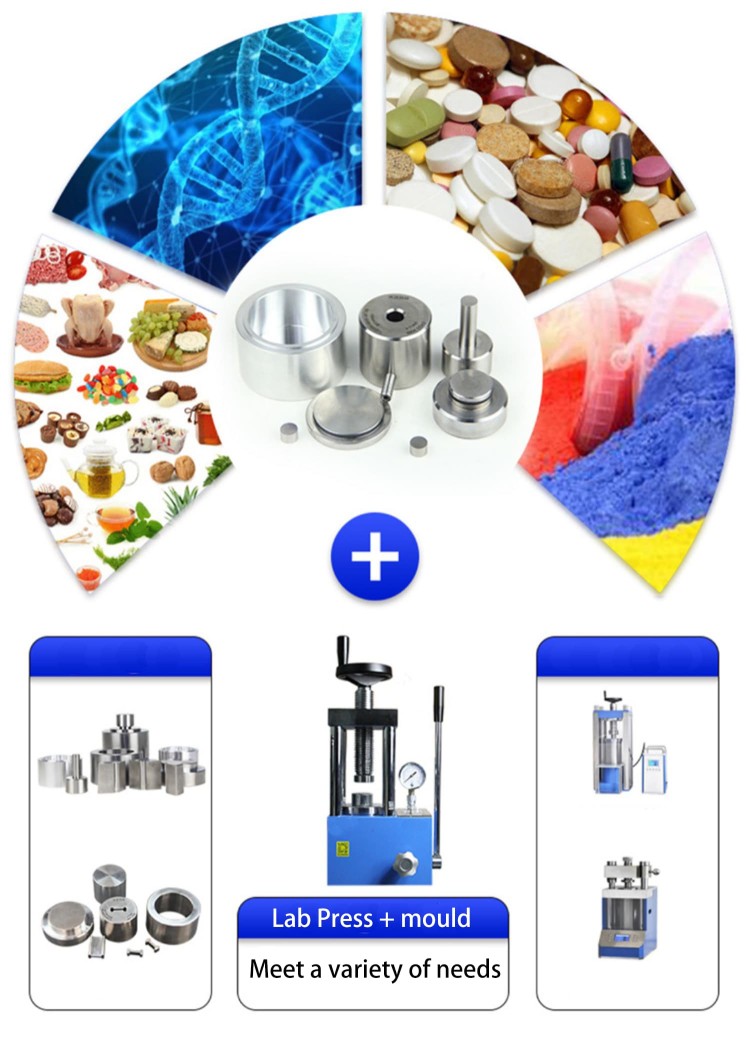
Full range of types of laboratory press molds
We have a full range of molds for you to choose from, and the molds fit the body perfectly.
If you need molds with special shapes, we can also customize them for you.
The Right Lab Press Awaits
Expert Advice? We're Here. Get in Touch!
Trusted by Industry Leaders

FAQ
What Is The Principle Of A Heated Hydraulic Press?
What Is A Laboratory Hot Press Machine Used For?
What Is A Laboratory Hydraulic Press Used For?
What Are The Main Applications Of Press Molds In Laboratories?
What Are The Advantages Of Using A Heated Hydraulic Press?
What Are The Key Features Of A Laboratory Hot Press Machine?
What Are The Main Features Of A Laboratory Hydraulic Press?
What Types Of Press Molds Are Available For Laboratory Use?
What Are The Common Applications Of A Heated Hydraulic Press?
What Are The Main Components Of A Laboratory Hot Press Machine?
How Does A Laboratory Hydraulic Press Work?
What Are The Key Features Of Laboratory Press Molds?
What Features Should I Look For In A Heated Hydraulic Press?
How Does A Laboratory Hot Press Machine Work?
What Are The Advantages Of Using A Laboratory Hydraulic Press?
What Materials Are Commonly Used To Make Press Molds?
How Does A Heated Hydraulic Press Differ From A Standard Hydraulic Press?
What Are The Advantages Of Using A Laboratory Hot Press Machine?
What Types Of Laboratory Hydraulic Presses Are Available?
What Are The Advantages Of Using Press Molds In Laboratories?
Why Is A Laboratory Hydraulic Press Ideal For Sample Preparation In Spectroscopy?
Can Press Molds Be Customized For Specific Laboratory Needs?
What Safety Features Are Included In Laboratory Hydraulic Presses?
How Do Press Molds Ensure High-precision Sample Preparation?
Can Laboratory Hydraulic Presses Be Used For High-temperature Applications?
What Are The Benefits Of Using Heated Press Molds?
How Do Press Molds Contribute To Efficient Laboratory Workflows?
What Should I Consider When Choosing A Press Mold For My Laboratory?
REQUEST A QUOTE
Our professional team will reply to you within one business day. Please feel free to contact us!
Related Products

Heated Hydraulic Press Machine with Heated Plates for Vacuum Box Laboratory Hot Press
KINTEK Heated Hydraulic Lab Press with Vacuum Box ensures precise sample preparation. Compact, durable, and featuring digital pressure control for superior results.

Automatic High Temperature Heated Hydraulic Press Machine with Heated Plates for Lab
KINTEK High Temperature Hot Press: Precision sintering & material processing for labs. Achieve extreme temperatures & consistent results. Custom solutions available.

Automatic Heated Hydraulic Press Machine with Hot Plates for Laboratory
KINTEK Automatic Lab Heat Press: Precision heating, programmable control, and rapid cooling for efficient sample preparation. Enhance lab productivity today!

24T 30T 60T Heated Hydraulic Lab Press Machine with Hot Plates for Laboratory
High-quality hydraulic lab presses for precise sample preparation. Choose automatic or heated models for material research, pharmacy, and more. Get a quote now!

Laboratory Split Manual Heated Hydraulic Press Machine with Hot Plates
Boost lab efficiency with KINTEK's heated lab presses—precise temperature control, durable design, and rapid cooling for consistent results. Explore now!

Lab Heat Press Special Mold
Precision KINTEK lab press molds for reliable sample prep. Durable, customizable, and ideal for diverse research needs. Enhance your lab's efficiency today!

Manual Heated Hydraulic Lab Press with Integrated Hot Plates Hydraulic Press Machine
KINTEK's precision lab presses offer efficient, high-temperature sample prep for material research, pharmacy, and ceramics. Explore models now!

Automatic Heated Hydraulic Press Machine with Heated Plates for Laboratory
KINTEK Automatic Heated Hydraulic Lab Press: Precision heating, uniform pressure, and automated control for superior sample processing. Ideal for labs and research. Contact us today!

Cylindrical Lab Electric Heating Press Mold for Laboratory Use
KINTEK's Cylindrical Electric Heating Press Mold offers rapid heating (up to 500°C), precise control, and customizable sizes for lab sample preparation. Ideal for battery, ceramic, and material research.

Laboratory Manual Heated Hydraulic Press Machine with Hot Plates
KINTEK's Manual Hot Press delivers precise material processing with controlled heat and pressure. Ideal for labs needing reliable bonds and high-quality samples. Contact us today!

Split Automatic Heated Hydraulic Press Machine with Heated Plates
KINTEK Split Automatic Heated Lab Press: Precision hydraulic press with 300°C heating for efficient sample preparation. Ideal for research labs.

Laboratory Hydraulic Press 2T Lab Pellet Press for KBR FTIR
KINTEK 2T Lab Hydraulic Press for precise FTIR sample prep, durable KBr pellet creation, and versatile material testing. Ideal for research labs.

Warm Isostatic Press for Solid State Battery Research Warm Isostatic Press
KINTEK Warm Isostatic Press (WIP) for precision lamination in semiconductors & solid-state batteries. ASME-certified, 50-100°C control, high-pressure capabilities. Enhance material performance now!

Laboratory Hydraulic Press Lab Pellet Press Machine for Glove Box
Precision lab press for glove boxes: Compact, leak-proof design with digital pressure control. Ideal for inert atmosphere material processing. Explore now!

Automatic Laboratory Hydraulic Press Lab Pellet Press Machine
Upgrade your lab with KINTEK's Automatic Lab Press – precision, efficiency, and versatility for superior sample preparation. Explore models now!

Manual Laboratory Hydraulic Pellet Press Lab Hydraulic Press
Boost lab efficiency with KINTEK's precision hydraulic presses—compact, leak-proof, and ideal for spectroscopy. Custom solutions available.

Laboratory Hydraulic Press Lab Pellet Press Button Battery Press
KINTEK Lab Press Machines: Precision hydraulic presses for material research, pharmacy, and electronics. Compact, durable, and low maintenance. Get expert advice today!

Laboratory Hydraulic Pellet Press for XRF KBR FTIR Lab Press
KINTEK Lab Press Machines: Precision hydraulic presses for sample prep. Automatic, heated, and isostatic models for research labs. Get expert advice now!

Automatic Laboratory Hydraulic Press for XRF and KBR Pellet Pressing
KinTek XRF Pellet Press: Automated sample prep for precise XRF/IR analysis. High-quality pellets, programmable pressure, durable design. Boost lab efficiency today!

Manual Laboratory Hydraulic Press Lab Pellet Press
KINTEK's Protective Manual Lab Hydraulic Press ensures safe, precise sample preparation with durable construction, versatile applications, and advanced safety features. Ideal for labs.
Related Articles
The Architecture of Slow: Why Physical Precision Dictates Chemical Destiny
In fertilizer research, the chemical formula is only half the story. Discover why heated hydraulic presses are the essential tools for standardizing nutrient release kinetics.
The Alchemy of 160°C: Why Precision Pressing is the Silent Backbone of Rubber Science
Explore the systemic importance of heated hydraulic presses in rubber vulcanization, balancing thermal energy and mechanical force to ensure material integrity.
The Architecture of Certainty: Why the Laboratory Press is the Anchor of Material Science
Explore how precision heated hydraulic presses eliminate variables in rubber and pigment testing, transforming raw mixtures into standardized, data-ready specimens.
The Vanishing Boundary: The Hidden Thermodynamics of LTCC Lamination
Explore the critical role of heated hydraulic presses in LTCC fabrication, where thermoplastic flow and molecular diffusion turn layered tapes into monolithic green bodies.
The Invisible Forge: Why the Laboratory Press is the Soul of Nano-Composites
Discover how laboratory heated hydraulic presses drive chemical cross-linking and physical densification in nano-composites through precise thermal and mechanical control.
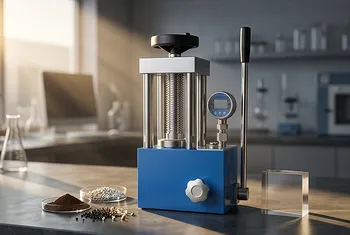
The Lens of Pressure: Engineering Truth from Recycled Waste
Explore how the heated press acts as a vital bridge in materials science, transforming rHDPE and coffee ground composites into standardized samples for microscopic clarity.
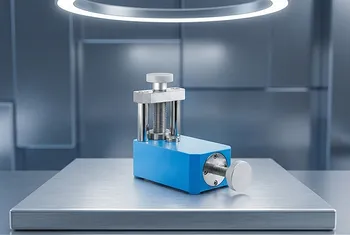
The Geometry of Precision: Mastering the Thermal-Pressure Field in APPC Fabrication
Discover how high-precision heated presses achieve full impregnation and structural uniformity in All-Polypropylene Composites through controlled thermal-pressure fields.
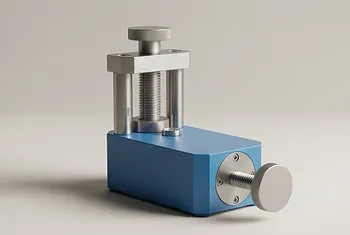
The Physics of Transparency: Why Pressure is the Silent Architect of Spectroscopic Clarity
Explore the critical role of laboratory hydraulic presses in FT-IR spectroscopy for Copper(II) complexes and how high-pressure molding eliminates light scattering for high-resolution data.
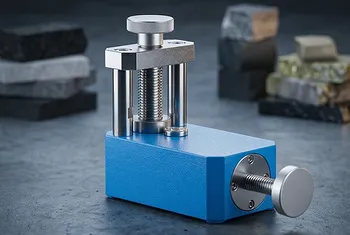
The Architecture of Density: Why Pressure is the Silent Architect of Solid-State Batteries
Explore how laboratory hydraulic presses transform sulfide powders into high-performance solid electrolytes by overcoming grain boundary resistance and porosity.
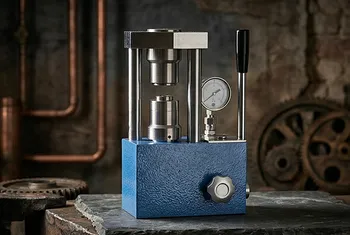
The Invisible Architect: Engineering Structural Harmony with the Heated Press
Discover how heated presses manage the critical interplay of heat and pressure to eliminate voids and optimize fiber-to-resin ratios in flax-epoxy composites.
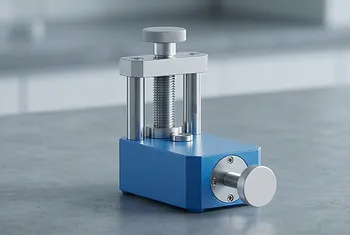
The Architecture of Pressure: Engineering the Transformation of Structural Composites
Explore the critical role of heated laboratory presses in OSL production, balancing thermal energy and mechanical force to forge high-performance materials.
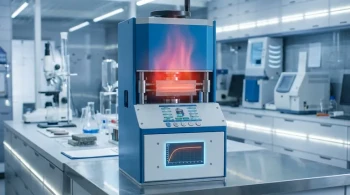
Precision's Edge: The Physics and Psychology of Temperature Control in Laboratory Presses
Mastering thermal control in a lab press is about managing the delicate interplay of heating, holding, and cooling to eliminate uncertainty.