The Hidden Logic of Material Success
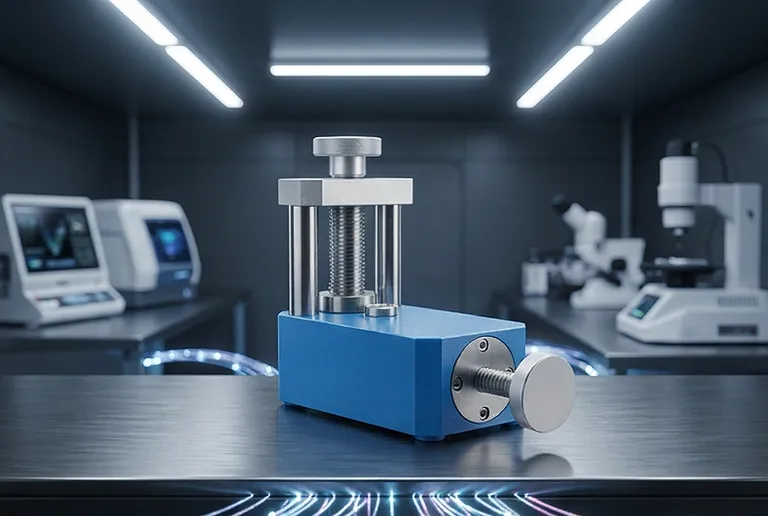
In surgery, the difference between a successful graft and a failure often comes down to the microscopic interface where biology meets suture. In materials science, particularly with nano-composite particleboards, that interface is governed by a machine often overlooked for its simplicity: the laboratory heated hydraulic press.
We tend to focus on the "nano" ingredients—the metal oxides and the advanced resins. But a recipe is not a meal. Without the precise application of thermal energy and mechanical force, these advanced components remain a loose, uncooperative mixture.
The laboratory press is the "invisible forge" that translates chemical potential into structural reality.
The Thermodynamics of the Core
Most material failures begin in the center. In traditional pressing, the surface of a board cures quickly while the core remains a "cold spot," leading to structural weakness.
Accelerating the Chemical Handshake
Between 150°C and 180°C, a transformation occurs. Urea-formaldehyde resin begins to polymerize. The laboratory press provides the stable environment required for these liquid chains to lock into a rigid solid matrix.
The Nanoparticle Shortcut
This is where the engineering gets romantic. By integrating metal oxide nanoparticles with high thermal conductivity, we aren't just adding strength; we are building an internal "heat highway."
These particles allow the press’s energy to penetrate the core faster, ensuring the center reaches the curing threshold before the surface becomes over-cured and brittle.
Eliminating the Void
Density is the physical manifestation of discipline. A material with internal pores is a material waiting to fail.
Plastic Flow and Densification
When you apply 4 MPa of pressure, you are doing more than squeezing. You are inducing "plastic flow." The resin, softened by heat, begins to behave like a fluid, migrating into the microscopic gaps between fibers.
The Isotropic Goal
The laboratory press uses uniaxial pressure. This is critical for researchers because it avoids the lateral stretching that creates "grain" or orientation. It produces a dense, isotropic sheet—a blank slate where properties are uniform in every direction.
| Pressing Factor | Influence on Nano-Composite | Key Performance Metric |
|---|---|---|
| Thermal Energy | Initiates resin cross-linking | Internal Bond Strength |
| Mechanical Pressure | Drives plastic flow/densification | Modulus of Elasticity (MOE) |
| Nanoparticles | Enhances core heat transfer | Thermal Stability/Uniformity |
| Controlled Cooling | Relieves internal molecular stress | Dimensional Precision |
The Psychology of Dimensional Stability
Why do some boards swell and warp while others remain defiant against moisture? It is rarely the wood; it is the quality of the bond.
Thickness swelling is the "memory" of a poorly pressed board trying to return to its loose state. A high-performance press locks the nanoparticles within the polymer chains through intercalation.
Once locked, the structure becomes hydrophobic and dimensionally stable. The modulus of elasticity (MOE) rises not just because the material is "harder," but because it is more systemic.
The Risk of the Gradient
Precision is the antidote to the "temperature lag." If the press is not calibrated, you create a density gradient—a board that is hard on the outside but soft in the middle.
Similarly, the cooling phase is as vital as the heating phase. Rapid cooling introduces internal stress, much like a sudden temperature change cracks glass. A controlled, pressure-holding cooling cycle ensures the composite reaches equilibrium before it ever leaves the platens.
Engineering the Future of Composites

The transition from a laboratory experiment to an industrial standard requires equipment that eliminates variables. Whether you are aiming for maximum structural strength or exploring the frontiers of battery research with isostatic pressing, the tool is the foundation.
KINTEK specializes in this precision. From manual and automatic heated models to glovebox-compatible and warm isostatic presses, our solutions are designed to give researchers total control over the thermal and mechanical variables that define the next generation of materials.
By mastering the balance of heat and force, you turn a mixture of particles into a high-performance system.
To find the precise pressing solution for your next breakthrough, Contact Our Experts.
Related Products
- 24T 30T 60T Heated Hydraulic Lab Press Machine with Hot Plates for Laboratory
- Automatic Heated Hydraulic Press Machine with Hot Plates for Laboratory
- Automatic High Temperature Heated Hydraulic Press Machine with Heated Plates for Lab
- Automatic Heated Hydraulic Press Machine with Heated Plates for Laboratory
- Heated Hydraulic Press Machine with Heated Plates for Vacuum Box Laboratory Hot Press
Related Articles
- The Architecture of Slow: Why Physical Precision Dictates Chemical Destiny
- The Architecture of Density: Why Pressure is the Silent Architect of Solid-State Batteries
- The Physics of Transparency: Why Pressure is the Silent Architect of Spectroscopic Clarity
- The Architecture of Certainty: Why the Laboratory Press is the Anchor of Material Science
- The Vanishing Boundary: The Hidden Thermodynamics of LTCC Lamination



















