KINTEK electrode calendering and rolling presses support the critical post-coating step in lithium-ion battery development, where dried anode and cathode sheets are compacted to achieve the target thickness, density, porosity, and surface quality. Our range includes compact manual vertical rolling mills, electric two-roll mills in multiple working widths, independently heated laboratory calenders, hydraulic balanced presses, dual-servo horizontal systems, high-precision electrode calendering machines, and continuous roll-to-roll equipment with unwind/rewind handling. These systems give research teams and pilot lines practical control over electrode compaction while also serving sheet rolling and densification work in metals, ceramics, functional films, and other advanced materials.
Toggle Categories
Get Instant Support
Choose your preferred way to connect with our team
Response Time
Within 8 hours on working days, 24 hours on holidays
Electrode Calendering / Rolling Presses
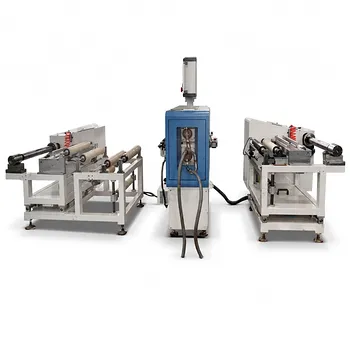
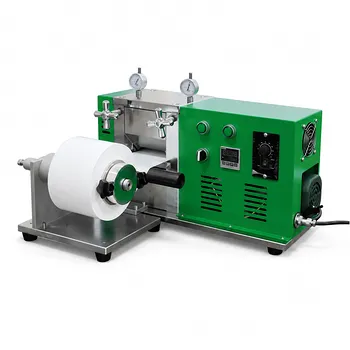
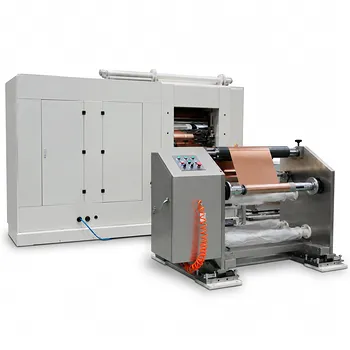
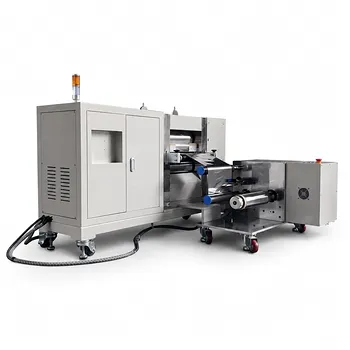
200mm Roll to Roll Film Unwinding and Rewinding Machine
Item Number: DG03
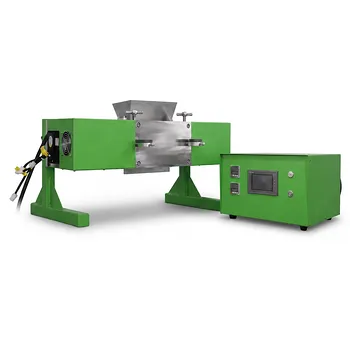
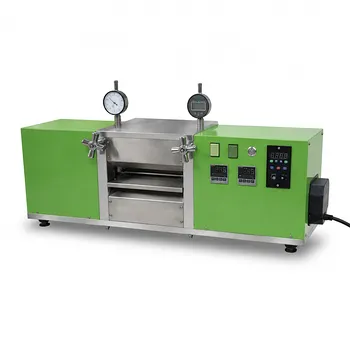
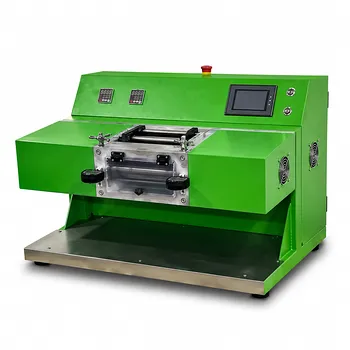
Laboratory Heated Horizontal Double Roll Machine with Dual Servo Motors
Item Number: DG06
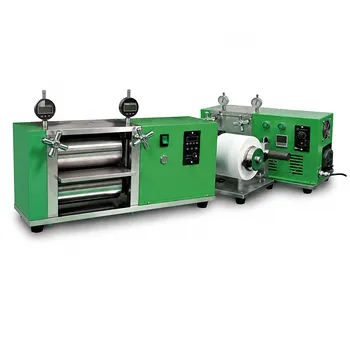
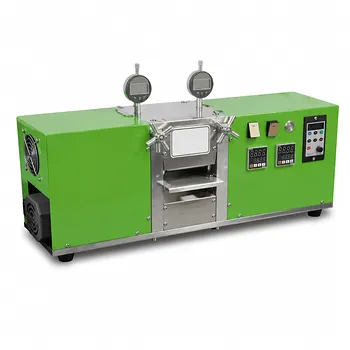
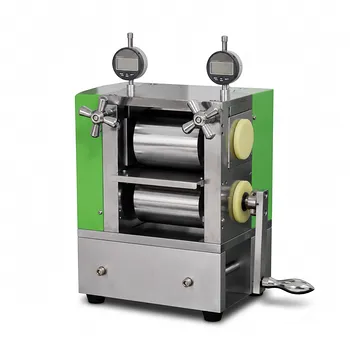
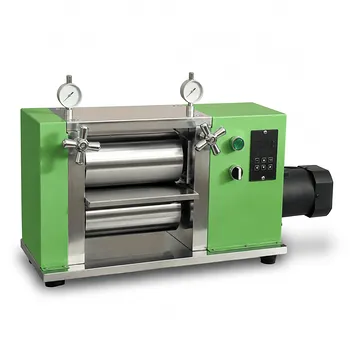
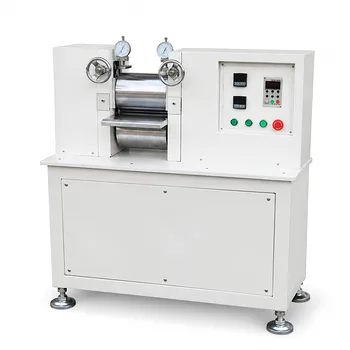
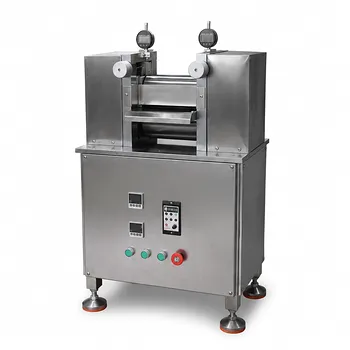
Laboratory Electric Vertical Two Roll Mill 100mm 200mm 300mm Width
Item Number: DG05
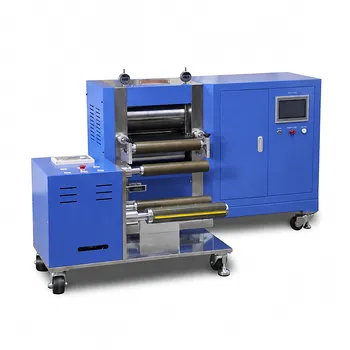
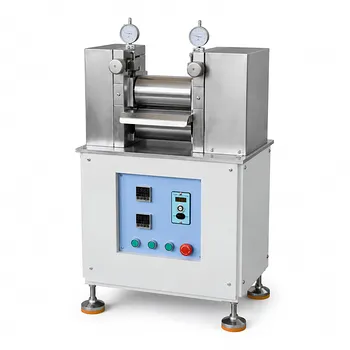
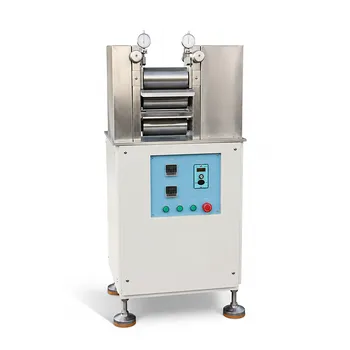
High Precision Lithium Battery Electrode Sheet Calendering Machine
Item Number: DG17
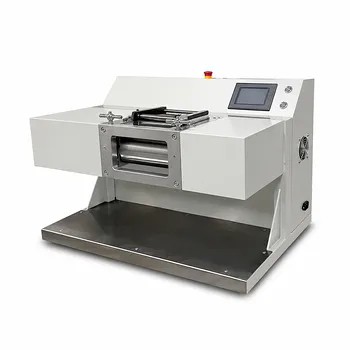
Integrated Dual Servo Heated Horizontal Rolling Press Calender Machine
Item Number: DG18
Precision Electrode Calendering for Better Cell Performance
Electrode calendering is one of the most consequential process steps between coating and cell assembly. After the active-material slurry has been coated onto a current collector and dried, the porous electrode structure must be compacted in a controlled way. The purpose is not simply to make the sheet thinner. A properly selected rolling press helps establish the balance among coating thickness, areal loading, electrode density, pore volume, adhesion, conductivity, flexibility, and electrolyte accessibility that determines whether a promising material can become a reliable cell.
KINTEK supplies laboratory and pilot-scale electrode calendering / rolling presses for teams developing lithium-ion, sodium-ion, solid-state, and other electrochemical energy-storage technologies. The category spans manual, electric, heated, hydraulic, servo-controlled, and continuous roll-to-roll configurations, allowing customers to match the machine to their material behavior, web format, throughput requirement, and process-development stage. Whether the goal is early-stage screening of a few coated coupons, process optimization for pouch-cell electrodes, or continuous handling of a functional-material web, the right calender provides a repeatable route from coated sheet to a denser, more uniform electrode.
Why Calendering Matters in Electrode Manufacturing
A coated electrode contains active material, conductive additives, polymeric binder, and an interconnected pore network. Drying removes solvent, but it does not automatically create the desired internal structure. In many cases, the dried coating has excess void volume, incomplete particle-to-particle contact, uneven thickness, and variable contact with the metal current collector. Passing the electrode through a controlled nip between two rollers applies line pressure across the moving sheet and reshapes that microstructure.
The rolling action can reduce voids between particles and increase the number and quality of electronic contact points. Better particle contact supports a more continuous conductive network through the active layer, while improved contact between the coating and the current collector can reduce interfacial resistance. The resulting increase in compaction density is important when pursuing higher volumetric energy density, particularly where cell dimensions are constrained.
At the same time, electrode compaction must be optimized rather than maximized. An electrode that is rolled too lightly may retain unnecessary porosity and electrical resistance. An electrode that is excessively densified can restrict electrolyte penetration, reduce ionic transport, damage the coating, promote particle fracture, or weaken long-term cycling behavior. The useful process window depends on the chemistry, particle morphology, binder system, conductive-carbon content, coating weight, current collector, and intended cell format. KINTEK rolling presses provide the controllable mechanical and thermal variables needed to establish that window experimentally.
Continuous Line Pressure Versus Flat Pressing
A calender differs from a conventional flat plate press because it compacts material continuously through the line contact created by two rotating rolls. This approach is well suited to coated electrode sheets and other flexible webs. Instead of processing one stationary area at a time, the material travels through the nip, which supports more consistent treatment along its length and a more efficient workflow for continuous samples.
The key process variables are the roller gap, applied force or line pressure, rolling speed, roll temperature, and web tension where continuous handling is used. Together, these settings influence final thickness, density distribution, surface finish, and coating integrity. Adjusting the gap creates a direct route to thickness control. Pressure determines the intensity of compaction. Speed affects residence time in the nip and must be considered alongside pressure and temperature. Heated rolls can soften or activate binder-containing electrodes and improve processing consistency for selected material systems. In roll-to-roll configurations, stable tension and web alignment help prevent wrinkling, skewing, stretching, and nonuniform handling.
Compared with flat pressing, roller calendering can offer more uniform thickness control over long electrode sheets and a process format that more closely represents manufacturing practice. It is especially valuable for researchers who need to translate promising lab formulations into scalable process parameters without losing visibility into the conditions that affect electrode quality.
Laboratory Rolling Press Options for Different Workflows
KINTEK's category includes several equipment formats because electrode development does not follow a single scale or operating method.
Manual vertical double-roller mills are practical for early research, material comparison, and small-batch trials. A manual laboratory rolling press with 100 mm rollers provides direct, hands-on control for compacting small electrode sheets, with an adjustable rolling gap and a working width suitable for typical research samples. This type of machine is useful when frequent formulation changes and simple experimental setups matter more than automation. It can also support controlled rolling of thin nonferrous and precious-metal sheets.
Electric vertical two-roll mills add motorized, repeatable rolling for laboratories that need better control of speed and higher test consistency. Available working widths include 100 mm, 200 mm, and 300 mm formats, enabling users to select a suitable width for coin-cell coupons, pouch-cell electrode strips, and wider development samples. Reversible operation can assist with setup and multi-pass studies, while durable, hard chromium-plated roll surfaces support stable processing of coated electrode sheets and compatible materials.
Heated electric rolling presses combine temperature control with adjustable gap and speed. Models with 100 mm, 150 x 200 mm, 100 x 200 mm, and 200 x 300 mm working formats address a broad range of laboratory electrode sizes. Independently controlled roll temperatures, available on relevant models, allow operators to tune thermal conditions at each roll. This is useful when studying binder response, coating deformation, sheet smoothness, and densification behavior under defined thermal conditions. Certain models provide temperatures up to 200 C, adjustable gaps, and controlled pressure capabilities for research-scale processing.
Hydraulic and balanced electric two-roll mills are designed for applications requiring greater compaction force and stronger control over load uniformity. Hydraulic assistance provides a robust way to apply pressure to dense or demanding electrode coatings. Balanced designs, precise gap adjustment, and monitored force data support repeatable cathode and anode processing. PLC and HMI control on applicable systems can help teams document settings, reproduce runs, and build process knowledge across operators and batches.
Dual-servo heated horizontal rolling mills are intended for higher-control laboratory and pilot development. Dual servo motors support accurate speed regulation, while horizontal layouts can suit convenient sample feeding and continuous sheet processing. Integrated systems with independently adjustable roll temperatures, reversible electric operation, PLC control, and hard chromium-plated rollers help researchers investigate how pressure, speed, heat, and pass sequence interact. These capabilities are particularly relevant when moving from formulation screening toward defined calendering recipes.
High-precision electrode sheet calendering machines support demanding development and production-oriented workflows. Equipment in this class can provide controlled compaction, accurate roll-gap adjustment, web-tension handling, and high line-pressure capability. Such control is valuable for electrode sheets where density uniformity and tight thickness tolerance are essential to reliable downstream cutting, stacking, winding, electrolyte filling, and cell testing.
Roll-to-roll calendering, unwinding, and rewinding systems help bridge the gap between isolated sheet trials and continuous-web processing. Heated roll-to-roll presses support continuous electrode calendering with adjustable gap, digital temperature regulation, and web handling. Dedicated unwind/rewind devices can provide servo tension control, optical web guiding, and split structures for accurate movement of battery electrodes, optical films, and functional materials. A 200 mm roll-to-roll unwinding and rewinding machine offers controlled tension and continuous handling for compatible web widths and core formats. These systems are relevant when the objective is to understand tension-sensitive behavior, improve process continuity, or evaluate a material under a workflow closer to pilot manufacturing.
Control the Parameters That Shape Electrode Quality
Successful calendering begins with a clear definition of the desired final electrode. Teams may target a specific thickness to fit a cell design, a density range to balance energy and power, or a porosity level that supports electrolyte wetting and ion transport. The rolling press becomes the tool used to translate these performance requirements into controllable process conditions.
Roll gap and final thickness: The roller gap is central to thickness reduction and should be set with the coated substrate, coating compressibility, and desired final thickness in mind. It is common to use staged passes rather than attempting a large thickness reduction in one pass, especially for brittle, thick, highly loaded, or mechanically sensitive coatings. A controlled sequence can reduce the risk of cracking, edge damage, delamination, and excessive density gradients.
Applied pressure and compaction density: Greater pressure generally produces a denser electrode, but the relationship is material-specific and nonlinear. The same nominal setting can produce different results depending on coating formulation, age, moisture condition, temperature, substrate thickness, and roller geometry. Hydraulic, balanced, and high-precision systems are beneficial where force repeatability is a major experimental variable. Measuring final thickness and calculating density after each trial helps convert machine settings into an actionable process map.
Rolling speed: Speed changes the duration and dynamics of contact in the roller nip. It affects productivity, coating deformation, heating response, and the amount of mechanical work applied in a pass. Variable-speed control helps teams compare conditions systematically, rather than treating calendering as a fixed finishing operation. When scale-up is planned, speed studies can also reveal whether a formulation remains processable under more production-relevant conditions.
Roll temperature: Heated rollers are useful for electrode systems whose binder or polymer phase benefits from carefully managed thermal energy during compaction. Appropriate heating may improve surface uniformity and enable smoother density development. However, temperature should be selected based on the thermal stability of the active material, binder, current collector, and any residual processing components. Independent temperature control for each roll provides additional flexibility for research programs investigating asymmetric thermal conditions or sensitive laminated structures.
Web tension and alignment: In continuous processing, tension should be stable enough to maintain web tracking without distorting the electrode. Unwind/rewind equipment, guided web paths, and servo tension control help maintain orderly transport through the process. Proper alignment matters because a web that enters the rolls at an angle can produce uneven edges, wrinkles, thickness variation, and handling losses. Tension control becomes increasingly important as material width, roll length, and processing speed increase.
Benefits for Battery Research and Pilot Development
For battery laboratories, an electrode rolling press is not only a compaction machine. It is a process-development instrument that connects electrode formulation to measurable cell behavior. By adjusting calendering conditions in a controlled way, researchers can study how electrode structure influences first-cycle capacity, rate capability, internal resistance, cycling stability, and mechanical robustness.
Reducing excess pore volume can improve volumetric energy density and strengthen the electronic pathway through the electrode. Better compaction can also reduce ohmic resistance by increasing contact among particles and between the coating and the current collector. For material systems that have undergone specialized processing, including densification approaches associated with rapid thermal or Joule-heating studies, high-pressure rolling can help refine internal porosity and reinforce the electronic conduction network. This may contribute to improved resistance to crack propagation and more stable performance under demanding charge-discharge conditions.
The practical value is equally important. A uniform, well-calendered electrode is easier to cut, stack, wind, and assemble. Consistent thickness improves dimensional control from sample to sample. Repeatable density makes it easier to compare materials fairly and identify whether a change in cell performance originates from the active material, the formulation, or the manufacturing process. When data quality matters, controlled calendering reduces a major source of experimental variability.
For solid-state battery development, compaction deserves particular attention because low porosity and intimate interfacial contact can be central to achieving high volumetric energy density. The appropriate process remains chemistry-dependent, but controllable line pressure, roll gap, temperature, and speed give researchers a meaningful framework for investigating dense electrode architectures. KINTEK systems can support this work from small-scale samples through wider continuous-web trials.
Beyond Lithium Battery Electrodes
Although battery electrode calendering is the core application for this category, two-roll presses are useful across materials research. The same controlled rolling principle can be applied to nonferrous metals, precious-metal sheets, ceramic and powder-derived tapes, polymer composites, optical films, functional films, and other sheet materials that require thickness adjustment, densification, surface finishing, or continuous handling.
For materials-science laboratories, this versatility can reduce the need for separate dedicated equipment when comparable rolling requirements exist across several projects. A heated rolling mill may be selected for temperature-sensitive sheet processing; a manual machine may suit straightforward coupon work; a hydraulic or servo-controlled system may support more demanding force-control studies; and a roll-to-roll system may be used where continuous web transport and tension management are necessary.
Choosing the Right Electrode Calendering Machine
The most suitable calender depends on the real process requirement, not only the maximum listed force or roll width. Start with the dimensions of the coated electrode and the expected sample volume. Small, intermittent research samples may be well served by a manual or compact electric vertical mill. Teams working with wider pouch-cell electrodes, multiple material variants, or defined repeatability targets may benefit from a heated motorized system with controlled speed and gap adjustment.
Next, consider whether heat is necessary. For some coatings, room-temperature rolling is appropriate. For others, heated rolls can provide a more useful processing window. Where heat is needed, independent control of the two rolls may be important for the experiment. Consider pressure requirements alongside coating hardness and target density. A high-force hydraulic solution is appropriate where dense electrodes or aggressive compaction programs require reliable force application, while a precision calender with tension handling is better suited to continuous, tightly controlled electrode-sheet work.
Finally, consider the transition from batch samples to web processing. A roll-to-roll press or a coordinated unwind/rewind unit is particularly valuable when tension, tracking, continuous speed, and reel-to-reel material movement must be evaluated. Selecting equipment with room for process growth can help a laboratory build transferable manufacturing knowledge without prematurely moving to a full production line.
Build a Repeatable Calendering Process With KINTEK
KINTEK combines laboratory equipment expertise with an understanding of the full battery fabrication workflow, including slurry mixing, coating, pressing, cell assembly, and testing. This broader perspective matters because rolling-press selection should account for upstream coating quality and downstream assembly requirements. We can help customers identify an appropriate machine configuration based on electrode width, current collector, target thickness, pressure range, heating needs, speed control, automation level, and continuous-web requirements.
Our equipment portfolio includes practical manual units for research, electrically driven and heated systems for repeatable development, hydraulic and servo-controlled solutions for demanding compaction, and roll-to-roll equipment for continuous material handling. For specialized applications, KINTEK can discuss customizable solutions that align the working width, roller dimensions, heating arrangement, control configuration, tension-handling approach, and other relevant specifications with your process objectives.
To discuss a battery electrode calendering press, laboratory roller press, heated two-roll mill, or roll-to-roll electrode handling system for your project, contact KINTEK through our inquiry form. Share your electrode dimensions, chemistry, coating thickness, target density or porosity, preferred temperature range, and expected throughput, and our technical team will help define a professional, application-focused solution for your laboratory or pilot line.
REQUEST A QUOTE
Our professional team will reply to you within one business day. Please feel free to contact us!