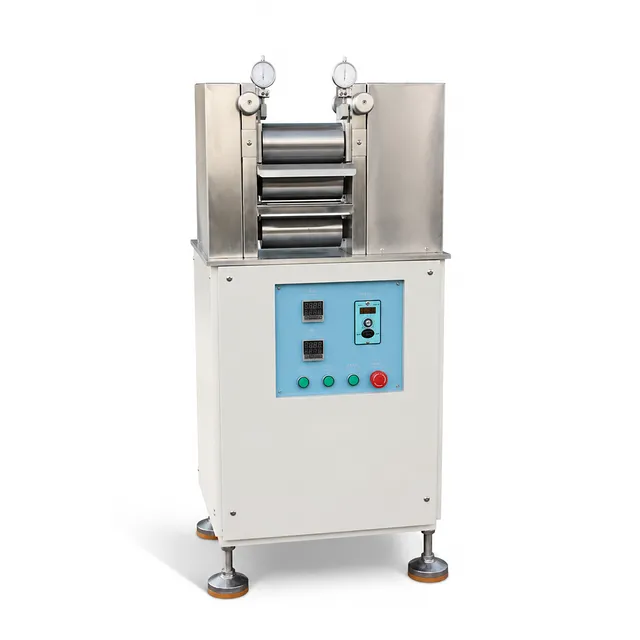
Electrode Calendering / Rolling Presses
200x300mm Laboratory Heated Calender Battery Electrode Roll Press Electrode Sheet Roll Press
Item Number : DG12
Price varies based on specs and customizations
- Maximum Pressure
- 15T
- Effective Gap
- 0-4mm adjustable
- Working Width
- Maximum 300mm

Shipping:
Contact us to get shipping details Enjoy On-time Dispatch Guarantee.
Why Choose Us
Easy ordering process, quality products, and dedicated support for your business success.
Product Overview
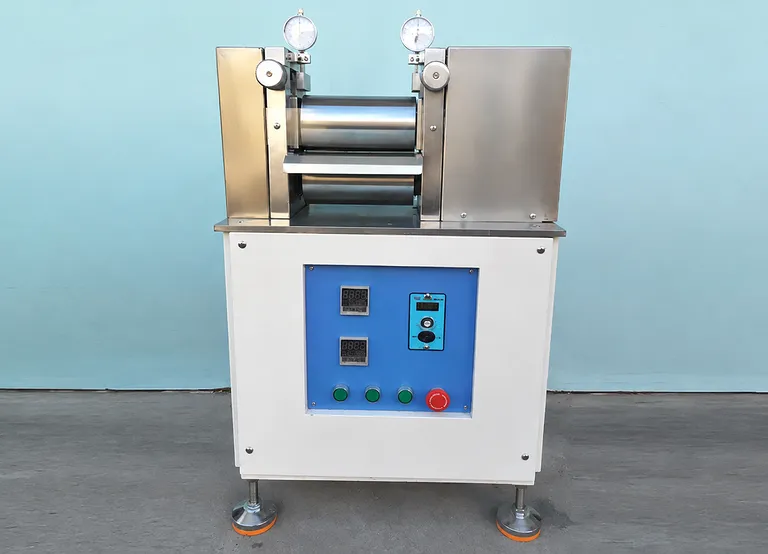
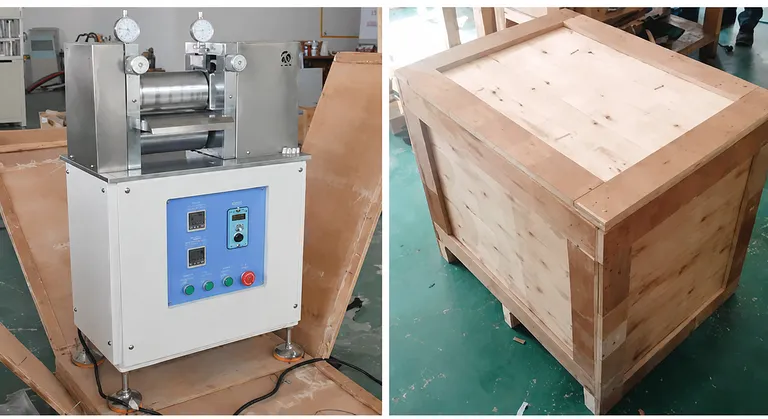
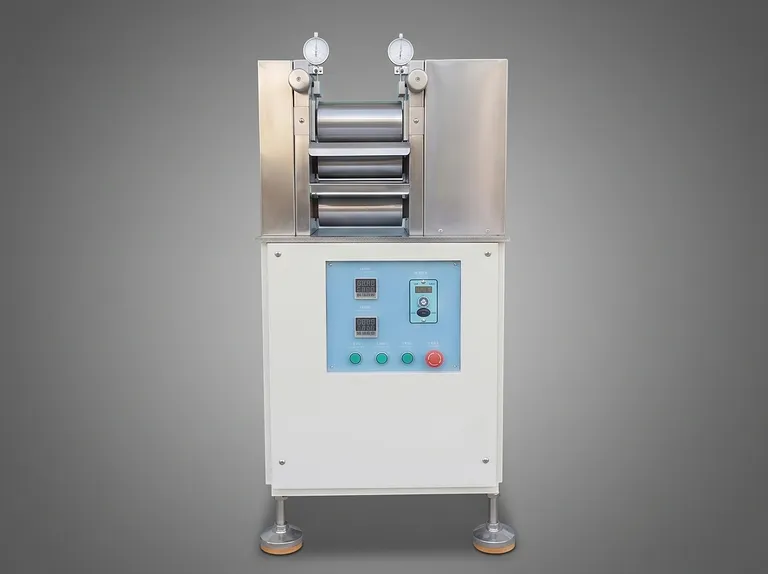
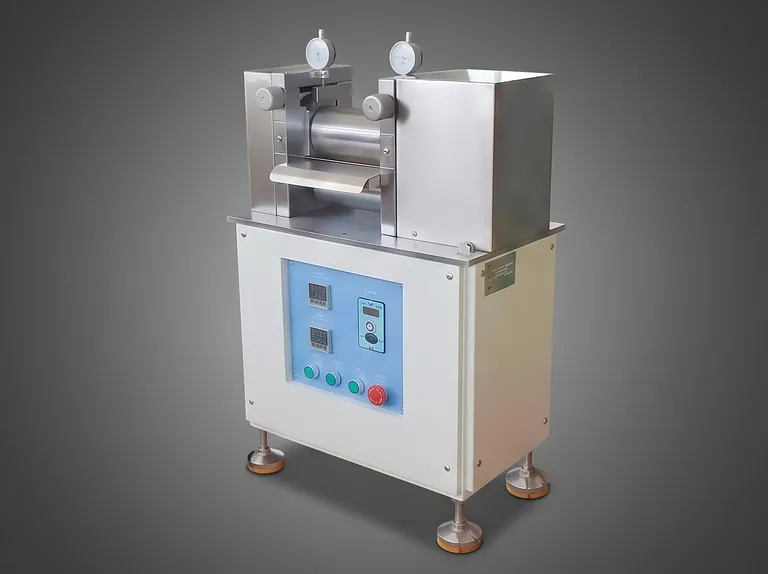
This heated roll press is designed for small-scale lithium battery electrode calendering, providing controlled compression to reduce electrode thickness and increase compact density. A reduction motor drives high-hardness pressure rolls, while mechanical adjustment of the roll gap lets operators set the forming clearance for the material under process. The equipment combines heated rolling, adjustable line speed, and substantial pressing force for laboratory work that requires repeatable mechanical densification.
The system is suited to university laboratories and enterprise trial lines working with clean-energy materials. Primary applications include lithium battery electrode plate thinning and densification, as well as manual rolling of small quantities of gold, silver, copper, aluminum, and other nonferrous materials. Its 300 mm maximum working width supports electrode-sheet development and material studies where roll contact, gap setting, and temperature are important process variables.
Built around hardened rolls with specified cylindrical accuracy, this unit is intended for demanding research use where uniform compression matters. Independent temperature control for the two rolls provides a practical way to set the thermal condition of each rolling surface. Adjustable clearance and stepless speed control give technical teams direct control of the main parameters affecting thickness reduction, density development, and rolling behavior.
Key Features
-
Heated Dual-Roll Processing: The two pressure rolls can be temperature controlled independently and adjusted as required, with a stated roll temperature of 150°C. This configuration supports thermal rolling studies where heat is used alongside mechanical compression.
-
300 mm Working Width: A maximum working width of 300 mm accommodates laboratory-scale battery electrode sheets and small metal stock. The roll dimensions of Φ200 mm × 300 mm provide a substantial contact surface for controlled sheet processing.
-
Adjustable Roll Clearance: The effective gap is mechanically adjustable from 0-4 mm. Operators can set the clearance to suit material thickness and the intended degree of compression without changing the fundamental rolling arrangement.
-
High Pressure Capability: Maximum pressure is specified at 15T, giving the equipment the force capability required for electrode compaction and thickness reduction. This is a key consideration for materials teams seeking to increase electrode compact density through calendering.
-
Stepless Variable Speed: Line speed is continuously adjustable from 0-4.0 m/min. The variable-speed arrangement enables operators to select a rolling rate appropriate to the material, heating condition, and research procedure.
-
Hard, Deep-Hardened Roll Surface: The roll face has HRC62 hardness and a stated quench depth of 10 mm. These characteristics are important for a pressure-contact component used in repeated laboratory rolling operations.
-
Precision Roll Geometry: Roll cylindrical accuracy is specified as ≤±2 μm. This controlled geometry supports consistent roll engagement across the working width, an important factor when evaluating calendered electrode sheets and thin material samples.
-
Reduction-Motor Drive Principle: A reduction motor drives the high-hardness pressure rolls, while the gap is adjusted mechanically. The direct, understandable operating principle gives laboratory users practical control over the rolling process and its principal settings.
-
Research-Oriented Material Versatility: Beyond lithium battery electrode plates, the equipment is intended for manual rolling of limited quantities of precious metals and nonferrous materials, including gold, silver, copper, and aluminum. This extends its relevance across battery research and materials-development laboratories.
Applications
| Application | Description | Key Benefit |
|---|---|---|
| Lithium-ion battery electrode densification | Calender cathode or anode electrode sheets after coating to reduce thickness and increase compact density. | Adjustable 0-4 mm roll clearance and up to 15T pressure support controlled electrode compaction. |
| Battery electrode plate thinning | Process clean-energy material electrode plates where a thinner sheet profile is required during laboratory development. | Heated rolls and adjustable line speed provide controllable rolling conditions. |
| University battery research | Support small-scale electrode-sheet experiments in university laboratories studying material density, thickness, and rolling response. | A 300 mm maximum working width fits laboratory-scale sheet development. |
| Enterprise pilot-line trials | Use in enterprise experimental lines for evaluating electrode rolling parameters before broader process decisions. | Stepless 0-4.0 m/min line speed allows practical parameter adjustment during trials. |
| Precious-metal manual rolling | Roll small quantities of gold or silver material for laboratory research and manual sample processing. | Heated dual-roll operation and mechanically adjustable clearance suit small-batch rolling work. |
| Copper and aluminum material studies | Process copper, aluminum, and other nonferrous materials in research-focused rolling evaluations. | HRC62 roll-face hardness and a 10 mm quench depth support repeated pressure-contact operation. |
| Advanced materials compression studies | Examine how applied pressure, roll temperature, gap, and line speed affect sheet materials during laboratory calendering. | Independently controllable roll temperatures isolate an important thermal process variable. |
Technical Specifications
| Parameter | Specification |
|---|---|
| Site-facing identifier | DG12 |
| Referenced application | Small lithium battery electrode-sheet rolling process |
| Referenced user environment | University and enterprise experimental lines |
| Referenced material uses | Laboratory battery materials; small quantities of gold and silver precious metals; copper, aluminum, and other nonferrous materials |
| Referenced battery process purpose | Lithium battery electrode plate thinning and compact-density increase |
| Working principle | A reduction motor drives high-hardness pressure rolls; mechanical adjustment of the roll gap compresses and forms the electrode sheet to increase compact density |
| Power | 380V、6KW |
| Electrical supply stated in overview | Single-phase 220V power supply |
| Roll temperature | 150°C |
| Two-roll temperature control | The temperatures of the two rolls can be independently controlled and adjusted as required |
| Pressure roll dimensions | Φ200mm×300mm |
| Roll-face hardness | HRC62 |
| Roll cylindrical accuracy | ≤±2μm |
| Effective gap | 0-4mm adjustable |
| Working speed | Stepless variable speed; line speed 0-4.0 meters/min adjustable |
| Roll-face finish | Not specified in the reference material |
| Maximum working width | 300mm |
| Roll-face quench depth | 10mm |
| Maximum pressure | 15T |
The supplied reference material contains two electrical statements: the overview identifies a single-phase 220V supply, while the technical parameter list specifies 380V、6KW. Confirm the required electrical configuration for the intended installation before procurement, commissioning, or facility planning.
For process planning, the central adjustable inputs are roll temperature, roll clearance, line speed, and applied pressure. The stated design allows the two rolls to be controlled independently for temperature, while the effective gap is adjusted mechanically. This gives researchers a defined framework for comparing material behavior across different thermal and compression conditions.
The pressure rolls are specified at Φ200 mm × 300 mm, with a maximum working width of 300 mm. For buyers evaluating electrode-sheet format, the relevant distinction is between the physical roll size and the usable processing width. The stated 300 mm width is the limit to assess against the planned electrode-sheet dimensions.
The roll construction data are also significant for laboratory teams that need stable rolling contact. HRC62 roll-face hardness, a 10 mm quench depth, and cylindrical accuracy of ≤±2 μm describe the pressure-roll characteristics supplied for this system. These values should be considered alongside the planned material type, sheet condition, temperature setting, and desired final thickness.
Why Choose This Product
-
Process-relevant control: Independent adjustment of the two roll temperatures, a 0-4 mm effective gap, and stepless 0-4.0 m/min line speed give research teams control over the documented rolling variables.
-
Substantial pressure-roll construction: The specified Φ200 mm × 300 mm rolls, HRC62 roll-face hardness, 10 mm quench depth, and ≤±2 μm cylindrical accuracy establish a technically focused basis for repeated laboratory calendering work.
-
Designed for electrode densification: This unit directly addresses lithium battery electrode plate thinning and compact-density increase, two central objectives in electrode-sheet rolling processes.
-
Useful across material programs: Its stated suitability for battery materials, precious metals, copper, aluminum, and other nonferrous materials makes the equipment relevant to both battery R&D and broader materials research.
-
Suitable for laboratory and trial-line use: The referenced fit for university laboratories and enterprise experimental lines makes it appropriate for teams that need a dedicated small-scale rolling platform for process evaluation.
Contact us for a quote or a custom solution aligned with your material format, electrical configuration, and laboratory rolling requirements.
Trusted by Industry Leaders

REQUEST A QUOTE
Our professional team will reply to you within one business day. Please feel free to contact us!
Related Products
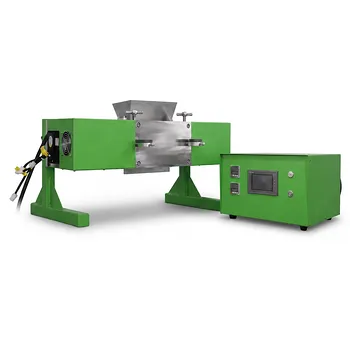
Laboratory Heated Horizontal Double Roll Machine with Dual Servo Motors
Laboratory heated horizontal double roll machine with dual servo motors delivers adjustable thickness, accurate speed control, and digital heating for consistent battery electrode rolling and advanced materials processing in compact research laboratories and pilot scale development environments applications
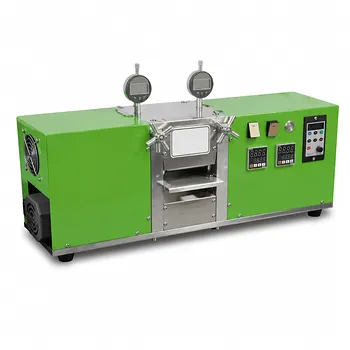
100mm Laboratory Heated Electric Vertical Two Roll Mill Electric Rolling Roller Press
100mm laboratory heated electric vertical two roll mill for precise battery electrode rolling, adjustable thickness, independent temperature control, high hardness rolls, and consistent small batch materials processing for lithium battery nonferrous metal precious metal and advanced materials research applications
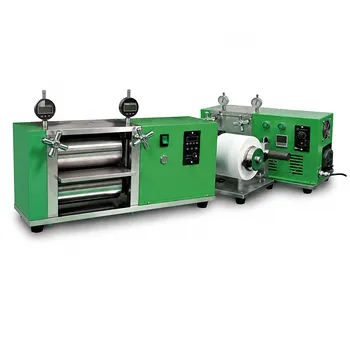
Heated Roll to Roll Roller Press Battery Electrode Two Roll Mill Laboratory Two Roll Mill
Heated laboratory roll to roll roller press for battery electrode calendering and nonferrous materials with adjustable gap independent heating digital temperature control and continuous web handling for repeatable research scale processing and dense electrode development in advanced laboratories
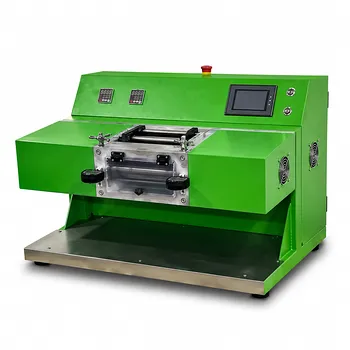
Integrated Dual Servo Heated Horizontal Two Roll Mill for Battery Electrode Calendering
Integrated dual servo heated horizontal two roll mill for battery electrode calendering provides adjustable thickness independent temperature control precise speed regulation reversible electric operation and PLC control with hard chromium plated rollers for consistent laboratory processing and material density control
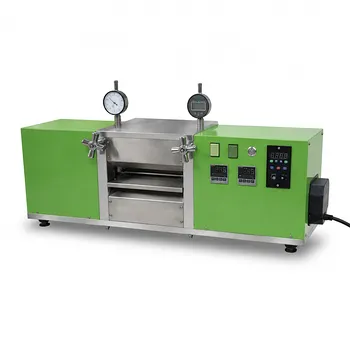
2 96 mm Laboratory Heated Electric Vertical Two Roll Mill Battery Roller Press Electric Rolling Roller Press
Heated electric vertical two roll mill with adjustable gap speed and temperature for precise lithium battery electrode rolling research and advanced materials processing in laboratories with reversible operation durable chrome plated rolls and controlled thickness for consistent electrode
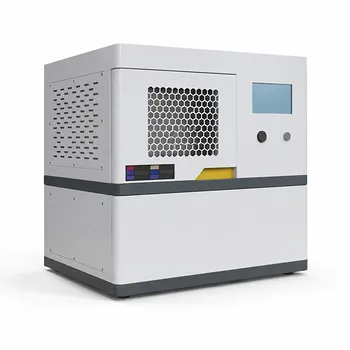
Solid State Battery Research Laboratory Hydraulic Hot Press Machine
Compact benchtop hydraulic hot press machine designed for solid-state battery research, featuring dual-zone independent heating up to 300°C, programmable pressure control with automatic replenishment, and integrated water cooling for rapid cycle times, suitable for electrolyte fabrication and electrode lamination.
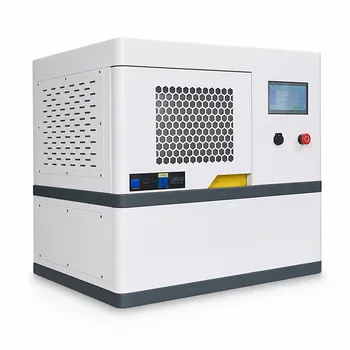
Solid-State Battery Laboratory Hydraulic Hot Press Machine
Precision laboratory hydraulic hot press machine for solid-state battery research; dual-platen independent heating up to 300°C, 30-ton hydraulic pressure with ±1% accuracy and automatic compensation, 7-inch touchscreen control, ideal for hot-pressing solid electrolyte sheets, polymer composites, and membrane electrode assemblies.
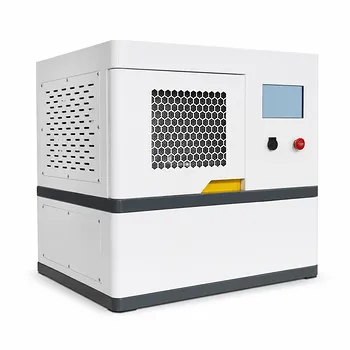
Solid State Battery Research Laboratory Hydraulic Hot Press Machine
Benchtop hydraulic hot press designed for solid-state battery research. Offers dual-platen heating to 500°C, 40-ton pressure with closed-loop control, and a 7-inch touchscreen. Supports electrolyte fabrication, electrode lamination, and polymer molding with safety shields and thermal cut-offs.
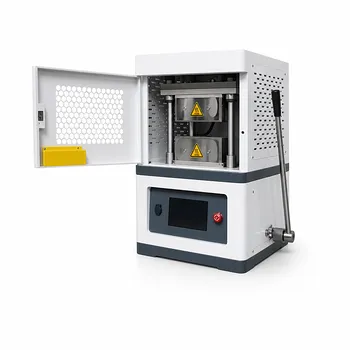
Laboratory Hydraulic Hot Press for Solid State Battery Research with Programmable Controls and Independent Platen Heating
Compact laboratory hydraulic hot press for solid-state battery research featuring programmable pressure and temperature control, independent platen heating up to 300°C, and automated pressure holding Ideal for electrode consolidation and thin film preparation with precise ±0.1 T pressure control accuracy
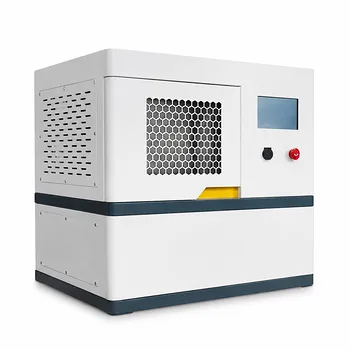
Laboratory Hydraulic Hot Press for Solid-State Battery Research and Manufacturing
This laboratory hydraulic hot press is designed for solid-state battery electrolyte preparation, offering dual-plate heating (up to 300°C), 40-ton force, and programmable pressure cycles with automatic re-pressurization. Ideal for composite lamination, powder compaction, and features a built-in safety interlock.
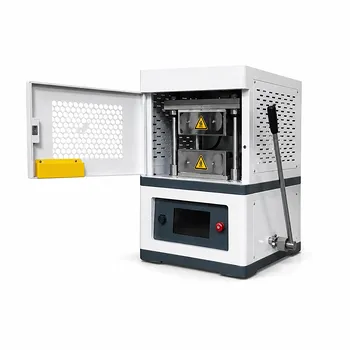
Laboratory Hydraulic Hot Press Machine for Solid-State Battery Research
Compact benchtop laboratory hydraulic hot press machine designed for solid-state battery research, featuring independent dual-platen heating up to 300°C, programmable multi-step temperature and pressure profiles, automated pressure holding, and water cooling for advanced materials processing and battery electrode lamination.
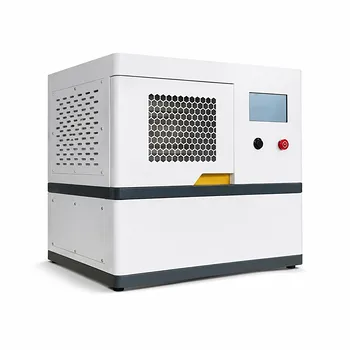
Laboratory Hydraulic Hot Press for Solid-State Battery Electrolytes and Polymer Composites
Explore advanced uniform thermal pressing for solid-state battery electrolytes and polymer composites using a laboratory hydraulic hot press featuring independent dual-platen precise PID temperature control up to 300°C, programmable pressure, and automatic force compensation for reliable consistent results.
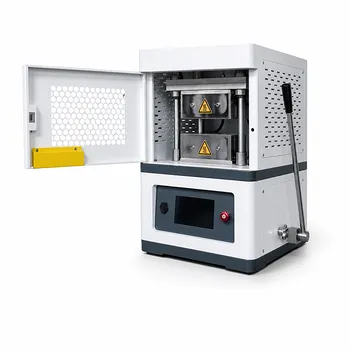
Solid-State Battery Laboratory Hydraulic Hot Press Machine
Ideal for solid-state battery research, this lab hydraulic hot press provides 50-ton pressure, independent dual-platen heating to 500°C, 7-inch touchscreen control, water cooling, customizable options, and ±0.2% pressure accuracy for precise material consolidation and electrode lamination with automatic pressure compensation.
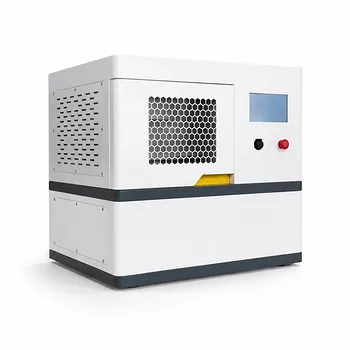
Solid-State Battery Laboratory Hydraulic Hot Press Machine
Precision laboratory hydraulic hot press for solid-state battery research. Features servo-driven 0-4 ton pressure, dual-plate independent heating up to 300°C, active water cooling, and 7-inch touchscreen control. Ideal for electrolyte and electrode fabrication. Ensures oil-free operation for reproducible results.
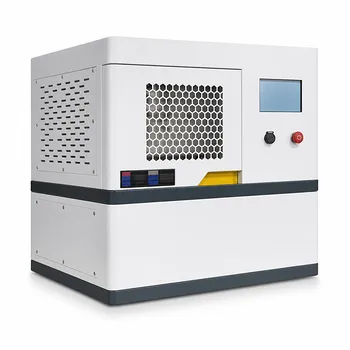
Solid-State Battery Research Laboratory Hydraulic Hot Press Machine
Designed for solid-state battery research, this laboratory hydraulic hot press features servo-driven pressurization up to 2 tons, dual-platen heating up to 300°C, programmable pressure cycles, and a 7-inch touch-screen controller for precise thermal compaction of electrolytes and electrodes.
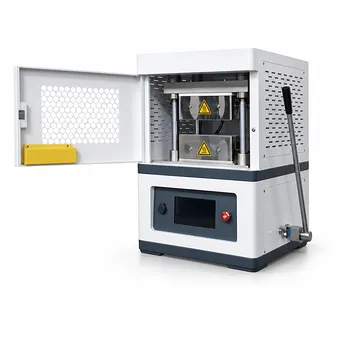
Laboratory Hydraulic Hot Press for Solid-State Battery and Polymer Electrolyte Research
Compact benchtop hydraulic hot press for solid-state battery and polymer electrolyte research with dual-zone heating, automatic pressure compensation, and active cooling system, ensuring uniform temperature up to 300°C and stable load for extended tests with CE certification and safety features.
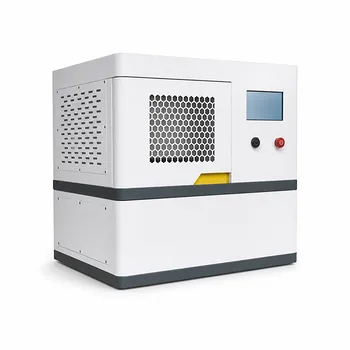
Laboratory Hydraulic Hot Press for Solid-State Battery Research
Discover our compact laboratory hydraulic hot press for solid-state battery research. Achieve precise thermal compaction up to 500°C and 5 tons with automated pressure stabilization and water cooling. Ideal for electrolyte consolidation, electrode lamination, and polymer synthesis in labs.
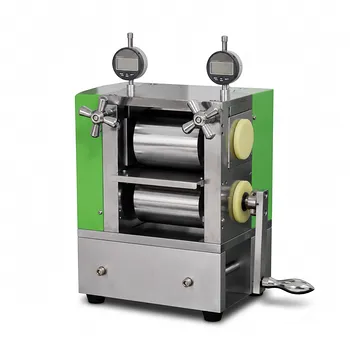
Laboratory Manual Vertical Double Roller Mill Manual Rolling Press with Two 100 mm Rollers
Laboratory manual vertical double roller press with 100 mm rollers, adjustable 0 to 2 mm rolling gap, up to 200 mm sheet width, high hardness chromium plated rollers, and precise battery electrode material rolling for consistent density and repeatable results
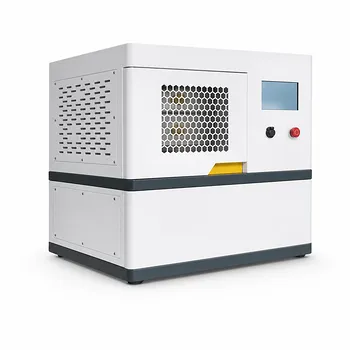
Solid-State Battery Laboratory Electric Hot Press Machine
Compact benchtop electric hot press for solid-state battery research, polymer lamination, and MEA fabrication. Features dual-plate independent heating up to 200°C, programmable pressure up to 1800 kgf. Oil-free electric servo drive ensures clean, high-repeatability pressing, integrated water cooling.
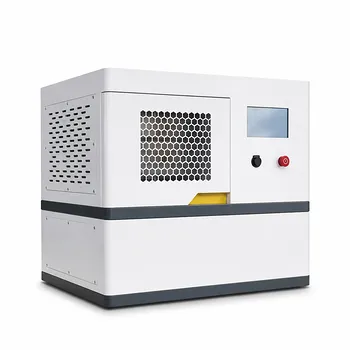
Laboratory Hydraulic Hot Press for Solid-State Battery Research
Compact benchtop hydraulic hot press for solid-state battery research, with dual heated platens, programmable touchscreen, and precise temperature control up to 300°C and 5 tons force. Ideal for electrolyte synthesis and electrode lamination, with automatic pressure holding. CE certified.