Within 8 hours on working days, 24 hours on holidays
Vacuum Heated Lab Press
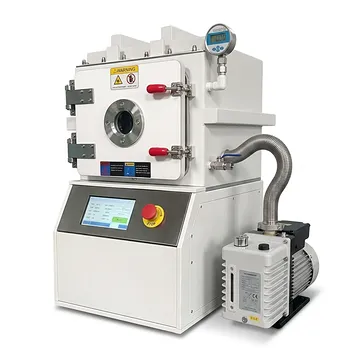
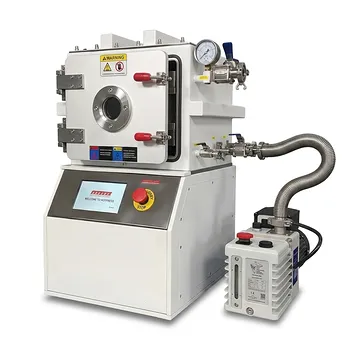
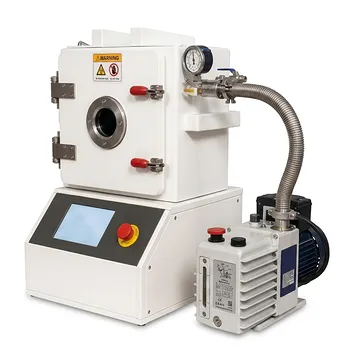
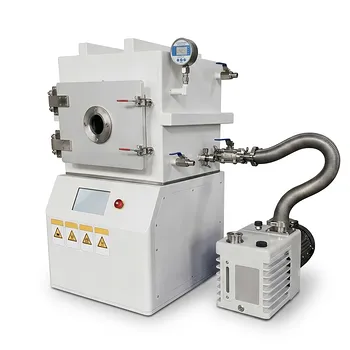
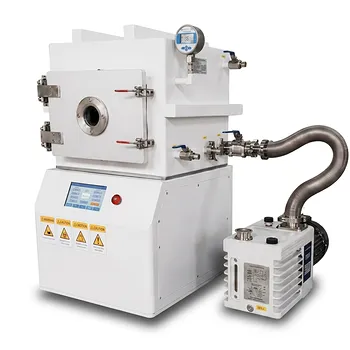
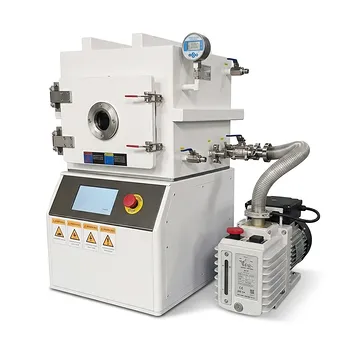
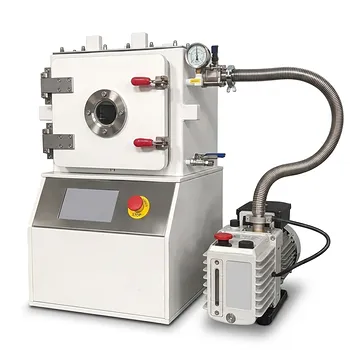
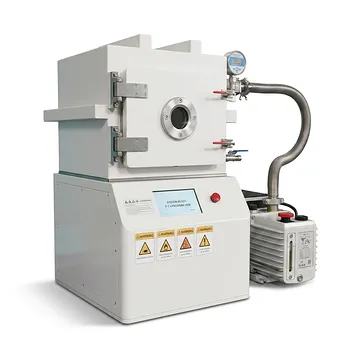
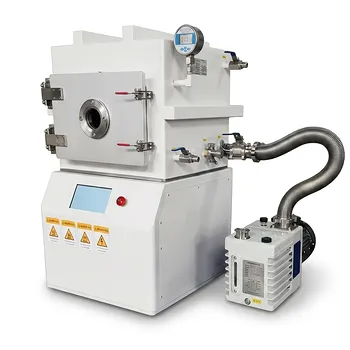
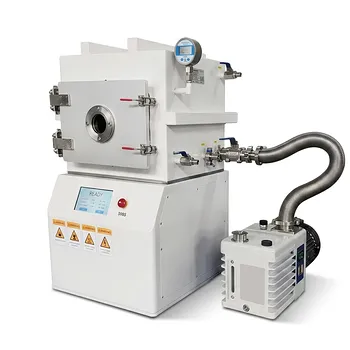
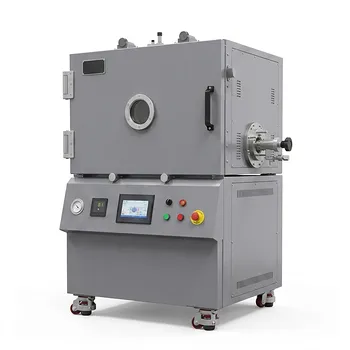
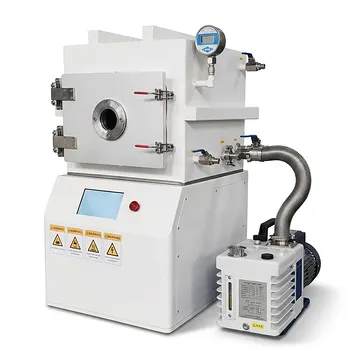
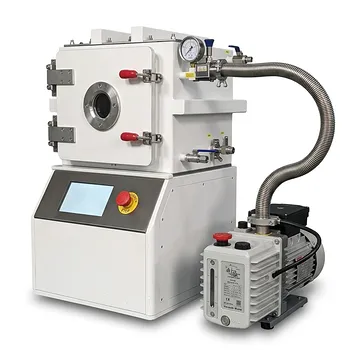
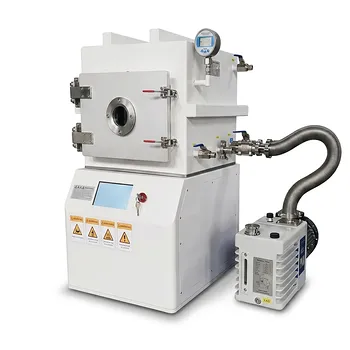
KINTEK vacuum heated lab presses provide a controlled temperature, pressure, and atmosphere platform for battery R&D, polymer and composite lamination, ceramic processing, powder metallurgy, and materials-science sample preparation. Processing under vacuum helps limit oxidation, moisture, and trapped gases while heated platens support uniform consolidation and bonding.
Our range includes compact programmable benchtop systems for routine electrode bonding and film lamination; automatic 10T, 15T, and 25T presses for repeatable research workflows; 30T to 60T systems for higher-load consolidation; large-area 30T, 40T, and 200T platforms; high-vacuum systems for oxygen-sensitive work; and servo-driven, electric, hydraulic, and warm isostatic configurations. Select the chamber size, platen area, temperature range, force, cooling, vacuum level, gas capability, and automation level that suit your process.
Vacuum Heated Lab Presses for Repeatable, Atmosphere-Controlled Materials Processing
A vacuum heated lab press brings together three process variables that strongly influence material quality: heat, force, and atmosphere. It applies programmed pressure through heated platens while the work area is evacuated or, where configured, purged and filled with an inert gas. This controlled environment is valuable whenever air, moisture, entrapped gas, or inconsistent thermal transfer can compromise a sample. In research laboratories and pilot-scale development, it supports reliable preparation of flat samples, dense pellets, bonded layers, laminates, and consolidated powder compacts without requiring a full production-scale press line.
KINTEK designs vacuum hot pressing equipment for battery development and advanced-materials research, while also serving general materials science, powder metallurgy, ceramics, polymers, composites, semiconductors, and academic laboratories. The platform is particularly relevant to teams moving from exploratory formulation toward repeatable process windows. Researchers can define a controlled temperature-pressure-time profile, compare samples under documented conditions, and refine dwell, ramp, pressure, cooling, and atmospheric parameters with greater confidence.
Why Vacuum Changes the Hot-Pressing Result
Conventional heated pressing can provide useful thermal consolidation, but processing in ambient air leaves the material exposed to oxygen, humidity, and gases released during heating. For sensitive electrode structures, reactive powders, polymer layers, adhesives, and interfaces, those conditions may contribute to oxidation, bubbles, voids, weak bonding, or inconsistent density. A vacuum chamber reduces the gas present around the sample and helps remove volatile species generated during the process. Systems with inert-gas connections add another layer of flexibility: the chamber can be evacuated, purged, and backfilled with a suitable protective gas when the process requires it.
The benefit is not simply a cleaner chamber. Lower gas content can improve intimate contact between layers or particles during pressing, helping produce more uniform, lower-porosity structures. Depending on the material system and process recipe, vacuum hot pressing can support improved density, mechanical integrity, electrical behavior, thermal stability, and interfacial quality. It is especially helpful where even small amounts of moisture or oxygen can affect the result, such as solid-state battery materials, electrode laminates, diffusion-bonded assemblies, reactive powders, and high-performance polymer films.
Vacuum processing should still be selected and validated around the specific material. Some formulations require a controlled gas atmosphere rather than deep vacuum, while others may release vapors that call for suitable chamber, pumping, trapping, or exhaust arrangements. KINTEK can help align the chamber configuration and operating method with your sample chemistry, safety requirements, and laboratory infrastructure.
Core Hot-Pressing Principle
The basic vacuum hot-pressing sequence is straightforward, but successful results depend on controlling each stage consistently:
Prepare and load the sample. Material may be placed in a die, a mold, a pouch-cell fixture, or directly between protected platen surfaces. Powder, film, stacked layers, substrates, or bonded components should be prepared with appropriate release materials, spacers, tooling, and alignment features where required.
Evacuate or establish the required atmosphere. The chamber is closed and evacuated. On systems with gas inlets, users can perform purge cycles and introduce an inert atmosphere according to the process requirement.
Set the process recipe. Temperature setpoints, heating rates, force or pressure, press speed, dwell times, and cooling conditions are entered through the controller. Programmable systems enable multi-stage recipes rather than relying on manual timing and adjustment.
Heat and apply force. The platen heating system raises the sample to its target temperature while the hydraulic, electric, or servo-driven press applies controlled load. The order and rate of these actions can be important: some materials benefit from preheating before full compression, while others need pressure during the heating ramp.
Hold at temperature and pressure. During the dwell period, heat improves material mobility, softening, curing, sintering behavior, or interfacial diffusion as appropriate to the sample. Applied pressure consolidates the workpiece and promotes contact across interfaces.
Cool under the intended condition. Pressure can be maintained through part or all of the cooling sequence where the process calls for dimensional stability or bond integrity. Water-cooling options and active cooling help shorten cycle times on compatible systems.
Release and unload safely. Once the workpiece has reached an appropriate temperature and the prescribed process endpoint, force is released, the chamber is returned to the required state, and the sample is removed.
This sequence enables a repeatable path from raw material or layer stack to a processed specimen. The critical detail is that force alone is not a complete process definition. Actual pressure at the sample depends on the applied force and effective pressing area, and the final material response also depends on the thermal profile, dwell, tooling, atmosphere, material thickness, and cooling method. KINTEK equipment is built to give laboratories practical control over these variables rather than treating hot pressing as a single fixed operation.
Uniform Heating for Better Sample Consistency
Heated platens are central to a successful press cycle. Flat heating elements are designed to deliver stable, even heat across the usable pressing area, supporting more consistent thickness, density, cure state, and bond quality. Uneven heating can create different material behavior between the center and edge of a sample, particularly in films, multilayer laminates, polymer composites, and larger-format sheets. Controlled platen heating helps researchers reduce this source of variation and better correlate output quality with their recipe.
Many KINTEK vacuum heated presses offer precise digital or PID temperature regulation, with configurations reaching up to 500 degrees C and selected systems available in 400 degrees C or 800 degrees C variants. The appropriate temperature range must be chosen for the intended process, tooling, sealing materials, and sample chemistry. A lower-temperature benchtop press may be well suited to electrode bonding, polymer curing, film lamination, and temperature-sensitive assemblies. Higher-temperature capability can be needed for demanding diffusion bonding, ceramic processing, powder consolidation, or advanced material synthesis.
Temperature capability alone is not the only selection criterion. Platen dimensions, heat uniformity, sensor placement, maximum load at temperature, ramp control, insulation, chamber construction, and cooling behavior all affect the usable process window. For a research team developing a new material, the ability to execute repeatable thermal ramps and dwell steps often matters as much as the maximum headline temperature.
Controlled Force From Compact Research to High-Load Consolidation
KINTEK offers vacuum hot presses across a broad force range, from compact 10-ton benchtop systems to 200-ton large-area equipment. This range lets laboratories match the machine to the active pressing area and target pressure rather than oversizing or under-specifying the equipment. Small platen systems are practical for coin-cell-scale components, coupons, pellets, small films, and early-stage formulation work. Larger 200 x 200 mm, 350 x 350 mm, and 400 x 400 mm platforms support bigger laminates, pouch-cell-related work, ceramic sheets, composite panels, and other larger samples.
A press should be evaluated using required sample pressure, not tonnage in isolation. The same force generates substantially different pressure over a small pellet than over a broad sheet. Tooling strength, sample shape, platen area, and the process temperature must also be considered. For instance, high-density powder consolidation may require a different force-and-die strategy from polymer film bonding, even when both use similar chamber temperatures. KINTEK can assist with sizing the press frame, platen format, and tooling approach around your real workpiece dimensions and process target.
Available hydraulic, electric, and servo-driven systems address different laboratory needs. Hydraulic presses provide robust load capability for general hot pressing and higher-force processing. Electric and servo-driven alternatives can offer clean, oil-free actuation and fine control that is attractive for precision materials research. Automatic systems reduce operator-dependent variation by executing programmed stages, while manually operated configurations remain useful for flexible development work and smaller budgets. The right choice depends on required force accuracy, process repeatability, cleanroom or glovebox considerations, throughput, maintenance preferences, and available utilities.
Application Areas
Battery electrode bonding and pouch-cell research. Vacuum heated pressing is widely used to laminate electrode layers, improve contact in stacked structures, process solid-state electrolyte components, and support controlled bonding of battery materials. Vacuum or inert-gas handling helps protect moisture- or oxygen-sensitive materials during critical heating and compaction stages. Compact benchtop presses are useful for iterative R&D; larger-area models support broader electrodes and scale-up studies.
Solid-state batteries and electrolyte consolidation. Dense, uniform electrolyte layers and well-controlled interfaces are important to electrochemical performance. A programmable hot press enables researchers to study the relationship between compaction pressure, temperature, hold time, and material response under a controlled atmosphere. High-force configurations, carefully selected dies, and compatible glovebox workflows can support challenging solid-state material development.
Polymer film production and lamination. Heat and pressure can soften, flow, cure, or bond polymeric materials into films and multilayer structures. Vacuum conditions help minimize air entrapment and bubbles, which is useful for transparent films, functional laminates, adhesive systems, membrane development, and composite layups. Programmable control supports repeatable heat-up, dwell, and cooling sequences for comparing formulations and processing conditions.
Ceramic powder processing. Ceramic powders can be formed into pellets and compacts for characterization, sintering studies, dielectric research, catalyst development, and structural-material investigations. Heated pressing can improve green-body uniformity or enable thermally assisted consolidation. Vacuum conditions can be beneficial where porosity reduction or atmosphere control is important, subject to the chemistry and the selected die system.
Powder metallurgy and dense material compaction. Metal and alloy powders, cermets, and other engineered powders can require high load, controlled heat, and limited exposure to reactive gases. Vacuum hot pressing provides a laboratory platform for studying densification, particle bonding, and microstructural development. Higher-force systems and high-vacuum configurations are available for work demanding more rigorous environmental control.
Diffusion bonding. When compatible materials are held in close contact at elevated temperature and pressure, atomic diffusion across the interface can create a strong joint without conventional filler material. Successful diffusion bonding depends on surface preparation, contact pressure, temperature, time, and atmosphere. High-vacuum hot press systems are suitable for research and process development where oxide control and clean interfaces are particularly important.
Composites, functional materials, and sample preparation. Researchers use heated pressing to make consistent coupons for mechanical, thermal, electrical, and microstructural analysis. Applications include conductive composites, magnetic materials, catalyst pellets, semiconductor-related stacks, membranes, and engineered coatings. Controlled platen pressure and temperature provide a more repeatable alternative to improvised thermal compression methods.
Programmable Recipes Improve Research Reproducibility
A material process is easier to optimize when every cycle can be repeated. KINTEK programmable vacuum hot presses provide recipe-based control for staged temperature-pressure-time processing. A sequence may include an evacuation period, controlled heating ramp, low-pressure pre-consolidation stage, higher-pressure dwell, and cooling stage. This enables users to investigate process changes systematically and preserve conditions for later validation.
For example, a battery laboratory may compare lamination results by holding the same force and dwell time while varying temperature in defined increments. A polymer team may add a lower-pressure venting stage before final compression to reduce trapped air. A ceramic researcher may maintain pressure while cooling through a critical range. These are process examples, not universal recipes; the correct parameters must be established for each material. The value of programmable control is that once a suitable method is developed, it can be executed with less operator variability.
Touchscreen and digital control interfaces also make it easier to monitor setpoints and process progress. Depending on the configuration, systems may include multi-stage programming, independent temperature and pressure control, PLC automation, and P-T-t synchronization. Such features are useful in facilities where multiple users need consistent outcomes or where experimental records need to be traceable to a defined operating procedure.
Vacuum, Inert Gas, and High-Vacuum Options
Not every process needs the same atmosphere. Standard vacuum-box systems are effective for many lamination, bonding, and material-processing tasks. Systems with dual gas inlets or inert-gas capability provide flexibility for purging and protective processing. For applications with more stringent sensitivity to oxygen or moisture, KINTEK also offers high-vacuum configurations, including systems designed with turbomolecular pumping to achieve approximately 6 x 10^-4 Pa where specified.
Atmosphere selection should reflect the actual material behavior and workflow. A lower-cost vacuum solution may be appropriate for routine polymer processing, whereas oxygen-sensitive diffusion bonding or advanced powder research may require higher vacuum performance, more rigorous seals, specialized pumping, and a controlled load/unload procedure. Teams should also consider whether samples are prepared in a glovebox, whether the press must integrate with that workflow, and whether inert-gas consumption, ventilation, or cooling-water infrastructure is available.
The chamber itself matters. Stainless-steel chamber construction, reliable sealing, appropriate feedthroughs, chamber size, platen placement, and viewing or access requirements influence usability. KINTEK can configure an equipment solution around the balance between vacuum level, working volume, sample format, required temperature, and budget, instead of forcing every application into the same chamber design.
Cooling, Safety, and Laboratory Usability
Cooling affects both throughput and sample quality. Natural cooling can be suitable for many research cycles, while water-cooled or active-cooling systems help reduce turnaround time and allow more controlled processing of temperature-sensitive materials. Maintaining pressure during a selected portion of cooling can also be important for certain laminates and bonded structures. The proper cooling approach should be based on the material, die, thickness, thermal mass, and desired final properties.
Laboratory press selection must also account for practical operation. A compact benchtop machine may be the best fit where space is limited and samples are small. Larger floor-standing or high-force systems are appropriate when higher pressure, larger platens, or larger workpieces are required. Automatic models help support repeated test programs; robust closed-loop frames, digital pressure control, safety interlocks, and clear operating procedures support dependable daily use.
Users should establish safe procedures for hot surfaces, stored hydraulic or mechanical energy, vacuum chambers, compressed or inert gases, water connections, and potentially hazardous material off-gassing. Material safety data, local laboratory rules, compatible personal protective equipment, and operator training remain essential. KINTEK equipment can be specified with the controls and safety features appropriate to the intended workflow, but the final operating protocol should always be reviewed for the site and material involved.
Selecting the Right Vacuum Heated Press
Start with the sample rather than the machine. Define the largest workpiece or die, target pressure at the sample, required temperature profile, desired vacuum level, gas requirements, expected cycle frequency, and cooling needs. Then consider how users will interact with the system: Is manual adjustment acceptable? Is multi-step automated processing needed? Must the press fit on a benchtop or operate beside a glovebox? Will the lab process small research coupons today but require larger electrode sheets or panels later?
A practical specification discussion usually includes:
Required pressing force and effective sample or platen area.
Target operating temperature, heating rate, uniformity needs, and dwell duration.
Vacuum performance, pumping arrangement, inert-gas purge or backfill capability, and chamber volume.
Die, mold, release-film, fixture, and sample-alignment requirements.
Cooling method, cooling-water availability, and acceptable cycle time.
Manual, automatic, PLC, touchscreen, or servo-control preferences.
Electrical supply, laboratory footprint, glovebox compatibility, and safety requirements.
Current research scope and the likely need for future process development.
KINTEK's portfolio spans compact 10-ton programmable units, 15-ton and 25-ton automatic systems, 30-ton electric and large-area platforms, 40-ton vacuum presses, 60-ton high-density consolidation solutions, and 200-ton industrial-scale vacuum and inert-gas presses. We also provide specialized high-vacuum and warm isostatic processing options. This breadth helps research groups select a press based on process requirements, not merely on a generic tonnage category.
Work With KINTEK on a Configured Hot-Press Solution
Every material stack, powder formulation, die arrangement, and laboratory workflow has its own constraints. KINTEK combines laboratory press expertise with experience across battery fabrication and advanced materials processing to help define a system that fits the real application. We can advise on press capacity, heated platen size, chamber format, temperature range, vacuum and gas handling, cooling, automation, glovebox compatibility, and suitable custom fixtures or tooling concepts.
Whether you need a compact system for battery electrode bonding, a high-vacuum press for oxygen-sensitive diffusion bonding, a large-area machine for film lamination, or a high-force platform for dense powder consolidation, our team can help translate process goals into a practical equipment specification. Contact KINTEK to discuss your vacuum heated lab press requirements and request a tailored recommendation, technical consultation, or quotation.
FAQ
What Is The Principle Of A Laboratory Isostatic Press?
A laboratory isostatic press applies uniform, equal force over the entire product using fluid (like water or oil) or gas (typically argon) pressure. This ensures uniform modification of materials in all directions, achieving maximum density uniformity. The process can be performed at both high temperatures and room temperature, and it eliminates the constraints of unidirectional compaction found in rigid dies.
What Is An Isostatic Press?
An isostatic press is a device that applies uniform pressure from all directions to a powdered material enclosed in a flexible mold or container, using a liquid or gas medium. This process enhances the material's density, strength, and dimensional accuracy.
What Is A Laboratory Hot Press Machine Used For?
A laboratory hot press machine is primarily used for high-temperature sample pressing tests involving powders, rubber, plastic films, and other solid samples. It can also function as a small vulcanization instrument. It is known for its ease of operation and wide applicability, making it an essential tool for laboratories involved in research and development.
What Is The Principle Of A Heated Hydraulic Press?
A heated hydraulic press operates based on Pascal's principle, which states that pressure applied to a confined fluid is transmitted equally in all directions. In a hydraulic press, pressure from a piston (acting like a pump) generates mechanical force. This force is transferred through hydraulic oil from a smaller cylinder to a larger one, where greater force and pressure are applied.
What Is A Laboratory Hydraulic Press Used For?
A laboratory hydraulic press is used for testing material durability and strength, creating pellets for sample analysis, and various other applications such as sample preparation for spectroscopy, power compaction for composite materials, material testing, prototyping microfluidic devices, and pharmaceutical research and development.
What Are The Main Applications Of Press Molds In Laboratories?
Press molds are widely used in pharmaceutical development for creating uniform tablets, in spectroscopy for sample preparation, in bomb calorimetry for consistent combustion measurement, and in XRF analysis for determining elemental composition. They help in providing standardized samples for accurate testing and analysis across these fields.
What Are The Advantages Of Using A Laboratory Isostatic Press?
The advantages include the ability to create parts with high density and complex shapes, uniform density, high green strength, and freedom from compact defects. It is particularly useful for brittle or fine powders and can produce difficult shapes and large-sized materials. Additionally, it improves corrosion resistance and enhances mechanical properties like ductility and strength.
What Are The Main Types Of Isostatic Presses?
The main types of isostatic presses are Cold Isostatic Pressing (CIP), Warm Isostatic Pressing (WIP), and Hot Isostatic Pressing (HIP). CIP operates at room temperature, WIP at moderate temperatures (50-100°C), and HIP at high temperatures.
What Are The Key Features Of A Laboratory Hot Press Machine?
Key features of a laboratory hot press machine include a titanium indenter for even temperature distribution, adjustable pressure head, digital pressure gauge, and advanced electronic control. It also features a four-column three-plate structure, pulse heating technology, precise temperature control (0.1s sampling), multi-stage temperature rise, real-time temperature display, and safety mechanisms like emergency stop switches and safety doors.
What Are The Advantages Of Using A Heated Hydraulic Press?
Heated hydraulic presses offer several advantages, including the ability to perform thermal curing, bonding, or shaping that standard hydraulic presses cannot achieve. They provide precise control over temperature and pressure, ensuring consistent quality. These presses are versatile, cost-effective, and suitable for both small-scale laboratories and large-scale industrial applications. Additional benefits include consistent pressure application, compact design, ease of use, and repeatability in sample production.
What Are The Main Features Of A Laboratory Hydraulic Press?
The hydraulic system features a closure force of 25 tons, includes a hydraulic balance device for stable and quick movement, and uses well-known electronic components for stability and long-term use.
What Types Of Press Molds Are Available For Laboratory Use?
There are various types of press molds available, including square bidirectional pressure molds, ring press molds, ball press molds, cylindrical press molds, anti-cracking press molds, polygon press molds, and special shape press molds. These molds come in different sizes and materials to suit various laboratory needs.
What Are The Common Applications Of A Laboratory Isostatic Press?
Common applications include producing balls, tubes, rods, nozzles, fuse tubes, grinding wheels, battery electrolytes, spark plug insulators, sewer pipes, crucibles, oxygen sensors, and rocket nose cones. It is also used for consolidating ceramic powders, graphite, refractory materials, and electrical insulators, as well as pressing sputtering targets and coatings for engine valve parts.
How Does An Isostatic Press Work?
An isostatic press works by enclosing powdered material in a flexible mold and applying uniform pressure from all directions using a liquid (like water or oil) or gas (like argon) medium. This eliminates voids and air pockets, resulting in products with high density and uniform strength.
What Are The Main Components Of A Laboratory Hot Press Machine?
The main components of a laboratory hot press machine include: 1) Heating System (heating platens, heating elements, temperature sensors, and insulation materials), 2) Pressing System (hydraulic, pneumatic, or manual systems with upper and lower platens), 3) Control System (temperature controller, pressure controller, timer, and human-machine interface), 4) Frame and Structure (robust metal frame to withstand pressing forces), and 5) Optional Auxiliary Systems (cooling system, vacuum system, atmosphere protection system, and safety guards).
What Are The Common Applications Of A Heated Hydraulic Press?
Heated hydraulic presses are used in a variety of applications such as forging, molding, punching, clinching, powder compacting, concrete compression testing, scrap baling, ceramics manufacturing, and laboratory testing. They are particularly valuable in material testing to evaluate strength, durability, and behavior under high pressure and temperature. These presses are also used for tension testing and to study the effects of high pressure on various substances, aiding in material science and engineering research.
How Does A Laboratory Hydraulic Press Work?
A hydraulic lab press works by using a hydraulic cylinder to apply pressure and a heating system to provide temperature control, enabling the compression or compaction of materials like rubber, polymers, and composites. It operates based on Pascal's principle, which states that pressure change within a closed system is constant.
What Are The Key Features Of Laboratory Press Molds?
Laboratory press molds feature precision-engineered hydraulic systems for consistent performance. Advanced models may include digital pressure displays and programmable settings. They are available in both manual and automated versions, with sizes ranging from compact benchtop units to larger floor-standing presses to accommodate different laboratory spaces and sample sizes.
What Types Of Laboratory Isostatic Presses Are Available?
Types include Lab Isostatic Pressing Molds for Isostatic Molding, Electric Lab Cold Isostatic Press (CIP) Machines, Warm Isostatic Presses for solid-state battery research, Automatic Lab Cold Isostatic Pressing (CIP) Machines, and Electric Split Lab Cold Isostatic Pressing (CIP) Machines. These cater to various research and industrial needs with features like uniform compaction and customizable models.
What Are The Advantages Of Using An Isostatic Press?
Isostatic pressing offers advantages such as the ability to produce parts with high density, complex shapes, and uniform density. It provides high green strength, improved corrosion resistance, and enhanced mechanical properties like ductility and strength. It is especially useful for brittle or fine powders.
How Does A Laboratory Hot Press Machine Work?
A laboratory hot press machine operates by applying positive pressure combined with negative pressure and special adhesives. It features high pressure, low temperature, and short processing times to reduce workpiece deformation. The process involves table feeding, heating, vacuuming, forming, and demolding, driven by oil pressure and compressed air.
What Features Should I Look For In A Heated Hydraulic Press?
Key features to look for in a heated hydraulic press include a robust hydraulic system capable of delivering several tons of closure force, precise pressure gauges and controls for accurate adjustment and monitoring, and heated plates for thermal processes. Additional desirable features may include digital pressure control, programmable settings for temperature and pressure, rapid cooling capabilities, and a durable design suitable for both laboratory and industrial environments.
What Are The Advantages Of Using A Laboratory Hydraulic Press?
Advantages include high force output for heavy-duty tasks, precise control over force and position, versatility for various applications through pressure adjustments, and built-in safety features like pressure relief valves.
What Materials Are Commonly Used To Make Press Molds?
Press molds are typically made from durable materials such as Cr12MoV alloy steel, carbide (e.g., YT15), and hardened steel. These materials are chosen for their high hardness, durability, and resistance to wear and high pressure, ensuring long-lasting performance in laboratory environments.
How Does A Laboratory Isostatic Press Ensure Uniform Density?
The press applies uniform pressure equally across the entire product surface, regardless of its geometric complexity or size. This uniform pressure distribution ensures consistent density throughout the material, which is crucial for achieving high-quality, defect-free components.
What Industries Use Isostatic Presses?
Isostatic presses are used in various industries including pharmaceuticals, explosives manufacturing, chemicals, food production, and nuclear fuel and ferrites production. They are also used for consolidating ceramic powders, graphite, refractory materials, and electrical insulators.
What Are The Advantages Of Using A Laboratory Hot Press Machine?
The advantages of using a laboratory hot press machine include the ability to apply larger pressure at lower temperatures and shorter film pressure times, which reduces the risk of workpiece deformation compared to negative pressure equipment. Hydraulic hot press machines, in particular, offer precise temperature control, rapid heating, and consistent temperature distribution, making them ideal for applications requiring both high pressure and controlled heat, such as in the molding of thermoplastics and composites.
How Does A Heated Hydraulic Press Differ From A Standard Hydraulic Press?
A heated hydraulic press differs from a standard hydraulic press primarily in its ability to apply heat in addition to pressure. This allows for processes like thermal curing, bonding, and shaping that require controlled temperature conditions. The heated plates or chambers enable precise temperature management, making these presses ideal for applications involving sensitive materials or processes that require both high pressure and heat, such as material testing and sample preparation in laboratories.
What Types Of Laboratory Hydraulic Presses Are Available?
There are various types of laboratory hydraulic presses, including manual and automatic models, heated hydraulic presses with hot plates, and specialized presses for glove boxes or vacuum environments. These presses cater to different laboratory needs such as spectroscopy, material research, and pharmaceutical applications.
What Are The Advantages Of Using Press Molds In Laboratories?
Press molds offer several advantages, including quick setting changes and easy switching between different sample types and materials. This flexibility is not typically available in production presses or injection molding machines, which are more cumbersome and time-consuming for such transitions. Additionally, press molds provide high precision and uniformity in sample preparation.
What Are The Applications Of Cold Isostatic Pressing (CIP)?
Cold Isostatic Pressing (CIP) is commonly used for consolidating ceramic powders, graphite, refractory materials, and electrical insulators. It is also expanding into new applications like pressing sputtering targets and coatings for engine valve parts.
Why Is A Laboratory Hydraulic Press Ideal For Sample Preparation In Spectroscopy?
Laboratory hydraulic presses are ideal for spectroscopy sample preparation because they can create precise and uniform pellets, such as KBr pellets for FTIR analysis, ensuring accurate and reproducible results in spectroscopic studies.
Can Press Molds Be Customized For Specific Laboratory Needs?
Yes, many press molds can be customized in terms of size, shape, and material to meet specific laboratory requirements. Customizable options include special shapes, sizes ranging from Φ3-80mm, and materials tailored for specific applications such as XRF analysis, battery research, or material testing.
What Is The Difference Between CIP, WIP, And HIP?
CIP (Cold Isostatic Pressing) operates at room temperature, WIP (Warm Isostatic Pressing) at moderate temperatures (50-100°C), and HIP (Hot Isostatic Pressing) at high temperatures. Each type is suited for different materials and applications, with HIP often used for densifying materials and eliminating porosity.
What Safety Features Are Included In Laboratory Hydraulic Presses?
Laboratory hydraulic presses come with built-in safety features such as pressure relief valves to prevent over-pressurization, ensuring safe operation during high-force applications.
How Do Press Molds Ensure High-precision Sample Preparation?
Press molds ensure high-precision sample preparation through their precision-engineered designs, which provide uniform pressure and consistent compaction. Features such as bidirectional pressure, durable materials, and advanced hydraulic systems contribute to the accuracy and reliability of the samples produced.
Why Is Uniform Density Important In Isostatic Pressing?
Uniform density is important because it ensures consistent material properties throughout the product, such as strength and durability. This uniformity is critical for applications requiring high performance and reliability, such as in aerospace or medical devices.
Can Laboratory Hydraulic Presses Be Used For High-temperature Applications?
Yes, some laboratory hydraulic presses are equipped with heated plates or integrated heating systems, making them suitable for high-temperature applications such as sintering, material processing, and other thermal treatments.
What Are The Benefits Of Using Heated Press Molds?
Heated press molds offer benefits such as rapid heating (up to 500°C), precise temperature control, and the ability to process materials that require heat for compaction or bonding. These molds are ideal for applications in battery research, ceramics, and other materials that need controlled heating during preparation.
How Do Press Molds Contribute To Efficient Laboratory Workflows?
Press molds enhance laboratory efficiency by enabling quick and easy sample preparation with minimal setup time. Their ability to switch between different sample types and materials rapidly, along with features like programmable settings and digital displays, streamlines the workflow and reduces downtime.
What Should I Consider When Choosing A Press Mold For My Laboratory?
When selecting a press mold, consider factors such as the type of samples you will be preparing, the required pressure and temperature ranges, the size and shape of the molds, and the material compatibility. Additionally, evaluate whether manual or automated models better suit your workflow and if any customization options are needed for your specific applications.
REQUEST A QUOTE
Our professional team will reply to you within one business day. Please feel free to contact us!
This website uses cookies to enhance your browsing experience,
analyze site traffic, and serve better user experiences. By continuing to use this site, you consent to our use of
cookies. Learn more in our cookie policy.