
The Illusion of Simplicity
In material science, we often mistake "heating" for "treating."
For decades, the traditional oven has been the workhorse of wood modification. It is simple, accessible, and familiar. You put a specimen in, raise the temperature, and wait for the chemistry to change.
But wood is not a passive medium. It is a complex architecture of cellulose, hemicellulose, and lignin—a biological matrix that resists change. In a standard oven, heat is a blunt instrument. It lacks the "invisible hand" required to truly transform the material's soul.
That invisible hand is Pressure.
The Synergy of Thermo-Mechanical Coupling
The fundamental limitation of an oven is its reliance on pure thermal energy. It relies on slow, atmospheric diffusion.
A laboratory hydraulic pressing system introduces a second dimension: the mechanical field. When heat and pressure are applied simultaneously, we achieve thermo-mechanical coupling.
This is not merely about "squeezing" the material. It is about creating a synchronized environment where physical force and thermal energy work in tandem to overcome the natural resistance of biomass.
Forcing the Chemistry
Consider the challenge of chemical impregnation. In an oven, modifiers like ionic liquids are expected to migrate into fibers on their own. Often, the heat causes these expensive volatiles to evaporate before they can even bond.
A hydraulic press, equipped with custom molds, acts as a physical seal. It creates a high-pressure "reaction chamber" that:
- Drives modifiers deep into the internal layers via mechanical force.
- Restricts evaporation, trapping volatile components until the chemical reaction is complete.
- Ensures retention, resulting in a deeper, more uniform treatment than surface-level oven heating.
Activating Nature's Glue
The "Engineer’s Romance" in wood science lies in the activation of lignin.
Lignin is the natural binder of the plant world. At specific temperatures, it reaches its glass transition point and becomes thermoplastic. In an oven, this transition is often wasted; the wood remains porous, and internal voids persist.
Under the weight of a hydraulic press, this activated lignin is forced into the gaps. It fills the air pockets and locks the structure into a new, denser state.
The Performance Gains
- Densification: Eliminating internal voids increases "green density."
- Structural Stability: Lignin activation creates a natural internal bond that prevents warping.
- Hygroscopicity Control: Modified wood becomes less "thirsty," meaning it absorbs less moisture and maintains its dimensions over time.
Precision as a Scientific Necessity
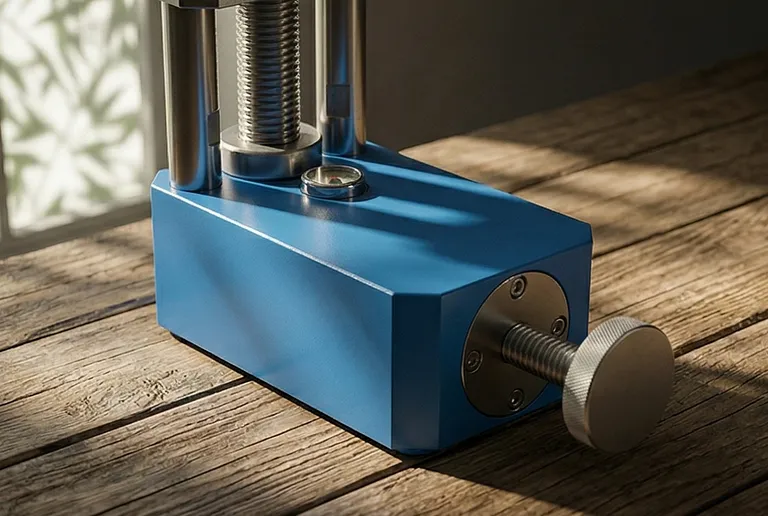
In research, the greatest enemy is "noise"—the unexplained variables that ruin reproducibility.
Oven heating is inherently imprecise. Samples on the edge of the rack heat differently than those in the center. Dimensions shift unpredictably as moisture leaves.
A hydraulic system provides Microstructure Locking. By using integrated cooling systems while the material is still under pressure, researchers can "freeze" the modified state in place. This prevents the internal stresses that typically lead to deformation when a sample is removed from a hot environment.
| Feature | Laboratory Hydraulic Press | Traditional Oven Heating |
|---|---|---|
| Mechanism | Thermo-mechanical coupling | Pure thermal energy |
| Volatile Retention | High (Seal restricts evaporation) | Low (Volatiles escape freely) |
| Void Management | High densification | High porosity remains |
| Dimensional Control | Precise (Mold-constrained) | Poor (Subject to warping) |
| Industrial Scaling | Simulates factory hot-pressing | Limited to drying/degradation |
Choosing the Right Tool
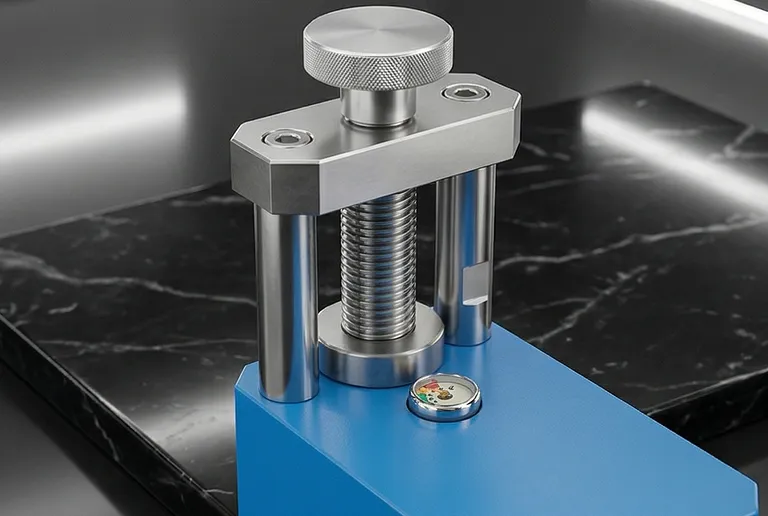
The decision between an oven and a press is a decision about the intended outcome.
If your goal is simply to dry a specimen or induce basic thermal degradation, the oven is an efficient, cost-effective choice. It handles bulk volume with ease.
However, if your goal is material evolution—creating wood composites with superior tensile strength, locked-in dimensions, and deep chemical integration—the hydraulic press is the only viable path. It is the difference between a surface-level change and a fundamental structural transformation.
Precision Engineered for Modern Research
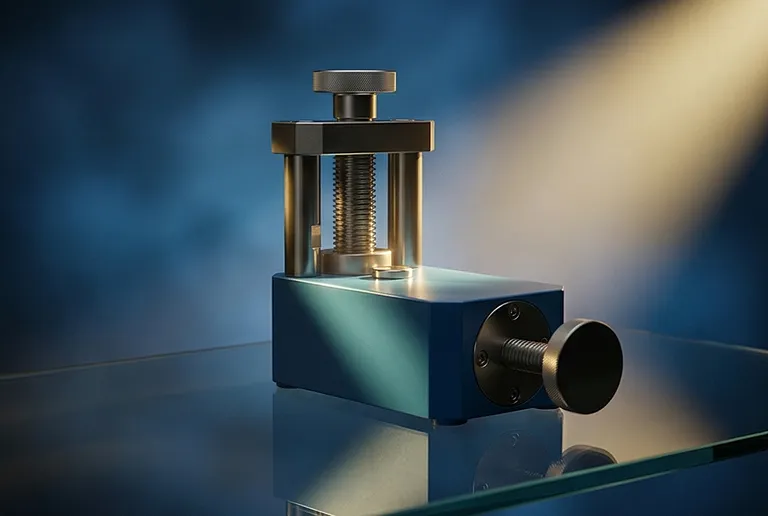
At KINTEK, we understand that the integrity of your data depends on the precision of your equipment. Our laboratory pressing solutions are designed to bridge the gap between experimental theory and industrial reality.
From manual and automatic heated presses to specialized glovebox-compatible and isostatic models for battery and biomass research, we provide the tools to control the variables that matter most.
Elevate your material science with the power of synchronized heat and pressure. Contact Our Experts
Related Products
- Automatic High Temperature Heated Hydraulic Press Machine with Heated Plates for Lab
- Manual Heated Hydraulic Lab Press with Integrated Hot Plates Hydraulic Press Machine
- Heated Hydraulic Press Machine with Heated Plates for Vacuum Box Laboratory Hot Press
- Laboratory Hydraulic Press 2T Lab Pellet Press for KBR FTIR
- Laboratory Hydraulic Press Lab Pellet Press Machine for Glove Box
Related Articles
- The Architecture of Slow: Why Physical Precision Dictates Chemical Destiny
- The Architecture of Certainty: Why the Laboratory Press is the Anchor of Material Science
- The Vanishing Boundary: The Hidden Thermodynamics of LTCC Lamination
- The Alchemy of 160°C: Why Precision Pressing is the Silent Backbone of Rubber Science
- The Invisible Forge: Why the Laboratory Press is the Soul of Nano-Composites



















