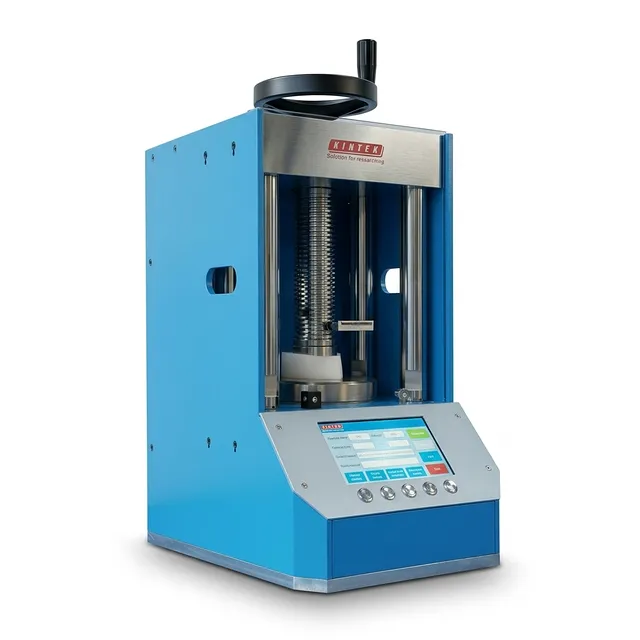
Automatic Heated Lab Press
Automatic Laboratory Hydraulic Press Lab Pellet Press Machine
Item Number : PCEA
Price varies based on specs and customizations
- Pressure Range
- 0.2-150.0 tons
- Display
- 4.3 inch LCD screen ~ 7 inch LCD screen
- Equipment weight
- 50Kg ~ 380Kg

Shipping:
Contact us to get shipping details Enjoy On-time Dispatch Guarantee.
Why Choose Us
Easy ordering process, quality products, and dedicated support for your business success.
Streamline Your Sample Preparation with KINTEK's Automatic Lab Press
KINTEK specializes in high-quality lab press machines, and our Automatic Lab Press is engineered to meet the rigorous demands of modern laboratories. Designed for efficiency, precision, and versatility, this machine is your ideal partner for consistent and reliable sample preparation across a wide range of applications. Whether you're in material research, pharmacy, catalysis, ceramics, or the electronics industry, our press delivers exceptional performance.
Ready to enhance your lab's capabilities? Discuss your application with our experts.
Why Choose KINTEK's Automatic Lab Press? Key Benefits for Your Lab
Our Automatic Lab Press is more than just a piece of equipment; it's a solution designed to save you time, improve accuracy, and offer unparalleled operational flexibility.
- Unmatched Efficiency & Automation: Dramatically reduce sample preparation time and effort. With programmable pressure and automatic operation, including pressure maintenance and restart, you achieve consistent results with minimal manual intervention.
- Versatile & Adaptable: Its compact footprint and light weight make it perfect for any lab space, including easy integration into vacuum glove boxes for processing under controlled atmospheres. The availability of heating plates enables hot press processing for specialized materials.
- Precision Control & User-Friendly Interface: Benefit from high-precision digital pressure gauges and an intuitive LCD screen. Our system allows for easy programming, and automatic mold pressure conversion prevents misoperation and protects your molds.
- Robust and Reliable Design:
- Durable Metal Buttons: Engineered for longevity (over 100,000 uses), our silver-plated metal buttons ensure reliable operation even in challenging environments—such as with oily samples, within glove boxes, or in dusty settings like steel mills and cement plants—where touch screens can falter.
- Quality Construction: Features like a chrome-plated cylinder, one-piece main board structure, and high-speed steel molds ensure durability, prevent oil leakage, and guarantee a long service life.
Diverse Applications Across Industries
The KINTEK Automatic Lab Press Machine is a versatile workhorse suitable for:
- Material Research Labs
- Pharmaceutical Development
- Catalytic Reaction Studies
- Ceramics Manufacturing and Research
- Electronics Industry Sample Prep
- Operations within a vacuum glove box
- Hot press processing with optional heating plates
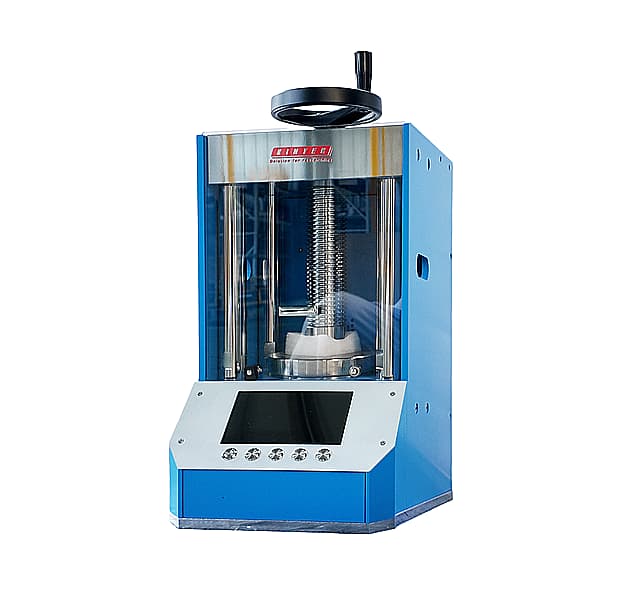
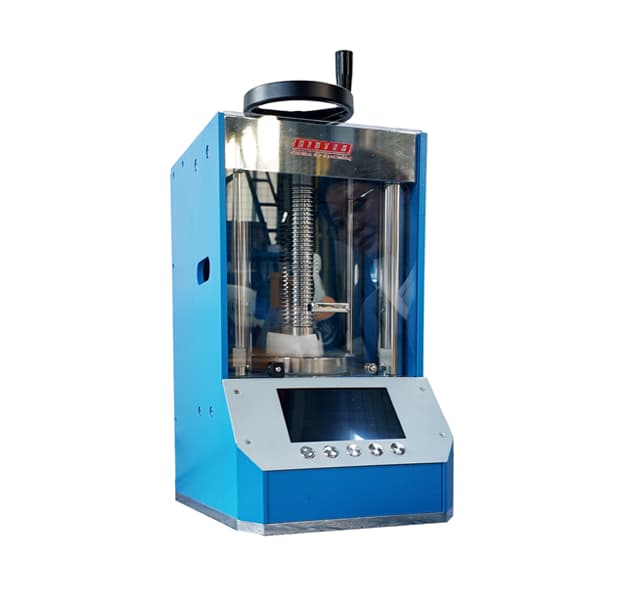
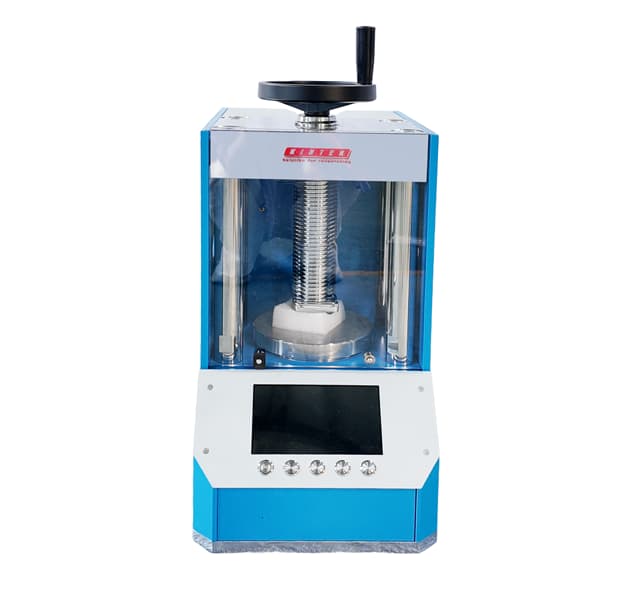
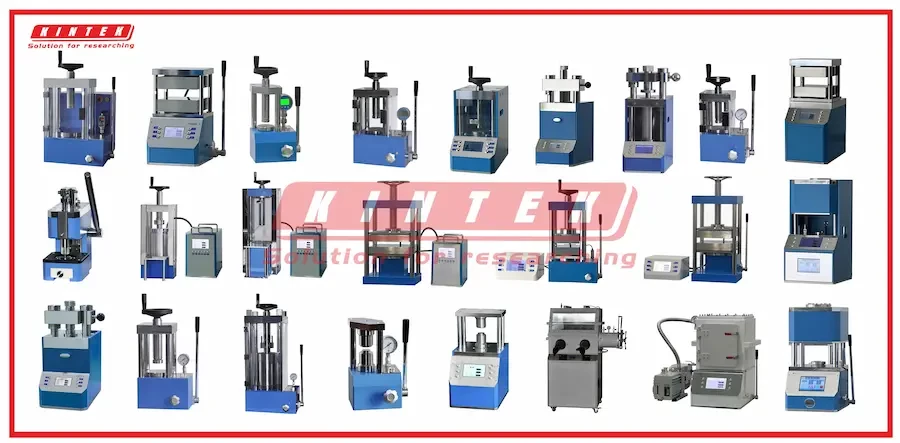
Explore Our Range of Automatic Lab Presses
We offer a variety of models to suit your specific pressure requirements and sample sizes. Browse our selection below:
Detailed Features for Optimal Performance
KINTEK's Automatic Lab Presses are packed with features designed for precision, ease of use, and durability:
- Automation & Programmability: Fully automatic desktop tablet press with programmable pressurization suitable for high-end laboratories. Hydraulic system restarts automatically if pressure drops below the set value.
- User-Centric Design ("Humanization"): Automatic mold pressure conversion eliminates manual calculations, preventing mold damage from misoperation.
- Clear Display & Controls: Intuitive LCD screen for clear visibility and straightforward operation. (See "Intuitive Operation Interface" below for more).
- Compact & Portable: Small footprint and light weight for easy carrying, movement, and ideal fitting in vacuum glove boxes.
- Dual Operation Mode: Both electric driving and manual press options are available on select models, complemented by a high-precision digital pressure gauge.
- Superior Components:
- Electroplated countersunk head hexagonal screws on the upper plate for a sleek, space-saving design.
- Chrome-plated cylinder: smooth, rust-proof, with excellent sealing to prevent oil leakage.
- One-piece main board structure integrating oil pool, main board, and oil cylinder, minimizing seal connections.
- Extended pulling spring for good rebound and reliable cylinder return (e.g., 30mm return without deformation).
- All-aluminum alloy handwheel: beautiful, practical, and resistant to breakage.
- Japanese high-speed steel molds: excellent material, high hardness, deformation-resistant for long service life.
- Digital display pressure gauge for accurate pressure control (accuracy up to 0.01MPa).
- External oil pool for easy oil replacement, with an integrated hydraulic oil filtration device.
- Special plunger with custom sealing structure for superior sealing.
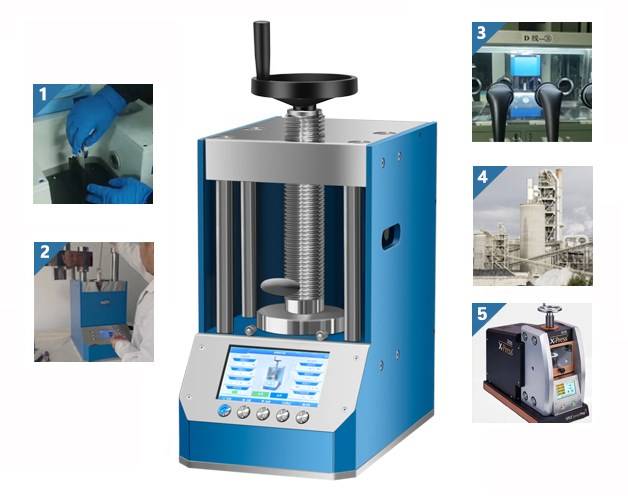
Have questions about specific features or need a customized solution? Contact our technical team now!
Intuitive Operation Interface
Our lab presses feature user-friendly interfaces for both standard and advanced operations.
Standard Mode
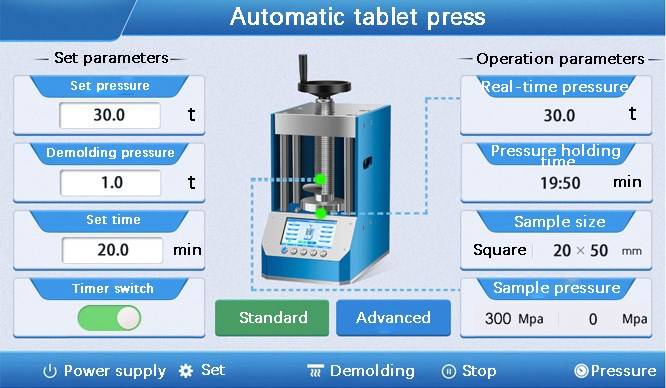
- Standard Interface: Set parameters like pressure, demolding, time, sample size, etc.
- Pressure Button: Initiates pressing according to set parameters.
- Stop Button: Halts pressurization.
- Demolding Button: Demolds the sample at the set demolding pressure.
- Timer Switch: Toggles the timing function on/off.
Advanced Mode
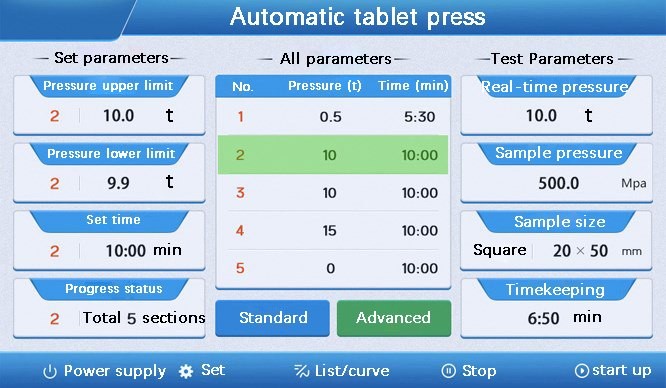
- Start Button: Initiates multi-stage pressurization programs.
- Stop Button: Halts the pressurization process.
- Set Button: Accesses the setting menu.
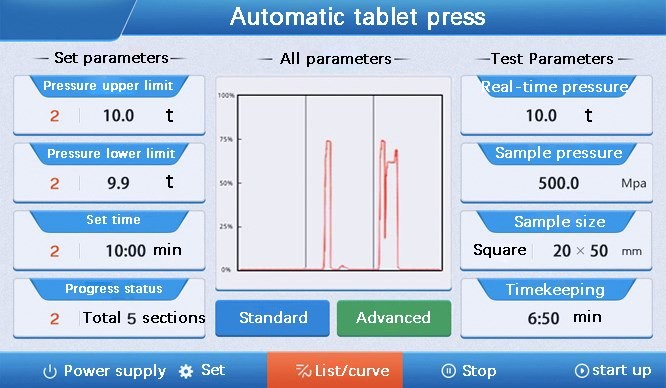
- List/Curve: Switch between list and curve display for pressure monitoring.
Technical Specifications
Choose the model that precisely fits your laboratory's needs. For detailed consultation or if you don't see your required specification, please contact us.
| Instrument model | PCEA-12T | PCEA-20T | PCEA-30T | PCEA-40T | PCEA-60T | PCEA-100T | PCEA-150T |
|---|---|---|---|---|---|---|---|
| Pressure Range | 0.2-12.0 tons | 1-20.0 tons | 1-30.0 tons | 1-40.0 tons | 1-60.0 tons | 1-100.0 tons | 1-150.0 tons |
| Pressure conversion | Program automatically converts the pressure borne by the mold | ||||||
| Display | 4.3 inch LCD screen | 7 inch LCD screen | |||||
| Metal buttons | Silver plated contacts with a service life of over 100,000 times | ||||||
| Equipment protection | Steel plate protection with organic glass door | ||||||
| Limit switch | Automatic pressure relief when the oil cylinder reaches the limit height | ||||||
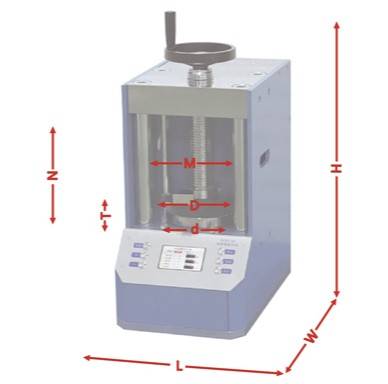
| Cylinder stroke (T) | 30mm | 50mm | |||||
| Space size (M×N) | 110×140mm | 140×160 mm | 140×160 mm | 175×180mm | 185×220mm | 185×250mm | 200×260mm |
| External dimensions (L×W×H) | 185×320×360 mm | 230×390×420mm | 230×390×420mm | 280×460×550mm | 300×520×580mm | 330×580×620mm | 400×620×620mm |
| Equipment power supply | 240W (220V/110V can be customized) | 550W (220V/110V can be customized) | 1500W (220V/110V can be customized) | ||||
| Equipment weight | 50 Kg | 90Kg | 150Kg | 180Kg | 240Kg | 380Kg | |
Easy Operation Steps
Follow these simple steps for efficient sample preparation. For detailed guidance on replacing accessories and precautions, please click here for our operating procedures guide.
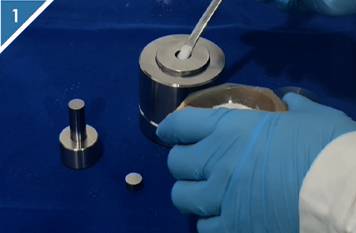
1. Insert the sample into the mold and assemble the mold properly.
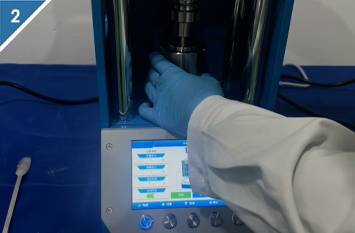
2. Put the mold into the tablet press and tighten the screw to secure the mold.
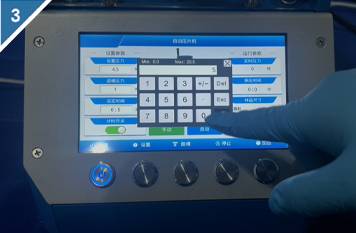
3. Press the "Settings" button to enter the pressure setting interface.
4. Press the "+" key to increase the value of the set pressure.
5. Press the "-" key to decrease the value of the set pressure.
6. Continuously press the"Settings"button to return to the operation interface.
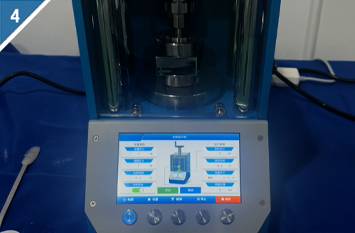
7. Press the "Sample Preparation" button (or "Pressure" button), and the system will start pressurizing according to the set program.
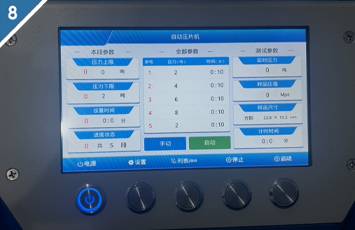
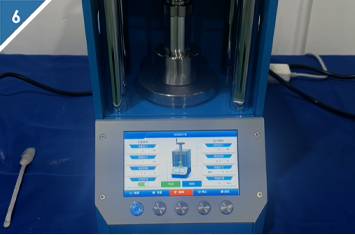
8. After reaching the set pressure, the system will automatically release pressure after maintaining pressure for a period of time (if programmed).

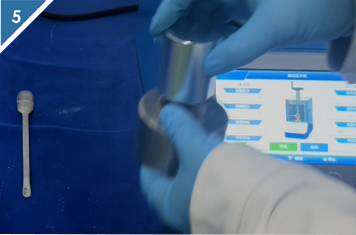
9. Remove the mold.
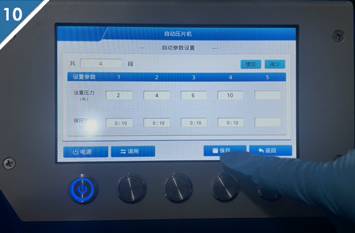
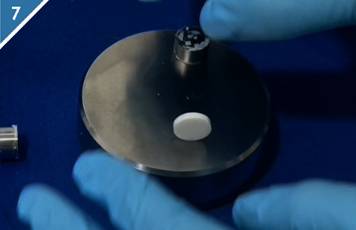
10. Push the sample out (e.g., in reverse or using a demolding tool) and take out the sample.
Ready to Optimize Your Lab's Efficiency?
The KINTEK Automatic Lab Press is designed to elevate your sample preparation process. For more information, to request a quote, or to discuss your specific requirements, please get in touch with us.
Click here to fill out our contact form and one of our specialists will get back to you shortly.
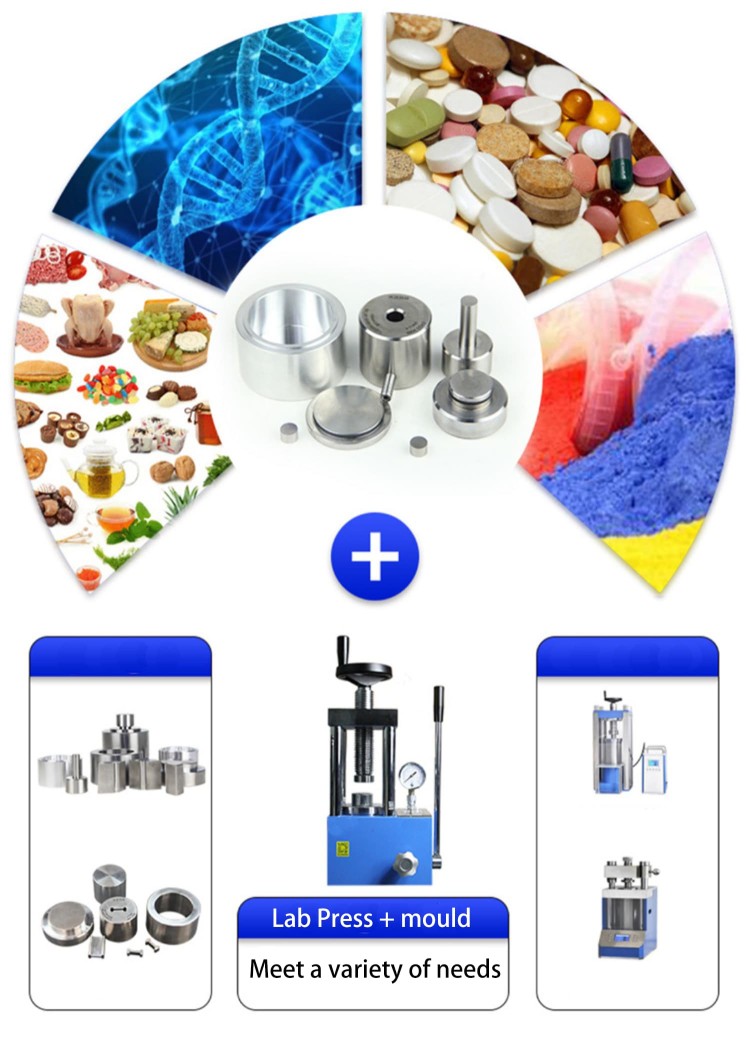
Full range of types of laboratory press molds
We have a full range of molds for you to choose from, and the molds fit the body perfectly.
If you need molds with special shapes, we can also customize them for you.
The Right Lab Press Awaits
Expert Advice? We're Here. Get in Touch!
Trusted by Industry Leaders

FAQ
What Is A Laboratory Hot Press Machine Used For?
What Is A Laboratory Hydraulic Press Used For?
What Are The Main Applications Of A Laboratory Pellet Press?
What Are The Main Applications Of A KBr Pellet Press?
What Are The Main Applications Of Press Molds In Laboratories?
What Are The Key Features Of A Laboratory Hot Press Machine?
What Are The Main Features Of A Laboratory Hydraulic Press?
What Features Should I Consider When Choosing A Laboratory Pellet Press?
What Are The Key Features Of A KBr Pellet Press?
What Types Of Press Molds Are Available For Laboratory Use?
What Are The Main Components Of A Laboratory Hot Press Machine?
How Does A Laboratory Hydraulic Press Work?
How Does A Laboratory Pellet Press Work?
How Does A KBr Pellet Press Work?
What Are The Key Features Of Laboratory Press Molds?
How Does A Laboratory Hot Press Machine Work?
What Are The Advantages Of Using A Laboratory Hydraulic Press?
What Are The Advantages Of Using A Laboratory Pellet Press?
What Are The Advantages Of Using A KBr Pellet Press?
What Materials Are Commonly Used To Make Press Molds?
What Are The Advantages Of Using A Laboratory Hot Press Machine?
What Types Of Laboratory Hydraulic Presses Are Available?
What Types Of Laboratory Pellet Presses Are Available?
What Are The Drawbacks Of Manual KBr Pellet Presses?
What Are The Advantages Of Using Press Molds In Laboratories?
Why Is A Laboratory Hydraulic Press Ideal For Sample Preparation In Spectroscopy?
Can Press Molds Be Customized For Specific Laboratory Needs?
What Safety Features Are Included In Laboratory Hydraulic Presses?
How Do Press Molds Ensure High-precision Sample Preparation?
Can Laboratory Hydraulic Presses Be Used For High-temperature Applications?
What Are The Benefits Of Using Heated Press Molds?
How Do Press Molds Contribute To Efficient Laboratory Workflows?
What Should I Consider When Choosing A Press Mold For My Laboratory?
REQUEST A QUOTE
Our professional team will reply to you within one business day. Please feel free to contact us!
Related Products

Automatic Laboratory Hydraulic Press for XRF and KBR Pellet Pressing
KinTek XRF Pellet Press: Automated sample prep for precise XRF/IR analysis. High-quality pellets, programmable pressure, durable design. Boost lab efficiency today!

Automatic Heated Hydraulic Press Machine with Hot Plates for Laboratory
KINTEK Automatic Lab Heat Press: Precision heating, programmable control, and rapid cooling for efficient sample preparation. Enhance lab productivity today!

Automatic Heated Hydraulic Press Machine with Heated Plates for Laboratory
KINTEK Automatic Heated Hydraulic Lab Press: Precision heating, uniform pressure, and automated control for superior sample processing. Ideal for labs and research. Contact us today!

Automatic High Temperature Heated Hydraulic Press Machine with Heated Plates for Lab
KINTEK High Temperature Hot Press: Precision sintering & material processing for labs. Achieve extreme temperatures & consistent results. Custom solutions available.

Manual Heated Hydraulic Lab Press with Integrated Hot Plates Hydraulic Press Machine
KINTEK's precision lab presses offer efficient, high-temperature sample prep for material research, pharmacy, and ceramics. Explore models now!

Split Automatic Heated Hydraulic Press Machine with Heated Plates
KINTEK Split Automatic Heated Lab Press: Precision hydraulic press with 300°C heating for efficient sample preparation. Ideal for research labs.

Manual Laboratory Hydraulic Press Lab Pellet Press
KINTEK's Protective Manual Lab Hydraulic Press ensures safe, precise sample preparation with durable construction, versatile applications, and advanced safety features. Ideal for labs.

Manual Laboratory Hydraulic Pellet Press Lab Hydraulic Press
Boost lab efficiency with KINTEK's precision hydraulic presses—compact, leak-proof, and ideal for spectroscopy. Custom solutions available.

24T 30T 60T Heated Hydraulic Lab Press Machine with Hot Plates for Laboratory
High-quality hydraulic lab presses for precise sample preparation. Choose automatic or heated models for material research, pharmacy, and more. Get a quote now!

Laboratory Manual Heated Hydraulic Press Machine with Hot Plates
KINTEK's Manual Hot Press delivers precise material processing with controlled heat and pressure. Ideal for labs needing reliable bonds and high-quality samples. Contact us today!

Laboratory Hydraulic Press Lab Pellet Press Machine for Glove Box
Precision lab press for glove boxes: Compact, leak-proof design with digital pressure control. Ideal for inert atmosphere material processing. Explore now!

Laboratory Hydraulic Press 2T Lab Pellet Press for KBR FTIR
KINTEK 2T Lab Hydraulic Press for precise FTIR sample prep, durable KBr pellet creation, and versatile material testing. Ideal for research labs.

Laboratory Split Manual Heated Hydraulic Press Machine with Hot Plates
Boost lab efficiency with KINTEK's heated lab presses—precise temperature control, durable design, and rapid cooling for consistent results. Explore now!

Laboratory Hydraulic Press Lab Pellet Press Button Battery Press
KINTEK Lab Press Machines: Precision hydraulic presses for material research, pharmacy, and electronics. Compact, durable, and low maintenance. Get expert advice today!

Laboratory Hydraulic Pellet Press for XRF KBR FTIR Lab Press
KINTEK Lab Press Machines: Precision hydraulic presses for sample prep. Automatic, heated, and isostatic models for research labs. Get expert advice now!

Heated Hydraulic Press Machine with Heated Plates for Vacuum Box Laboratory Hot Press
KINTEK Heated Hydraulic Lab Press with Vacuum Box ensures precise sample preparation. Compact, durable, and featuring digital pressure control for superior results.

Laboratory Hydraulic Split Electric Lab Pellet Press
KINTEK Split Electric Lab Press: Precision sample preparation for research. Compact, versatile, with advanced pressure control. Ideal for material studies.

Heated Hydraulic Press Machine With Heated Plates For Vacuum Box Laboratory Hot Press
Enhance lab precision with KINTEK's Heated Vacuum Lab Press for uniform, oxidation-free samples. Ideal for sensitive materials. Get expert advice now!

Automatic Lab Cold Isostatic Pressing CIP Machine
High-efficiency Automatic Cold Isostatic Press (CIP) for precise lab sample preparation. Uniform compaction, customizable models. Contact KINTEK experts today!

Cylindrical Lab Electric Heating Press Mold for Laboratory Use
KINTEK's Cylindrical Electric Heating Press Mold offers rapid heating (up to 500°C), precise control, and customizable sizes for lab sample preparation. Ideal for battery, ceramic, and material research.
Related Articles
The Architecture of Density: Why Pressure is the Silent Architect of Solid-State Batteries
Explore how laboratory hydraulic presses transform sulfide powders into high-performance solid electrolytes by overcoming grain boundary resistance and porosity.
The Physics of Transparency: Why Pressure is the Silent Architect of Spectroscopic Clarity
Explore the critical role of laboratory hydraulic presses in FT-IR spectroscopy for Copper(II) complexes and how high-pressure molding eliminates light scattering for high-resolution data.
The Geometry of Electrons: Why Surface Precision is the Silent Partner in SECM Research
Discover how laboratory hydraulic presses transform powder catalysts into precision electrodes, eliminating topography errors and ohmic resistance in SECM analysis.
The Architecture of Density: Why Pressure is the Foundation of Precision
Discover why laboratory hydraulic presses are essential for sample pretreatment. Learn how consolidation, geometric uniformity, and density eliminate analytical noise.
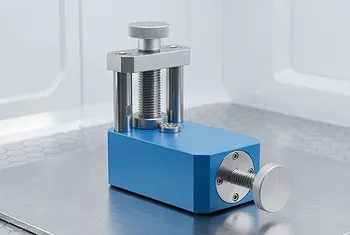
The Architecture of Heat: Why Sample Density Dictates the Truth in Metal Hydride Research
Explore how laboratory hydraulic presses bridge the gap between loose powders and accurate thermal conductivity data through precise density control and geometric standardization.
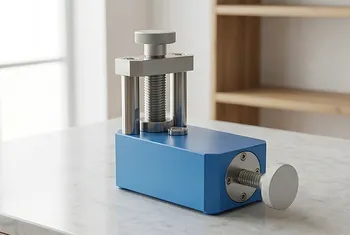
The Geometry of Ionic Flow: Why Precision Pressing Dictates Material Truth
Explore how laboratory hydraulic presses eliminate measurement artifacts in solid-state electrolytes like PbxSr1-xSnF4 by transforming powder into dense polycrystals.
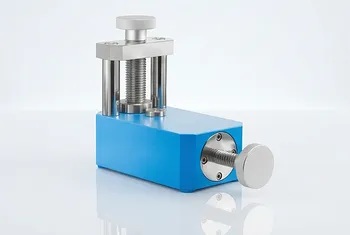
The Architecture of Density: Why Precision Molding Defines High-Entropy Alloy Success
Discover how automatic hydraulic presses eliminate experimental noise in HEA synthesis by standardizing green body density and structural integrity.
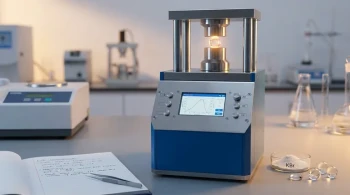
Beyond Brute Force: The Psychology of Precision in Laboratory Presses
Discover how hydraulic lab presses transform research not just with force, but with precision, reducing cognitive load and ensuring data reproducibility.
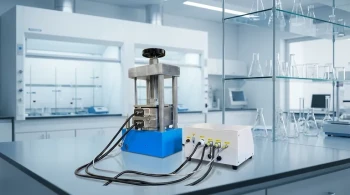
The Anatomy of Repeatability: Deconstructing the Modern Laboratory Press
Discover how lab press precision is a system, not a feature. It's a union of hydraulics, control feedback, and mechanical integrity.

The Physics of Trust: A Disciplined Approach to Laboratory Press Safety and Reliability
Explore the systemic risks of lab press neglect and how a disciplined maintenance protocol protects personnel, data, and your investment.
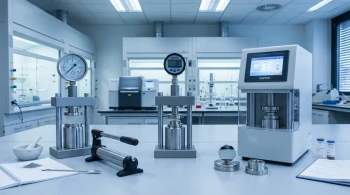
The Unseen Variable: Why Your Lab Press Dictates Your Data's Integrity
Learn why choosing a lab press is about repeatable outcomes, not just max pressure. A guide to matching a press to your application's needs.
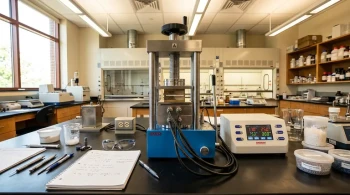
Beyond Tonnage: The Subtle Art of Specifying a Laboratory Press
Selecting a lab press requires a deep look beyond max tonnage. Discover how control, uniformity, and precise calculations lead to repeatable results.