Improve Electrolyte Filling Accuracy From Research Cells to Pilot Production
Electrolyte filling is not merely a liquid-transfer task. In rechargeable battery manufacturing and laboratory cell development, it is a controlled process that influences electrode wetting, interfacial formation, internal resistance, gas behavior, capacity retention, and the consistency of test results. A cell can contain well-designed electrodes and high-quality separator materials, yet still deliver unstable performance when the electrolyte dose, filling environment, or wetting process is poorly controlled.
KINTEK provides practical electrolyte filling equipment for battery R&D, process development, sample preparation, and laboratory-scale manufacturing. Our portfolio addresses different levels of process complexity, from manual microliter dispensing for early-stage formulation work through precision ceramic-pump filling and advanced isobaric vacuum injection for aluminum-shell cells. This flexibility enables laboratories to build a filling workflow that is appropriate for current needs while maintaining a logical route toward more controlled and repeatable production.
Why Electrolyte Filling Requires Process Control
In lithium-ion batteries and related electrochemical cells, electrolyte must enter the available pore structure of the electrodes and separator with sufficient uniformity. The liquid transport process depends on the cell architecture, electrode porosity, separator properties, electrolyte viscosity, temperature, vacuum condition, residual moisture, and fill volume. Air trapped in pores or internal corners can restrict wetting. Incomplete wetting may increase impedance, create local current-density variation, delay formation, and cause unwanted variation between otherwise identical cells.
Accurate volume control is equally important. Insufficient electrolyte can leave active areas poorly wetted and reduce usable performance. Excess electrolyte can affect mass balance, increase leakage risk, complicate sealing, and make comparative research less meaningful. For laboratories studying new cathode materials, silicon-rich anodes, solid-liquid hybrid systems, additives, binders, or separator designs, consistent electrolyte addition is essential for separating a genuine materials effect from a simple assembly variation.
A controlled filling workflow helps teams achieve several important objectives:
- Improve repeatability across experimental cell batches.
- Reduce variation caused by manual transfer and inconsistent dispensing speed.
- Support accurate electrolyte-to-capacity, electrolyte-to-porosity, or electrolyte-to-electrode-area calculations.
- Minimize unnecessary electrolyte exposure, spills, and material waste.
- Create a more traceable cell-assembly process for research records and quality review.
- Scale methods from exploratory cells toward pilot-line validation with better confidence.
Isobaric Vacuum Filling for Aluminum-Shell Battery Cells
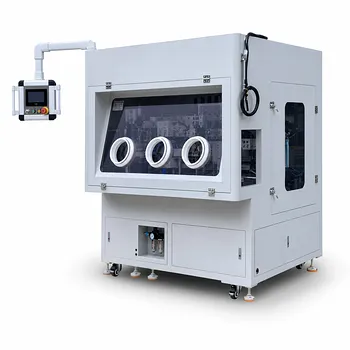
For aluminum-shell battery manufacturing, an isobaric high-precision liquid injection machine offers a more controlled approach than simple open-air dosing. These systems are designed for workflows that require vacuum treatment, measured injection, and pressure management within a sealed operating environment. By reducing pressure before filling, the process can help remove air from the cell cavity and porous internal structure. Subsequent electrolyte injection and pressure cycling encourage the liquid to access areas that may be difficult to wet under atmospheric conditions alone.
The isobaric concept is particularly useful when the cell design, electrode loading, or target consistency demands closer process control. Vacuum and pressure stages can support improved wetting behavior while limiting uncontrolled air entry. Where configured for glovebox integration or sealed positive-pressure operation, the machine also helps laboratories maintain a more appropriate handling environment for moisture-sensitive electrolyte and battery components.
KINTEK's aluminum-shell liquid injection solutions support primary and secondary filling workflows. Primary filling delivers the planned initial electrolyte quantity, while secondary filling can be used after settling, wetting, degassing, or other process stages when the application requires further adjustment. This approach gives process engineers useful flexibility when optimizing the relationship between electrolyte volume, cell expansion, wetting time, and final sealing conditions.
High-precision dosing and integrated weighing support more reliable process verification. Rather than relying only on a nominal dispense setting, operators can use mass-based checks to confirm that the expected electrolyte amount has been transferred. This is valuable for quality-sensitive laboratory production, comparative research studies, and process development programs where each cell must be associated with dependable assembly data.
Precision Ceramic Metering Pumps for Programmable Filling
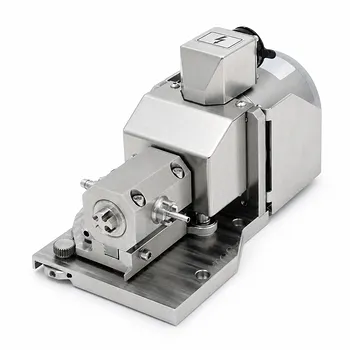
Single-head electrolyte filling pumps provide an efficient bridge between fully manual liquid handling and more complex integrated filling stations. A precision metering pump can dispense programmed low volumes repeatedly, helping teams control dose size and improve consistency from cell to cell. This makes it well suited to coin cells, cylindrical cells, pouch-cell trials, small aluminum-shell formats, electrolyte aliquoting, and other controlled liquid-addition tasks.
Ceramic valve and metering components are especially valuable in demanding laboratory environments because they offer dimensional stability, durability, and resistance to wear during repeated dispensing cycles. When correctly matched to the liquid chemistry and maintained according to operating procedures, ceramic metering technology can support dependable delivery of battery electrolyte, solvents, additives, adhesives, pharmaceutical liquids, food liquids, and chemical formulations. This versatility makes the platform useful beyond battery research when a laboratory needs accurate, repeatable liquid dosing.
Programmable operation can reduce operator-dependent variation in dispense volume, timing, and cycle count. It also supports development teams that need to compare multiple fill volumes or test protocols methodically. A process engineer may use a low-volume setting during preliminary optimization, then establish a defined program for repeatable experimental batches. For OEM integration or custom laboratory automation, a single-head metering system can form part of a broader dispensing, weighing, inspection, or assembly sequence.
Bottle-Top Dispensers for Reliable Routine Liquid Transfer
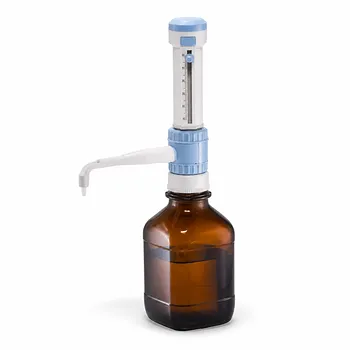
Not every electrolyte-related task requires an automated filling machine. Chemical-resistant bottle-top dispensers are practical tools for preparing formulations, transferring solvents, dispensing non-final-fill liquids, conducting quality-control work, and handling routine laboratory reagents. Their direct bottle-mounted design can simplify frequent dispensing while avoiding repeated pouring and helping maintain a tidier work area.
Models with broad adjustable volume ranges, such as 0.5 to 50 mL configurations, provide flexibility for varied preparation and handling tasks. Material choices such as PTFE, FEP, borosilicate glass, and polypropylene are selected for their useful chemical-compatibility characteristics in laboratory service. However, users should always verify compatibility with the exact electrolyte, solvent, additive concentration, temperature, and cleaning solution before use. This is especially important for lithium battery electrolytes, which may contain reactive salts and organic carbonate solvents that require careful materials selection and controlled handling.
For teams managing multiple experiments, a dependable bottle-top dispenser improves workflow efficiency by making common liquid volumes easier to repeat. It is an effective supporting tool in slurry laboratories, electrolyte formulation areas, analytical laboratories, materials-research facilities, and routine QC settings. Autoclavable designs may also be useful where laboratory sterilization procedures are relevant, although battery-electrolyte handling requirements should remain distinct from biological sterilization workflows.
Micropipettes for Small-Volume Research and Cell Assembly
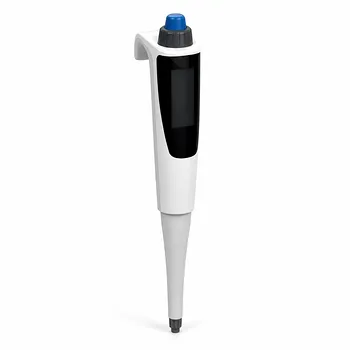
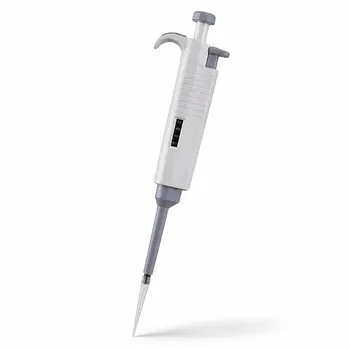
At the smallest dispensing scale, manual and electronic single-channel micropipettes give researchers fine control over electrolyte additives, reference liquids, samples, and micro-volume cell-assembly steps. They are particularly relevant for formulation screening, additive development, electrolyte sampling, analytical preparation, and low-volume battery research where every microliter matters.
Manual adjustable pipettes provide straightforward, tactile operation with a digital volume display and broad volume coverage across model ranges. Their lightweight ergonomic form is useful during repetitive laboratory tasks, while calibration support helps maintain confidence in delivered volumes. Electronic micropipettes add controlled aspiration and dispensing speeds, LCD-based operation, and rechargeable convenience. Adjustable speed settings can be helpful when working with liquids that require more careful handling or when operators want to improve consistency across repeated transfers.
Pipettes should be regarded as precision laboratory instruments, not substitutes for industrial high-throughput filling equipment. Their core value is controlled low-volume work, especially where researchers need flexibility, rapid method changes, and direct visual oversight. Correct tip selection, pipetting technique, periodic calibration, and chemical-compatibility review are necessary to obtain reliable results. For moisture-sensitive electrolyte work, pipetting should be performed within the appropriate dry-room or inert-atmosphere process controls.
Choose Equipment Around Your Cell, Process, and Volume Range
The correct electrolyte-filling solution depends on more than nominal liquid volume. Cell construction, production stage, environmental controls, desired throughput, and data-quality requirements should all shape the selection. A battery laboratory may use several tools from this category rather than relying on a single device for every task.
For example, a research group developing novel electrolyte additives may use an electronic micropipette for micro-scale formulation screening, a bottle-top dispenser for larger reagent preparation, and a precision filling pump for repeatable experimental cell batches. A pilot team working with aluminum-shell lithium-ion cells may require a dedicated isobaric vacuum injection machine to improve process control during filling, wetting, and production validation.
Consider the following selection factors when comparing systems:
- Cell format: Coin, pouch, cylindrical, prismatic, and aluminum-shell cells have different access geometry and filling requirements.
- Dose range: Select a system whose accurate working range suits the actual target volume rather than only its maximum capacity.
- Required throughput: Manual tools are effective for small research batches; programmable or vacuum-assisted equipment better supports repeated and higher-volume workflows.
- Atmosphere control: Moisture-sensitive electrolyte operations may require glovebox compatibility, sealed transfer, dry-room use, or other controlled-environment measures.
- Wetting challenge: Thick electrodes, high loading, complex internal geometry, and demanding cell designs can benefit from vacuum and pressure-cycle capability.
- Verification method: Where traceability matters, select workflows that support weighing, recording, calibration, and repeatable operating parameters.
- Chemical compatibility: Confirm all wetted materials against the actual electrolyte, solvents, additives, cleaning fluids, and temperature conditions.
- Integration needs: Consider whether the equipment must connect with gloveboxes, cell sealing equipment, weighing systems, formation workflows, or custom automation.
Build a More Consistent Battery Assembly Workflow
Electrolyte filling should be considered alongside the complete cell-fabrication process. Electrode mixing, coating, drying, calendaring or pressing, cutting, assembly, electrolyte injection, sealing, wetting, formation, and testing are interdependent. An inconsistency upstream can affect filling behavior, and poor filling control can obscure the effect of otherwise successful electrode or materials development.
KINTEK understands this broader workflow because our laboratory equipment portfolio supports battery R&D and advanced-materials research from slurry mixing and coating through precision pressing, assembly, testing, and related processing operations. This perspective helps us discuss electrolyte filling in the context of the entire experimental or pilot-production process. The goal is not simply to supply a dispenser or filling machine, but to help customers establish an equipment configuration that supports repeatable research and practical scale-up.
Our equipment is also relevant to materials-science laboratories, powder-metallurgy research, ceramics development, pharmaceutical preparation, chemical processing, adhesive dispensing, and academic teaching laboratories where controlled liquid metering is required. The application determines the required materials, accuracy, environment, fluid properties, and level of automation. A properly specified system provides better results than an oversized or under-configured machine selected solely by volume range.
Professional Configuration and Customization Support
Laboratory requirements are rarely identical. Cell dimensions, electrolyte chemistry, fill ports, target dose, container handling, glovebox interfaces, weighing requirements, and automation expectations may vary significantly between projects. KINTEK can help evaluate these requirements and identify a suitable configuration from standard laboratory dispensing tools through advanced vacuum electrolyte filling solutions.
For custom projects, our team can discuss practical requirements such as fill-volume range, number of filling heads, compatible cell type, vacuum and pressure sequence, wetted-material requirements, control preferences, data collection, safety considerations, and connection to adjacent equipment. Clear process information at the start helps ensure that the final system is aligned with the actual research or manufacturing objective.
Contact KINTEK through our inquiry form to discuss your electrolyte filling process, battery cell format, target throughput, and customization requirements. Our specialists can help you select a precision liquid-handling solution that supports reliable cell assembly, consistent experimental data, and a more efficient path from laboratory development to pilot-scale validation.