Electrode slitting is a critical finishing step in lithium-ion battery manufacturing, transforming coated electrode rolls into accurately sized strips or sheets for winding, stacking, and pouch-cell assembly. KINTEK offers continuous roll-to-roll electrode slitters, manual slitters, automatic cross-cutting slitters, and aluminum-plastic film slitting and segment-cutting systems. Our equipment supports coated cathode and anode materials, including LFP, NMC/NCA, graphite, oxide-based electrodes, metal foils, and functional films, with configurations for laboratory research, pilot lines, and production preparation.
Toggle Categories
Get Instant Support
Choose your preferred way to connect with our team
Response Time
Within 8 hours on working days, 24 hours on holidays
Electrode Slitter
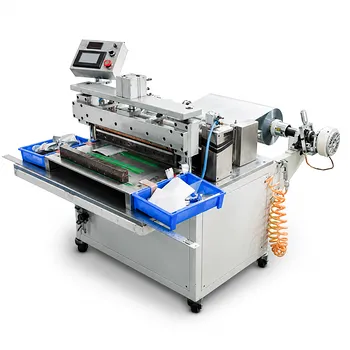
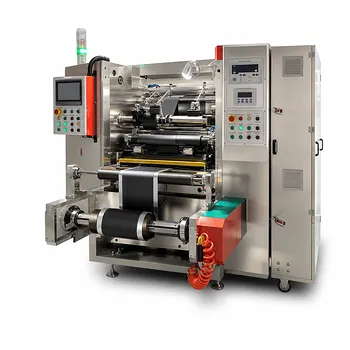
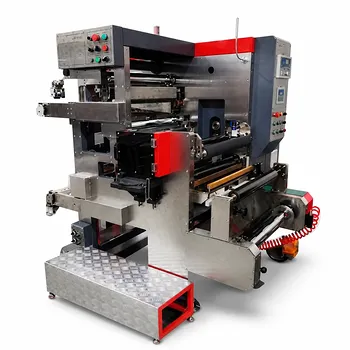
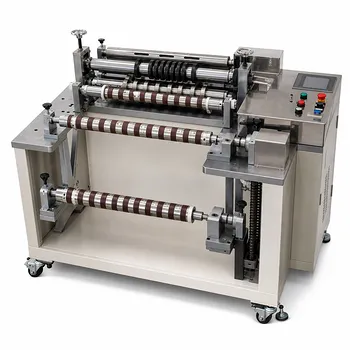
50mm to 600mm Aluminum Plastic Film Slitting and Cutting Machine
Item Number: FQ05
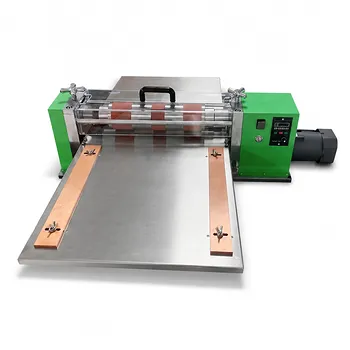
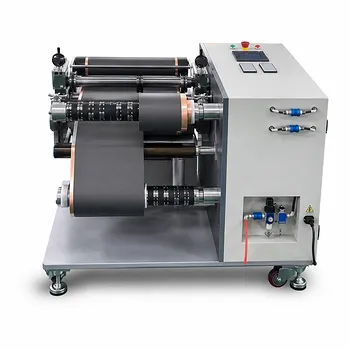
Roll to Roll Continuous Slitting Machine
Item Number: FQ10
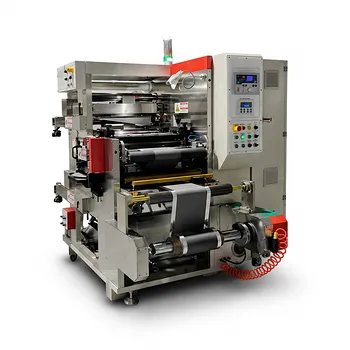
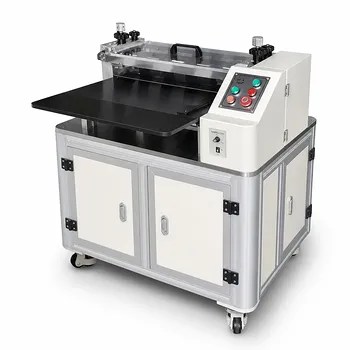
Lithium Battery Electrode Sheet Manual Slitting Machine
Item Number: FQ06
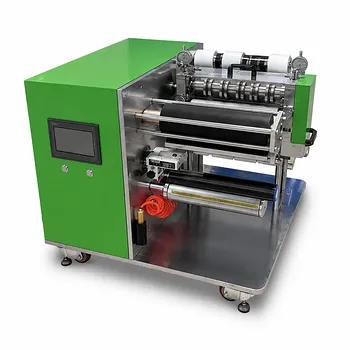
Lithium Battery Electrode Roll to Roll Slitting Machine
Item Number: FQ09
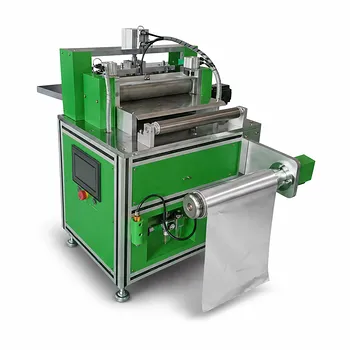
Automatic Lithium Battery Electrode Sheet Cross Cutting Slitting Machine
Item Number: FQ08
Precision Electrode Slitting for Reliable Battery Cell Fabrication
Electrode slitting directly affects the quality, consistency, and downstream manufacturability of lithium-ion cells. After coating, drying, and calendering, electrode rolls must be converted into strips or sheets with the exact width, edge condition, alignment, and winding quality required by the cell design. A poorly controlled slitting process can introduce burrs, loose particles, wrinkles, telescoping rolls, uneven tension, and dimensional variation. These defects can complicate winding or stacking, reduce assembly yield, and create avoidable safety and performance risks in the finished cell.
KINTEK electrode slitting machines are designed to make this conversion stage accurate, stable, and adaptable. Our range covers continuous roll-to-roll slitters for coated electrode rolls, automatic electrode sheet cross-cutting and slitting machines, compact manual slitters for laboratory preparation, and dedicated aluminum-plastic film slitting and segment-cutting equipment for pouch-cell packaging workflows. This broad selection enables research groups, universities, battery developers, and manufacturers to choose equipment that matches their material format, throughput target, available space, and process-control requirements.
Built for Cathode, Anode, Foil, and Functional-Film Processing
Battery electrode materials present distinctive converting challenges. Coated cathode and anode sheets combine thin current collectors with active-material coatings that can crack, shed particles, or deform if web handling is unstable. Aluminum and copper foils require careful control because they are thin, conductive, and susceptible to edge damage. The problem becomes even more demanding with high-loading electrodes, brittle coatings, multilayer laminates, ultrathin foils, or wide coated rolls intended for multiple narrow electrode strips.
KINTEK systems are suitable for processing common battery electrode and film materials, including:
- Positive electrodes based on lithium iron phosphate, layered ternary materials, and other coated cathode chemistries.
- Negative electrodes based on graphite, silicon-containing graphite, oxide materials, and other coated anode formulations.
- Aluminum and copper current collector foils before or after coating, according to the process route.
- Coated electrode rolls for cylindrical, prismatic, pouch, and tabless-cell development.
- Aluminum-plastic composite film used in pouch lithium battery packaging.
- Metal foil, optical film, separator-related materials, and selected functional films where compatible with the chosen machine configuration.
The ability to process multiple material types is particularly valuable in battery R&D. Development teams often work with changing coating formulations, thicknesses, widths, and roll lengths as they optimize energy density, fast-charge performance, cycle life, and manufacturing yield. Rather than relying on a fixed, production-only setup, they need equipment that can be adjusted and configured around evolving experimental requirements.
The Principle of Roll-to-Roll Electrode Slitting
A continuous electrode slitter operates as a coordinated web-handling system. The parent roll is unwound under controlled tension, guided into the slitting section, cut into the required lanes, and rewound into finished rolls. Every stage matters because the web must remain stable while moving through the machine.
During unwinding, tension control prevents the parent roll from feeding too loosely or too aggressively. Insufficient tension can cause wandering, wrinkles, and uneven cuts. Excessive tension can stretch or damage delicate coated electrodes. Closed-loop tension management helps maintain a consistent web state as the roll diameter changes over the course of processing.
The web-guiding stage keeps the electrode material aligned with the selected cutting path. Precise guidance is essential when narrow strips, tight width tolerances, or long runs are required. It also helps preserve straightness and reduce variation from roll to roll. The material then passes through circular knife tooling or another configured cutting arrangement, where it is separated into multiple strips or trimmed to the desired width.
After cutting, edge trim and generated dust must be managed to protect material cleanliness and equipment reliability. Dust extraction and edge-trim collection support a cleaner converting environment, particularly when processing coated materials that can release fine particles at the cut edge. Finally, rewinding systems collect the slit lanes with controlled tension so that finished rolls remain compact, aligned, and ready for subsequent winding, stacking, notching, drying, inspection, or cell-assembly operations.
KINTEK continuous slitters can incorporate precision web guiding, adjustable tension control, multi-strip processing, durable circular cutting tools, dust removal, trim collection, and synchronized rewinding. Depending on the model and selected configuration, PLC-based operation and differential-shaft winding can support repeatable processing across different electrode formats.
Accurate Width Control and Edge Quality
Slit width is more than a dimensional specification. It influences the fit of the electrode in the cell, alignment with separators and current collectors, active-area utilization, and the consistency of subsequent winding or stacking operations. For cylindrical cells, accurate strip width supports stable jelly-roll formation. For pouch and prismatic cells, accurately prepared sheets and strips help maintain repeatable stack geometry and controlled margins. In tabless cell development, slitting precision becomes especially important because the electrode architecture may require multiple consistently formed strips and carefully managed edges.
Our electrode slitting range includes systems covering a wide selection of material widths. Available solutions include compact manual processing for narrow laboratory samples, roll-to-roll equipment for adjustable slit widths, machines designed for 7 to 500 mm slitting ranges, and wider continuous systems handling electrode-sheet formats in the 200 to 560 mm range. Aluminum-plastic film equipment is also available for pouch-film widths from 50 to 600 mm. The exact usable range, number of cutting lanes, and finished-roll requirements should be selected according to the material, process route, and target cell geometry.
Edge quality is equally important. Burrs, rough cut edges, and coating damage can introduce complications in the next manufacturing steps. Sharp, durable cutting tools combined with stable web control are central to achieving clean cuts. Tungsten carbide circular blades are commonly used in suitable roll-slitting configurations because they offer wear resistance and support consistent cutting performance. Tool alignment, blade overlap, cutting pressure, material tension, coating condition, and running speed should all be considered when optimizing burr control.
For teams working with new material formulations, it is useful to validate slitting conditions with representative coated samples before scaling a process. A machine can provide the control needed for stable production, but the final result also depends on the interaction between the electrode coating, substrate foil, blade setup, and operating parameters. KINTEK can help define an equipment configuration that is appropriate for your experimental or manufacturing conditions.
Controlled Tension Protects Delicate Coated Electrodes
Tension management is one of the most important capabilities in electrode converting. Coated electrode sheets can be sensitive to elongation, creasing, coating fracture, and powder shedding. At the same time, insufficient tension can produce uneven feeding and poor rewind quality. A properly designed slitting machine maintains a balanced web path from unwinding through cutting and rewinding.
KINTEK roll-to-roll electrode slitters use controlled unwinding and rewinding to support stable material transport. Closed-loop tension control is valuable when processing rolls with changing diameters because the mechanical conditions at the start and end of a run are different. Synchronized winding functions help keep slit strips uniform, while differential-shaft rewinding can help accommodate lanes that naturally build at slightly different rates.
Stable tension also contributes to consistent blade engagement. When a web moves smoothly through the cutting zone, the cutter can produce more repeatable edges and dimensions. This is especially relevant for thin coated foils, where small disturbances may lead to wandering, wrinkling, or localized edge defects. For high-value research electrodes, this control can reduce material loss and allow teams to compare test samples with greater confidence.
Options for Continuous, Automatic, and Manual Workflows
Not every electrode-processing task requires the same level of automation. KINTEK provides several slitting and cutting approaches so users can match equipment to their actual workflow.
Continuous roll-to-roll electrode slitters are intended for processing coated rolls into finished narrow rolls with stable, repeatable web handling. They are suitable for laboratory pilot lines, process-development work, and manufacturing preparation where continuous operation, controlled tension, precision guiding, and rewinding are required. These systems are useful for cathode and anode materials as well as compatible foil and functional-film converting tasks.
Continuous slitters for 4680 and tabless-cell electrode development support multi-strip processing of rolled coated foil. The tabless-cell format places significant emphasis on dimensional consistency and reliable edge quality because the electrode design and downstream winding process can be sensitive to variation. Controlled web guiding, dust extraction, stable rewinding, and burr-conscious cutting help support development of these demanding electrode structures.
Automatic electrode sheet cross-cutting slitters serve workflows that require sheets or fixed lengths rather than only slit rolls. Programmable fixed-length cutting and optical tracking options can help users prepare positive and negative electrode sheets with repeatable dimensions. This is useful for stacked pouch cells, prismatic-cell studies, sample preparation, and other applications where accurately cut electrode blanks are needed before assembly.
Manual electrode slitters provide a compact and practical solution for low-volume laboratory use. They can be suitable for researchers preparing samples, screening coating recipes, making prototype cells, or processing a limited number of electrode strips. Manual equipment is especially useful where flexibility, simple operation, and smaller installation requirements matter more than high throughput.
Aluminum-plastic film slitting and segment-cutting machines address a related but distinct stage of pouch-cell manufacturing. Pouch film must be cut to accurate widths and lengths to support forming and sealing operations. Adjustable tension, longitudinal slitting, synchronized rewinding, and controlled segment cutting help prepare packaging materials consistently for pouch-cell fabrication. By supplying both electrode-processing and pouch-film converting solutions, KINTEK can support a more connected cell-development workflow.
Clean Processing and Better Material Utilization
Battery manufacturing environments require attention to cleanliness because particulate contamination can affect cell quality and create downstream handling issues. Slitting is a potential source of fine debris, particularly around coated edges and trim material. Integrated dust extraction and edge-trim collection help remove loose material from the processing zone and make routine operation more manageable.
Clean processing is not only about housekeeping. It can help preserve the quality of slit electrode rolls, prevent particles from transferring to other web areas, reduce operator cleanup, and support more orderly pilot-line workflows. When working with advanced cathode and anode materials, process teams should also consider the appropriate facility controls, material handling practices, and personal protective measures for their specific chemistry.
Accurate slitting improves material utilization as well. A stable process reduces rejects caused by width variation, damaged edges, uneven winding, and improperly cut segments. This matters in any production setting, but it is particularly important in R&D, where coated samples may be limited and active materials can be costly. More usable material per coated roll gives researchers more data from each experimental batch and can speed up iteration cycles.
Integration Across the Battery Manufacturing Workflow
Electrode slitting sits between upstream electrode preparation and downstream cell assembly. KINTEK supports the broader sequence that battery laboratories and pilot lines require, from slurry mixing and coating to pressing, cutting, assembly, and testing. This perspective helps us evaluate a slitter as part of the full workflow rather than as an isolated machine.
Upstream conditions influence slitting performance. Coating uniformity, drying quality, calendering pressure, residual stress, coating adhesion, and roll winding quality can all affect how the electrode behaves in the slitter. Downstream requirements also shape equipment selection. For example, the desired strip width, winding mandrel, stacking method, cell format, tab design, and production volume influence whether a continuous slitter, cross-cutting system, manual machine, or a combination of equipment is most appropriate.
A well-matched slitting solution supports smoother handoffs between process stages. Finished electrode strips should be wound and labeled in a way that supports the next operation. Sheet dimensions should match the intended stacking or pouch-cell geometry. Pouch-film cuts should suit forming and sealing requirements. Considering these connections early helps prevent bottlenecks and avoids selecting equipment based solely on a single headline specification.
Selecting the Right Electrode Slitter
The best electrode slitting machine is determined by the actual material and production objective. Before selecting a system, define the following process requirements:
- Parent-roll width, inner diameter, outer diameter, and approximate roll weight.
- Substrate type, electrode chemistry, coating thickness, total thickness, and mechanical sensitivity.
- Required finished strip widths, width tolerance, number of slit lanes, and edge-trim allowance.
- Whether the desired output is slit rolls, fixed-length sheets, pouch-film segments, or a combination.
- Required operating speed and target throughput for R&D, pilot, or production-preparation work.
- Acceptable burr level, edge appearance, dust-control needs, and inspection expectations.
- Unwinding and rewinding requirements, including core sizes, roll direction, and finished-roll tension.
- Available utilities, footprint, safety expectations, automation preference, and facility cleanliness requirements.
For an early-stage laboratory, a manual or compact electrically driven slitter may provide the most practical entry point. For a pilot line producing repeated batches of coated electrodes, continuous roll-to-roll processing with tension control, web guiding, dust management, and automated rewinding may be more suitable. For pouch-cell programs, an automatic cross-cutting system and aluminum-plastic film cutting equipment may be needed alongside roll slitting.
Professional Configuration and Customizable Support
Battery processes are rarely identical from one facility to another. A research center may need to handle frequent chemistry changes and small rolls. A pilot line may prioritize repeatability across several electrode widths. A manufacturer may need a defined lane layout, compatible cores, a specific unwind direction, or integration with existing upstream and downstream equipment. KINTEK approaches equipment selection with these practical requirements in mind.
We can discuss configurations based on your electrode material, coated-roll dimensions, desired slit widths, cutting method, rewinding arrangement, automation level, and application. Customization may include suitable width ranges, knife arrangements, web-handling options, tension-control requirements, dust-management provisions, cutting lengths, and compatibility considerations for your cell-development process. The goal is to provide an electrode slitting solution that supports your work with controlled, repeatable processing rather than forcing your process to fit an unsuitable standard setup.
Whether you are developing pouch cells, cylindrical cells, prismatic cells, 4680-format tabless designs, new cathode and anode formulations, or advanced functional films, KINTEK can help you identify the right slitting and cutting equipment for your workflow. Contact our technical team with your material specifications, roll dimensions, target widths, and production goals to discuss a professional, customized solution.
REQUEST A QUOTE
Our professional team will reply to you within one business day. Please feel free to contact us!