Battery slurry mixers are essential for preparing homogeneous cathode and anode coatings in lithium-ion battery research, pilot-scale validation, and advanced materials development. KINTEK offers practical mixing solutions for each stage of electrode formulation work, from compact 500 mL to 5 L laboratory vacuum mixers for early slurry screening to 10 L, 20 L, 30 L, 100 L, and 200 L planetary dispersion vacuum mixers for process scale-up. Our range also includes hand-operated vacuum mixers, heated vacuum mixers, temperature-controlled magnetic stirring reaction baths, and dry powder or conical barrel mixers for precursor blending. These systems support controlled powder-liquid dispersion, high-viscosity mixing, bubble removal, thermal management, and repeatable batch preparation for battery laboratories, ceramics, powder metallurgy, and materials science teams.
Toggle Categories
Get Instant Support
Choose your preferred way to connect with our team
Response Time
Within 8 hours on working days, 24 hours on holidays
Battery Slurry Mixer
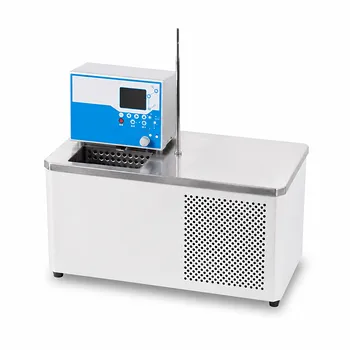
Constant Temperature Magnetic Stirring Reaction Bath Magnetic Stirrer
Item Number: JL11
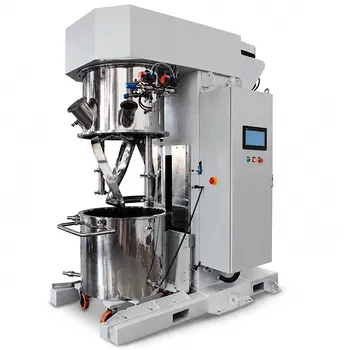
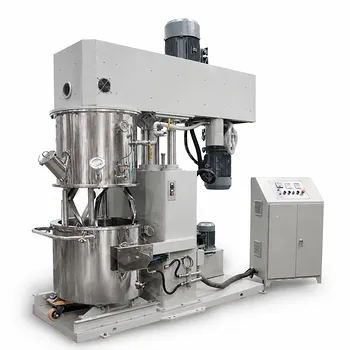
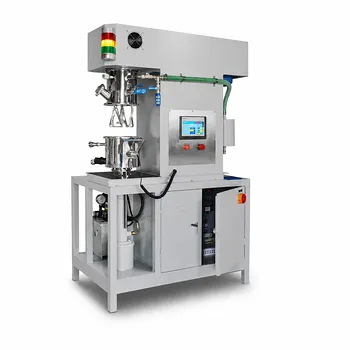
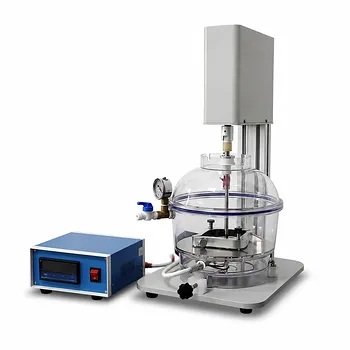
Constant Temperature Electric Heated Vacuum Mixer
Item Number: JL08
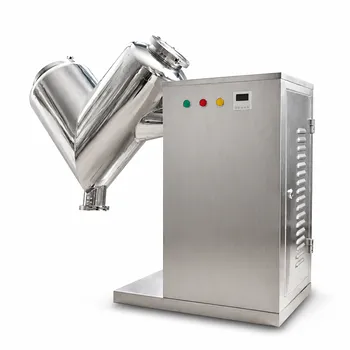
Dry Powder Mixer Laboratory Mixing Equipment for Granules
Item Number: JL12
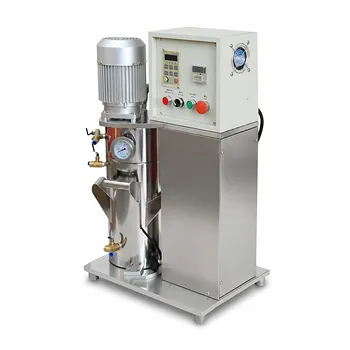
500ML to 5L Battery Slurry Laboratory Vacuum Mixer
Item Number: JL15
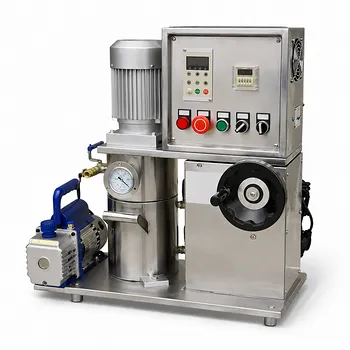
1L 2L 3L 5L Hand Operated Laboratory Vacuum Mixer
Item Number: JL04
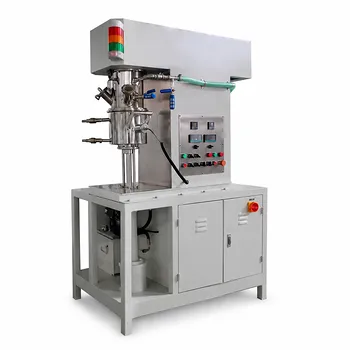
2L Laboratory Planetary Vacuum Mixer Cantilever Lifting Bucket
Item Number: JL02
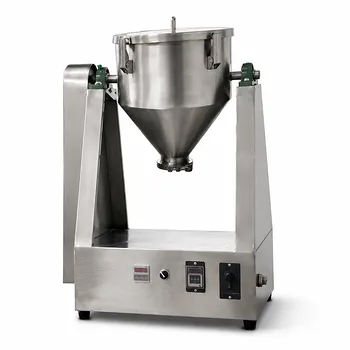
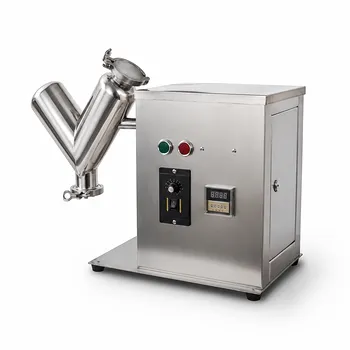
Conical Barrel Mixer for Dry Powder and Granule Blending
Item Number: JL14
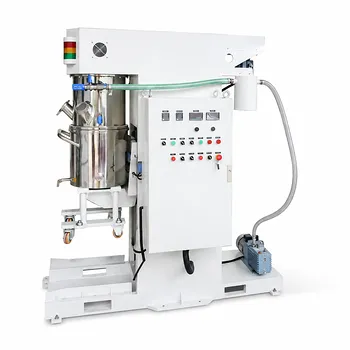
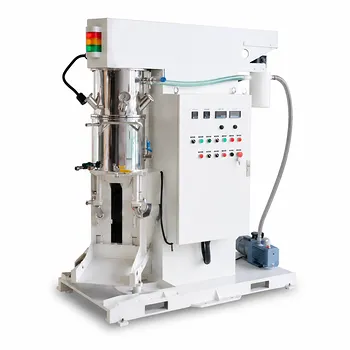
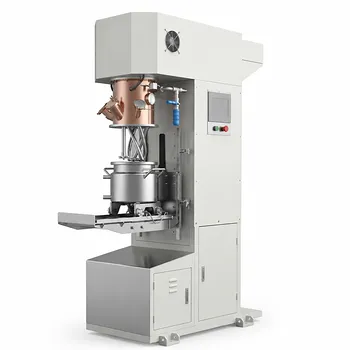
30L Planetary Vacuum Dispersing Mixer for Battery Slurry
Item Number: JL07
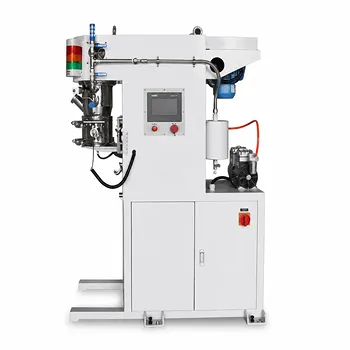
2L Laboratory Small Battery Slurry Mixer
Item Number: JL13
Battery Slurry Mixing Equipment for Consistent Electrode Preparation
Electrode slurry preparation is one of the most influential steps in lithium-ion battery manufacturing and battery research. Before an anode or cathode slurry can be coated, dried, pressed, assembled, and tested, active materials, conductive additives, binders, solvents, and other formulation components must be distributed uniformly. An apparently small variation in mixing quality can affect coating rheology, loading consistency, adhesion, porosity, electrical pathways, and ultimately cell performance. A dependable battery slurry mixer therefore does more than combine materials: it helps researchers establish a controlled, repeatable process foundation for every downstream step.
KINTEK battery slurry mixers are designed for laboratories, R&D departments, pilot lines, universities, and advanced-materials teams that need reliable processing from formulation discovery through scale-up. The category includes compact vacuum mixers for small experimental batches, planetary dispersion vacuum mixers for high-viscosity electrode formulations, jacketed systems for heating and cooling control, and supporting equipment for dry-material and temperature-controlled mixing. With working volumes ranging from sub-liter laboratory processing to 200 L-scale operation, users can select equipment that aligns with their present batch size while retaining a practical route toward larger-scale development.
Why Slurry Homogeneity Matters in Battery Research
Battery electrodes are composite structures. Cathode formulations commonly contain materials such as lithium metal oxides, conductive carbon, polymer binder, and solvent; anode formulations may combine graphite, silicon-containing materials, conductive agents, binders, and solvent systems. These ingredients differ substantially in particle size, density, surface area, wetting behavior, and viscosity contribution. Achieving a stable, uniform slurry requires more than ordinary low-speed stirring.
Poorly dispersed carbon agglomerates, incompletely wetted powders, trapped gas bubbles, localized binder-rich regions, or temperature-driven viscosity changes can all introduce uncertainty into coating and cell-test results. A well-mixed slurry improves the likelihood that samples prepared in different batches share comparable rheology and composition. This is especially valuable when research teams are evaluating a new active material, optimizing binder concentration, comparing conductive-additive ratios, or transferring a formulation from coin-cell trials to pilot-scale electrode production.
KINTEK mixing systems help users address these practical challenges through controlled agitation, high-shear dispersion, vacuum processing, and temperature management. The appropriate configuration depends on formulation behavior, solids loading, target batch size, and the degree of process control required. Rather than treating slurry mixing as an isolated operation, our equipment is intended to support a connected battery workflow that can continue through coating, calendaring, cell assembly, and electrochemical testing.
Planetary Vacuum Mixing for High-Viscosity Battery Slurries
Planetary vacuum mixers are a core solution for demanding battery slurry applications. In a planetary mixing arrangement, agitation tools rotate around their own axes while traveling around the mixing vessel. This combined motion continually sweeps through the material volume and helps reduce regions that receive insufficient mixing energy. For viscous slurries, the planetary action supports material turnover from the vessel wall, bottom, and center, promoting more uniform distribution of solids and liquids.
KINTEK planetary dispersion vacuum mixers combine this broad bulk-mixing action with high-speed dispersing elements. The dispersing discs introduce localized shear that helps break apart soft agglomerates and incorporate fine powders into the liquid phase. This is useful for electrode formulations containing high-surface-area conductive carbon, fine active-material powders, or polymer binders that require careful wetting and dispersion. The dual action of planetary agitation and dispersion is designed to support efficient processing without relying solely on one mixing mechanism.
Several models in this category are specified for high-viscosity processing up to 1,200,000 cP. This capability is relevant when developing high-solids-loading slurries, dense electrode formulations, ceramic pastes, conductive pastes, adhesives, and other advanced-material systems. High viscosity can make conventional stirring inefficient because the material may circulate poorly or cling to vessel surfaces. A planetary dispersing configuration provides the stronger material movement and shear needed for these more difficult formulations.
Available capacities include 1 L, 2 L, 5 L, 10 L, 20 L, 30 L, 100 L, and 200 L configurations, with selected models offering defined effective working-volume ranges. This broad selection helps laboratories avoid an unproductive mismatch between vessel size and experimental need. Small vessels are well suited to material screening and formulation iterations, while larger systems support process confirmation, pilot-scale slurry preparation, and more representative coating trials.
Vacuum Processing for Bubble Reduction and Better Coating Behavior
Entrained air is a recurring challenge in slurry preparation. Air can be introduced when powders are added, when viscous materials fold during agitation, or when dry agglomerates resist wetting. Bubbles may interfere with rheology measurement, contribute to irregular coating surfaces, increase coating defects, and complicate reproducibility. For this reason, vacuum mixing is widely used in battery electrode processing.
By operating under vacuum, a battery slurry mixer helps remove entrained gases from the material during or after mixing. The reduced-pressure environment encourages trapped air to expand and escape, supporting a denser and more uniform slurry. This is particularly useful for viscous formulations in which bubbles can remain suspended for long periods under atmospheric conditions. Vacuum retention is also important when processing moisture-sensitive materials or when researchers want more controlled handling before coating.
KINTEK offers planetary vacuum mixers and compact laboratory vacuum mixers with vacuum-capable vessel designs for this type of processing. Models with transparent vessel visibility can provide practical observation during operation, while adjustable vacuum parameters enable users to establish settings appropriate to the material and procedure. The goal is not simply bubble removal in isolation, but a mixing process that produces a stable slurry suitable for consistent coating and electrode fabrication.
Effective vacuum processing should be considered alongside material behavior. Very volatile solvents, highly aerated powders, and formulations with rapid foaming characteristics may require staged powder addition, gradual vacuum application, or adjusted mixing speeds. Equipment selection and operating procedures should account for these variables. KINTEK can help customers evaluate mixer capacity, vacuum requirements, agitation configuration, and process options based on their formulation and laboratory objectives.
Temperature Control for Stable, Repeatable Slurry Rheology
Temperature influences viscosity, solvent behavior, binder dissolution, dispersion efficiency, and process repeatability. Even modest temperature variation can change how a slurry flows and responds to shear. In battery research, this can affect the interpretation of results when comparing batches, coating parameters, or electrode performance. Maintaining appropriate thermal conditions is therefore a meaningful part of controlled slurry preparation.
Many KINTEK planetary vacuum mixers incorporate jacketed temperature-control designs for heating and cooling. A jacketed vessel supports thermal exchange around the mixing chamber, helping users manage process heat generated by shear or maintain a selected temperature range during mixing. Heating can assist material wetting, binder incorporation, and viscosity adjustment where appropriate. Cooling can help control heat buildup during extended dispersion or high-shear operation, supporting more stable processing of temperature-sensitive formulations.
For applications requiring a dedicated thermal stirring environment, the constant-temperature magnetic stirring reaction bath provides programmable temperature control from 0 to 100 degrees C with 0.01 degrees C resolution, adjustable magnetic stirring, external circulation capability, rapid cooling functions, and safety protections. This equipment can support solution preparation, controlled reaction work, binder studies, electrolyte-related laboratory processes, and material-development experiments where precise temperature management is important.
The constant-temperature electric heated vacuum mixer offers another useful configuration for viscous materials that benefit from simultaneous heating, variable-speed agitation, and vacuum operation. This may be suitable for laboratory-scale slurry preparation, glue processing, resin systems, coatings, or material blends where removing bubbles while maintaining temperature is necessary. The right thermal approach depends on the chemistry, solvent system, desired viscosity, and safety requirements of the specific process.
Flexible Equipment from Formulation Screening to Pilot Scale-Up
One of the central difficulties in battery development is translating a successful small-batch recipe into a larger batch without losing process consistency. Scale-up is not simply a matter of multiplying quantities. Mixing time, shear exposure, vessel geometry, filling level, powder feed rate, thermal behavior, and deaeration efficiency can all change as batch volume increases. Selecting mixer equipment across a logical volume range helps teams develop a more traceable scale-up path.
KINTEK supports this progression with compact and larger-capacity battery slurry mixers. The 500 mL to 5 L laboratory vacuum mixer range is practical for early-stage formulation development, where frequent adjustments and limited material availability are common. The 1 L, 2 L, and 5 L planetary vacuum mixers offer a controlled platform for research-scale high-viscosity dispersion. Their cantilever lifting bucket designs improve vessel handling and access, helping laboratory teams work more efficiently during charging, processing, cleaning, and discharge.
The 10 L, 20 L, and 30 L planetary dispersion vacuum mixers are suited to expanded research batches and pilot-oriented process development. They combine planetary agitation, high-speed dispersion, vacuum operation, and thermal control to support more representative slurry volumes. Features such as electric lifting and mobile casters on selected models can improve practical operation within a laboratory or pilot workspace, particularly when vessels or finished slurries require controlled handling.
For teams preparing larger validation batches, 100 L and 200 L planetary dispersion vacuum mixers offer higher working capacity and more substantial processing capability. The 100 L model provides a 45 to 100 L working volume and uses dual planetary agitation with four dispersing discs. The 200 L model is designed for large-batch high-viscosity slurry mixing with variable-speed agitation, jacketed temperature control, lifting-barrel functionality, and integrated safety interlocks. These systems provide a useful bridge for organizations that need more material than a bench-scale mixer can efficiently produce, while still maintaining the process control expected in development and pilot environments.
Supporting Mixers for Powders, Granules, and Material Preparation
Although wet electrode slurry mixing is the center of this category, many battery and materials workflows also require reliable dry blending and pre-mixing. Uniform dry-powder distribution can be important before liquid addition, especially when preparing blends of active materials, conductive additives, ceramic powders, metal powders, or granular materials. KINTEK provides dry powder mixers and conical barrel mixers for these complementary operations.
The conical barrel mixer is designed for dry powders and granules in fields including ceramics, metallurgy, chemical processing, pharmaceutical work, food, feed, and laboratory research. Its enclosed stainless-steel construction, adjustable speed, timed operation, and low-dead-zone mixing design support uniform blending and practical cleaning. For teams working with powders that should be blended gently before wet processing, this type of equipment can offer a useful alternative to high-shear slurry mixing.
The laboratory dry powder mixer supports efficient material turnover and uniform granule blending across multiple industries. It is suitable for users who require a compact, practical solution for dry precursor preparation, material screening, or laboratory batch blending. While dry mixing and vacuum slurry mixing solve different process problems, combining the appropriate equipment can help create a more organized and repeatable material-preparation workflow.
Design Features That Support Laboratory Productivity
Battery R&D often involves frequent recipe changes, short development cycles, and careful handling of valuable materials. Equipment usability is therefore as important as nominal capacity. KINTEK mixer configurations include practical features intended to support day-to-day laboratory operation.
Cantilever lifting bucket or lifting-barrel systems simplify access to the mixing vessel. This can make it easier to load powders and liquids, inspect the vessel, collect processed material, and clean between batches. Electric lifting on selected models further supports controlled handling for larger vessels. Mobile designs with casters can help teams position equipment within a pilot laboratory while preserving operational flexibility.
Stainless-steel wetted parts, including 304 stainless-steel contact components on selected models, provide a durable and practical material-contact surface for many laboratory and industrial mixing applications. Variable-speed control enables researchers to tune agitation and dispersion intensity to the requirements of the formulation. Timed operation supports more consistent processing procedures, while safety protections and interlocks on applicable systems help promote responsible operation in active laboratory environments.
The most suitable operating settings will vary with solids content, powder properties, solvent choice, batch volume, and target viscosity. For this reason, a good mixing process should be developed through documented trials rather than relying only on a single speed or time value. Recording addition order, temperature, vacuum level, mixing stages, and observed rheology can help teams create a repeatable standard operating procedure as formulations advance.
Applications Beyond Lithium-Ion Battery Electrodes
While these mixers are particularly valuable for lithium-ion battery cathode and anode slurry preparation, their processing capabilities extend to a broad range of viscous and particulate materials. Planetary vacuum mixing and high-shear dispersion are relevant to conductive pastes, ceramic slurries, electronic materials, adhesives, sealants, polymer compounds, coatings, inks, catalyst mixtures, powder-metallurgy binders, and research formulations.
In ceramic and advanced-materials laboratories, users may need to disperse fine powders uniformly, control viscosity, reduce bubbles before casting or coating, and maintain temperature through a defined process. In powder metallurgy, dry blending and binder-containing paste preparation can benefit from controlled mixing and material turnover. In academic research, compact systems provide a manageable way to study how composition and process conditions influence material properties before moving to larger equipment.
This versatility makes a KINTEK battery slurry mixer a useful investment for organizations whose work crosses battery technology and broader materials science. A laboratory may begin by preparing lithium-ion electrode slurries, then apply the same controlled mixing principles to ceramic tapes, conductive coatings, polymer composites, or other development projects.
Select the Right Battery Slurry Mixer for Your Process
The best mixer is determined by more than nominal volume. Important selection factors include the batch size required now and in the near future, slurry viscosity, solids loading, particle characteristics, required shear level, need for vacuum deaeration, heating or cooling requirements, and vessel-handling preferences. Small formulation batches may favor compact vacuum mixers with straightforward operation. Highly viscous or demanding slurries may require planetary agitation combined with high-speed dispersing elements. Larger pilot batches may justify lifting mechanisms, wider temperature-control capability, and more robust vessel handling.
KINTEK brings practical expertise across battery cell fabrication and advanced-material processing, including slurry mixing, coating, precision pressing, cell assembly, and testing equipment. This broader workflow perspective helps us recommend mixing equipment that fits the real needs of electrode development rather than treating the mixer as a standalone purchase. We can work with customers to discuss capacity, mixing configuration, vacuum and thermal requirements, material-contact needs, workflow integration, and customized equipment options.
For guidance on selecting a battery slurry mixer or configuring a system for your electrode formulation, contact KINTEK through our inquiry form. Share your target batch volume, material system, viscosity range, process objectives, and required features, and our team will help develop a professional, customized solution for your laboratory, R&D program, or pilot-scale battery production workflow.
REQUEST A QUOTE
Our professional team will reply to you within one business day. Please feel free to contact us!