KINTEK isostatic presses provide reliable all-direction powder compaction for battery R&D, technical ceramics, powder metallurgy, pharmaceuticals, electronic materials, and academic materials science. Our range includes manual, electric, and automatic cold isostatic pressing (CIP) machines for repeatable room-temperature forming; split electric CIP designs for convenient loading; and warm or heated isostatic presses for temperature-assisted densification research. For analytical sample preparation, the category also includes an automatic hydraulic press for consistent XRF and KBr pellets. From exploratory lab specimens to demanding high-density green bodies, these systems help researchers produce more uniform parts with less material waste.
Toggle Categories
Get Instant Support
Choose your preferred way to connect with our team
Response Time
Within 8 hours on working days, 24 hours on holidays
Isostatic Press

Automatic Laboratory Hydraulic Press for XRF and KBR Pellet Pressing
Item Number: PMXA
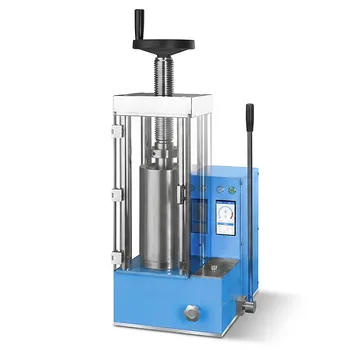

Automatic Lab Cold Isostatic Pressing CIP Machine
Item Number: PCIA

Electric Lab Cold Isostatic Press CIP Machine
Item Number: PCIE

Manual Cold Isostatic Pressing CIP Machine Pellet Press
Item Number: PCIM
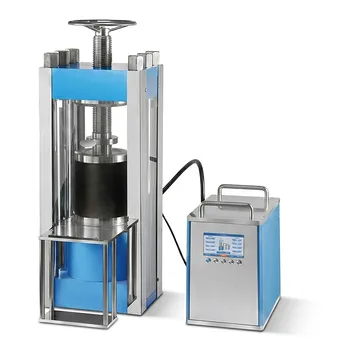
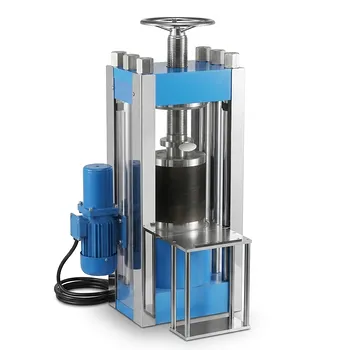

Electric Split Lab Cold Isostatic Pressing CIP Machine
Item Number: PCESI
Uniform Powder Compaction for Advanced Materials Research
Isostatic pressing is a highly effective forming method for researchers and manufacturers who need powder compacts with dependable density, improved structural integrity, and consistent results across the complete specimen. Instead of concentrating force along one pressing axis, an isostatic press applies pressure through a fluid or gas medium around a sealed flexible mold or hermetic container. The pressure reaches the material from every direction, compacting the powder uniformly even when the part has a complex geometry, a large aspect ratio, or regions that would be difficult to consolidate using conventional uniaxial dies.
This all-directional pressure principle makes isostatic pressing especially valuable where density variation can compromise downstream processing or final performance. In battery materials research, uniform green density supports more consistent electrode and solid-state material studies. In technical ceramics and refractories, it helps reduce internal density gradients that can contribute to shrinkage variation, cracking, or distortion during sintering. In powder metallurgy, it enables efficient forming of metal powders, including difficult-to-compact or high-value materials. It is equally relevant for ferrites, electronic ceramics, pharmaceutical compounds, graphite, catalysts, geological specimens, nuclear materials research, and specialized laboratory sample preparation.
KINTEK offers laboratory isostatic presses designed to give research teams a practical route from loose powder to dense, repeatable green bodies. The portfolio includes manual, electric, automatic, split-chamber, warm, and heated isostatic pressing systems, allowing laboratories to choose a machine configuration that matches their material behavior, sample volume, workflow, safety requirements, and desired level of process control. Whether the immediate goal is screening a new powder formulation, preparing specimens for sintering, studying the effect of pressure and temperature on densification, or establishing a reproducible pilot-scale procedure, our equipment supports controlled compaction with the flexibility expected in advanced R&D environments.
How Isostatic Pressing Works
The process begins by placing powder, granules, or a preformed material into a flexible elastomeric mold, bag, membrane, or pressure-resistant container. This enclosure serves as a barrier between the material and the pressurizing medium. In cold isostatic pressing, the mold is subjected to a liquid medium, commonly water or oil, at room temperature. The external fluid pressure acts evenly over the entire mold surface. Because the pressure is transmitted hydrostatically, the powder is compacted from all sides rather than being compressed only from the top and bottom.
As the applied pressure increases, particles rearrange, fill voids, and form more extensive contact points with adjacent particles. This reduces porosity and produces a denser green compact. The exact response depends on particle size distribution, powder morphology, moisture content, binder system, die or mold design, pressure level, dwell time, and the material's inherent compressibility. The aim is not merely to maximize pressure. Effective compaction requires a controlled process that produces the density, shape retention, and handling strength needed for the next stage, such as machining, drying, debinding, sintering, or characterization.
With warm or heated isostatic pressing, temperature is introduced alongside pressure. Heating can improve powder flow, soften or activate selected binders, and support the consolidation of materials that benefit from thermal assistance. Heated isostatic systems are useful when researchers need to investigate pressure-temperature relationships, improve compactability, or build more representative processing routes for advanced ceramic and battery material development. The combination of programmed heating and hydrostatic pressure provides an important research capability for materials whose forming behavior cannot be fully understood through room-temperature pressing alone.
The key distinction between isostatic and conventional uniaxial pressing is the distribution of force. A standard die press applies load primarily along a single direction. Friction between the powder and die wall can create density differences from top to bottom or from the outer area toward the center of the compact. While uniaxial pressing remains an efficient solution for many simple shapes and high-throughput tasks, it can impose restrictions on geometry and density uniformity. Isostatic pressing minimizes these limitations by applying balanced external pressure to the container, helping create a more homogeneous compact throughout the part.
Benefits of Laboratory Isostatic Pressing
The primary advantage of an isostatic press is highly uniform pressure transmission. A more even compaction load can lead to better density consistency across the specimen, which is critical when a material will later be sintered, heat treated, machined, or evaluated for mechanical, electrical, thermal, or electrochemical performance. Uniformity matters because uneven green density may become uneven shrinkage during firing. This can affect dimensional control, generate internal stresses, and reduce confidence in experimental results.
High green density is another important benefit. By reducing internal voids and improving particle packing, isostatic pressing helps laboratories create specimens with increased strength and improved handling characteristics before sintering. Dense, stable green bodies are often easier to transfer, inspect, machine, or position in subsequent processing equipment. For research teams working with small quantities of costly powders, reliable green strength can also reduce losses caused by damaged specimens and repeated preparation cycles.
Isostatic pressing also expands the range of shapes that can be formed. Since pressure is applied around the component rather than through a rigid punch arrangement, the process is well suited to parts with irregular, elongated, hollow, or otherwise complex geometries. It can be used for pellets, cylinders, tubes, rods, blocks, custom specimens, and near-net-shape components. The ability to form a part closer to its final shape reduces unnecessary machining, minimizes scrap, and makes more efficient use of expensive feedstock such as titanium powder, tool steel, superalloys, specialty ceramic powders, and advanced battery materials.
Material utilization is a practical advantage for both laboratories and small-scale production environments. Research powders may be costly, scarce, or synthesized in limited batches. Isostatic pressing can make effective use of these materials by lowering the waste associated with machining a finished form from a larger billet or repeatedly producing failed samples with poor density distribution. Near-net-shape compaction helps users focus valuable material where it is needed: in the final test specimen or component.
The process is also versatile across material classes. Ceramic researchers can use isostatic pressing to prepare alumina, zirconia, silicon carbide, ferrite, refractory, and composite samples. Battery development teams can investigate compacted electrode powders, separator-related materials, solid electrolytes, and other functional formulations. Powder metallurgy laboratories can prepare metal and alloy compacts. Pharmaceutical and chemical researchers can form powders into consistent tablets or test bodies, while electronics researchers can work with magnetic materials, conductive compounds, and dielectric ceramics. This broad compatibility makes isostatic equipment a useful shared resource within multidisciplinary research facilities.
Cold Isostatic Pressing for Flexible, Repeatable Research Workflows
Cold isostatic pressing, commonly called CIP, is performed at or near room temperature using a liquid pressure medium. It is a practical choice for laboratories that need high-density powder compacts without introducing a thermal cycle during the pressing stage. CIP is widely used for sample preparation and green-body production because it offers reliable pressure distribution while maintaining flexibility in mold selection, sample geometry, and material type.
KINTEK manual cold isostatic presses provide a straightforward option for laboratories that require hands-on pressure control and do not need fully automated cycling for every experiment. A manual CIP machine can be a strong fit for teaching laboratories, early-stage formulation research, lower-throughput material development, and teams that value direct operator involvement. It supports the essential advantages of hydrostatic compaction while giving researchers the freedom to adjust their approach as the material and experimental method evolve.
Electric laboratory CIP machines add powered operation and improved convenience for routine work. Electric control can make pressure application more consistent between operators and reduce the manual effort associated with repeated compaction cycles. These systems are well suited to laboratories that have moved beyond occasional sample preparation and need a more efficient, repeatable workflow for powder specimens. For teams handling a range of ceramic, pharmaceutical, electronic, and materials science powders, electric CIP equipment offers a balanced combination of precision, productivity, and ease of use.
Automatic laboratory cold isostatic pressing machines are intended for users who need enhanced consistency, repeatable program execution, and higher process efficiency. Automated operation is valuable when comparative experiments depend on maintaining the same pressure profile from one batch to the next. It also helps laboratories document and standardize procedures as a project advances from initial feasibility work toward method development, quality-controlled sample preparation, or pilot-scale evaluation. Repeatability is particularly important when compacts will be compared after sintering or tested for properties that are sensitive to porosity and density variation.
Split laboratory CIP configurations make handling and loading more convenient. A split design can improve access to the pressure chamber or working area, helping operators manage molds and samples with greater efficiency. This is useful when laboratories frequently change specimen sizes, work with delicate flexible molds, or need to streamline preparation between different research projects. Better accessibility can contribute to a more practical workflow without giving up the fundamental benefit of uniform isostatic pressure.
Warm and Heated Isostatic Pressing for Demanding Materials
Some powders, binders, and composite systems benefit from temperature-assisted processing. KINTEK split warm isostatic presses and heated isostatic pressing machines combine high compaction force with controlled heating capabilities for advanced materials investigations. These configurations are particularly relevant when room-temperature compaction alone does not provide the desired green density, binder response, or microstructural condition.
Warm isostatic pressing can be used to explore how moderate thermal conditions influence powder consolidation. In certain systems, heating can improve particle rearrangement and binder behavior, leading to stronger or more uniform green compacts. It may also help researchers assess process windows before moving to more complex manufacturing stages. For battery research, technical ceramics, and composite development, the ability to study pressure and temperature together can reveal valuable information about material processability and support more informed optimization decisions.
Heated isostatic presses extend this capability further by enabling programmable temperature profiles alongside controlled force or pressure conditions. Multi-stage heating programs are useful for experiments that require gradual temperature ramps, dwell periods, or carefully managed thermal exposure. Rather than treating pressing as an isolated step, researchers can use a heated isostatic system to investigate an integrated consolidation approach that reflects the needs of advanced powder systems. This is particularly useful in projects where density, binder behavior, thermal response, and final sintered performance are closely linked.
High-capacity split warm and heated models support more challenging compaction applications while preserving useful accessibility. Their combination of robust pressing capability, temperature control, touchscreen interfaces, curve recording, and safety-focused operating features helps laboratories execute complex research cycles with greater confidence. Recorded process information can support experiment comparison, troubleshooting, internal reporting, and the development of repeatable standard operating procedures.
Product Options in the KINTEK Isostatic Press Range
The KINTEK isostatic press category covers several operating approaches so users can select equipment based on process requirements rather than forcing every material into one method.
-
Manual cold isostatic pressing machines are suitable for versatile laboratory powder compaction where direct control, simple operation, and reliable density uniformity are priorities. They are a practical entry point for advanced material research and routine green-body preparation.
-
Electric cold isostatic presses offer powered, efficient operation for laboratories that prepare specimens frequently. They help improve workflow consistency while supporting a wide range of powder materials and research applications.
-
Automatic cold isostatic pressing machines are designed for repeatable processing and higher-efficiency sample preparation. Their automated operation supports standardized cycles for laboratories conducting comparative studies, recurring tests, or controlled process development.
-
Electric split laboratory CIP machines combine powered compaction with a split configuration that can simplify mold loading and specimen handling. They are well suited to research teams managing varied sample types and changing project requirements.
-
Split warm isostatic presses introduce temperature control to the compaction process, supporting challenging powder systems and investigations where thermal assistance may improve densification or green strength.
-
Split hot or heated isostatic pressing machines provide high-capacity, temperature-programmable processing for demanding battery and technical ceramic research. These systems are valuable when users need to assess pressure-temperature interactions and produce dense samples under controlled conditions.
-
Automatic hydraulic pellet presses for XRF and KBr preparation complement the category for laboratories requiring consistent analytical pellets. Although their pressing mechanism is uniaxial rather than hydrostatic, these systems support the broader sample-preparation workflow by producing repeatable pellets for X-ray fluorescence and infrared spectroscopy applications.
This selection allows KINTEK customers to build a compaction workflow around actual research needs. A laboratory performing occasional ceramic pellet trials may prioritize a manual CIP system. A battery R&D team preparing many comparable green bodies may benefit from electric or automatic operation. A group studying difficult materials, temperature-responsive binders, or advanced densification behavior may require a warm or heated isostatic press with programmed control. By matching equipment capability to the intended material, geometry, throughput, and data requirements, users can make compaction a more controlled and informative part of their development process.
Applications Across Battery, Ceramic, Metal, and Scientific Research
In battery research, isostatic pressing can support the development and evaluation of materials used throughout the cell fabrication workflow. Uniformly compacted powders help researchers prepare consistent samples for characterization and downstream thermal processing. This is useful when investigating cathode and anode-related materials, solid electrolytes, conductive additives, ceramic separators, and other functional powder systems. When experimental conclusions depend on comparing formulations, particle treatments, or processing conditions, consistent compaction reduces one important source of variability.
Technical ceramic laboratories use isostatic pressing to form materials that demand controlled density and dimensional stability. Alumina, zirconia, ferrite, silicon carbide, and refractory compositions often require careful green-body preparation before firing. The hydrostatic nature of CIP can help reduce density gradients that may otherwise influence shrinkage and final shape. This is valuable for both basic materials studies and applied work involving insulating components, structural ceramics, wear-resistant parts, magnetic materials, or high-temperature applications.
Powder metallurgy applications benefit from the ability to compact difficult and valuable powders with high material efficiency. Isostatic pressing can be used for metal powder research involving titanium, tool steels, superalloys, and other engineered materials where conventional forming methods may introduce limitations. By enabling near-net-shape green parts and more uniform compaction, the process can reduce the amount of material removed later and support more efficient routes to dense sintered or post-processed components.
In pharmaceutical, chemical, and food-related research, controlled powder consolidation is relevant to tablet formation, ingredient testing, and process development. In electronics, isostatic pressing supports ferrites, dielectric materials, conductive compounds, and other powders used in functional components. Medical, aerospace, nuclear, and energy research programs may also use isostatic methods when high density, complex geometry, and dependable material performance are central concerns. The shared requirement across these fields is clear: a compact that accurately represents the material and provides a stable foundation for the next processing or testing stage.
Process Control, Safety, and Data for Confident Operation
Laboratory compaction equipment should make complex processing more manageable, not introduce uncertainty into critical experiments. KINTEK systems are developed with practical control features suited to research environments. Depending on the model, users can benefit from touchscreen interfaces, programmable operating parameters, curve recording, multi-stage heating capability, and integrated safety shielding. These features help operators establish clear process conditions and repeat them when required.
Programmable control is valuable because pressing results depend on more than maximum capacity. Pressure rate, holding time, heating profile, and sequence can affect the outcome, particularly with sensitive powders, binder-containing formulations, or thermally assisted processes. The ability to define and reproduce a cycle helps researchers evaluate the influence of individual variables more systematically. This supports a disciplined approach to process optimization and improves traceability when results are shared within a research group or transferred between development stages.
Curve recording and process visualization provide another level of insight. Being able to review pressure and temperature behavior during a cycle can help users verify that the intended program was executed, identify deviations, and compare successful and unsuccessful trials. For advanced materials work, this information can be as important as the compact itself. It provides context for density measurements, sintering results, microscopic examination, and electrochemical or mechanical performance testing.
Safety remains essential whenever laboratories work with high force, pressurized media, and elevated temperature. Equipment should support sound operating practices through durable construction, appropriate protective design, clear controls, and procedures tailored to the selected system. KINTEK can help users consider factors such as target pressure range, chamber and mold configuration, sample dimensions, heating needs, utility requirements, and the material-specific precautions relevant to their intended application.
Select the Right Isostatic Press for Your Application
Choosing an isostatic press begins with the material and the result you need to achieve. Consider whether the powder is easy or difficult to compact, the required specimen dimensions and geometry, the desired green density, and whether the compact will be sintered, machined, analyzed, or used directly. Also evaluate sample throughput, the need for programmed and recorded cycles, operator preferences, laboratory space, and whether heating is necessary during compaction.
For room-temperature research and general powder compaction, a cold isostatic press is often the right starting point. Manual operation may be appropriate for flexible, lower-volume development work, while electric and automatic systems are better suited to recurring sample preparation and standardized workflows. When sample loading convenience is important, a split design can be especially helpful. When a material benefits from thermal assistance or a project requires controlled temperature-pressure studies, warm or heated isostatic pressing provides the additional process capability needed for more demanding investigations.
Capacity should be selected according to the actual pressure and sample requirements, not only the largest nominal tonnage available. A well-matched system provides sufficient performance for the intended materials while remaining practical for daily laboratory operation. Mold compatibility is equally important. The pressure medium, container type, sealing arrangement, and mold material must be appropriate for the sample and operating conditions. A properly defined configuration supports safer operation, better sample quality, and a more durable workflow.
KINTEK understands that standard equipment specifications do not always answer every laboratory requirement. Research projects may require non-standard mold dimensions, special pressure ranges, unique heating programs, customized control logic, integrated data functions, or configurations adapted to a specific material workflow. Our team can help assess these details and recommend a suitable laboratory isostatic pressing solution based on your experimental objectives.
For expert guidance on selecting a manual, electric, automatic, warm, or heated isostatic press, contact KINTEK through our inquiry form. Share your powder type, desired sample size, target density, required pressure and temperature conditions, and expected throughput. Our specialists can help configure a system that supports reliable compaction today and remains adaptable as your battery, ceramic, powder metallurgy, or advanced materials program develops.
FAQ
What Are The Main Applications Of A Laboratory Pellet Press?
What Is A Laboratory Hydraulic Press Used For?
What Are The Main Applications Of A KBr Pellet Press?
What Are The Main Applications Of Press Molds In Laboratories?
What Is The Principle Of A Laboratory Isostatic Press?
What Is The Principle Of Cold Isostatic Press (CIP)?
What Is An Isostatic Press?
What Features Should I Consider When Choosing A Laboratory Pellet Press?
What Are The Main Features Of A Laboratory Hydraulic Press?
What Are The Key Features Of A KBr Pellet Press?
What Types Of Press Molds Are Available For Laboratory Use?
What Are The Advantages Of Using A Laboratory Isostatic Press?
What Are The Advantages Of Cold Isostatic Press (CIP)?
What Are The Main Types Of Isostatic Presses?
How Does A Laboratory Pellet Press Work?
How Does A Laboratory Hydraulic Press Work?
How Does A KBr Pellet Press Work?
What Are The Key Features Of Laboratory Press Molds?
What Are The Common Applications Of A Laboratory Isostatic Press?
What Are The Applications Of Cold Isostatic Press (CIP)?
How Does An Isostatic Press Work?
What Are The Advantages Of Using A Laboratory Pellet Press?
What Are The Advantages Of Using A Laboratory Hydraulic Press?
What Are The Advantages Of Using A KBr Pellet Press?
What Materials Are Commonly Used To Make Press Molds?
What Types Of Laboratory Isostatic Presses Are Available?
What Types Of Cold Isostatic Press (CIP) Machines Are Available?
What Are The Advantages Of Using An Isostatic Press?
What Types Of Laboratory Pellet Presses Are Available?
What Types Of Laboratory Hydraulic Presses Are Available?
What Are The Drawbacks Of Manual KBr Pellet Presses?
What Are The Advantages Of Using Press Molds In Laboratories?
How Does A Laboratory Isostatic Press Ensure Uniform Density?
How Does Cold Isostatic Press (CIP) Compare To Uniaxial Die Compaction?
What Industries Use Isostatic Presses?
Why Is A Laboratory Hydraulic Press Ideal For Sample Preparation In Spectroscopy?
Can Press Molds Be Customized For Specific Laboratory Needs?
What Are The Applications Of Cold Isostatic Pressing (CIP)?
What Safety Features Are Included In Laboratory Hydraulic Presses?
How Do Press Molds Ensure High-precision Sample Preparation?
What Is The Difference Between CIP, WIP, And HIP?
Can Laboratory Hydraulic Presses Be Used For High-temperature Applications?
What Are The Benefits Of Using Heated Press Molds?
Why Is Uniform Density Important In Isostatic Pressing?
How Do Press Molds Contribute To Efficient Laboratory Workflows?
What Should I Consider When Choosing A Press Mold For My Laboratory?
REQUEST A QUOTE
Our professional team will reply to you within one business day. Please feel free to contact us!
Related Articles
The Architecture of Slow: Why Physical Precision Dictates Chemical Destiny
In fertilizer research, the chemical formula is only half the story. Discover why heated hydraulic presses are the essential tools for standardizing nutrient release kinetics.
The Architecture of Density: Why Pressure is the Silent Architect of Solid-State Batteries
Explore how laboratory hydraulic presses transform sulfide powders into high-performance solid electrolytes by overcoming grain boundary resistance and porosity.
The Architecture of Stress: Bridging the Gap in Hybrid Hot Forming
Explore how high-precision laboratory hydraulic systems validate numerical models, control microstructure, and optimize parameters to prevent defects in industrial manufacturing.
The Physics of Transparency: Why Pressure is the Silent Architect of Spectroscopic Clarity
Explore the critical role of laboratory hydraulic presses in FT-IR spectroscopy for Copper(II) complexes and how high-pressure molding eliminates light scattering for high-resolution data.
The Geometry of Pressure: Why Precision Hot-Pressing is a Science of Limits
Explore the critical role of high-temperature pressure sensing and precision pressing in composite manufacturing, from matrix impregnation to avoiding structural failure.
The Geometry of Electrons: Why Surface Precision is the Silent Partner in SECM Research
Discover how laboratory hydraulic presses transform powder catalysts into precision electrodes, eliminating topography errors and ohmic resistance in SECM analysis.
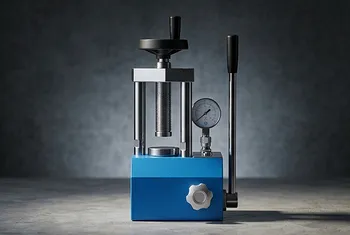
The Silent Geometry of Density: Why Isotropic Pressure is the Soul of Advanced Ceramics
Explore how Cold Isostatic Pressing (CIP) solves the hidden internal stresses of alumina ceramics to ensure defect-free sintering and superior material density.
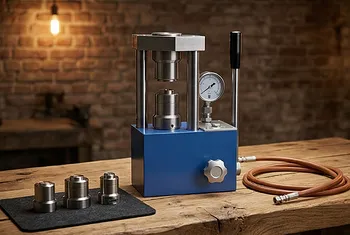
The Paradox of Pressure: Why 10 MPa Outperforms Force in Alumina Sintering
Discover why moderate pressure (10 MPa) is superior to high force in hot-pressing platelet alumina, preventing pore expansion and ensuring optical clarity.
The Architecture of Certainty: Why the Laboratory Press is the Anchor of Material Science
Explore how precision heated hydraulic presses eliminate variables in rubber and pigment testing, transforming raw mixtures into standardized, data-ready specimens.
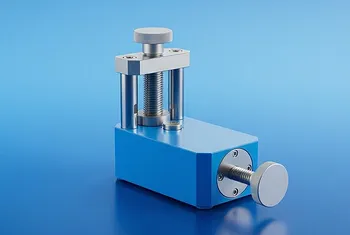
The Architecture of Uniformity: Why Omnidirectional Pressure Defines Ceramic Destiny
Explore how Cold Isostatic Pressing (CIP) eliminates internal density gradients in 10NiO-NiFe2O4 composite ceramics to ensure survival in high-corrosion environments.
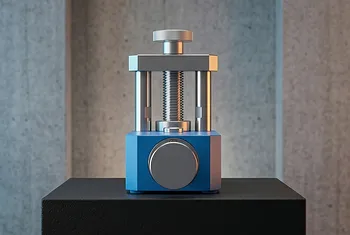
The Mechanics of Transformation: Why Pressure Redefines Wood Modification
Explore how thermo-mechanical coupling in hydraulic presses outperforms traditional ovens by enabling deep chemical penetration and structural stabilization.
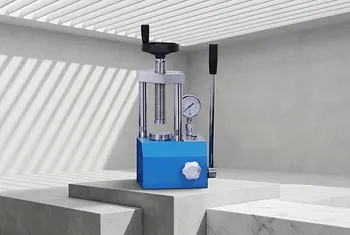
The Mechanical Handshake: The Invisible Architecture of Room-Temperature Pressing
Discover how room-temperature pressing acts as the critical mechanical foundation for lignin-fiber integration, ensuring structural integrity before thermal consolidation.
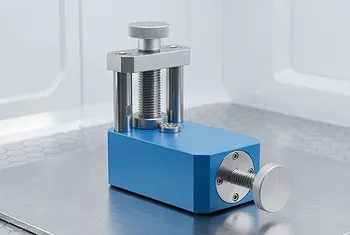
The Architecture of Heat: Why Sample Density Dictates the Truth in Metal Hydride Research
Explore how laboratory hydraulic presses bridge the gap between loose powders and accurate thermal conductivity data through precise density control and geometric standardization.
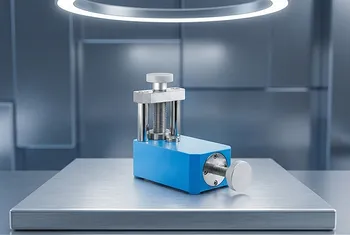
The Geometry of Precision: Mastering the Thermal-Pressure Field in APPC Fabrication
Discover how high-precision heated presses achieve full impregnation and structural uniformity in All-Polypropylene Composites through controlled thermal-pressure fields.
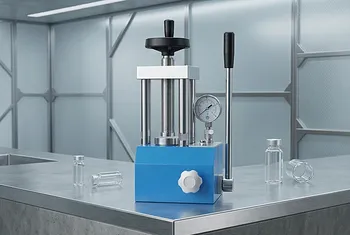
The Isotropic Imperative: Why Uniform Pressure Defines the Life of a Superconductor
Explore how Cold Isostatic Pressing (CIP) eliminates internal density gradients in Bi2212 substrates to ensure structural integrity and maximum current density.
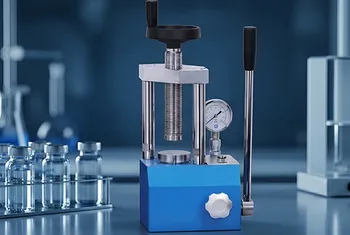
The Thin Line of Efficiency: Why Precision Pressing Dictates Thermal Performance
Discover how laboratory pressing optimizes thermal interface thickness and filler orientation to maximize the COP of TEC and PCM composite systems.
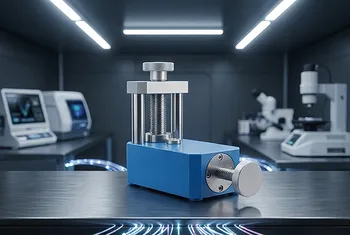
The Invisible Forge: Why the Laboratory Press is the Soul of Nano-Composites
Discover how laboratory heated hydraulic presses drive chemical cross-linking and physical densification in nano-composites through precise thermal and mechanical control.
The Architecture of Contact: Why 400 MPa is the Bridge to Solid-State Batteries
Explore the critical role of ultra-high pressure in solid-state fluoride-ion battery assembly and how mechanical interlocking overcomes interfacial resistance.
The Geometry of Silence: Why Flexibility is the Ultimate Precision in Ti-6Al-4V Pressing
Explore the critical role of flexible rubber molds in isostatic pressing. Learn how they eliminate density gradients and protect Ti-6Al-4V alloy integrity.
The Architecture of Force: Engineering Integrity in Copper-Based Composites
Explore how precision hydraulic pressing transforms loose copper powders into high-density green compacts, overcoming bridging effects and ensuring sintering success.