The Invisible Architecture
In the world of material science, we often talk about the "bond"—the moment heat and chemistry fuse two substances into one. But the bond is a climax. Before the climax, there is the introduction.
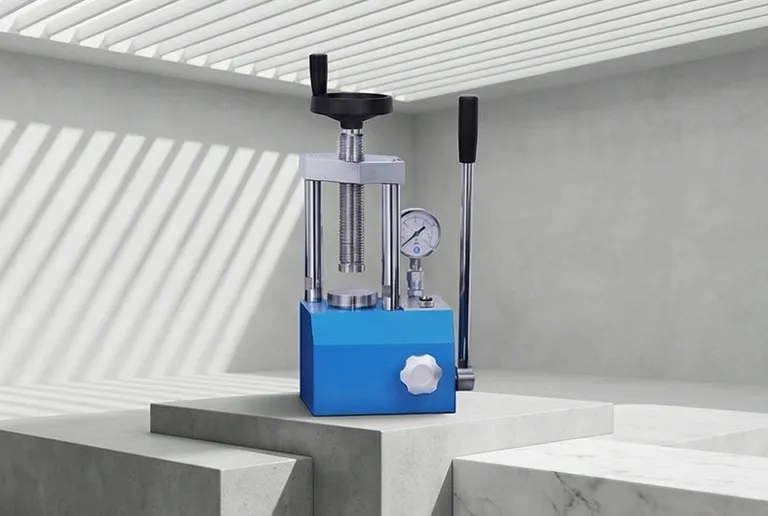
In the fabrication of lignin-integrated paper, the laboratory press performs a "mechanical handshake." At room temperature, long before the first joule of heat is applied, the press determines whether the material will succeed or fail.
It is not merely a weight; it is a precision instrument of spatial organization.
The Vertical Imperative: Embedding the Particle
When a wet handsheet laden with lignin powder sits on a platen, it is a loose collection of strangers. The fibers and the lignin particles are merely adjacent.
The first movement of the press is the vertical force. This isn't just about compression; it is about relocation.
- Particle Redeposition: Pressure drives the lignin deep into the porous network of the cellulose.
- Surface Integration: It prevents the lignin from staying on the surface like a coat of paint, forcing it to become part of the internal matrix.
- Proximity: By minimizing the distance between fiber and binder, the press creates the physical intimacy required for future chemical bonding.
The Radial Flow: A River of Distribution
If vertical force provides the depth, radial flow provides the breadth.
As the press closes, moisture within the wet sheet is forced outward. This lateral movement acts as a transport system. It is a hydraulic river that carries lignin particles into every void, ensuring the surface doesn't have "hot spots" of high concentration or "dead zones" of weakness.
Without this pressure-induced flow, the final sheet is a lottery of inconsistent strength. The press turns a localized application into a systemic distribution.
The Psychological Trade-off: Precision vs. Power
In engineering, there is a temptation to believe that if some pressure is good, more pressure is better. This is a fallacy of the "unskilled hammer."
A researcher must balance two competing forces:
| Objective | The Risk of Excess | The Result |
|---|---|---|
| Uniformity | Fiber Crushing | Brittle, structurally compromised sheets |
| Lignin Embedding | Washout | Lignin is pushed out with the water, not into the fiber |
| Structural Foundation | Irreversible Damage | Loss of the fiber's inherent mechanical elasticity |
The goal is not to crush the material into submission, but to guide it into a state of optimal proximity.
From Lab Bench to Industrial Reality
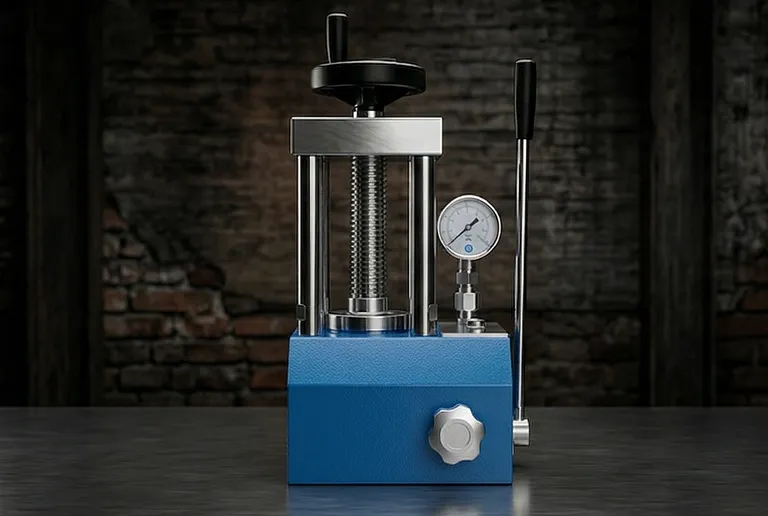
The laboratory press serves as a simulator. It mimics the dehydration and pressing stages of massive industrial papermaking machines.
For those working with conductive additives or battery-grade composites, this phase is even more critical. Mechanical pressure ensures the tight contact required to reduce electrical resistance. It is the phase where the electrochemical future of the material is decided.
Engineering the Perfect Foundation
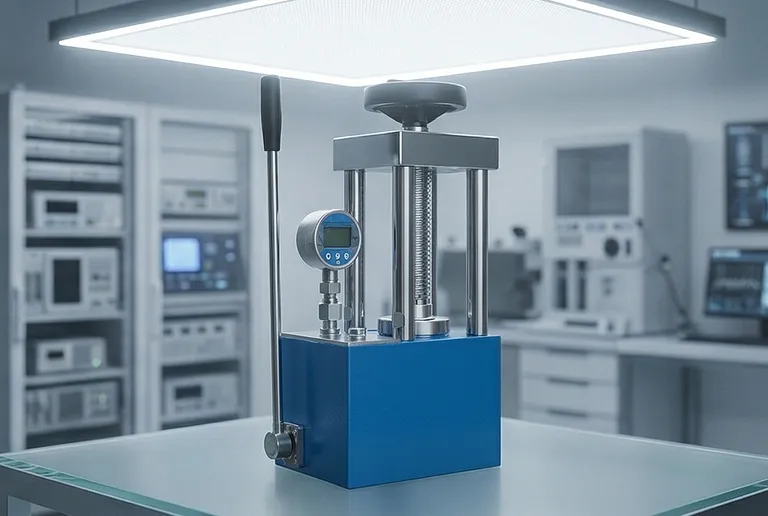
Precision in this mechanical phase requires hardware that understands the nuance of force. At KINTEK, we design laboratory presses that bridge the gap between "brute force" and "material science."
Our solutions are built for those who understand that the room-temperature phase is the foundation of everything that follows:
- Manual & Automatic Presses: For repeatable, calibrated force that respects the limits of your fiber matrix.
- Heated & Multifunctional Models: To transition seamlessly from the mechanical handshake to thermal consolidation.
- Isostatic Solutions: When your research demands uniform pressure from every angle, particularly in advanced battery and lignin-carbon research.
The success of your material is dictated by the quality of its foundation. Ensure your mechanical preparation is as precise as your chemistry.
Ready to optimize your pressing process? Contact Our Experts
Related Products
- Automatic High Temperature Heated Hydraulic Press Machine with Heated Plates for Lab
- Cylindrical Lab Electric Heating Press Mold for Laboratory Use
- Warm Isostatic Press for Solid State Battery Research Warm Isostatic Press
- Lab Heat Press Special Mold
- Automatic Heated Hydraulic Press Machine with Hot Plates for Laboratory
Related Articles
- The Architecture of Slow: Why Physical Precision Dictates Chemical Destiny
- The Architecture of Certainty: Why the Laboratory Press is the Anchor of Material Science
- The Vanishing Boundary: The Hidden Thermodynamics of LTCC Lamination
- The Alchemy of 160°C: Why Precision Pressing is the Silent Backbone of Rubber Science
- The Invisible Forge: Why the Laboratory Press is the Soul of Nano-Composites


















