The Psychology of the Threshold
Every structural failure has a signature. In the world of high-strength materials, a macroscopic crack or a wrinkled edge is rarely an accident; it is a physical manifestation of a misunderstood variable.
In engineering, we often live in the "ideal" world of numerical simulations. But as Morgan Housel might suggest about finance, the gap between what should happen and what actually happens is where the risk lives.
High-precision laboratory hydraulic forming systems are the tools designed to close that gap. They serve as the bridge between the sterile perfection of a computer model and the chaotic reality of industrial-scale production.
Validating the Digital Twin
Numerical simulations (FEA) are only as good as the physics they are built upon. Without real-world validation, an algorithm is just a sophisticated guess.
Precision lab systems provide an ultra-stable environment to test these digital predictions. By isolating individual mechanical variables, engineers can move from theory to certainty.
- Punch Speed Control: Precisely adjusting the rate of deformation to find the limits of material ductility.
- Blank Holder Force: Managing the tension required to prevent wrinkling without inducing tearing.
- Defect Identification: Locating the exact "process window" where complex geometries can be formed without structural failure.
The Microscopic Battle: Controlling Grain History
A material is a living history of the forces applied to it. At the microscopic level, hybrid hot forming is a battle against time and temperature.
When dealing with high-strength steels or advanced alloys, the goal is often Dynamic Recrystallization. This is the process of "restarting" the grain structure to ensure fine-grain strengthening.
The Dynamics of Integrity
- True Strain Management: To achieve a refined grain structure, a system must reach specific strain thresholds (often 0.6 or higher) with absolute repeatability.
- Abnormal Grain Growth: If the process isn't precisely guided, the material develops structural "weak spots" that lead to premature failure in the field.
- Internal Uniformity: Especially in composites, the pressure must be perfectly distributed to ensure thermal conductivity and mechanical strength are consistent across the entire part.
The Symphony of Heat and Pressure
Hybrid hot forming is not a solo performance; it is a synchronized duet between thermal and mechanical energy.
Identifying the "Ideal Forming Pressure"—often a narrow window between 100 and 150 MPa—requires a system that doesn't just apply force, but applies it with rhythmic precision.
| Parameter | Impact on Part | Laboratory Necessity |
|---|---|---|
| Mechanical Variables | Prevents macro-defects | Precise punch and holder control |
| Microstructure | Ensures structural strength | Controlled strain for recrystallization |
| Thermal Synchronization | Prevents interlayer cracking | Simultaneous heat/pressure cycles |
| Simulation Accuracy | Reduces factory scrap | High-fidelity data for FEA tuning |
The Paradox of Precision
There is a subtle danger in the laboratory: Over-Optimization.
If an engineer defines a process window that is too narrow, the manufacturing process becomes "brittle." A slight fluctuation in factory ambient temperature or a minor batch variation in raw material can lead to high scrap rates.
The true value of a high-precision lab system is not just finding the perfect point, but mapping the boundaries of failure. It allows researchers to understand the "thermal inertia" and mechanical tolerances they will face when scaling up to industrial presses.
The KINTEK Solution: Precision as a Standard
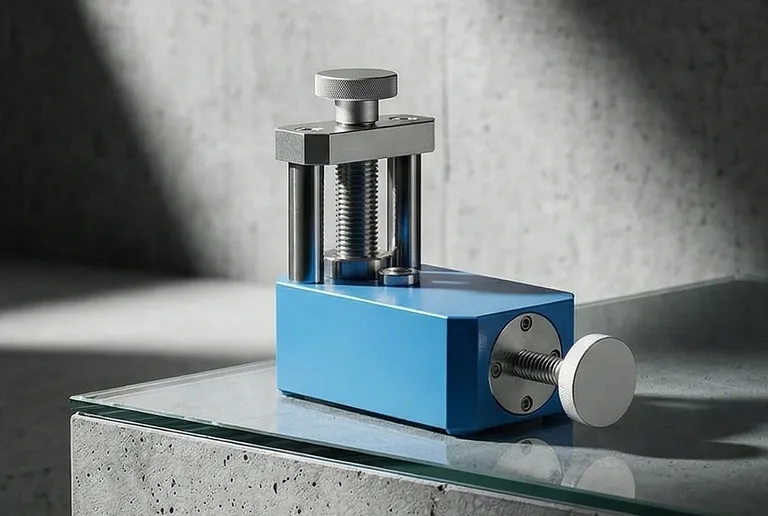
At KINTEK, we understand that material science is a pursuit of margins. Our laboratory pressing solutions are engineered to provide the "Engineered Romance" of absolute control, ensuring that your research translates perfectly to the factory floor.
Our comprehensive suite of tools supports every stage of this optimization:
- Manual & Automatic Presses: For iterative testing and variable isolation.
- Heated & Multifunctional Models: Enabling the synchronized thermal-mechanical cycles required for resins and composites.
- Isostatic Presses (Cold/Warm): Essential for achieving the density uniformity required in advanced battery research.
- Glovebox-Compatible Systems: Ensuring material integrity for sensitive chemical environments.
By empowering your research with validated physical principles, you eliminate the "trial and error" that haunts industrial scaling.
Related Products
- Laboratory Hydraulic Press Lab Pellet Press Button Battery Press
- Laboratory Hydraulic Press 2T Lab Pellet Press for KBR FTIR
- Laboratory Hydraulic Press Lab Pellet Press Machine for Glove Box
- Laboratory Split Manual Heated Hydraulic Press Machine with Hot Plates
- Automatic Laboratory Hydraulic Press Lab Pellet Press Machine
Related Articles
- The Architecture of Density: Why Pressure is the Silent Architect of Solid-State Batteries
- The Physics of Transparency: Why Pressure is the Silent Architect of Spectroscopic Clarity
- The Architecture of Heat: Why Sample Density Dictates the Truth in Metal Hydride Research
- The Geometry of Ionic Flow: Why Precision Pressing Dictates Material Truth
- The Geometry of Electrons: Why Surface Precision is the Silent Partner in SECM Research



















