Precision Coin Cell Disc Cutting for Reliable Battery Research
Coin cell testing is one of the most widely used methods for evaluating electrode materials, electrolytes, separators, binders, and complete electrochemical systems. Whether the objective is to compare active-material formulations, validate a new coating process, study cycling stability, or establish baseline performance before pouch-cell development, the quality of each assembled coin cell depends heavily on the consistency of its components. Electrode discs that vary in diameter, show rough edges, retain loose debris, or become distorted during cutting can introduce avoidable uncertainty into the experiment.
KINTEK coin cell disc cutters are designed to make this preparation step controlled, repeatable, and efficient. Our electrode sheet punching machines and handheld circular cutting machines create circular samples from battery cathodes, anodes, separators, metal foils, polymer films, and related thin materials. By producing well-defined discs with clean profiles, they help laboratories standardize electrode geometry and prepare components ready for coin-cell assembly.
Why electrode disc quality matters
A coin cell may be compact, but its performance data are affected by many interdependent variables. Electrode composition, coating loading, compaction density, electrolyte selection, separator properties, cell pressure, and assembly conditions all influence the final result. Sample geometry is another important variable. When discs are cut inconsistently, the active area may differ between cells, edge defects may occur, and loose particles can be carried into subsequent assembly steps.
A precise cutting process supports more dependable comparisons by helping researchers achieve:
- Consistent electrode diameter, enabling a more uniform active area across replicate cells.
- Clean, smooth edges, which reduce the likelihood of edge damage, flaking, and unwanted contamination.
- Reliable stack alignment, especially when electrode, separator, and counter-electrode dimensions are selected as a coordinated set.
- Reduced sample waste, because accurately cut sheets are more likely to meet the intended cell design on the first attempt.
- Improved workflow repeatability, allowing researchers to focus on meaningful material and process differences rather than preparation variation.
For battery R&D teams, repeatable sample preparation is not merely a convenience. It is part of building an experimental workflow that can generate data with greater confidence. This becomes increasingly important when screening many material variations, transferring a process between researchers, comparing batches, or documenting procedures for scale-up.
Two practical cutting approaches for laboratory coin-cell preparation
The Coin Cell Disc Cutter category includes complementary tools for different laboratory preferences and sample-preparation requirements.
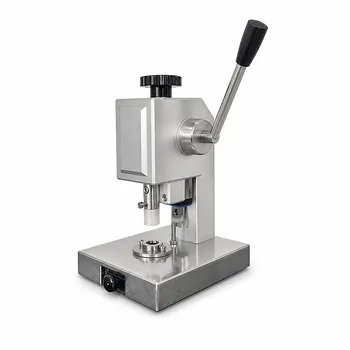
Coin Cell Electrode Sheet Punching Machine
A coin cell electrode sheet punching machine uses a matched die set to punch circular discs from prepared electrode sheets and other thin materials. This configuration is well suited to researchers who need a straightforward, stable, and repeatable method for producing multiple samples of a defined diameter. The punching action concentrates force around the cutting perimeter, separating the disc from the sheet in a controlled operation.
These machines are commonly used for coated cathode and anode sheets, including lithium-ion battery electrodes on aluminum or copper current collectors. They can also support the preparation of separator discs and compatible thin films used in electrochemical test cells. A compact footprint makes this type of equipment practical for research laboratories where bench space is limited and where preparation equipment may need to be positioned close to coating, drying, pressing, weighing, or assembly stations.
The key advantage of a die-punching system is repeatability. Once an appropriate die size is selected and the material is positioned correctly, operators can prepare a series of discs with consistent dimensions. This is valuable for routine cell fabrication, high-volume materials screening, and standardized test protocols. Flexible die options also allow laboratories to select disc diameters that match their coin-cell hardware, electrode design, and experimental objectives.
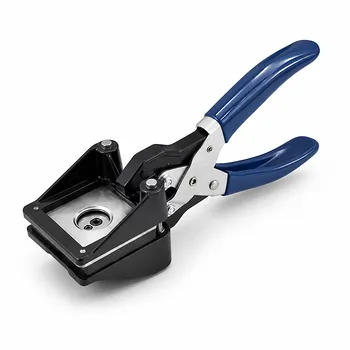
Handheld Circular Cutting Machine for Lithium Battery Electrode Samples
The handheld circular cutting machine offers a compact solution for rapid electrode sample preparation. It is designed for one-stroke circular cutting, giving laboratories an efficient method for producing disc-shaped samples without a large permanent installation. Its portable format can be particularly useful when researchers need flexibility in where they prepare samples or when the workflow calls for a simple tool that can be used near the point of assembly.
For lithium battery electrode samples, smooth and burr-minimized cut edges are especially important. Coated electrodes can be susceptible to cracking, delamination, particulate shedding, or deformation if they are handled with unsuitable tools. A purpose-built circular cutting machine helps produce cleaner samples than improvised methods, supporting better material handling and a more controlled assembly process.
Customizable dies enable the handheld cutter to adapt to different coin-cell formats and research designs. This flexibility is useful for laboratories that work on multiple projects, compare different active-area configurations, or need to align electrode dimensions with separators, spacers, and other cell components. The result is an accessible cutting solution that supports fast iteration without compromising the basic consistency expected in professional battery research.
How coin cell disc cutters work
Coin cell disc cutters rely on a simple but important principle: a precisely defined circular die applies concentrated mechanical force to shear the material along a controlled perimeter. The quality of the resulting disc depends on several factors, including die sharpness, die-to-material compatibility, material thickness, coating characteristics, support beneath the material, and the steadiness of the cutting operation.
In a punch-style machine, the electrode sheet is placed on the working surface and aligned with the die. The operator actuates the mechanism, and the die cuts through the sheet to produce a circular sample. In a handheld cutting system, the operator positions the tool and completes the cut in a direct, one-stroke operation. Both approaches are intended to provide a defined sample geometry with less variation than hand trimming or cutting with general-purpose tools.
The cutting process is particularly relevant for battery electrodes because they are composite structures. A typical coated electrode includes a metal current collector, active material, conductive additive, and binder. The sheet may have different mechanical behavior depending on coating thickness, porosity, calendering pressure, moisture condition, and composition. A well-matched disc cutter helps process these materials efficiently while preserving the sample condition required for assembly and testing.
Compatible materials and research applications
KINTEK coin cell disc cutters are intended for laboratories preparing circular specimens from a broad range of thin materials. Common applications include:
- Cathode electrode sheets, such as coated aluminum foil used for lithium-ion battery positive electrodes.
- Anode electrode sheets, including graphite, silicon-containing, lithium-metal-related, or other coated copper-foil materials where applicable.
- Battery separators, including polymer separator films prepared to match the electrode and coin-cell configuration.
- Current collector foils, metal foils, and thin conductive sheets used in materials development and cell design.
- Polymer films and membranes, including films evaluated for separator, electrolyte, binder, or protective-layer research.
- Thin materials for electrochemical test cells, including samples used in fundamental materials science and interface studies.
Beyond conventional lithium-ion coin-cell research, disc cutting can support work in sodium-ion batteries, solid-state battery development, lithium-metal studies, supercapacitors, fuel-cell-related materials research, and other energy-storage investigations that require accurately sized circular specimens. The same precision preparation principles can also benefit materials science, powder metallurgy, ceramics, polymer research, and academic laboratory programs when compatible sheet-like materials need to be sampled consistently.
Supporting a connected battery R&D workflow
Disc cutting is most effective when it is integrated into a complete electrode and cell-fabrication workflow. In a typical research sequence, slurry ingredients are mixed, coated onto a current collector, dried, calendered or pressed to achieve the desired thickness and density, then cut into discs for assembly. The finished discs are weighed, transferred into a controlled environment as needed, and assembled with separators, electrolyte, spacers, cases, and other cell components. The cells are then crimped and connected to battery test systems for cycling, rate capability, impedance, or other performance evaluations.
KINTEK understands this connected workflow because our laboratory equipment portfolio spans battery R&D and advanced materials processing. In addition to coin cell disc cutters, we provide equipment for slurry mixing, coating, precision pressing, cell assembly, and testing. This broader perspective helps us recommend a practical cutting solution that fits the actual process rather than treating the cutter as an isolated purchase.
For example, a laboratory evaluating coating density may need disc cutting that preserves the post-calendered electrode condition. A group performing high-throughput materials screening may prioritize a consistent die size and repeatable operation for many samples. A glovebox-based research workflow may require compact equipment that can be handled within restricted space and controlled-atmosphere procedures. A pilot team may need dies matched to an internal test standard or a specific coin-cell hardware configuration. The right solution depends on the material, the cell design, the throughput target, and the way the laboratory works.
Advantages of purpose-built coin cell cutters
Using a dedicated coin cell disc cutter provides clear operational advantages over manual trimming, scissors, utility blades, and improvised circular tools. General cutting methods can be slow, difficult to standardize, and more likely to produce irregular edges. They may also place uneven stress on coated electrode layers, making it harder to achieve repeatable samples across a test series.
A purpose-built cutter offers several benefits:
- Precision: Defined dies help control disc dimensions for a consistent active area and better component matching.
- Efficiency: One-stroke or punch-based cutting reduces preparation time for routine coin-cell assembly.
- Repeatability: Operators can reproduce the same sample size across multiple cells, batches, and projects.
- Cleaner handling: Smooth, burr-minimized edges help support orderly assembly and reduce loose material concerns.
- Flexibility: Available and customizable die sizes allow the cutting configuration to match specific research needs.
- Compact operation: Bench-friendly and handheld options suit laboratories that need practical tools without excessive space requirements.
- Process compatibility: Suitable designs can support electrode preparation workflows involving gloveboxes and controlled handling practices.
These benefits help research teams spend less time compensating for sample-preparation inconsistency and more time evaluating the chemistry, structure, and processing conditions that determine battery performance.
Choosing the right disc cutter and die size
Selecting a coin cell disc cutter begins with the cell format and intended electrode geometry. The diameter of the working electrode should be chosen with consideration for the coin-cell case, separator size, counter electrode, intended test area, and assembly practice. In many designs, the separator is larger than the working electrode to help prevent direct contact between electrodes, while the counter electrode may be selected according to the specific cell configuration and research objective.
Material properties also matter. Coated electrodes vary substantially in thickness, stiffness, surface texture, loading, and adhesion. A highly compacted electrode may behave differently under cutting force than a porous coating. Metal foil, polymer separator film, and multilayer samples also have distinct handling characteristics. Sharing material details with the equipment supplier helps ensure that the selected die configuration and operating approach are appropriate for the application.
When evaluating a punching machine versus a handheld circular cutter, consider:
- The number of discs required per day or per project.
- The need for fixed-position, repeatable production versus portable operation.
- The range of disc diameters required.
- The type and thickness of electrode, separator, foil, or film being cut.
- The available workspace and glovebox handling requirements.
- The desired balance between routine throughput, flexibility, and operator workflow.
KINTEK can help match the equipment configuration to these requirements. Rather than relying on a generic recommendation, we consider how the cutter will fit into your material preparation, coin-cell assembly, and testing process.
Customizable solutions for specialized research
Battery research is not limited to one electrode diameter, one material construction, or one workflow. Laboratories often need to compare formats, use proprietary cell designs, develop new chemistries, or adapt tooling as projects evolve. For this reason, customization is an important part of selecting a disc-cutting solution.
KINTEK supports customizable die sizes and application-focused equipment selection for coin cell electrode preparation. When contacting us, providing the desired disc diameter, material type, material thickness, coating structure, cell format, working environment, and expected throughput allows our technical team to give more relevant guidance. We can also discuss how the cutter should interface with related laboratory equipment, including electrode presses, coating systems, cell assembly tools, and battery testing platforms.
This consultative approach is particularly valuable for universities, research institutes, corporate R&D centers, and pilot laboratories that need equipment to support evolving experiments. A well-chosen disc cutter should be straightforward to operate today while remaining aligned with the laboratory's broader development plans.
Build more consistent coin-cell test cells with KINTEK
Reliable battery data begins with reliable sample preparation. Whether you need a stable electrode sheet punching machine for repeatable die cutting or a handheld circular cutter for fast, flexible electrode sampling, KINTEK provides practical laboratory solutions for coin-cell research and advanced materials development. Our experience across the battery fabrication workflow enables us to support not only the cutter itself, but also the process conditions around it.
Contact KINTEK to discuss your electrode material, required disc size, coin-cell format, glovebox needs, throughput expectations, and customization requirements. Our specialists can help you select a coin cell disc cutting solution that delivers clean samples, consistent geometry, and a workflow suited to your research goals.