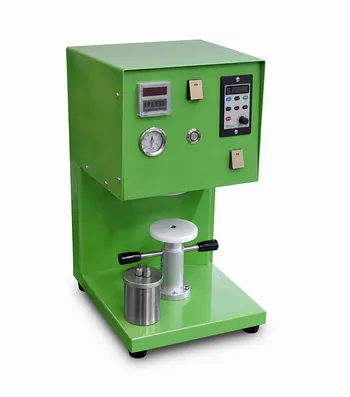
Improve Slurry Consistency From Material Development to Pilot Preparation
Slurry mixing is more than combining powders and liquids. In battery electrode production, ceramics processing, coatings research, pharmaceutical formulation, and other advanced-materials workflows, mixing directly affects dispersion quality, viscosity stability, air content, coating behavior, density, and ultimately product performance. An apparently uniform mixture can still contain agglomerates, trapped air, unevenly wetted powder, or local viscosity variation. These issues may lead to inconsistent coating thickness, poor adhesion, voids after drying, unreliable electrochemical behavior, weak mechanical properties, and avoidable variation between samples.
KINTEK laboratory slurry mixers are designed to help researchers and process developers create homogeneous, repeatable mixtures under controllable laboratory conditions. The range covers compact vacuum mixing, digitally controlled high-power stirring, temperature-assisted vacuum processing, and roller-based agitation. This gives laboratories practical options for different material rheologies, batch volumes, containers, and process objectives rather than forcing one mixing method onto every formulation.
Why controlled slurry preparation matters
A well-designed mixing process must provide sufficient mechanical energy to wet and disperse powder particles while avoiding unnecessary air entrainment, sedimentation, localized overheating, or damage to sensitive components. The optimal method depends on the formulation. Low-to-medium viscosity liquids may require vigorous, accurately controlled stirring. Highly viscous mixtures may benefit from vacuum conditions and temperature control. Containerized samples, suspensions, and formulations that need gentle but thorough blending may be better suited to roller agitation.
For battery research, repeatable electrode slurry preparation is particularly important. Active materials, conductive additives, binders, solvents, and other components must be combined into a stable, processable slurry before coating. Insufficient dispersion can create conductive-network inconsistency or particle clusters. Excess entrained air can cause coating defects and density variation. Uncontrolled viscosity can change flow, leveling, coating loading, and drying behavior. A laboratory mixing system that provides consistent speed, time, vacuum, and, where required, temperature control helps make formulation comparisons more meaningful.
The same principles apply beyond batteries. Ceramic powders require uniform dispersion to reduce defects during shaping and sintering. Adhesives, sealants, coatings, pigments, fragrances, cosmetics, and pharmaceutical mixtures often need controlled processing to achieve smooth texture, stable composition, and dependable downstream behavior. Dental investment, gypsum, agar, and casting materials benefit from vacuum processing because removing air helps produce dense, accurate models with fewer visible voids.
Vacuum mixers for dense, bubble-free material preparation
Vacuum mixing combines mechanical agitation with reduced pressure. During conventional mixing, air may be incorporated into the material through vortex formation, powder addition, or the natural movement of viscous media. Small bubbles can remain suspended in the mixture, especially when the slurry is thick. Under vacuum, trapped air expands and is drawn out more effectively, helping produce a denser and more uniform result.
KINTEK vacuum mixers are suited to laboratories that need bubble-free processing of battery slurries, ceramic powder dispersions, dental materials, casting compounds, and other viscous formulations. Compact cup-style systems, including 150 ml vacuum mixer configurations with built-in vacuum pumps, are useful for research-scale formulation work where material availability is limited and repeatable small batches are essential. Reliable sealing and an integrated vacuum environment support clean, controlled preparation without requiring a large external system.
Vacuum processing offers several practical advantages:
- Reduced entrained air: Helps minimize bubbles and void-related defects in dense slurries, casting materials, coatings, and dispersions.
- Improved material uniformity: Supports more consistent wetting and blending of powders, binders, liquids, and additives.
- Better downstream processing: A smoother, more homogeneous slurry can improve coating, casting, molding, leveling, and compaction behavior.
- More dependable test samples: Reducing preparation-related variation helps researchers compare formulations and process parameters with greater confidence.
- Efficient small-batch development: Compact mixing cups are appropriate for screening materials and refining recipes before increasing batch size.
For labs preparing battery electrodes, vacuum mixing can be especially useful when the formulation contains fine powders, conductive additives, binder systems, or viscous solvents that can retain air. By improving slurry density and consistency, the mixer supports the preparation stage before coating, drying, calendering, cell assembly, and electrochemical testing. While the final electrode result always depends on the complete process window, controlled mixing establishes a stronger foundation for each subsequent step.
Heated vacuum mixing for viscous and temperature-dependent formulations
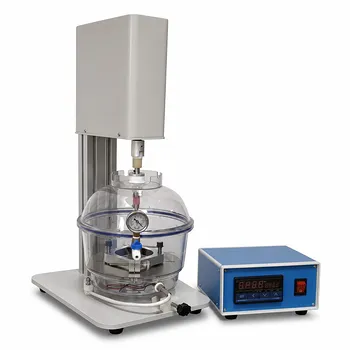
Some materials become difficult to process when viscosity is high or when components do not disperse efficiently at ambient temperature. A constant-temperature electric heating vacuum mixer combines three useful process variables: mechanical mixing, vacuum degassing, and controlled heat. This approach is valuable for viscous slurries and formulations that require temperature-assisted flow or more stable processing conditions.
The heating function can help lower the apparent viscosity of suitable materials, improve flow during agitation, and support more effective contact between liquid and powder phases. Meanwhile, vacuum helps remove air introduced during mixing, and adjustable speed allows the operator to tailor shear input to the formulation. A transparent vacuum vessel also gives users visibility during development work, helping them observe volume changes, mixing behavior, and material movement.
These systems are relevant to a wide group of laboratory applications, including adhesives, coatings, pigments, additives, fragrances, cosmetics, electronic materials, pharmaceutical research, and new-energy development. In each case, the ability to control temperature and mixing conditions can help laboratories move beyond informal manual preparation toward a documented, repeatable method.
When specifying a heated vacuum mixer, researchers should consider the expected viscosity range, thermal sensitivity of materials, target batch size, desired mixing speed, required temperature range, vacuum needs, and cleaning requirements. The correct choice is determined by the actual formulation and workflow, not simply by selecting the most powerful machine. KINTEK can help match the equipment configuration to your material characteristics and experimental goals.
Digital high-power stirrers for flexible laboratory mixing
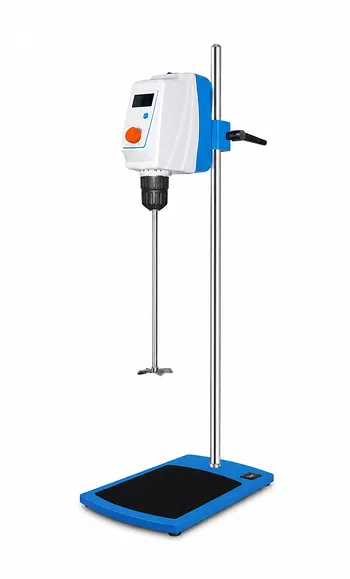
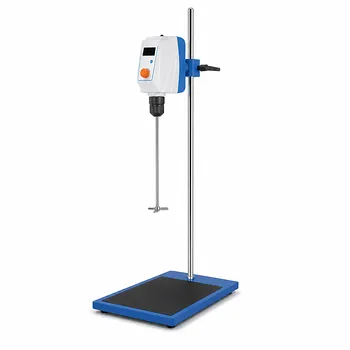
A digital high-power stirrer is a versatile choice for routine laboratory mixing, dispersion development, and process parameter studies. Compared with basic manual agitation, a digitally controlled system allows users to set and monitor speed more consistently. Features such as LCD speed display, programmable timing, overload protection, and broad voltage compatibility support dependable daily use across battery, materials, pharmaceutical, polymer, and academic research environments.
The value of a high-power stirrer is its flexibility. It can be used for blending liquid systems, dispersing powders into solvents or binder solutions, preparing lower-to-medium viscosity slurries, and conducting formulation trials with controlled mixing conditions. Adjustable speed allows researchers to study how shear level affects dispersion, viscosity, stability, and processability. Programmable time settings also support method repeatability, particularly when several batches or comparative samples must be prepared under the same conditions.
For a battery materials laboratory, the digital stirrer can support early-stage slurry development and component pre-mixing. For polymer or pharmaceutical work, it can assist solution blending and suspension preparation. For general materials research, it provides a practical platform for studying dispersion behavior before moving into specialized vacuum, heated, or larger-capacity equipment.
Overload protection is important when working with variable-viscosity materials. Formulations can become more resistant to mixing as solids loading changes, solvents evaporate, or temperature shifts. Equipment designed for dependable operation helps protect the workflow and supports a more controlled experimental environment. Selecting the appropriate shaft, impeller, vessel, and speed range remains essential for obtaining useful results.
Roller mixers for gentle, programmable container agitation
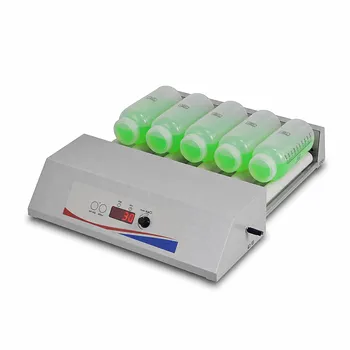
Roller mixing uses rotating rollers to turn containers continuously, causing their contents to tumble and circulate. Rather than relying on a single high-shear impeller, this method provides broad, gentle agitation across the sample volume. It is useful for blending solid materials, solid-liquid systems, viscous liquids, and battery slurry preparations where containerized processing, timed operation, or controlled reversing is beneficial.
KINTEK 6/8 roller mixers and roller agitators provide digitally controlled operation, adjustable speed, timed reversing, flexible container handling, and approximately 10 kg capacity for demanding laboratory and industrial materials processing. The ability to handle different containers can simplify workflows when researchers need to work with bottles, jars, tubes, or other suitable vessels without repeatedly transferring the material between equipment.
Timed reversing can be valuable because it changes the direction of material movement during a run. Depending on the formulation and container geometry, this can help prevent preferential settling patterns and encourage more complete circulation. Adjustable roller speed allows the operator to find a balance between mixing intensity and material behavior. Lower speeds can provide gentle rolling action for sensitive or settling systems, while higher speeds can increase turnover where the formulation permits.
Roller mixers can complement other slurry preparation tools. For example, a laboratory may use a high-power stirrer for initial dispersion, a vacuum mixer for degassing a small development batch, and a roller agitator for maintaining uniformity or blending samples in sealed containers. This approach recognizes that preparation is often a sequence of controlled operations rather than a single mixing step.
Selecting the right laboratory slurry mixer
The best laboratory slurry mixer depends on the material, target outcome, and scale of work. Consider the following process questions when evaluating equipment:
- What is the batch volume? Small development quantities may suit compact 150 ml cup vacuum mixers, while broader container handling may call for roller agitation or a different vessel arrangement.
- How viscous is the formulation? Higher-viscosity systems may require vacuum mixing, heating assistance, stronger drive capability, or a combination of these features.
- Is air removal critical? For dense slurries, casting materials, coatings, and precision model materials, a vacuum mixer can reduce air entrainment and improve the finished mixture.
- Does the material need temperature control? Heating vacuum mixers are appropriate when controlled warmth can improve flow, dispersion, or process consistency for compatible formulations.
- Is high shear required? Digital high-power stirring is useful when the formulation needs controlled mechanical agitation and dispersion development.
- Would gentle container rotation be preferable? Roller mixers are suitable for continuous tumbling, solid-liquid blending, and workflows that benefit from timed reversing.
- How important is method repeatability? Digital speed display, timers, adjustable settings, and documented operating parameters help laboratories create reproducible procedures.
- What happens after mixing? Consider downstream coating, casting, drying, pressing, sintering, cell assembly, or testing requirements when defining the target slurry condition.
A mixer should be selected as part of the complete laboratory process. The target is not merely to make a mixture look uniform; it is to achieve a material state that performs consistently in the next operation. This may mean stable viscosity for coating, minimal bubbles for casting, even powder distribution for pressing, or repeatable composition for research comparisons.
Build a more reproducible battery and materials workflow
KINTEK supports laboratory workflows spanning battery and advanced-materials research, from slurry mixing and coating through precision pressing, cell assembly, and testing systems. This broader process understanding is valuable when selecting a slurry mixer because upstream preparation affects every later stage. A well-mixed electrode slurry supports more consistent coating; a consistent coating supports more reliable drying and calendering; and more uniform electrodes support better-controlled cell assembly and test interpretation.
For materials science, powder metallurgy, ceramics, polymers, coatings, and academic research, the same integrated perspective applies. Researchers need equipment that is practical to operate, suitable for the material system, and capable of supporting repeatable experimental methods. Whether you are refining a small formulation, preparing dense vacuum-mixed samples, studying viscosity-dependent processing, or blending materials in flexible containers, KINTEK can help configure an appropriate laboratory solution.
Our team can discuss your slurry composition, solids loading, viscosity, batch size, vacuum requirement, temperature requirement, container format, operating workflow, and downstream process. We also provide professional support for customized equipment needs, including configurations aligned with specialized research methods and laboratory integration requirements.
Ready to improve the consistency of your slurry preparation? Contact KINTEK through our inquiry form to discuss a laboratory slurry mixer for your battery, ceramic, coating, pharmaceutical, or advanced-materials application. Share your material type, desired capacity, and mixing objectives, and our specialists will help identify a practical, customizable solution.