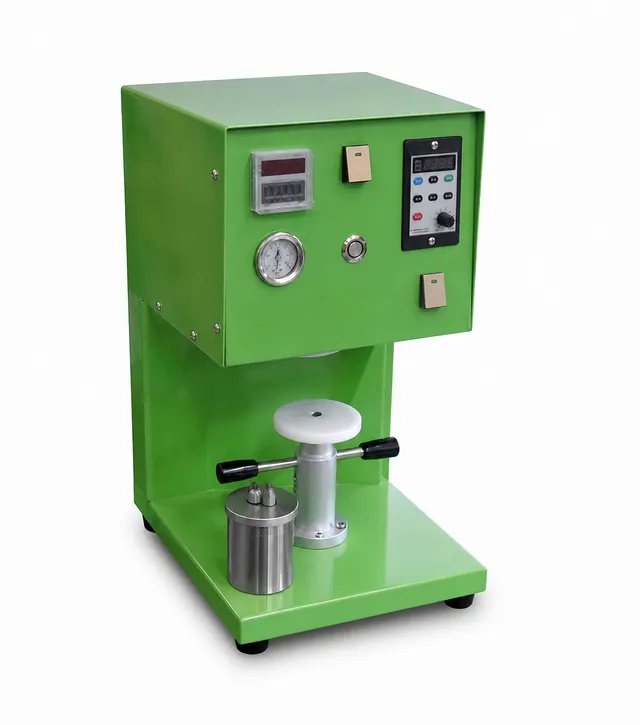
Laboratory Slurry Mixer
150ml Cup Vacuum Mixer With Built In Vacuum Pump For Battery Slurry Ceramic Powder Dispersion
Item Number : ZB03
Price varies based on specs and customizations
- Mixing Speed
- 0 to 320 rpm, frequency-converter adjustable
- Vacuum Level
- ≤ -80 KPa or higher
- Rated Power
- 150W

Shipping:
Contact us to get shipping details Enjoy On-time Dispatch Guarantee.
Why Choose Us
Easy ordering process, quality products, and dedicated support for your business success.
Product Overview
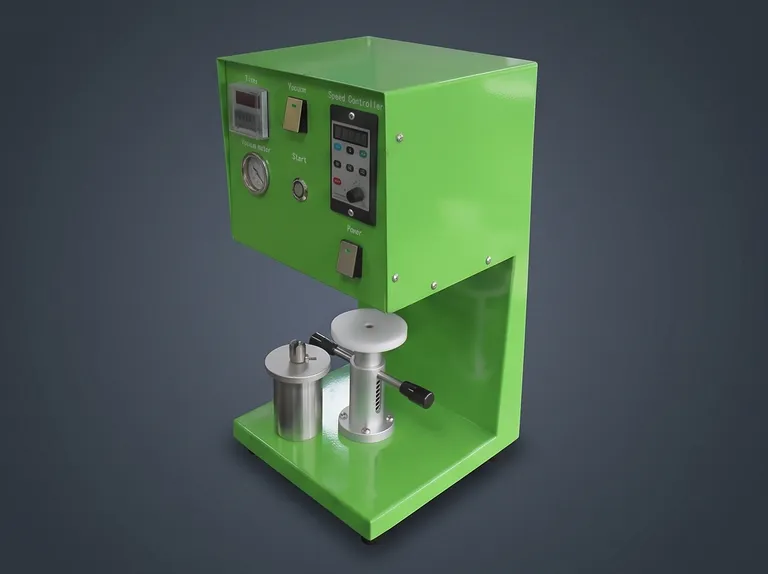
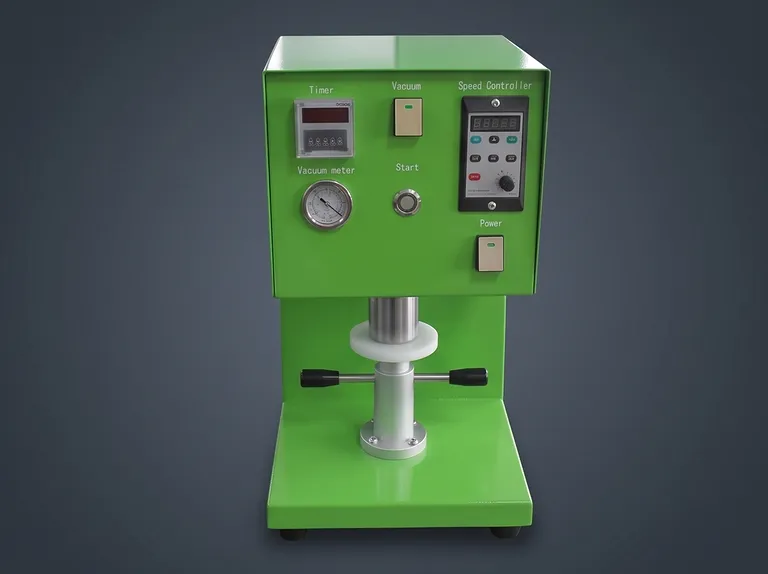
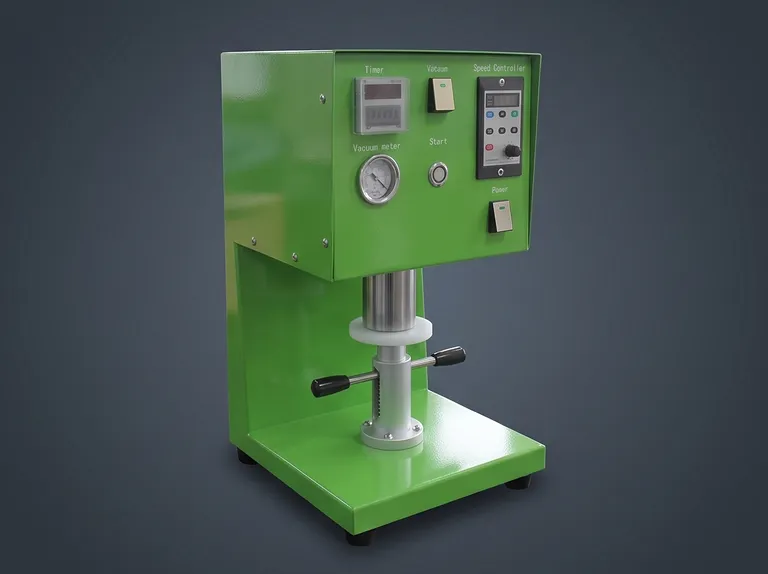
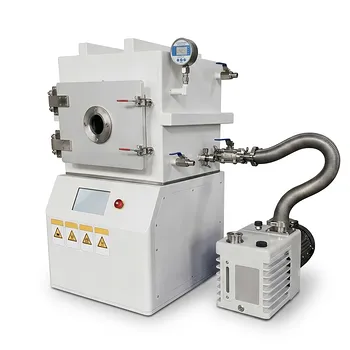
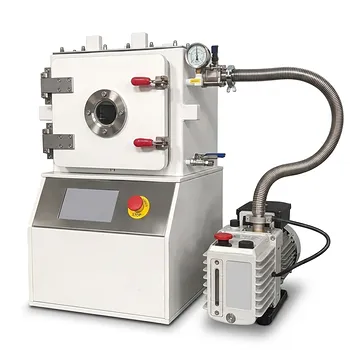
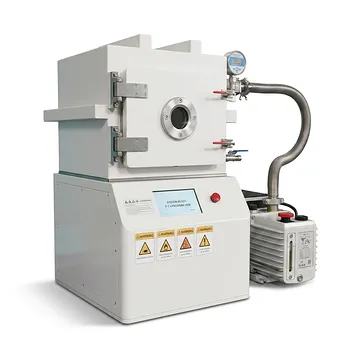
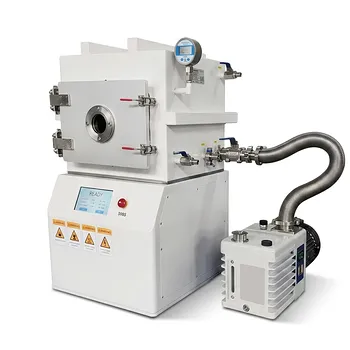
This compact vacuum mixing and dispersion system combines material mixing with vacuum processing in one laboratory unit. By completing agitation under vacuum, the equipment minimizes or eliminates entrained air bubbles, improving material filling behavior and helping produce denser, more consistent molded or processed materials. An integrated vacuum pump supports convenient operation without requiring a separate external pumping system.
The unit is designed for positive- and negative-electrode slurry preparation during battery research, as well as mixing powder materials and ceramic compounds. It is suitable for battery R&D laboratories, advanced materials research, powder processing, ceramics development, and academic laboratories where small-batch process control is important.
A soft-sealing design, variable-frequency drive, adjustable mixing speed, programmable operating time, and compact footprint support dependable daily operation. The clean geometric enclosure is suited to professional laboratory environments, while routine cleaning, lubrication, and fastener inspection help preserve smooth movement and long-term operating consistency.
Key Features
-
Integrated Vacuum Mixing and Dispersion: The system combines vacuum treatment and mechanical agitation in a single workflow. Processing under vacuum reduces air inclusion and supports improved filling performance and material density.
-
Effective Soft-Seal Construction: An industry-leading soft-sealing process provides reliable sealing performance during vacuum operation. Consistent sealing helps maintain the required negative-pressure environment throughout the mixing cycle.
-
Variable-Frequency Speed Adjustment: The mixing motor uses a gearbox with frequency-converter control. Operators can select an appropriate speed and torque for different process requirements and material viscosities.
-
Wide Mixing Speed Range: Adjustable operation from 0 to 320 revolutions per minute provides process flexibility for battery slurries, powders, ceramic materials, and other laboratory formulations requiring controlled agitation.
-
Programmable Mixing Duration: The operating timer can be set from 0 to 9999 minutes. This supports repeatable batch preparation and helps standardize experimental procedures across different users and material systems.
-
Stepless Oscillation Control: The oscillation function uses stepless speed adjustment, allowing the operator to refine movement according to the formulation and desired dispersion behavior.
-
Compact Laboratory Footprint: The equipment has an approximate length of 330 mm, width of 310 mm, and height of 510 mm. Its small external dimensions conserve valuable bench and laboratory floor space.
-
Stable Low-Power Operation: A rated power of 150 W provides a practical balance between laboratory energy consumption and controlled mixing performance for small-batch research work.
-
Professional Enclosure Design: The three-dimensional geometric exterior is clean, refined, and space-conscious. The finished enclosure complements controlled laboratory environments and supports straightforward access for routine care.
Applications
| Application | Description | Key Benefit |
|---|---|---|
| Battery electrode slurry preparation | Mix positive- and negative-electrode slurries for laboratory battery fabrication and process development. Variable speed and torque selection accommodate different formulation viscosities. | Reduced air inclusion and improved slurry filling consistency support more repeatable electrode preparation. |
| Ceramic compound development | Combine ceramic powders and binders during small-batch formulation and materials research. Vacuum agitation helps remove bubbles introduced during mixing. | Better material density and fewer voids can improve the consistency of subsequent forming or molding work. |
| Powder material mixing | Process laboratory powder blends that require controlled agitation and a reduced-air environment. The compact unit fits research benches with limited available space. | Flexible speed control supports formulation trials while the vacuum process promotes more uniform, denser mixtures. |
| Advanced materials research | Prepare experimental material systems in academic, industrial, and institutional laboratories where batch conditions must be controlled and documented. | Programmable time and adjustable operating conditions improve repeatability between experiments. |
| Powder metallurgy preparation | Mix powder-based compositions before pressing or other forming operations. Vacuum processing helps limit trapped air within the prepared material. | Improved filling characteristics can contribute to more consistent green-body or compact density. |
| Small-batch process optimization | Evaluate material behavior across different speeds, torque requirements, and mixing durations before scale-up. The unit supports controlled laboratory trials without a large installation. | Researchers can compare process conditions efficiently while conserving workspace and material. |
Technical Specifications
| Parameter | Specification |
|---|---|
| Product item number | ZB03 |
| Product type | Vacuum mixing and dispersion equipment |
| Intended mixing materials | Positive-electrode slurry, negative-electrode slurry, powder materials, and ceramic materials |
| Vacuum system | Built-in vacuum pump |
| Power supply | AC220V |
| Rated power | 150W |
| Mixing speed | 0 to 320 rpm |
| Speed adjustment | Frequency-converter speed control |
| Vacuum level | ≤ -80 KPa or higher |
| Accessory vessel | 250ml stainless steel vacuum mixing tank |
| Vessel customization | Available according to customer requirements |
| Mixing time | 0 to 9999 minutes, programmable |
| Oscillation mode | Stepless speed adjustment |
| Overall dimensions | Approximately 330 mm × 310 mm × 510 mm, length × width × height |
| Overall weight | Approximately 20 kg |
| Routine cleaning | Wipe the tank and mixing head before and after every operation |
| Moving-part maintenance | Keep moving parts clean and apply lubricating oil to maintain smooth movement |
| Fastener inspection | Regularly inspect screws, nuts, pins, and other fasteners to prevent loosening |
| Operating safety | Do not allow two or more people to operate the equipment simultaneously, helping prevent accidental injury |
The electrical and mechanical configuration is intended for controlled laboratory-scale processing. The AC220V supply and 150 W rated power support installation in laboratories equipped for standard industrial or research electrical service. Before commissioning, purchasers should confirm that the available power supply matches the specified voltage and that the installation location provides sufficient access for loading, cleaning, inspection, and maintenance.
The adjustable mixing range is a central process-control feature. Operation from 0 to 320 rpm allows users to select slower movement for sensitive or highly viscous materials and higher movement for suitable dispersion tasks. Because the motor is coupled to a gearbox and controlled through a frequency converter, the operator can adapt speed and torque to the material rather than relying on one fixed operating condition. This flexibility is valuable when formulations change during battery development or when powder characteristics vary between research batches.
Vacuum processing is equally important for applications in which entrained air can compromise filling, forming, or density. The specified vacuum level of ≤ -80 KPa or higher, together with the built-in pump and soft-sealing construction, supports mixing in a reduced-pressure environment. The reference specification identifies a 250ml stainless steel vacuum mixing tank as the supplied accessory vessel and states that the vessel can be customized according to customer requirements. Purchasers should confirm the required vessel configuration and working volume when requesting a quotation, particularly for applications based on a 150ml cup format.
The programmable 0 to 9999 minute mixing period helps laboratories establish consistent procedures. Users can define a repeatable duration for each formulation, record the selected condition, and compare results across development cycles. The stepless oscillation adjustment provides an additional operating variable for refining material movement. Together, these controls support practical experimentation without requiring a large or complex production installation.
Maintenance requirements are straightforward but important for preserving performance. The tank and mixing head should be wiped clean before and after each operating cycle so that residue does not affect the next batch or interfere with sealing and movement. Moving parts should remain clean and receive appropriate lubrication to maintain smooth operation. Screws, nuts, pins, and other fasteners should be inspected regularly because loosening can affect mechanical stability and create avoidable quality or safety risks.
Why Choose This Product
-
Purpose-Built for Research Workflows: This system addresses the specific need to combine mixing, dispersion, and air removal in small-batch battery and advanced-materials development. It supports practical laboratory workflows without requiring a separate vacuum installation.
-
Controlled, Repeatable Processing: Variable-frequency speed control, gearbox-assisted torque delivery, stepless oscillation, and a programmable timer give operators meaningful control over process conditions. These features help reduce variation between batches and users.
-
Premium Mechanical Attention: Soft-sealing construction, a stainless steel mixing vessel, and a robust 20 kg overall structure provide a solid foundation for repeated laboratory use. The design emphasizes stable operation, maintainability, and consistent vacuum performance.
-
Space-Efficient Installation: The compact approximately 330 mm × 310 mm × 510 mm footprint fits laboratories where bench and floor space are limited. The refined geometric enclosure also presents a professional appearance in shared research environments.
-
Adaptable Configuration and Support: The reference configuration includes a 250ml stainless steel vacuum mixing tank, with customization available according to customer requirements. Contact us for a quotation, vessel configuration review, or a custom solution matched to your material, process, and laboratory workflow.
Trusted by Industry Leaders
REQUEST A QUOTE
Our professional team will reply to you within one business day. Please feel free to contact us!
Related Products

Heated Hydraulic Press Machine With Heated Plates For Vacuum Box Laboratory Hot Press
Enhance lab precision with KINTEK's Heated Vacuum Lab Press for uniform, oxidation-free samples. Ideal for sensitive materials. Get expert advice now!
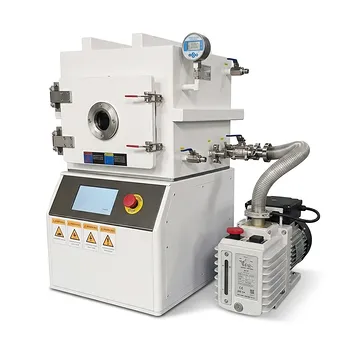
Benchtop Automatic Vacuum Hot Press for Advanced Material Processing
High-precision benchtop automatic vacuum hot press delivering 25 tons of force, dual large-area heated platens up to 300°C, oil-free clean vacuum, programmable multi-stage pressing for repeatable results. Perfect for solid-state battery fabrication, polymer film lamination, and advanced material development.
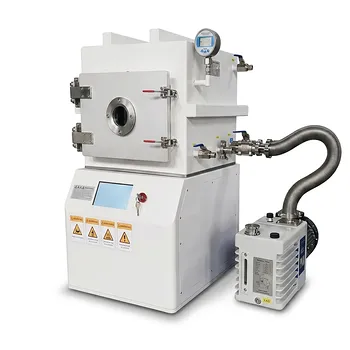
15-Ton Automatic Vacuum Hot Press with 200x200mm Heated Platens and Water Cooling
Explore KINTEK's automatic 15-ton vacuum hot press: 200x200mm heated platens (up to 500°C), precise PID control, water cooling, and SUS 304 chamber for vacuum or inert gas processing—perfect for battery pouch cells, polymer lamination, and diffusion bonding.
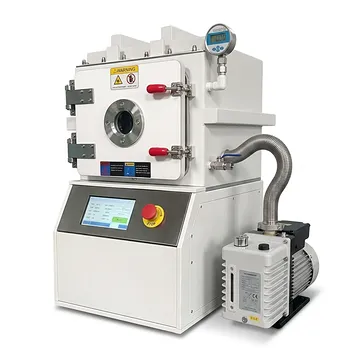
Compact Benchtop Programmable Vacuum Hot Press for Battery Electrode Bonding and Material Processing
Benchtop programmable vacuum hot press delivering 10-ton hydraulic force, precision PID temperature control up to 500°C, and a vacuum or inert gas environment. Designed for battery electrode bonding, polymer lamination, and advanced materials research in a compact benchtop format.

Heated Hydraulic Press Machine with Heated Plates for Vacuum Box Laboratory Hot Press
KINTEK Heated Hydraulic Lab Press with Vacuum Box ensures precise sample preparation. Compact, durable, and featuring digital pressure control for superior results.
30T Electric Vacuum Hot Press
KINTEK's electric vacuum hot press is designed to deliver precise temperature and pressure control up to 300°C and 30 tons, with inert gas environment, programmable multi-stage recipes, and fast active cooling, ideal for battery research and advanced materials processing.
15T High Vacuum Hot Press System for Diffusion Bonding and Sintering
The 15T high vacuum hot press system delivers precise 500°C heating and high vacuum performance via turbomolecular pump achieving 6×10⁻⁴ Pa for diffusion bonding sintering and processing of oxygen-sensitive advanced materials. Ideal for research labs. Contact KINTEK for quote.
25 Ton 200x200mm Vacuum Hot Press with Programmable P-T-t Control
Engineered for demanding laboratory applications, this 25-ton desktop vacuum hot press provides precise P-T-t synchronization, up to 500°C temperature range, inert gas/vacuum atmosphere, and adaptive power matching, enabling high-density sintering and bonding in solid-state battery, ceramic, and composite research. Compact, CE-certified system with dynamic pressure derating for long-term reliability.
60-Ton Automatic Vacuum Hot Press for High-Density Material Consolidation
KINTEK's 60-ton automatic vacuum hot press achieves 305.6 MPa precision compaction at up to 500°C with Tungsten Carbide mold, delivering void-free consolidation. Ideal for powder metallurgy and battery research under -0.1 MPa vacuum. Ensures safety with triple interlock.
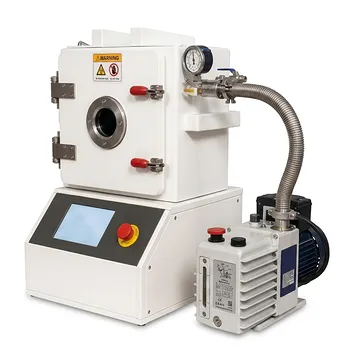
Programmable Vacuum Hot Press Benchtop System for Advanced Material Synthesis
KINTEK's programmable vacuum hot press: benchtop 10-ton hydraulic press with vacuum/inert gas, 400°C & 800°C configurations for battery lamination, diffusion bonding, powder metallurgy.
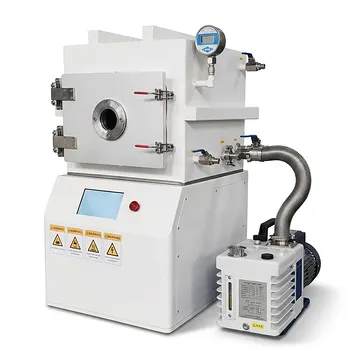
30 Ton 350x350mm Vacuum Hot Press for Battery Research and Materials Processing
30-Ton laboratory vacuum hot press featuring 350×350mm work area, 300°C max temperature, multi-zone heating, precise ±0.1T pressure control, dual-loop water cooling, and PLC automation. Ideal for battery research, solid-state electrolyte processing, ceramic sintering, and advanced composite materials fabrication.
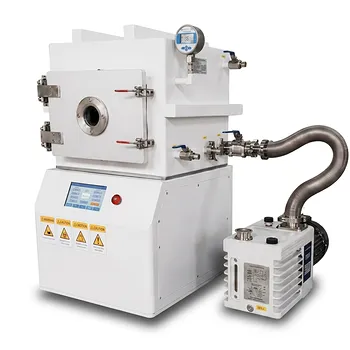
10T Vacuum Automatic Hot Press for Precision Lab Pressing
High-precision benchtop 10T vacuum automatic hot press with 200x200mm heated platens and rapid vacuum pump for polymer curing, battery electrode bonding, and materials research. Ideal for lab environments requiring uniform heating and precision pressure control, CE certified with programmable touchscreen.
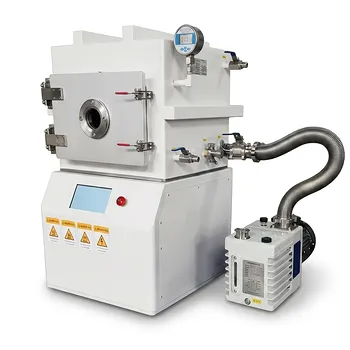
Precision Servo Driven Electric Vacuum Hot Press for Battery Research and Advanced Material Processing
Precision servo-driven electric vacuum hot press with compact 260mm chassis, programmable 7-inch touchscreen, oil-free actuation, and high-temperature capability for battery research and advanced material consolidation. Ideal for producing dense, uniform films and solid-state electrolytes with precise pressure and temperature control.
40 Ton 400x400mm Vacuum Hot Press with Independent Temperature and Pressure Control
40-ton vacuum hot press with 400x400mm platens, high-vacuum chamber, dual gas inlets, and programmable temperature-pressure profiles for precision material processing. Ideal for battery, ceramic, composite, and polymer research. Engineered for demanding lab environments with uniform heating and closed-loop frame.