Build More Reliable Coin Cells With Controlled Crimping
Coin cells are a foundational test platform for lithium-ion battery research, sodium-ion battery development, solid-state battery studies, supercapacitor evaluation, and a broad range of electrochemical materials investigations. Their compact format makes them practical for screening new active materials, binders, conductive additives, separators, electrolytes, and electrode processing conditions before a team commits resources to larger-format pouch or cylindrical cells. Yet the apparent simplicity of a coin cell can be misleading: the final test result depends not only on the electrode formulation and cycling protocol, but also on the quality and consistency of cell assembly.
The crimping operation is one of the most important controls in that process. A coin cell crimper machine applies the force needed to form the cell case around the gasket and internal stack, helping secure the anode, cathode, separator, electrolyte, spacers, and other required components within the selected case design. Properly controlled sealing helps limit electrolyte leakage and moisture ingress, preserves the intended internal environment, and supports stable contact between the cell components. It also helps maintain suitable internal stack pressure, which is important for reproducible electrical contact and for reducing assembly-related variation between nominally identical samples.
For researchers comparing subtle differences in capacity retention, Coulombic efficiency, rate performance, impedance, or long-term cycle life, uncontrolled sealing variation can obscure the true behavior of a material. An inconsistent crimp may contribute to leakage, poor contact, irregular internal pressure, or early test failure. These issues can lead to misleading conclusions, repeated experiments, and wasted active materials. KINTEK coin cell crimping machines are designed to make this critical final assembly step more repeatable, practical, and adaptable to laboratory requirements.
A Practical Range for Research Throughput and Process Control
Different laboratories need different levels of automation, force control, and operator involvement. Some groups need a compact press for occasional cell preparation in a glovebox. Others must assemble a steady stream of cells for formulation optimization, quality studies, or multiple parallel research projects. KINTEK provides manual, electric, pneumatic, and automated coin cell crimping and assembly equipment so laboratories can select a system suited to their cell format, throughput target, inert-atmosphere constraints, and standard operating procedures.
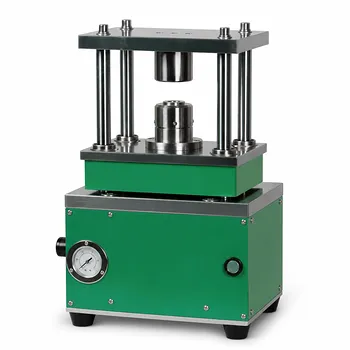
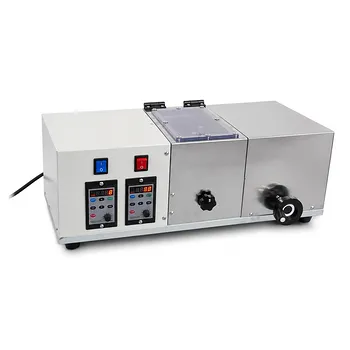
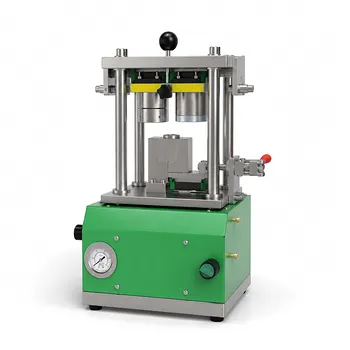
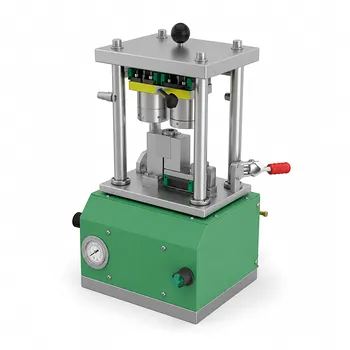
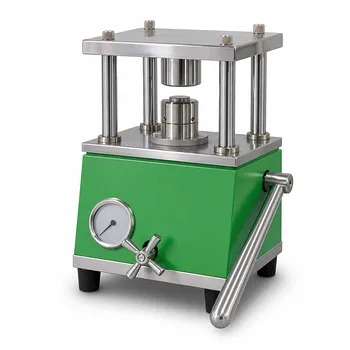
Manual coin cell battery crimping machines are a direct and dependable choice for R&D environments that value flexibility and hands-on control. The hydraulic design can provide substantial sealing force, up to 8 T in the referenced configuration, while maintaining a compact footprint suitable for laboratory benches and glovebox use. Adjustable safety control and height-limiting features help operators perform the crimping stroke with greater consistency. This approach is well suited to early-stage material screening, custom cell-stack development, academic teaching laboratories, and pilot work where recipes and component combinations change frequently.
Manual crimpers are particularly valuable when teams need to inspect each cell stack before sealing or conduct low-volume experiments with varied electrode thicknesses, spacer configurations, and electrolyte systems. The operator can follow a controlled sequence, confirm alignment, and apply the established crimping procedure to each specimen. With appropriate SOPs, calibrated tooling, and consistent component preparation, a manual crimper provides a robust foundation for producing test cells without requiring a large automated production footprint.
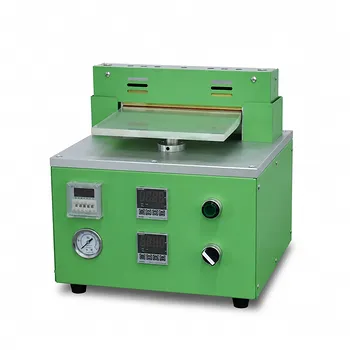
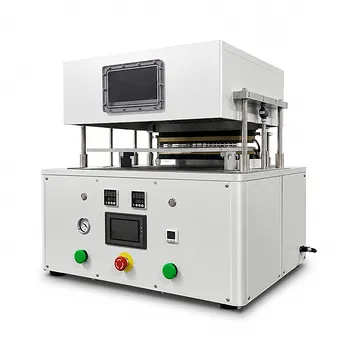
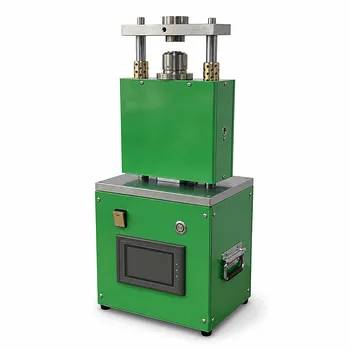
Electric coin cell crimping machines bring a further degree of process consistency and convenience to laboratory sealing. Precisely controlled electric pressure can deliver stable and repeatable force during the forming process, helping create a reliable bond between the coin cell cases, gasket, and internal components. Their vibration-free operation supports careful laboratory handling, while adjustable pressure settings allow users to develop an appropriate sealing window for their cell architecture and materials. Interchangeable dies also enable practical adaptation to different compatible cell sizes and applications.
For teams preparing larger batches of comparable cells, the electric crimper can reduce dependence on operator-applied force and support more standardized assembly conditions. This is especially useful when comparing materials across multiple lots or when transferring a research method between operators. A consistent mechanical seal helps isolate the internal cell environment from external air and supports electrolyte retention during long-term cycling. It also contributes to stable internal contact pressure, a prerequisite for generating meaningful and reproducible electrochemical results.
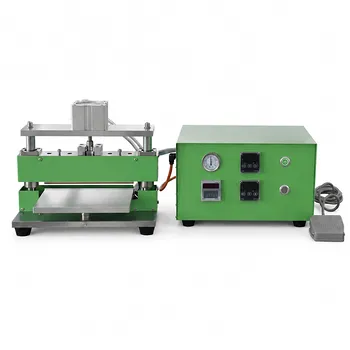
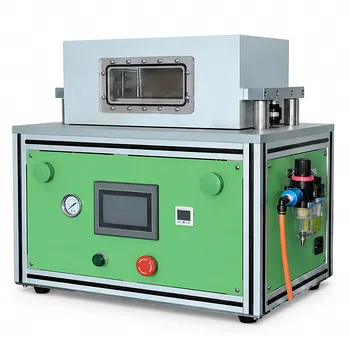
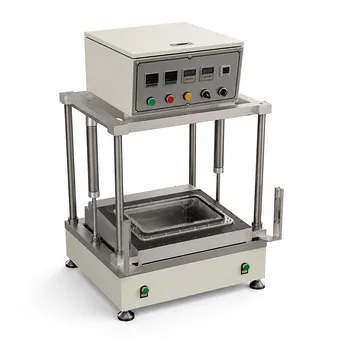
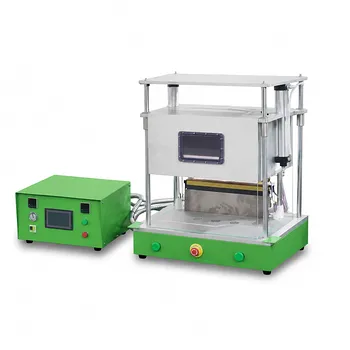
Pneumatic laboratory coin cell crimping machines are an effective option where compressed air is readily available and adjustable, repeatable sealing is required. Pneumatic operation can be especially practical in glovebox or inert-gas workflows because the system does not require an electrical power connection at the point of use. Users can adjust sealing pressure to suit compatible cell cases and established procedures, while precision tooling helps maintain a consistent forming action. The compact design is appropriate for small-batch battery and capacitor assembly, including laboratories where space, workflow simplicity, and safe handling are central concerns.
A pneumatic crimper can help teams establish a controlled repetitive workflow: prepare and align the components, position the cell correctly in the die, actuate the sealing cycle, and inspect the completed cell before testing. This repeatability is valuable in experimental campaigns involving dozens or hundreds of cells, where small assembly deviations may otherwise become a significant source of data scatter. For laboratories operating with inert gas, the ability to use a compact pressure-driven system can support efficient cell preparation within the controlled environment.
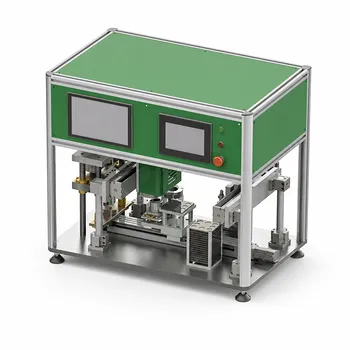
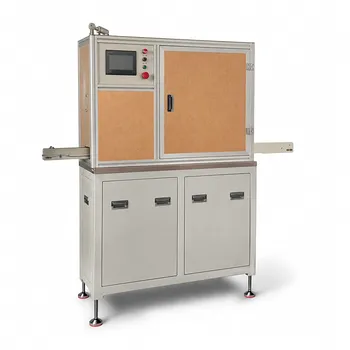
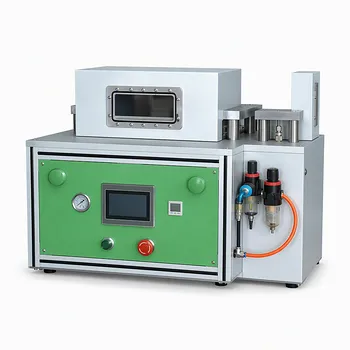
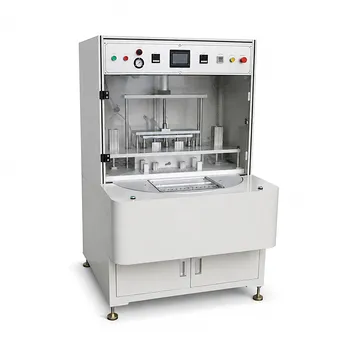
Automated coin cell assembly machines address the needs of advanced battery research groups that require higher throughput, more standardized handling, and improved traceability across a larger number of samples. KINTEK's automated system for 20 and 24 series batteries integrates functions such as automatic material handling, precision electrolyte filling, tray switching, sealing, CCD inspection, and PLC control. By organizing multiple assembly actions into a coordinated process, this type of equipment can reduce repetitive manual work and help laboratories create more uniform assembly conditions across cell batches.
Precision electrolyte filling is particularly important because electrolyte volume and distribution can influence wetting, ionic transport, interface formation, and test repeatability. Automated material handling supports a more orderly workflow for cell components, while tray management can help maintain efficient batch processing. CCD inspection adds another level of process visibility by enabling visual checks that support quality control. In a research setting, this capability can be useful for identifying positioning, assembly, or appearance issues before cells move into time-consuming electrochemical testing.
PLC-controlled automation also gives laboratories a stronger basis for standardizing repeatable process steps. As research programs expand from exploratory experiments to systematic design-of-experiment studies, consistent assembly parameters become increasingly important. An automated machine can help teams reduce variation associated with repetitive manual handling, establish clearer work instructions, and support more predictable throughput. It is compatible with glovebox-oriented operation, making it suitable for sensitive battery chemistries and moisture-controlled cell assembly workflows.
Why Coin Cell Seal Quality Matters
A coin cell is a complete electrochemical system, not simply a container for electrode samples. The crimped case must retain the internal components in their intended arrangement while supporting the electrical and environmental conditions required for testing. In a typical CR2032-type configuration, the stack can include a negative electrode or lithium reference material, separator, electrolyte, positive electrode, spacers, spring elements where applicable, gasket, and upper and lower case components. The exact arrangement varies by chemistry and laboratory protocol, but the core requirement remains the same: the finished cell must be assembled consistently enough that its electrochemical response reflects the material under investigation.
Uniform crimping pressure helps form the case around the gasket and establish a mechanically secure seal. An adequate seal helps prevent electrolyte from escaping and limits pathways for external moisture or air to enter the cell. This is critical for moisture-sensitive materials and electrolyte systems, but it also matters for general reliability during handling, storage, and extended cycling. A stable seal supports the internal environment needed for the cell to behave as intended throughout its planned test period.
Internal contact pressure is another major consideration. The current collectors, electrode coatings, separator, and spacers must remain in suitable contact to provide a stable electrical path and consistent ion transport conditions. Insufficient or uneven pressure may increase contact resistance, contribute to unstable impedance, or cause inconsistent results across cells. Excessive force can also be undesirable, particularly when working with delicate electrode coatings, brittle materials, unconventional stack designs, or sensitive separators. The best crimping condition is therefore not simply the maximum possible force; it is a repeatable, validated setting appropriate for the cell hardware, gasket, component thickness, and test objective.
KINTEK equipment supports the process control needed to establish that setting. Adjustable pressure, controlled actuation, accurate height limiting, precision dies, and consistent machine operation enable users to develop and follow a defined crimping protocol. Rather than treating sealing as an afterthought, laboratories can make it a measurable part of their quality process. Recording equipment settings, component specifications, assembly conditions, and post-crimp inspection results provides a stronger foundation for correlating cell performance with material and process variables.
Supporting Better Data From Cell Assembly to Testing
Battery development increasingly depends on fast, credible feedback loops. Researchers need to prepare cells, test them, identify performance trends, and make the next material or processing decision with confidence. Coin cell crimping machines support this workflow by reducing a common source of non-material variation. When cells are sealed with consistent tooling and defined parameters, the experimental team is better positioned to distinguish genuine electrode or electrolyte behavior from assembly artifacts.
This benefit applies across many research objectives:
- Electrode material screening: Compare new cathode, anode, silicon-based, lithium-metal, sodium-ion, or conversion-material formulations with more confidence in assembly consistency.
- Electrolyte development: Evaluate electrolyte composition, additive packages, and wetting behavior in cells with controlled sealing conditions.
- Separator and interface studies: Investigate separator materials, coatings, interlayers, and interfacial stability while maintaining a repeatable stack configuration.
- Process optimization: Study the impact of slurry mixing, coating, drying, calendaring, and electrode density using consistently assembled evaluation cells.
- Quality and failure analysis: Prepare reference cells and replicate samples for investigating leakage, resistance growth, short circuits, capacity loss, or cycle-life variation.
- Capacitor and general electrochemical research: Use compatible pressing and sealing approaches for small electrochemical devices and materials characterization programs.
KINTEK's broader expertise in battery R&D equipment is valuable because coin cell sealing is only one stage of a connected fabrication workflow. Cell quality can be influenced by upstream slurry preparation, coating uniformity, electrode drying, punching, pressing, and controlled-environment assembly. Our portfolio spans mixing, coating, precision pressing, cell assembly, testing systems, and related laboratory processing equipment. This perspective helps us understand how crimping requirements connect with electrode properties, material handling practices, glovebox operations, and the downstream need for reliable test data.
Selecting the Right Coin Cell Crimper
The appropriate coin cell crimping machine depends on the laboratory's technical and operational requirements. A research group should consider cell format compatibility first, including whether the work centers on 20-series, 24-series, or other compatible coin cell sizes. Tooling must match the intended case geometry, and users should confirm the suitable die configuration before purchasing. Where multiple formats are used, interchangeable dies or dedicated tooling can provide useful flexibility.
Throughput is the next practical consideration. For a small number of cells per day, a manual hydraulic crimper may provide the ideal balance of control, compact size, and cost effectiveness. For repeated batches where stable force and low operator effort are priorities, an electric or pneumatic system may be a stronger fit. For high-volume research screening, structured sample campaigns, or laboratories seeking integrated electrolyte dosing and inspection, an automated assembly machine can provide greater process standardization and production efficiency.
The working environment also matters. Battery cells often need to be assembled under dry inert gas to protect moisture-sensitive materials and electrolytes. Compact equipment designed for glovebox-compatible use can help researchers retain control of the process without interrupting the protective atmosphere. Pneumatic operation may be attractive where electrical connections are inconvenient, while manual and electric systems can suit other glovebox layouts and operating preferences. The final selection should account for available space, utilities, ergonomic access, and the laboratory's contamination-control procedures.
Users should also evaluate adjustability and safety. A machine should enable the operator to establish the pressure and stroke conditions required for the specific cell architecture. Features such as height limitation, controlled force adjustment, sturdy construction, and short-circuit protection can support safer, more repeatable operation. Equally important is the ability to inspect the assembled cell and verify that it meets the laboratory's acceptance criteria before it enters a test channel.
Custom Tooling and Professional Application Support
Standard equipment is often the right starting point, but advanced materials research frequently introduces requirements beyond a conventional coin cell workflow. A laboratory may work with nonstandard component thicknesses, specialized gasket materials, unusual spacer arrangements, custom electrode stacks, alternative coin cell diameters, or specific automation expectations. In these cases, the practical value of a supplier depends on more than a catalog specification. It depends on the ability to understand the intended process and help configure a workable solution.
KINTEK provides professional support for laboratories building or refining coin cell fabrication workflows. We can help assess the relationship between cell format, tooling, force requirements, operating environment, and target throughput. Our customizable service approach supports customers who need to align equipment with their established procedures, unique sample structures, and research objectives. Whether the goal is a compact crimper for an academic battery lab or a more automated system for a structured R&D program, we focus on equipment configurations that support reliable, repeatable cell preparation.
A well-specified solution begins with clear application information: the target coin cell size, case and gasket type, electrode dimensions and thickness, expected daily output, glovebox constraints, available utilities, and preferred degree of automation. Sharing these details early allows the equipment selection and tooling discussion to be more precise. It also helps ensure that the completed system supports the real workflow rather than only the nominal cell format.
For a tailored recommendation, tooling discussion, or quotation, contact our battery equipment specialists. Tell us about your coin cell format, material system, assembly environment, and desired throughput, and KINTEK will help identify a manual, electric, pneumatic, or automated crimping solution suited to your laboratory.