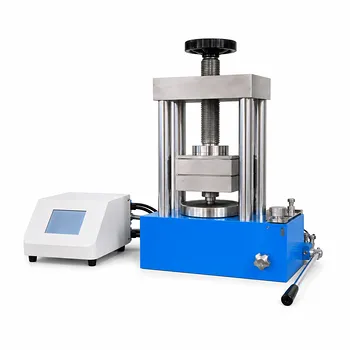
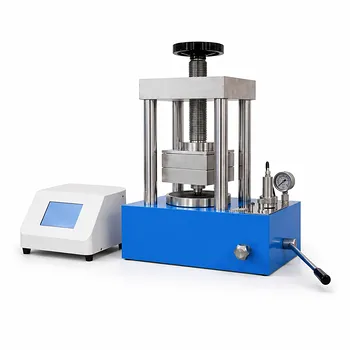
KINTEK manual heated lab presses provide controlled thermal compression for battery R&D, polymer processing, ceramics, powder metallurgy, composites, pharmaceutical sample preparation, and materials characterization. The range includes compact 5 to 15 ton benchtop systems, glovebox-compatible narrow-footprint presses, and robust 20 to 50 ton platforms for larger or higher-force work. Select split or integrated hydraulic designs, platen sizes from micro-sample formats to 400 x 400 mm, temperatures up to 500 C on selected models, dual-zone PID heating, programmable touchscreen control, pressure monitoring, and optional water or active-chiller cooling. These presses help laboratories form films, densify powders, laminate layers, cure composites, and prepare reproducible pellets with a practical manual hydraulic workflow.
Toggle Categories
Get Instant Support
Choose your preferred way to connect with our team
Response Time
Within 8 hours on working days, 24 hours on holidays
Manual Heated Lab Press

Laboratory Split Manual Heated Hydraulic Press Machine with Hot Plates
Item Number: PCSM

Laboratory Manual Heated Hydraulic Press Machine with Hot Plates
Item Number: CPCL

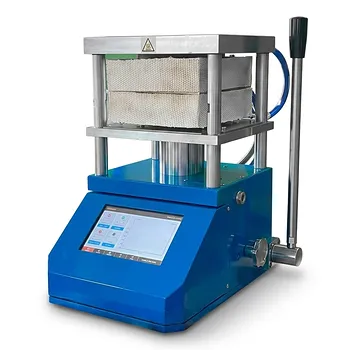
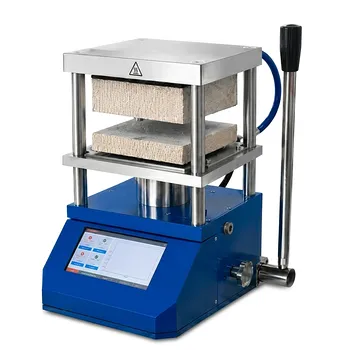
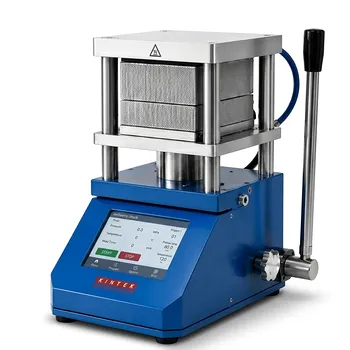
15 Ton Manual Hot Press for Battery Research and Advanced Materials
Item Number: XP15
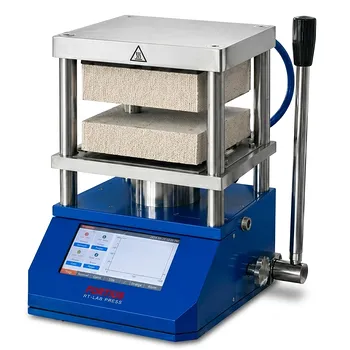
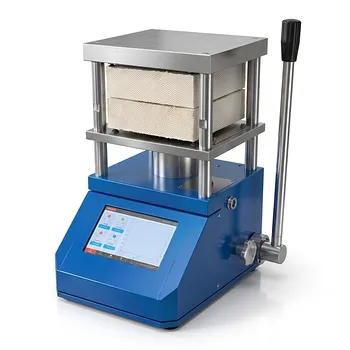
5 Ton Laboratory Integrated Hot Press
Item Number: XP06
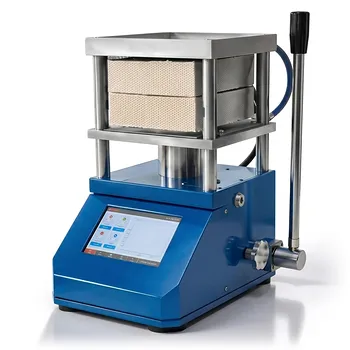
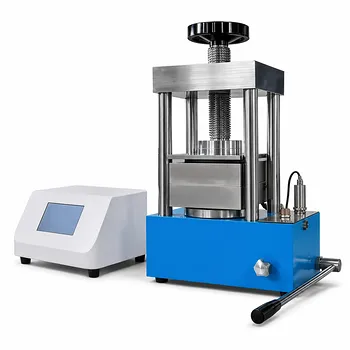
30 Ton Manual Hot Press with Water Cooling for Laboratory Applications
Item Number: XP52
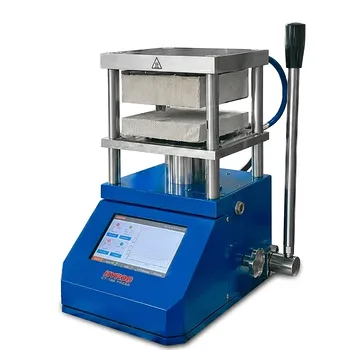
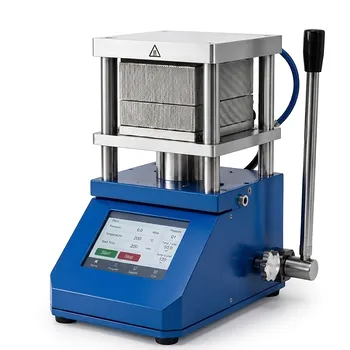
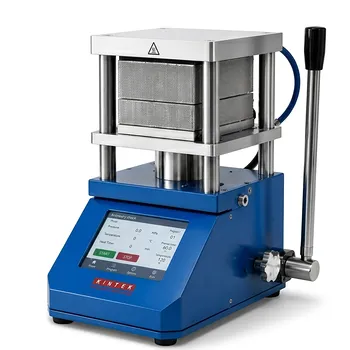
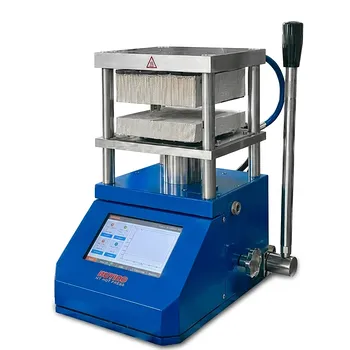
Manual Hot Press Digital Dual-Zone Heating Precision Laboratory Press
Item Number: XP05
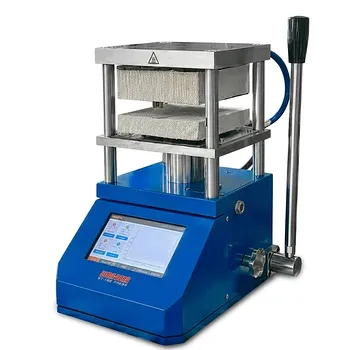
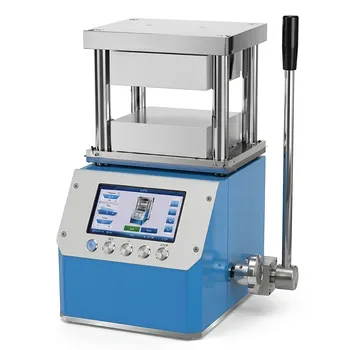
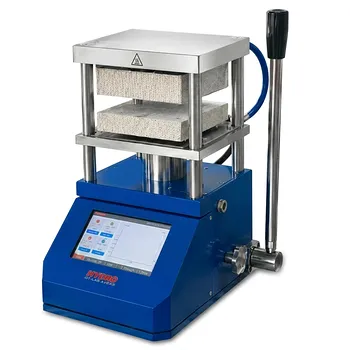
Integrated Manual Heated Plate Hydraulic Press for Laboratory
Item Number: XP01
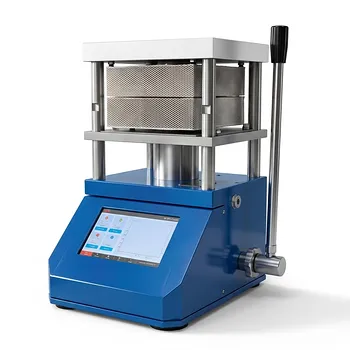
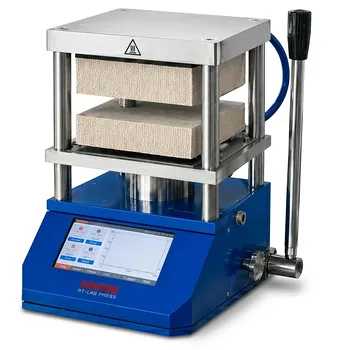
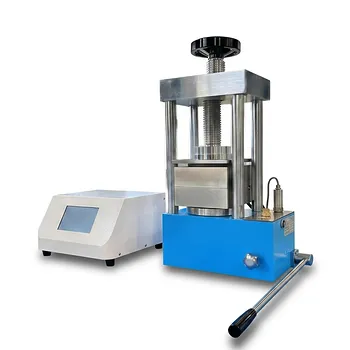
Laboratory Manual Hot Press for Battery Research and Material Science
Item Number: XP51
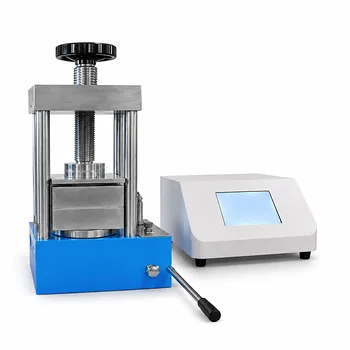
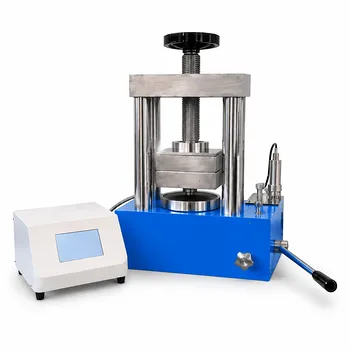
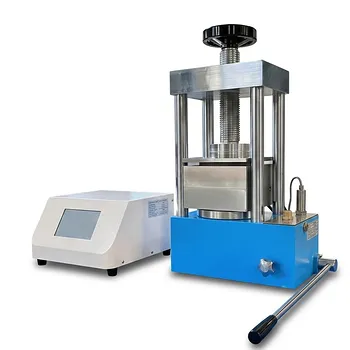
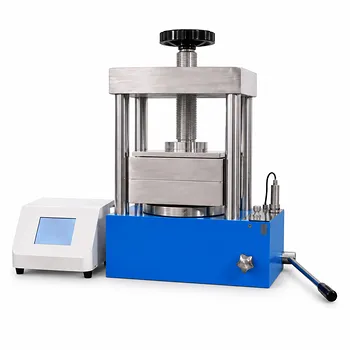
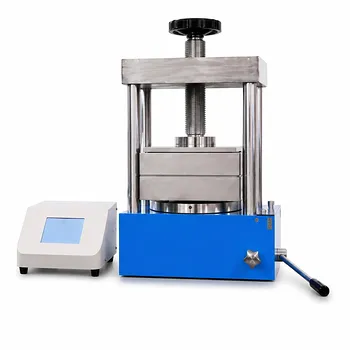
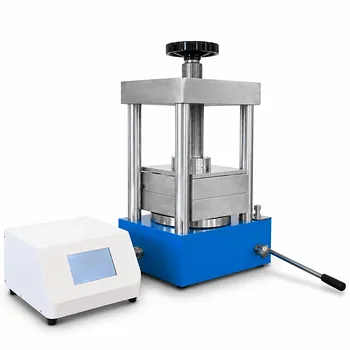
Manual Laboratory Hot Press 10 Ton 300x300mm Water Cooling
Item Number: XP58
Manual Heated Lab Presses for Controlled Thermal Compression
A manual heated lab press is a practical laboratory platform for applying force and temperature together in a controlled sequence. It is used when a material must be compacted, bonded, shaped, laminated, cured, or densified while thermal conditions influence its flow, consolidation, crystallization, adhesion, or chemical response. KINTEK manual heated presses bring this capability to battery laboratories, advanced-materials programs, polymer and rubber laboratories, ceramic research groups, powder-metallurgy facilities, electronics teams, and academic teaching and research environments.
The category spans compact benchtop thermal presses through higher-capacity manual hydraulic systems. Depending on the model, users can select forces from approximately 5 to 50 tons, heated platen formats suited to small specimens or large-area sheets, manual hydraulic actuation, digital temperature management, real-time pressure monitoring, programmable process recipes, and integrated water cooling or recirculating-chiller configurations. This breadth matters because a small FTIR pellet, a solid-state battery stack, a polymer film, and a 400 x 400 mm composite panel have very different requirements for force, thermal uniformity, daylight, tooling, and cycle time.
Why heat and pressure are applied together
Many laboratory materials do not respond adequately to pressure alone. Thermoplastics may need to soften before they can flow and consolidate. Polymer layers may require heat to develop an adhesive bond or complete a curing cycle. Ceramic and powder specimens can benefit from elevated-temperature compaction conditions that improve particle rearrangement and green-body quality. Battery electrodes, separators, electrolyte layers, and laminated stacks often require carefully controlled compression to study contact behavior, interfacial resistance, densification, or layer integrity.
A heated press combines these process variables in one stable work area. The specimen is placed in a die, mold, or fixture, or positioned directly between protected platen surfaces. The operator establishes the required temperature and process time, brings the platens to thermal equilibrium, and applies hydraulic force through the manual pump or lever mechanism. Pressure and temperature are then maintained for the defined dwell period. At the end of the cycle, the specimen is cooled as required, pressure is released in a controlled manner, and the finished sample is removed after safe handling temperature is reached.
This sequence gives researchers direct control over the essential thermal-compression variables:
- Temperature determines softening, melting, curing, sintering-related behavior, viscosity, diffusion, and other material responses.
- Pressure establishes the contact and compaction force needed to remove voids, consolidate layers, fill a mold, or create a consistent pellet or laminate.
- Ramp rate influences thermal history and can reduce stress, warpage, cracking, or uneven consolidation.
- Dwell time gives the material adequate time to flow, bond, cure, relax, or equilibrate under the selected conditions.
- Cooling conditions affect dimensional stability, release behavior, polymer morphology, cycle time, and repeatability.
Manual operation remains valuable in research even when a laboratory also uses automated equipment. It provides responsive operator control, an accessible starting point for method development, and a dependable platform for short runs, feasibility studies, custom fixtures, and frequently changing sample formats. The best choice is not simply the highest-force press. It is the press whose force range, platen geometry, heating capacity, temperature uniformity, clearance, controls, and cooling method fit the actual specimen and workflow.
Product configurations for laboratory-scale work
KINTEK offers manual heated press configurations for both routine preparation and demanding development work. Compact 5 ton systems are useful where workspace is limited, sample areas are modest, and a convenient benchtop format is preferred. They can support polymer films, spectroscopy pellets, battery components, and other small-format samples. Models with 10, 15, 20, 24, 25, or 30 ton capacities provide additional versatility for materials that need greater compaction force, larger tooling, or more substantial laminating pressure. Heavy-duty 40 and 50 ton systems extend the range for high-force compaction, larger panels, composites, and specialized research tasks.
Platen dimensions are equally important. Small heated platens can concentrate available force over a limited area, supporting high pressure for micro-samples, pellets, and compact dies. Medium-format platens provide a balanced solution for battery electrodes, polymer sheets, standard molds, and general material-development tasks. Large 300 x 300 mm or 400 x 400 mm heated platens support large-area films, elastomer sheets, composite panels, flexible-device laminates, and scale-up studies. Rectangular platen options are useful for specimens whose geometry is not square, helping teams use working surface efficiently without making unnecessary compromises in fixture design.
Several systems use dual-zone heating. Independent or separately managed zones help compensate for thermal gradients across larger platens and allow more consistent surface temperatures from center to edge. This is particularly relevant for wide polymer films, multilayer laminates, and large composite coupons, where uneven heat can lead to variable thickness, incomplete bonding, distorted edges, or nonrepresentative test samples. PID temperature control continuously regulates heater output against the measured temperature, improving stability compared with a simple on-off heating approach. For many R&D processes, stable temperature control is fundamental to producing comparable results from one experiment to the next.
Selected presses incorporate touchscreen interfaces and programmable controls. These allow teams to define temperature setpoints, hold stages, and process steps in a more structured way than manual recording alone. Recipe capability is useful when a laboratory repeats a development method across many samples, compares formulations, trains multiple operators, or transfers a procedure from exploratory work toward a more standardized internal protocol. Digital pressure sensing and real-time MPa display can further improve traceability by allowing the operator to relate applied load to the actual pressure at the platen or sample area, subject to the tooling and contact geometry used.
Consistency starts with uniform platen performance
The platen is the immediate thermal interface between the press and the sample. Flat, well-controlled heated platens support more even energy transfer and help create samples with more consistent thickness, density, surface quality, and physical characteristics. Uniformity is especially important when the target sample will later be tested electrically, mechanically, chemically, or spectroscopically. A poorly consolidated region can compromise a test result even when the material formulation itself is sound.
For battery research, consistent thermal compression can support studies involving electrode calendaring, solid-state electrolyte compaction, composite electrolyte films, separator-related samples, pouch-cell components, and stacked-layer assemblies. Research teams can use the press to assess how pressure, temperature, dwell, and cooling influence porosity, contact quality, interfacial behavior, film integrity, or dimensional repeatability. Glovebox-compatible and narrow-chassis options are particularly relevant for moisture- or oxygen-sensitive materials, allowing thermal pressing to be incorporated into controlled-atmosphere workflows where space and access are constrained.
For polymer processing, a manual hot press is commonly used to make test plaques, thin films, molded sheets, laminates, and specimen blanks. The combination of heat and force can help thermoplastic materials flow into a mold or spread into a controlled film thickness. It can also assist bonding in multilayer structures and provide a repeatable cure environment for thermoset or composite systems. Water-cooled platens or active cooling improve workflow efficiency where samples need to be brought down in temperature before demolding, trimming, measuring, or proceeding to the next cycle.
Ceramic, mineral, and powder-metallurgy laboratories use heated presses for pellet preparation, powder consolidation studies, and the creation of green samples for subsequent thermal treatment. The press is not a substitute for a furnace-based sintering process where full densification is required, but it can establish controlled compact geometry and strength before downstream processing. It is also valuable for preparing pellets for XRF and FTIR analysis, where flatness, density, and specimen consistency affect handling and measurement quality.
Composite and electronics researchers use heated compression to prepare resin systems, fiber-reinforced laminates, conductive films, flexible substrates, insulating sheets, and layered functional materials. A defined combination of pressure, temperature, and dwell can improve wet-out, reduce void content, create better layer-to-layer contact, and establish a repeatable specimen form for performance testing. In these applications, platen size, temperature range, parallelism, and cooling capability should be selected alongside the force requirement.
Cooling is a process variable, not only a convenience
Cooling is often essential to producing a stable and usable sample. Rapid or controlled cooling can shorten overall cycle times, reduce handling delays, support consistent demolding, and help laboratories repeat a process without waiting for passively heated equipment to return to a workable condition. KINTEK offers manual heated presses with water-cooling provisions and, for selected systems, integrated recirculating cooling capability. These options are well suited to laboratories processing thermoplastics, elastomers, composites, electronic laminates, and battery materials where the transition from elevated temperature to a lower release temperature needs to be managed carefully.
The appropriate cooling approach depends on the material and objective. Some samples require rapid cooling to preserve a desired form or improve throughput. Others benefit from a controlled cooling rate to reduce residual stress, warpage, cracking, or structural variation. During process development, teams should document cooling conditions alongside temperature, pressure, and dwell time. Treating cooling as part of the recipe improves experimental reproducibility and makes scale-up decisions more defensible.
Selecting the right manual heated press
Begin with the sample rather than the equipment specification. Consider the material type, maximum sample area, required final thickness, mold geometry, target temperature, desired pressure at the sample, dwell time, and cooling requirement. A force value expressed in tons does not by itself define process pressure: pressure depends on the applied force divided by the actual loaded area. Smaller dies can generate higher pressure from the same press force, while large-area panels may require significantly more total force to achieve the intended pressure uniformly.
Also evaluate the necessary daylight and opening geometry. A high-clearance configuration may be needed for thick molds, stacked fixtures, or experimental tooling. Conversely, a compact low-profile design can be advantageous inside a glovebox or on a crowded bench. The preferred platen size should accommodate the sample and fixture with reasonable margin while avoiding an unnecessarily large heated mass that can increase energy demand and heat-up time for small routine specimens.
Temperature range should be matched to the material and the process margin required. Many laboratory methods operate around or below 300 C, while selected systems can support higher temperatures up to 500 C. Confirm that the platen materials, seals, tooling, release films, sensors, and any surrounding controlled-atmosphere equipment are appropriate for the intended operating temperature. For applications requiring temperature-sensitive coatings, very tight repeatability, or large sample areas, dual-zone control and well-defined thermal equilibration are valuable considerations.
Safety and practical operation also deserve attention. A robust frame, stable hydraulic system, guarded hot surfaces where applicable, over-temperature protection, clear control access, and a defined cooling and release procedure all contribute to dependable laboratory use. Operators should use suitable personal protective equipment, account for hot tooling and stored hydraulic energy, and follow the press-specific operating instructions. Sample release should occur only when the material and tooling have reached an appropriate condition for safe and stable handling.
A partner for research methods and custom systems
KINTEK supports laboratories that need more than a generic hot press. Our experience spans battery R&D and advanced materials processing across the cell fabrication workflow, from slurry mixing and coating through pressing, cell assembly, testing, and related research operations. That perspective helps us understand how a thermal-compression step fits into broader sample preparation, electrode development, multilayer fabrication, and material characterization workflows.
Custom configuration can address the details that determine whether an instrument truly fits a laboratory method: force capacity, platen dimensions, temperature range, dual-zone heating, clearance, tabletop or floor-standing construction, touchscreen programming, pressure measurement, water cooling, active chilling, glovebox integration, specialized molds, and application-specific fixtures. We can help align a manual heated press with your sample size, target pressure, process temperature, throughput expectations, and laboratory constraints.
For a recommendation or a custom quotation, contact KINTEK's technical team with your material, sample dimensions, required temperature, target pressure or mold area, desired cycle profile, and any glovebox, cooling, or tooling requirements. We will help specify a manual heated lab press configured for reliable, repeatable thermal compression in your research program.
FAQ
What Are The Main Applications Of Press Molds In Laboratories?
What Is A Laboratory Hot Press Machine Used For?
What Is A Laboratory Hydraulic Press Used For?
What Is The Principle Of A Heated Hydraulic Press?
What Types Of Press Molds Are Available For Laboratory Use?
What Are The Key Features Of A Laboratory Hot Press Machine?
What Are The Main Features Of A Laboratory Hydraulic Press?
What Are The Advantages Of Using A Heated Hydraulic Press?
What Are The Key Features Of Laboratory Press Molds?
What Are The Main Components Of A Laboratory Hot Press Machine?
How Does A Laboratory Hydraulic Press Work?
What Are The Common Applications Of A Heated Hydraulic Press?
What Materials Are Commonly Used To Make Press Molds?
How Does A Laboratory Hot Press Machine Work?
What Are The Advantages Of Using A Laboratory Hydraulic Press?
What Features Should I Look For In A Heated Hydraulic Press?
What Are The Advantages Of Using Press Molds In Laboratories?
What Are The Advantages Of Using A Laboratory Hot Press Machine?
What Types Of Laboratory Hydraulic Presses Are Available?
How Does A Heated Hydraulic Press Differ From A Standard Hydraulic Press?
Can Press Molds Be Customized For Specific Laboratory Needs?
Why Is A Laboratory Hydraulic Press Ideal For Sample Preparation In Spectroscopy?
How Do Press Molds Ensure High-precision Sample Preparation?
What Safety Features Are Included In Laboratory Hydraulic Presses?
What Are The Benefits Of Using Heated Press Molds?
Can Laboratory Hydraulic Presses Be Used For High-temperature Applications?
How Do Press Molds Contribute To Efficient Laboratory Workflows?
What Should I Consider When Choosing A Press Mold For My Laboratory?
REQUEST A QUOTE
Our professional team will reply to you within one business day. Please feel free to contact us!
Related Articles
The Architecture of Slow: Why Physical Precision Dictates Chemical Destiny
In fertilizer research, the chemical formula is only half the story. Discover why heated hydraulic presses are the essential tools for standardizing nutrient release kinetics.
The Architecture of Density: Why Pressure is the Silent Architect of Solid-State Batteries
Explore how laboratory hydraulic presses transform sulfide powders into high-performance solid electrolytes by overcoming grain boundary resistance and porosity.
The Architecture of Stress: Bridging the Gap in Hybrid Hot Forming
Explore how high-precision laboratory hydraulic systems validate numerical models, control microstructure, and optimize parameters to prevent defects in industrial manufacturing.
The Physics of Transparency: Why Pressure is the Silent Architect of Spectroscopic Clarity
Explore the critical role of laboratory hydraulic presses in FT-IR spectroscopy for Copper(II) complexes and how high-pressure molding eliminates light scattering for high-resolution data.
The Geometry of Pressure: Why Precision Hot-Pressing is a Science of Limits
Explore the critical role of high-temperature pressure sensing and precision pressing in composite manufacturing, from matrix impregnation to avoiding structural failure.
The Geometry of Electrons: Why Surface Precision is the Silent Partner in SECM Research
Discover how laboratory hydraulic presses transform powder catalysts into precision electrodes, eliminating topography errors and ohmic resistance in SECM analysis.
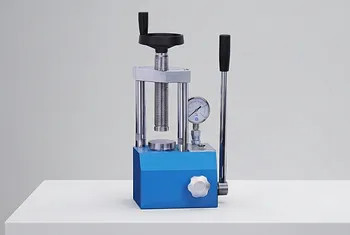
The Internal Spark: Why Resistance Heating Redefines Composite Integrity
Explore the systemic differences between resistance and radiation heating in vacuum hot pressing and how localized energy transforms aluminum matrix composites.
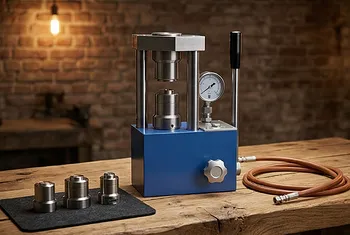
The Paradox of Pressure: Why 10 MPa Outperforms Force in Alumina Sintering
Discover why moderate pressure (10 MPa) is superior to high force in hot-pressing platelet alumina, preventing pore expansion and ensuring optical clarity.
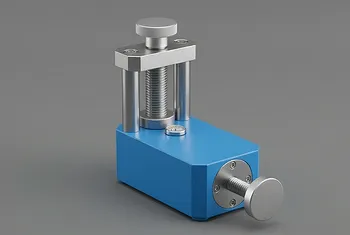
The Architecture of Certainty: Why the Laboratory Press is the Anchor of Material Science
Explore how precision heated hydraulic presses eliminate variables in rubber and pigment testing, transforming raw mixtures into standardized, data-ready specimens.
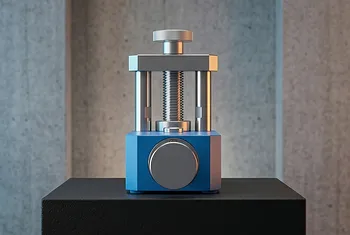
The Mechanics of Transformation: Why Pressure Redefines Wood Modification
Explore how thermo-mechanical coupling in hydraulic presses outperforms traditional ovens by enabling deep chemical penetration and structural stabilization.
The Mechanical Handshake: The Invisible Architecture of Room-Temperature Pressing
Discover how room-temperature pressing acts as the critical mechanical foundation for lignin-fiber integration, ensuring structural integrity before thermal consolidation.
The Architecture of Heat: Why Sample Density Dictates the Truth in Metal Hydride Research
Explore how laboratory hydraulic presses bridge the gap between loose powders and accurate thermal conductivity data through precise density control and geometric standardization.
The Geometry of Precision: Mastering the Thermal-Pressure Field in APPC Fabrication
Discover how high-precision heated presses achieve full impregnation and structural uniformity in All-Polypropylene Composites through controlled thermal-pressure fields.
The Thin Line of Efficiency: Why Precision Pressing Dictates Thermal Performance
Discover how laboratory pressing optimizes thermal interface thickness and filler orientation to maximize the COP of TEC and PCM composite systems.
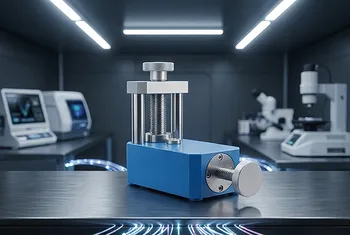
The Invisible Forge: Why the Laboratory Press is the Soul of Nano-Composites
Discover how laboratory heated hydraulic presses drive chemical cross-linking and physical densification in nano-composites through precise thermal and mechanical control.
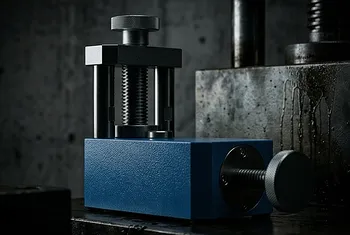
The Architecture of Contact: Why 400 MPa is the Bridge to Solid-State Batteries
Explore the critical role of ultra-high pressure in solid-state fluoride-ion battery assembly and how mechanical interlocking overcomes interfacial resistance.
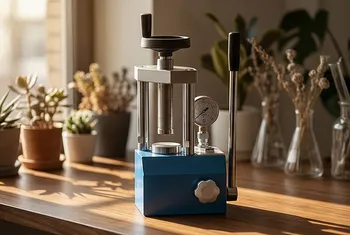
The Geometry of Silence: Why Flexibility is the Ultimate Precision in Ti-6Al-4V Pressing
Explore the critical role of flexible rubber molds in isostatic pressing. Learn how they eliminate density gradients and protect Ti-6Al-4V alloy integrity.
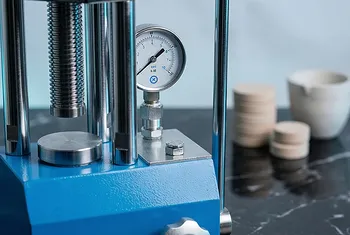
The Architecture of Contact: Why Density is the Destiny of Advanced Ceramics
Explore how laboratory presses transform LSTH powder into 98% dense ceramics by mastering the physics of particle arrangement and pressure control.
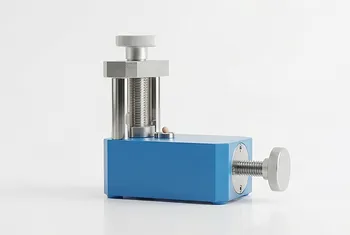
The Architecture of Force: Engineering Integrity in Copper-Based Composites
Explore how precision hydraulic pressing transforms loose copper powders into high-density green compacts, overcoming bridging effects and ensuring sintering success.

The Architecture of Density: Why Advanced Composites Demand Hydraulic Precision
Discover why high-precision hydraulic pressing is essential for NiO-doped polymer composites to eliminate micro-voids and ensure accurate material testing.