The Invisible Friction of Materials
In materials science, the interface is not just a boundary; it is a battlefield. For engineers developing aluminum matrix short steel fiber composites, the challenge is rarely about the bulk material. It is about the nanometers where the aluminum meets the steel.
Traditionally, we treat heat like weather—a generalized environment we subject a sample to, hoping the center reaches the same state as the surface. This is radiation heating.
But there is a more surgical way. Resistance heating turns the material’s own internal "friction"—its electrical resistivity—into the primary tool for bonding.
The Internal Ghost: Harnessing Differential Resistivity
Physics is indifferent to our production schedules, but it is highly sensitive to resistance.
In a vacuum hot press using resistance heating, we don't just warm the room. We pass an electric current through the mold and the composite itself.
- The Steel Advantage: Steel fibers have significantly higher electrical resistivity than the surrounding aluminum.
- Targeted Energy: Because electricity seeks the path of least resistance but generates heat where it meets the most, the steel fibers effectively become internal heating elements.
- The Result: Heat is generated exactly where it is needed—at the fiber-matrix interface.
The Speed of Atomic Real Estate
In radiation heating, thermal energy is a slow traveler. It must penetrate from the outside in, fighting through layers of material in a process governed by thermal lag. This is a "bulk" approach to a "molecular" problem.
Resistance heating flips the script. By generating heat internally, we eliminate the wait.
The localized surge of energy triggers rapid atomic diffusion. This isn't just about speed; it's about the precision of the bond. We are not just cooking the composite; we are engineering the metallurgical connection at the speed of an electron.
The Psychology of the Brittle Layer
In his book The Checklist Manifesto, Atul Gawande speaks to the danger of the "invisible failure." In composites, that failure is the brittle intermetallic layer.
If you heat a composite for too long, the reaction between the aluminum and steel creates a thick, glass-like layer at the interface. It looks solid, but it shatters under stress.
The Balancing Act
- High Pressure: Allows for densification at lower temperatures.
- Rapid Cycles: Resistance heating reaches the "sweet spot" of bonding before the brittle layer has time to grow.
- Localized Control: We minimize the thermal budget of the bulk aluminum matrix, preserving its structural properties.
Strategic Comparison: Energy Delivery Models
| Feature | Resistance Heating (Internal) | Radiation Heating (External) |
|---|---|---|
| Heat Origin | Generated within the fibers | Transferred from surface |
| Energy Profile | Localized at interfaces | Generalized bulk flux |
| Thermal Lag | Minimal to none | High; requires penetration time |
| Bonding Speed | Rapid atomic diffusion | Slower, conventional kinetics |
| Ideal For | High-efficiency production | Uniformity in irregular densities |
Precision as a Systemic Requirement
Choosing a heating method is not merely a technical preference; it is a strategic decision about the lifecycle of your material. If your goal is to push the limits of battery research or aerospace components, the "generalized" approach of the past is often the bottleneck.
True progress in materials science happens when we stop fighting physics and start leveraging it. By utilizing the electrical properties of the reinforcement itself, we transform the vacuum hot press from a simple furnace into a precision instrument.
Engineering the Future with KINTEK
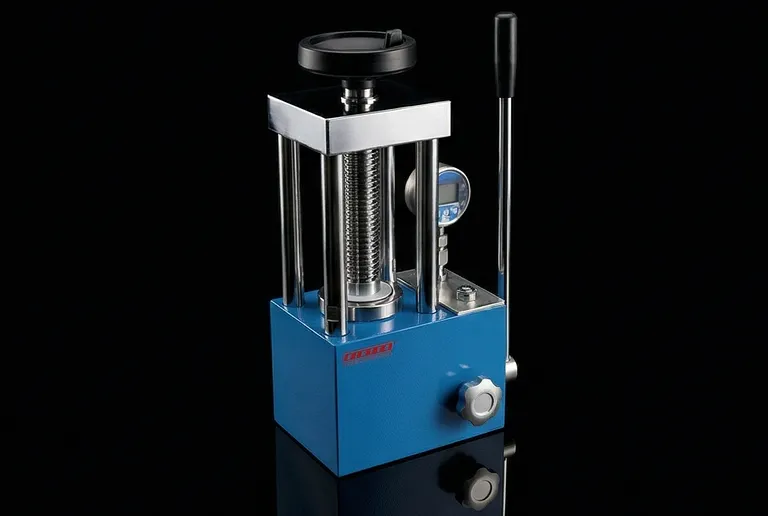
The margin between a breakthrough and a failure often comes down to the tools that manage your pressure and temperature.
KINTEK provides the specialized infrastructure required for this level of precision. From manual and automatic heated presses to multifunctional and glovebox-compatible models, we offer the systems necessary to control the delicate chemistry of isostatic and vacuum pressing.
Whether you are optimizing interfacial bonding or scaling advanced battery research, our equipment ensures that your "internal spark" is never lost to system inefficiency.
Related Products
- Heated Hydraulic Press Machine With Heated Plates For Vacuum Box Laboratory Hot Press
- Heated Hydraulic Press Machine with Heated Plates for Vacuum Box Laboratory Hot Press
- Automatic High Temperature Heated Hydraulic Press Machine with Heated Plates for Lab
- Automatic Heated Hydraulic Press Machine with Hot Plates for Laboratory
- Laboratory Split Manual Heated Hydraulic Press Machine with Hot Plates
Related Articles
- The Architecture of Slow: Why Physical Precision Dictates Chemical Destiny
- The Alchemy of 160°C: Why Precision Pressing is the Silent Backbone of Rubber Science
- The Vanishing Boundary: The Hidden Thermodynamics of LTCC Lamination
- The Architecture of Certainty: Why the Laboratory Press is the Anchor of Material Science
- The Invisible Forge: Why the Laboratory Press is the Soul of Nano-Composites













