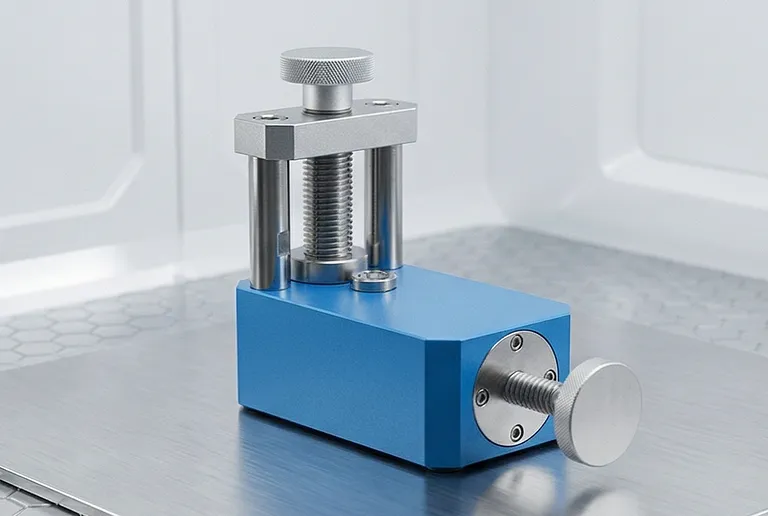
The Gap Between Raw Material and Reliable Data
In the world of hydrogen storage, metal hydride powders are promising but elusive. They are chaotic. In their raw form, these materials are a collection of loose grains separated by vast, invisible canyons of air or gas.
If you attempt to measure heat flow through this "loose" state, you aren't measuring the material. You are measuring the voids.
To find the truth about a material’s Effective Thermal Conductivity (ETC), you must first solve a structural problem. This is where the laboratory hydraulic press transitions from a simple tool to a precision instrument of science.
The Mechanics of the Thermal Bridge
Thermal energy in a solid doesn't travel through nothingness; it travels through contact. In axial heat flow measurements, the hydraulic press acts as the architect of these pathways.
Reducing Inter-particle Resistance
When pressure is applied, individual grains of metal hydride are forced into intimate contact. This process:
- Deforms the microscopic jagged edges of the powder.
- Increases the effective surface area where grains touch.
- Eliminates the "thermal bottlenecks" that cause erratic data readings.
The Standardized Geometry
The axial heat flow method relies on Fourier’s Law. This equation is unforgiving—it requires absolute certainty in the cross-sectional area and thickness of the sample.
By using precision-ground dies, a hydraulic press ensures that the specimen is not just a "pellet," but a geometric cylinder with perfectly parallel faces. Without this flatness, the sensor interface creates its own resistance, skewing the results before the experiment even begins.
The Psychology of Precision: Why Consistency Trumps Power
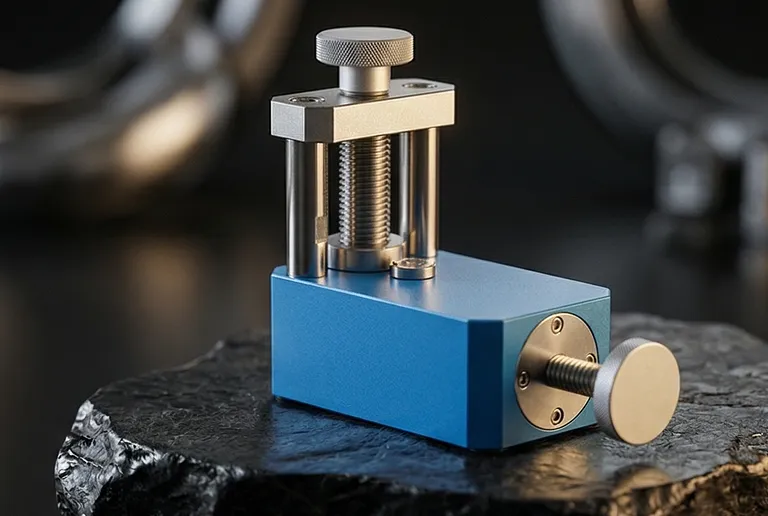
In engineering, we often mistake force for progress. However, in thermal analysis, the way you apply pressure is as critical as the amount of pressure itself.
Consistency is the antidote to "hot spots." A sample with non-uniform density will suffer from non-linear heat paths. The axial method assumes a one-dimensional flow. If one side of your pellet is denser than the other, your data reflects a structural failure, not a material property.
| Key Role | Physical Impact | Research Benefit |
|---|---|---|
| Powder Compaction | Increases particle-to-particle contact | Reduces internal thermal resistance |
| Geometric Control | Produces flat, parallel surfaces | Minimizes interface contact resistance |
| Porosity Tuning | Achieves specific target bulk density | Simulates real-world storage conditions |
| Uniformity | Creates a homogenous internal structure | Ensures valid one-dimensional heat flow |
The Paradox of Pressure
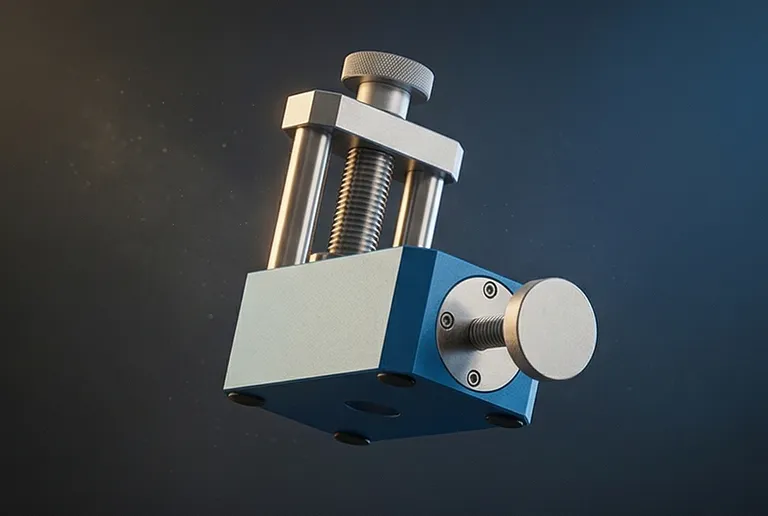
There is a point of diminishing returns. This is the "Engineer's Paradox": more of a good thing can eventually destroy the result.
- The Over-Compression Risk: Excessive force can lead to brittle fracture. If you crush the lattice too severely, you induce work hardening, changing the material's baseline properties.
- The Permeability Conflict: In hydrogen storage, heat must move, but so must gas. A pellet pressed too tightly may show excellent thermal conductivity but zero gas permeability, rendering it useless for a functional storage bed.
- Dimensional Instability: Metal hydrides swell when they absorb hydrogen. A press must help researchers find the "sweet spot"—a density that is stable enough for measurement but realistic enough for cycling.
Choosing the Right Instrument for the Narrative
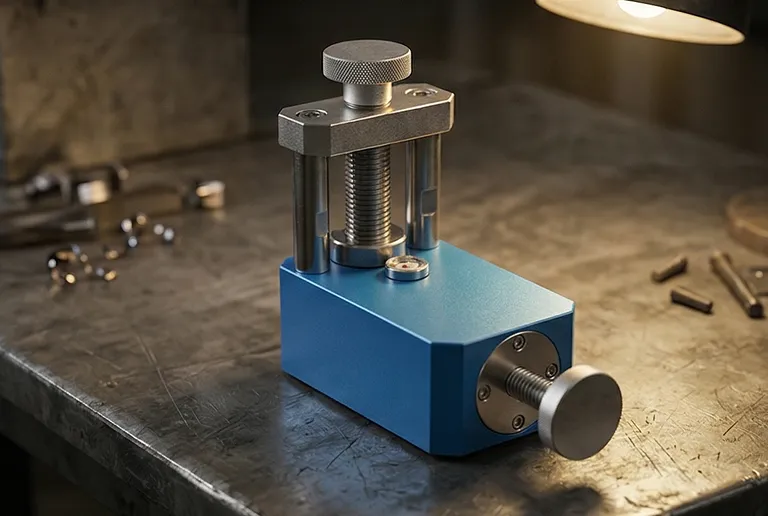
A researcher’s choice of press defines the limits of their data. Manual presses offer the "feel" of the material, but automatic systems offer the narrative of repeatability.
In high-stakes research, such as battery development or large-scale hydrogen storage, the ability to program a "hold time" or use isostatic pressing to ensure 360-degree uniformity is what separates a successful experiment from a series of anomalies.
At KINTEK, we understand that the press is the foundation of your thermal analysis. Our range of solutions—from manual and automatic presses to heated, glovebox-compatible, and isostatic models—are designed to give you total control over the density and integrity of your specimens.
Whether you are perfecting the volumetric energy density of a hydride bed or minimizing contact resistance for a new alloy, we provide the precision required to turn your powders into measurable truth.
Ready to enhance your lab's efficiency? Contact our experts today to find your ideal pressing solution!
Related Products
- Laboratory Hydraulic Press Lab Pellet Press Machine for Glove Box
- Laboratory Hydraulic Press 2T Lab Pellet Press for KBR FTIR
- 24T 30T 60T Heated Hydraulic Lab Press Machine with Hot Plates for Laboratory
- Laboratory Hydraulic Press Lab Pellet Press Button Battery Press
- Laboratory Hydraulic Pellet Press for XRF KBR FTIR Lab Press
Related Articles
- The Physics of Transparency: Why Pressure is the Silent Architect of Spectroscopic Clarity
- The Architecture of Density: Why Pressure is the Silent Architect of Solid-State Batteries
- The Geometry of Electrons: Why Surface Precision is the Silent Partner in SECM Research
- The Geometry of Ionic Flow: Why Precision Pressing Dictates Material Truth
- The Architecture of Density: Why Pressure is the Foundation of Precision



















