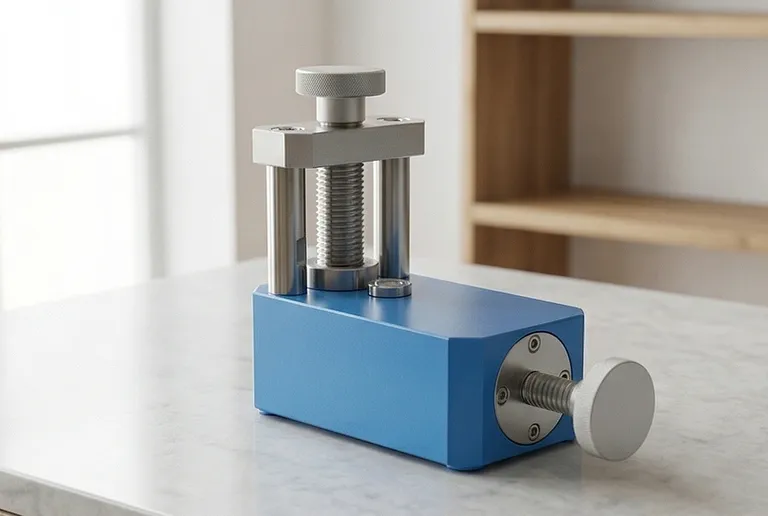
The Invisible Gap Between Powder and Precision
In the pursuit of the next generation of solid-state electrolytes, we often focus on the elegance of the chemical formula. We obsess over the stoichiometry of $Pb_xSr_{1-x}SnF_4$. But in the laboratory, truth is not found in a formula; it is found in the physical contact between particles.
The transition from a synthesized fluoride powder to a scientifically valid measurement is a mechanical one. Without the application of controlled, high-intensity pressure—often exceeding 140 atm—your data measures nothing more than the insulating properties of air.
In research, as in finance, the most expensive mistake is the highly accurate measurement of a fundamentally flawed sample.
The Architecture of a Signal
To understand why a laboratory hydraulic press is a prerequisite for electrical conductivity testing, one must look at the microscopic landscape of a "green body."
The Insulation of Voids
In its raw, loose state, $Pb_xSr_{1-x}SnF_4$ is a chaotic collection of particles separated by macroscopic voids. These air gaps act as insulators. When you run Electrochemical Impedance Spectroscopy (EIS), ions do not see a path; they see a series of dead ends.
High pressure forces these particles to undergo three critical stages:
- Rearrangement: Particles shift to fill the largest gaps.
- Fragmentation: Larger crystals break into smaller ones to fill smaller pores.
- Plastic Deformation: The material yields, interlocking particles into a single, coherent mass.
Overcoming Grain Boundary Resistance
Even when particles touch, they do not always communicate. The interface between two crystals—the grain boundary—is a zone of high resistance. A hydraulic press minimizes this "interfacial tax," allowing researchers to measure the intrinsic ionic conduction of the lattice rather than the friction of the boundary.
The Mathematical Necessity of Geometry
Conductivity is not an arbitrary number; it is a value derived from geometry. We calculate Siemens per centimeter ($S/cm$) based on the precise thickness and diameter of a sample.
- Uniformity: If a pellet is thicker at the edges than the center, the electric field distribution becomes non-linear.
- Structural Integrity: A pellet must be robust enough to survive electrode attachment and handling without micro-fracturing.
- Reproducibility: Scientific validity requires that Sample A and Sample B were subjected to the exact same dwell time and pressure gradient.
Without a precision-controlled press, these variables drift. When variables drift, insights vanish.
The Risks of Force
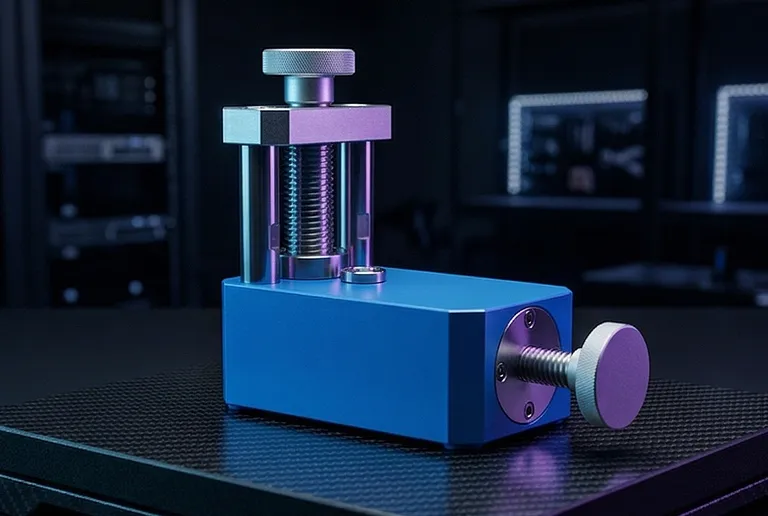
Engineers know that more is not always better. While 140 atm is often a baseline, excessive pressure introduces its own set of psychological and physical traps:
| Risk | Impact on Sample |
|---|---|
| Lattice Strain | Excessive force can distort the crystalline structure, altering the very properties you wish to measure. |
| Phase Transition | Some fluoride materials may undergo unwanted phase changes under extreme stress. |
| Density Gradients | Uniaxial pressing (pressure from one side) can lead to "capping" or uneven density between the top and bottom of the pellet. |
Designing for Consistency
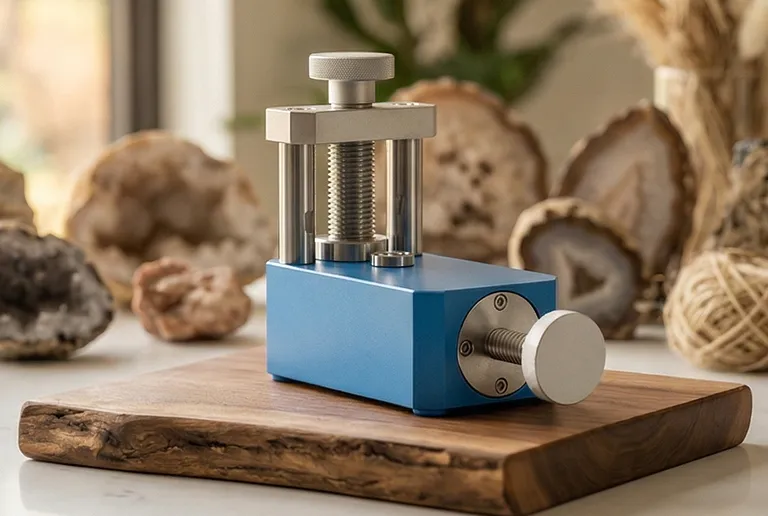
To move from "loose powder" to "reliable data," the methodology must be systematic. The goal is to create a sample where the movement of ions is limited only by the material's chemistry, not its preparation.
- For Intrinsic Properties: Use the highest pressure supported by literature to minimize grain boundary interference.
- For Structural Stability: Utilize precision-ground steel dies and implement a slow, controlled release of pressure to prevent "capping" cracks.
- For Comparative Studies: Maintain a strict "dwell time"—the duration under load—to ensure every sample has the same density history.
The KINTEK Solution: Precision as a Standard
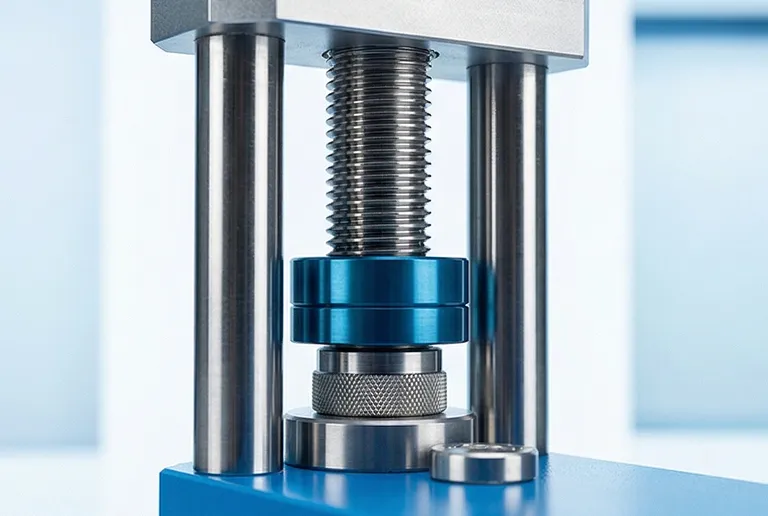
At KINTEK, we recognize that the hydraulic press is the bridge between a theoretical powder and a physical discovery. We specialize in comprehensive pressing solutions designed for the rigorous demands of battery and solid-state research.
Our range covers the entire spectrum of laboratory needs:
- Manual & Automatic Presses: For controlled, repeatable force application.
- Heated & Multifunctional Models: For materials requiring thermal assistance during densification.
- Glovebox-Compatible Designs: Ensuring that moisture-sensitive fluorides like $Pb_xSr_{1-x}SnF_4$ never touch the atmosphere.
- Isostatic Presses (CIP/WIP): To eliminate density gradients and provide truly uniform compaction.
The quality of your research is capped by the quality of your sample preparation. Let us help you remove the artifacts and reveal the true potential of your materials.
Related Products
- Laboratory Hydraulic Press Lab Pellet Press Machine for Glove Box
- Laboratory Hydraulic Press 2T Lab Pellet Press for KBR FTIR
- 24T 30T 60T Heated Hydraulic Lab Press Machine with Hot Plates for Laboratory
- Laboratory Hydraulic Press Lab Pellet Press Button Battery Press
- Laboratory Hydraulic Pellet Press for XRF KBR FTIR Lab Press
Related Articles
- The Physics of Transparency: Why Pressure is the Silent Architect of Spectroscopic Clarity
- The Architecture of Density: Why Pressure is the Silent Architect of Solid-State Batteries
- The Geometry of Electrons: Why Surface Precision is the Silent Partner in SECM Research
- The Architecture of Heat: Why Sample Density Dictates the Truth in Metal Hydride Research
- The Architecture of Density: Why Pressure is the Foundation of Precision



















