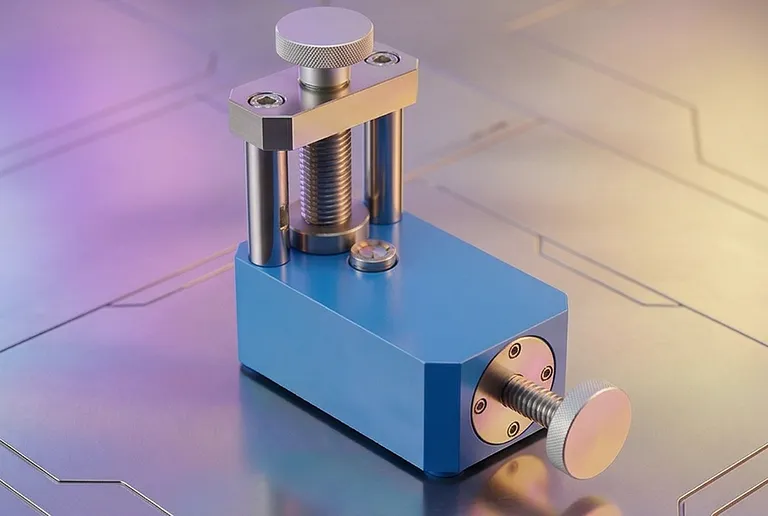
The Fragility of the Advanced Lattice
In the world of materials science, the difference between a breakthrough and a failure is often measured in parts per million. Ternary III-C-N semiconductor compounds—the backbone of next-generation electronics—are architectural masterpieces at the atomic level.
But these structures are fragile.
The moment these raw powders encounter the open air, a silent tragedy begins. Oxygen and moisture are not just gases; in the context of advanced powder metallurgy, they are corrosive agents that rewrite the chemical script of your material before the first press even begins.
The Invisible Saboteurs: Oxygen and Moisture
For an engineer, the enemy isn't just "dirt." It is the invisible reactivity of the environment. When working with III-C-N compounds, the atmosphere is a contaminant.
1. The Prevention of Chemical Decay
Ternary compounds are exceptionally prone to oxidation and hydrolysis. Even a few seconds of exposure can trigger a chemical chain reaction. By integrating a hydraulic press within a vacuum glovebox, we create a sanctuary. The mold loading and high-pressure forming happen in an inert gas cocoon, shielding the material from its own reactivity.
2. Preserving the "Golden Ratio"
Semiconductor performance is a function of stoichiometry—the exact ratio of elements. If oxygen sneaks into the crystal lattice, the bandgap shifts, and electron mobility drops. The vacuum glovebox ensures that the material you weighed is the material you press, keeping the electrical characteristics predictable and pure.
The Physics of the Squeeze: Why Force Matters
If the glovebox is the sanctuary, the hydraulic press is the forge. Density is not merely a physical state; it is a requirement for functionality.
The Role of Densification
Green body density determines the success of the subsequent sintering process. High hydraulic force reduces porosity, ensuring that solid-phase reactions occur efficiently. Without uniform, high-pressure application, the resulting semiconductor will suffer from internal defects and poor mechanical stability.
The Hot Press Advantage
In many III-C-N applications, pressure alone isn't enough. The combination of heat and force within a vacuum—known as vacuum hot pressing—facilitates solid-phase reactions that are physically impossible at atmospheric pressure. This produces grain structures that are tighter, stronger, and more electrically consistent.
The Engineer’s Paradox: Complexity vs. Control
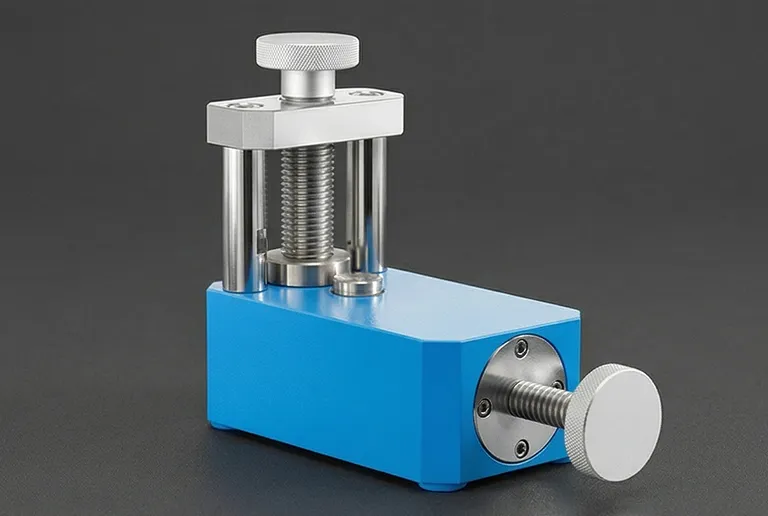
Integrating heavy machinery into a sealed environment is an exercise in managing trade-offs. It is a systemic challenge that requires more than just "putting a press in a box."
- Thermal Management: Hydraulic systems generate heat. In a closed glovebox, this heat has nowhere to go. Without integrated cooling, the internal temperature can rise, threatening seals and altering the very powders you are trying to protect.
- Spatial Constraints: Working through rubber gloves limits dexterity. The ergonomics of mold handling become a critical failure point. A misplaced tool or a spilled powder in a sealed chamber can cause days of downtime.
- The Maintenance Debt: Accessing a press for calibration inside a glovebox is difficult. Every breach of the seal is a risk. This necessitates equipment that is not just powerful, but exceptionally reliable.
Strategic Integration: A Framework for Success
Choosing the right setup depends on your research priorities.
| Focus Area | Recommended Strategy | Material Impact |
|---|---|---|
| Ultimate Purity | Fully automated internal press | Eliminates human error and glove breaches. |
| High Performance | Integrated Hot Pressing | Maximizes densification and grain structure. |
| R&D Flexibility | Modular glovebox/press design | Allows for easier maintenance and upgrades. |
| Structural Integrity | Isostatic Pressing | Provides uniform density for complex geometries. |
Engineering the Future of Synthesis
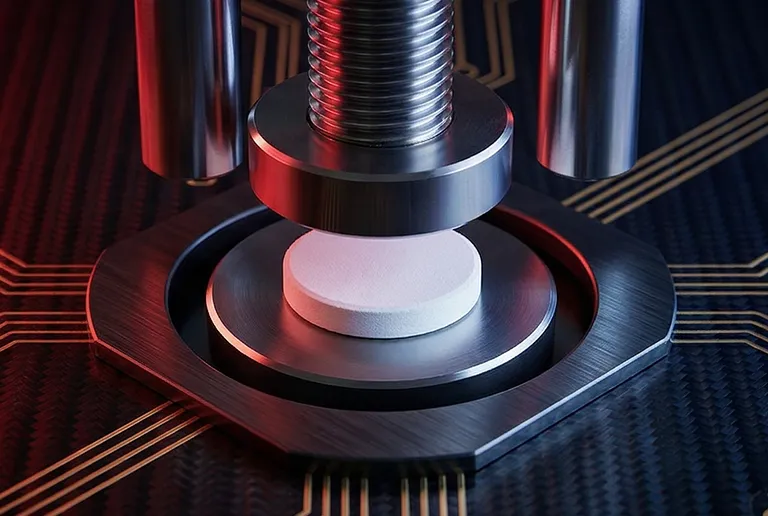
Precision is expensive, but in the realm of III-C-N semiconductors, the cost of compromise is a total loss of material integrity. To build the future of power electronics and high-frequency devices, the workflow must be as pure as the intent.
At KINTEK, we understand the "engineer's romance" with perfection. We specialize in the complex integration of laboratory pressing solutions—ranging from manual and automatic models to sophisticated glovebox-compatible and isostatic presses designed for the rigors of battery and semiconductor research.
Ensure your materials achieve their theoretical potential by controlling every variable of their birth. Contact Our Experts
Related Products
- Laboratory Hydraulic Press Lab Pellet Press Machine for Glove Box
- Heated Hydraulic Press Machine with Heated Plates for Vacuum Box Laboratory Hot Press
- Heated Hydraulic Press Machine With Heated Plates For Vacuum Box Laboratory Hot Press
- Automatic Laboratory Hydraulic Press for XRF and KBR Pellet Pressing
- Manual Heated Hydraulic Lab Press with Integrated Hot Plates Hydraulic Press Machine
Related Articles
- The Physics of Transparency: Why Pressure is the Silent Architect of Spectroscopic Clarity
- The Architecture of Density: Why Pressure is the Silent Architect of Solid-State Batteries
- The Geometry of Electrons: Why Surface Precision is the Silent Partner in SECM Research
- The Geometry of Ionic Flow: Why Precision Pressing Dictates Material Truth
- The Architecture of Heat: Why Sample Density Dictates the Truth in Metal Hydride Research


















