Precision Electrode Die Cutting Equipment for Reliable Battery Development and Manufacturing
Electrode cutting is more than a simple converting operation. In battery research and manufacturing, it is a quality-defining process that determines the final size, shape, edge condition, handling behavior, and assembly compatibility of coated anodes and cathodes. A poorly cut electrode can introduce burrs, loose particles, dimensional variation, coating damage, or edge defects that complicate stacking, winding, tab welding, sealing, and subsequent electrochemical evaluation. For this reason, battery laboratories and production teams need cutting equipment that combines precision, repeatability, material protection, and the flexibility to support changing cell designs.
KINTEK supplies electrode die cutting machines for lithium-ion battery R&D, pouch-cell development, polymer lithium battery preparation, pilot-line validation, and scalable electrode processing. Our portfolio covers manual, pneumatic, hydraulic, semi-automatic, laser, and fully automatic solutions, enabling users to select the appropriate cutting method and automation level for their materials, sample quantities, required tolerances, and workflow requirements. These systems are also valuable for processing copper foil, aluminum foil, nickel strip, lithium foil, metal sheet, coated current collectors, separator-related films, aluminum-plastic laminate, tapes, and other thin functional materials used in advanced materials research.
Why electrode edge quality matters
During electrode fabrication, active material slurry is coated onto a current collector, dried, calendered when needed, and converted into electrode sheets or shaped blanks. The cutting stage turns this coated web or sheet into the geometry required for a specific cell design. Typical requirements include rectangular sheets, rounded-corner pouch electrodes, tab-forming profiles, narrow strips, circular samples, customized outlines, and other die-defined forms.
The electrode edge must be controlled carefully. Excessive burrs on metallic current collectors may create risks during cell assembly, particularly when clearances between the anode, cathode, and separator are small. Damaged coating edges may shed particles or affect active-area uniformity. Inconsistent dimensions can reduce stacking accuracy, create tab-position errors, or make it difficult to compare experimental results across a batch of laboratory cells. Clean, repeatable cutting therefore supports both safety-oriented manufacturing practice and credible research data.
KINTEK electrode cutting systems are engineered to help users achieve stable cut geometry and controlled edge quality. Depending on the machine configuration, users can benefit from precision die cutting, adjustable pneumatic or hydraulic pressure, accurate platen alignment, infrared positioning, programmable length control, fiber-sensor tracking, CCD inspection, laser cutting, web alignment, dust removal, and continuous rewinding. The result is an electrode preparation process that is better suited to consistent downstream assembly and testing.
A complete range from manual research tools to automated production systems
Battery projects rarely remain at one scale. A research group may begin by manually preparing a small number of electrodes, then move to repeated pouch-cell builds, pilot-line trials, and eventually continuous production validation. KINTEK provides equipment across this progression so that the cutting process can evolve with your development program.
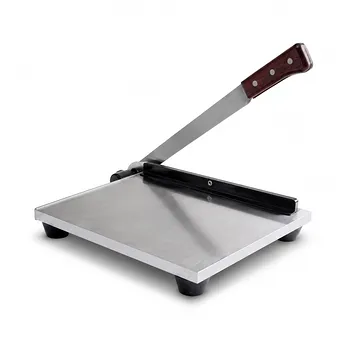
Manual benchtop cutting knives provide a direct, practical method for trimming electrode sheets and thin films. A stable base, pressure bar, ruler, and durable high-speed tool steel blade enable efficient straight cutting of coated foils, aluminum-plastic film, and related laboratory materials. These machines are useful when operators need flexible dimensions, fast setup, and low-volume preparation without the complexity of an automated line. They are particularly appropriate for early-stage formulation studies, sample preparation, incoming-material evaluation, and small-batch cell research.
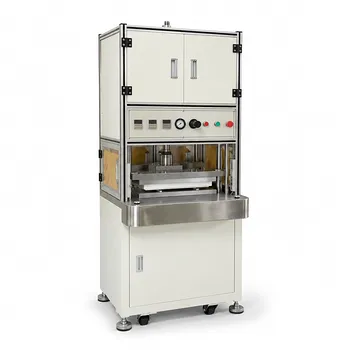
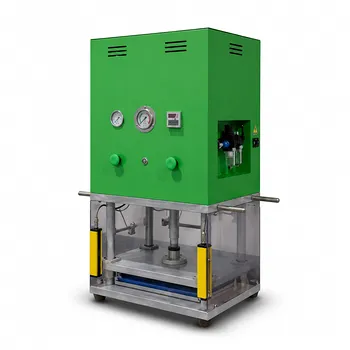
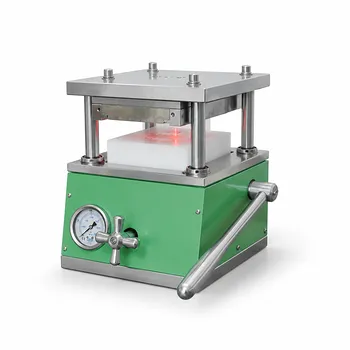
Manual and pneumatic punching machines are designed for users who need defined electrode shapes rather than simple straight cuts. Controlled pressing force and dedicated dies make it possible to produce repeatable cathode and anode blanks for polymer lithium batteries, pouch cells, coin-cell-related sample preparation, and custom laboratory formats. Features such as adjustable dwell timing, platen parallelism, dual-button actuation, and light-curtain protection support more controlled and secure operation. A pneumatic or hydraulic approach also reduces operator-dependent variation compared with purely hand-operated punching.
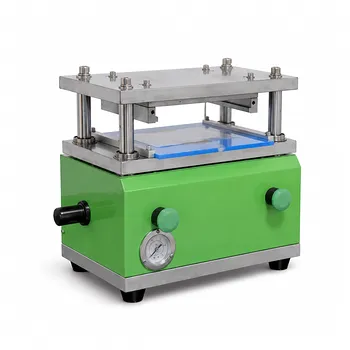
Laboratory pneumatic and compact hydraulic positioning die cutters deliver a strong balance of accuracy, force control, and compact laboratory usability. These machines are suitable for coated electrode sheets, lithium foil, and other sensitive thin materials where a clean edge and repeatable geometry are required. Configurable tooling enables adaptation to different cell formats, while glovebox-compatible configurations can support workflows involving moisture-sensitive materials. The ability to change dies efficiently is valuable for laboratories developing multiple electrode dimensions, experimental pouch formats, or customer-specific cell architectures.
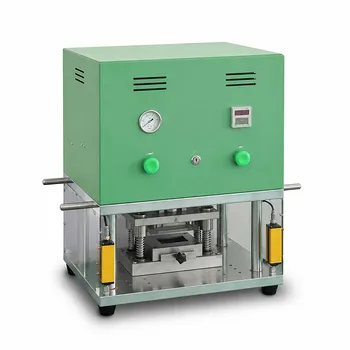
Semi-automatic pouch-cell electrode die cutting machines support higher throughput while retaining practical operator control. Infrared positioning helps align electrode material accurately before cutting, and selectable pressing force can be matched to the material stack and tooling requirement. With clean edges, controlled dimensional accuracy, and safety protection, this equipment is well suited to research institutes, university laboratories, battery development teams, and pilot operations producing repeated pouch-cell samples. It helps bridge the gap between individual laboratory punches and fully automated web-processing equipment.
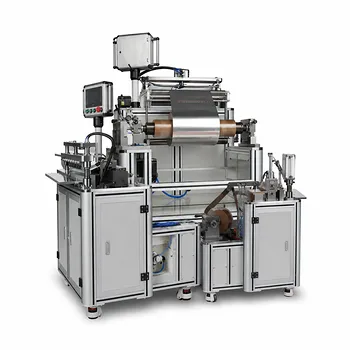
Automatic electrode sheet cutting machines are designed for repeated, controlled preparation of electrode strips and sheets. Programmable cut lengths or fiber-sensor tracking can support consistent processing of coated web materials, while adjustable speed enables the operation to be matched to material behavior and production demand. Automatic cutting is a practical choice when teams need to reduce repetitive manual handling, improve batch consistency, and increase preparation efficiency for cell assembly work.
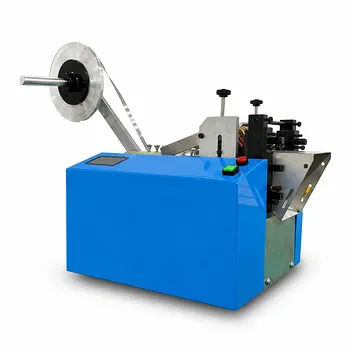
Nickel strip cutting machines address another essential battery manufacturing task: reliable preparation of conductive strips and thin metal materials. Adjustable cutting dimensions and dependable high-speed operation support the processing of nickel strip, copper, aluminum, foil tape, and related materials. These systems can be used for battery interconnect preparation, tab-related work, and materials conversion where accurate, repeatable strip dimensions are important.
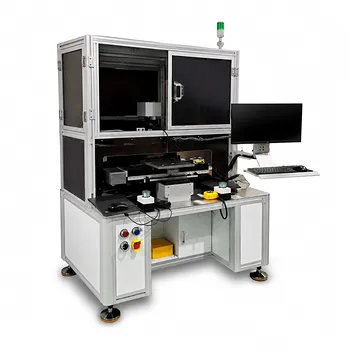
Semi-automatic electrode laser cutting machines offer a non-contact alternative for applications that benefit from flexible digital geometry and rapid changeover. Fiber laser cutting can create precise profiles without relying on a dedicated physical die for every design. This is valuable for development teams testing new electrode outlines, prototype formats, or frequent design iterations. Suitable dust-control and material-handling provisions are important in laser processing, and KINTEK systems are intended to support clean, stable workflow integration for battery pilot lines and advanced research environments.
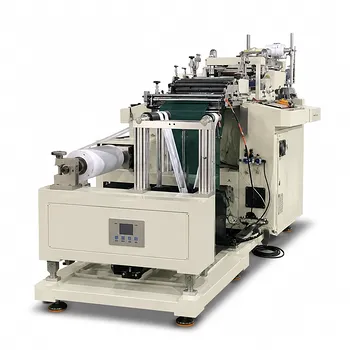
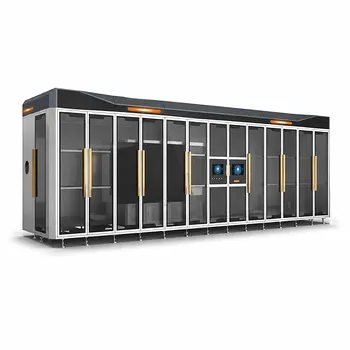
Fully automatic lithium-ion battery electrode die cutting machines are intended for continuous, high-efficiency electrode processing. By integrating unwinding, web alignment, die cutting, tab forming, CCD inspection, dust removal, and rewinding, these systems support a more complete production workflow. Automated inspection and alignment functions help maintain quality during high-speed operation, while continuous handling reduces manual intervention. For teams moving toward pilot production or manufacturing-scale validation, this integrated approach can improve process consistency, traceability, and labor efficiency.
Choosing the right cutting principle
Different electrode materials, product volumes, and cell architectures require different cutting approaches. The right machine depends on more than the desired shape. Material thickness, coating density, foil type, tolerance expectations, edge-quality requirements, equipment footprint, and expected daily throughput should all be considered.
Mechanical die cutting uses a shaped die and controlled pressing force to cut the electrode into a predetermined profile. It is especially effective when the same shape is produced repeatedly. Once the die is qualified, mechanical die cutting can provide efficient, repeatable output with good dimensional consistency. It is widely used for rectangular, shaped, and tab-related electrode geometries. Proper die design, material support, and pressure adjustment are central to reducing burrs and protecting the active coating.
Pneumatic cutting uses compressed air to generate controlled cutting motion and force. This method is well suited to laboratory and semi-automatic applications because it offers responsive operation, relatively simple control, and repeatable actuation. Pneumatic systems can be configured with safety features and adjustable timing, helping operators match the cutting cycle to material characteristics and handling requirements.
Hydraulic die cutting provides higher, stable pressing force and can be beneficial for materials or tooling that require stronger, more uniform pressure. Compact hydraulic systems are useful when laboratories need accurate, burr-controlled die cutting in a space-efficient format. Adjustable pressure control gives users a practical way to optimize results for different foil, coating, and laminate combinations.
Laser cutting applies focused energy to create the desired profile without physical contact from a cutting die. Its main advantages are geometry flexibility, rapid changeover, and the ability to support prototype development without fabricating a new die for every design iteration. Laser cutting parameters must be selected carefully for the electrode material to achieve suitable cut quality and manage thermal effects. For this reason, laser systems with stable source performance, dependable material handling, and appropriate dust control are important for consistent operation.
Automatic sheet or web cutting uses programmed motion, tracking, and controlled actuation to process electrode material repeatedly. It is a strong choice for operations that need consistent lengths, reduced manual handling, and higher throughput. When integrated with unwinding, alignment, inspection, and rewinding, automatic equipment can become a key part of a continuous electrode-processing line.
Designed around dimensional accuracy and low-burr performance
In battery electrode processing, accuracy is closely linked to usable active area, cell balance, stack alignment, and assembly repeatability. KINTEK equipment is configured to support precise positioning and controlled cutting across a broad range of laboratory and production requirements. Depending on the selected model, systems can achieve tightly controlled cutting accuracy, with automatic die cutting equipment designed for accuracy down to 0.1 mm and low-burr performance as fine as 0.015 mm in appropriate applications.
Low burr formation is especially important when working with thin copper and aluminum current collectors. Burrs can interfere with separator placement, complicate handling, and create unacceptable edge conditions in tightly assembled cells. Controlled tooling, proper cutting force, stable material support, and accurate positioning all contribute to cleaner edges. The same discipline benefits coated electrodes by helping preserve the coating near the cut boundary and reducing loose debris during downstream handling.
Positioning technologies such as infrared alignment, fiber-sensor tracking, and CCD inspection further support dimensional consistency. Infrared positioning is useful for aligning sheets before a semi-automatic die-cutting cycle. Fiber sensors can track reference features or material conditions during automatic length cutting. CCD inspection can add a visual quality-control layer within fully automatic lines, supporting the detection of alignment or processing issues before material advances to later stages.
Flexible tooling for evolving cell formats
Battery development requires flexibility. Researchers may compare multiple electrode sizes in one program, optimize tab placement, test different N/P ratios, or evaluate a new pouch-cell footprint. Standardized equipment without adaptable tooling can slow these programs down. KINTEK supports configurable dies and customized tooling options so users can match the cutting profile to their specific cell design.
Custom tooling can be developed for electrode width, length, corner radius, tab geometry, notch location, coated-area requirements, and specialized material formats. This capability is valuable for research groups building proprietary cells, startups qualifying new designs, academic teams conducting controlled experiments, and manufacturers adapting equipment to customer programs. A properly designed die also supports repeatable setup from batch to batch, reducing the time required to move from prototype preparation to a more stable process.
When specifying tooling, it is useful to define the material stack clearly: current collector type and thickness, coating presence and thickness, total sheet thickness, target shape, dimensional tolerance, expected production volume, and edge-quality target. KINTEK can use these process details to recommend an appropriate machine configuration and die approach.
Supporting safer, more efficient laboratory operation
Electrode cutting equipment should be easy to integrate into the realities of battery work. Laboratory users need compact footprints, straightforward operation, reliable repeatability, and safety provisions that suit frequent material changes. Pilot-line users need more throughput, better alignment control, and reduced dependence on manual handling. Production users need continuous operation, stable web transport, inspection capability, and process consistency.
KINTEK systems address these different needs with options including compact benchtop formats, guarded cutting areas, dual-button operation, light-curtain protection, adjustable pressure settings, programmable cutting parameters, stable bases, and controlled web handling. Machine selection can also account for glovebox operation, which is relevant when cutting lithium foil or preparing moisture-sensitive materials in an inert atmosphere.
The practical benefit is a more orderly electrode-preparation workflow. Operators can reduce repeated manual measurement, improve consistency between samples, prepare materials faster for stacking or winding, and spend more time evaluating battery performance rather than correcting avoidable cutting variation. For research teams, this supports stronger experimental repeatability. For pilot and manufacturing teams, it supports process discipline and yield-oriented operations.
Applications across battery and advanced materials workflows
Although electrode die cutting is central to lithium-ion cell fabrication, these machines also serve a wider range of thin-material converting tasks. They can support preparation of cathode and anode sheets for coin cells, pouch cells, prismatic-cell studies, polymer lithium batteries, and prototype solid-state battery architectures. They are also useful for current collector processing, lithium metal handling, separator-related films, conductive tape, metal foil, and laminated packaging materials.
Beyond battery R&D, precision cutting and punching equipment can support materials science, powder metallurgy, ceramics research, polymer film development, capacitor studies, fuel-cell component preparation, and other laboratory applications involving thin metallic or coated sheet materials. The exact suitability depends on the material properties and required cut profile, but the core requirement remains the same: reliable, repeatable preparation of samples with controlled dimensions and clean edges.
Work with KINTEK on a cutting solution matched to your process
Selecting an electrode die cutting machine requires a clear view of your material, desired geometry, sample volume, accuracy target, and process environment. A manual cutting knife may be the most efficient choice for flexible research trimming. A pneumatic or hydraulic die cutter may be ideal for repeatable shaped electrodes. A laser system may offer the flexibility needed for prototype changes. An automatic or fully integrated line may be the right investment when throughput, inspection, and continuous handling become priorities.
KINTEK combines laboratory equipment experience with a broad understanding of battery R&D and advanced-materials workflows. We can help evaluate machine type, cutting principle, press force, automation level, safety configuration, glovebox compatibility, and customized die requirements. Our goal is to provide an electrode-processing solution that fits the way your team actually works today while supporting the next stage of development.
Contact our technical team to discuss your electrode material, cell format, target dimensions, burr requirements, throughput goals, and custom tooling needs. We will help you identify a professional, configurable electrode die cutting solution for dependable laboratory research, pilot-line development, or battery manufacturing.