Advance Battery Research With Configurable In-Situ Raman Test Cells
Understanding a battery only from its voltage curve, capacity retention, or post-mortem sample analysis leaves important questions unanswered. Many of the mechanisms that determine battery life, rate capability, safety, and reversibility occur at buried interfaces or evolve while the cell is operating. Electrode phase changes, electrolyte decomposition, interfacial reactions, dendrite initiation, gas-related effects, passivation, swelling, and contact loss can all develop dynamically. KINTEK in-situ Raman test cells and related operando characterization fixtures are designed to give battery and materials researchers practical access to these processes under controlled experimental conditions.
The category brings together optical test devices, transparent electrochemical reactors, sealed battery fixtures, and supporting circulation equipment for researchers who need to combine cell operation with Raman spectroscopy, optical microscopy, infrared analysis, X-ray diffraction (XRD), computed tomography (CT), or visual observation. Rather than treating the test fixture as a generic holder, these products make the fixture part of the experimental design. They provide defined sample geometry, stable assembly, controlled electrode spacing, material compatibility, optical access, and adaptable connections so that the data collected are more relevant to the actual electrochemical system.
Why In-Situ and Operando Observation Matters
Conventional ex-situ characterization remains essential, but it often requires a cell to be stopped, opened, rinsed, transferred, or otherwise altered before analysis. Those steps can change moisture-sensitive materials, relax mechanical stress, disturb interfaces, or obscure short-lived reaction products. In-situ testing examines a material within a dedicated cell environment, while operando testing links characterization measurements directly to a cell's active charge, discharge, cycling, or reaction state. The distinction is useful in practice because it encourages researchers to record the electrochemical condition, test sequence, pressure, temperature, atmosphere, and electrolyte state together with the analytical result.
Raman spectroscopy is particularly useful for following molecular vibration and crystal-lattice information. Depending on the material and instrument configuration, it can help investigate carbon structure, transition-metal oxide behavior, sulfur species, electrolyte-related signals, reaction intermediates, and surface-film evolution. Optical microscopy can reveal changes in electrode morphology, wetting, corrosion, gas generation, interface movement, and metal deposition. Infrared methods provide complementary chemical information, while XRD can follow crystallographic evolution and CT can support non-destructive structural inspection. A thoughtfully designed test cell helps bring these techniques closer to the electrochemical event of interest.
A reliable experiment starts with reliable physical conditions. Poor sealing, unstable sample positioning, imprecise spacing, incompatible construction materials, and uncontrolled electrolyte volume can introduce variation that is mistakenly attributed to the active material. KINTEK fixtures are selected and configured to support repeatable laboratory workflows, helping researchers establish controlled geometries and practical access for the instruments used in their program.
Optical Devices for Raman, Microscopy, and Infrared Studies
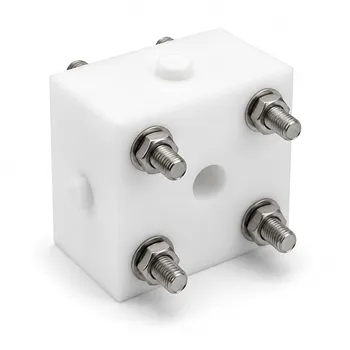
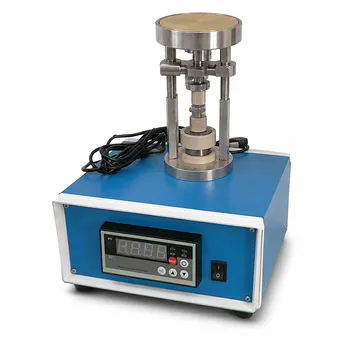
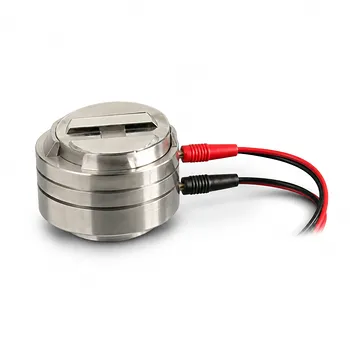
The optical testing solid-state battery device is intended for compact battery research setups requiring microscope, Raman, or infrared cross-section analysis. Its fixture-based architecture supports controlled sample access and adaptable sample dimensions, which is important when evaluating different electrolyte pellets, composite cathodes, lithium-metal interfaces, or layered solid-state cell assemblies. A venting configuration is available for research workflows that require managed access or specialized experimental arrangements. This makes the platform useful for studies where the relationship between pressure, contact condition, microstructure, and electrochemical response must be examined carefully.
For aqueous battery development, the optical testing cross-section aqueous battery device provides a route to microscopy, Raman, and infrared analysis while supporting observations such as dendrite behavior and conductivity-related phenomena. Aqueous systems can exhibit rapid interfacial changes, corrosion, metal deposition, electrolyte movement, and concentration gradients. Direct visual or spectroscopic access can help researchers determine whether an observed electrochemical change is associated with electrode morphology, separator condition, electrolyte behavior, or an evolving interface. The device supports a more deliberate approach to correlating images and spectra with cycling data.
Transparent or optically accessible cells are especially valuable when experimental questions are visual by nature. For example, a team developing metal electrodes may need to compare deposition texture at different current densities. A researcher studying an air cathode may want to observe wetting, reaction-zone changes, or gas-access effects. A solid-state battery group may need to examine cross-sectional behavior under defined assembly conditions. In each case, the goal is not merely to see the cell. It is to generate a measurement environment where observation can be repeated, compared, and interpreted in relation to the cell's design and operating state.
Dedicated Fixtures for Solid-State Battery Characterization
Solid-state battery research introduces specific mechanical and interfacial challenges. Electrolyte pellets, composite electrodes, and solid interfaces may be highly sensitive to applied pressure, surface flatness, stack alignment, and contact resistance. KINTEK supplies solid-state battery test devices that help researchers organize these variables into practical characterization workflows.
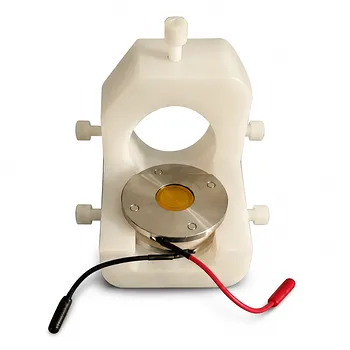
The XRD testing solid-state battery device is designed for 16 mm battery samples and supports sample thicknesses from 0 to 6 mm within a 50 mm fixture diameter. Its adaptable mounting supports diffraction-oriented laboratory work, including electrolyte pellet evaluation and integration with suitable XRD platforms. Because crystalline phase evolution can be central to solid electrolyte and electrode research, an appropriately dimensioned, stable fixture can make it easier to plan measurements around the actual sample geometry rather than forcing the sample into an unsuitable holder.
The CT testing solid-state battery device provides a compact fixture concept for cell evaluation, with a 2 mm inner diameter, optional display arrangement, external fixture capability, and integration options for a 2-ton sensor. It is suited to researchers exploring structural change in small-format solid-state samples or developing instrument-specific test protocols. Non-destructive CT evaluation can be useful for examining internal geometry, voids, cracks, layer alignment, and changes that may occur during preparation or cycling. Where mechanical loading and structural integrity are central variables, a fixture that supports controlled integration becomes particularly important.
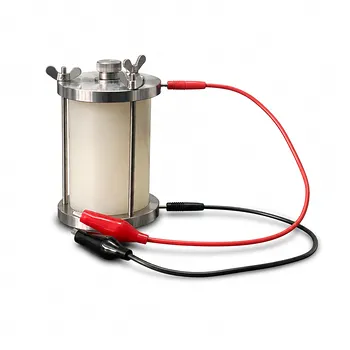
The 4680 cylindrical battery detachable split test kit addresses a different but equally practical need: repeatable research access to a cylindrical battery format. It incorporates corrosion-resistant sealing, stainless-steel end caps, PTFE insulation, and spring-loaded fastening. The detachable architecture supports flexible experimental workflows, component evaluation, and controlled reassembly. Researchers investigating material combinations or electrochemical behavior in a cylindrical format can benefit from a test platform that prioritizes secure positioning and repeatable assembly rather than a one-time sealed commercial-cell construction.
Zinc-Air, Metal-Air, and Fuel-Cell Reactor Platforms
Zinc-air and other metal-air systems place unusual demands on the test cell. Their behavior can depend strongly on oxygen supply, air cathode condition, zinc-anode response, electrolyte composition, electrolyte circulation, reaction area, electrode spacing, and concentration polarization. KINTEK's transparent zinc-air and metal fuel-cell reactors provide configurable platforms for studying these interacting variables.
The secondary zinc-air reactor metal fuel-cell test apparatus uses leak-resistant polypropylene construction, defined electrode spacing, selectable reaction areas, and controlled electrolyte volume. These features help establish repeatable conditions for evaluating cathode behavior, anode response, and overall electrochemical performance. Defined geometry is important because changes in spacing or exposed area can affect resistance, current distribution, mass transport, and apparent performance. A reactor that allows the experimenter to specify these conditions makes comparison between samples more meaningful.
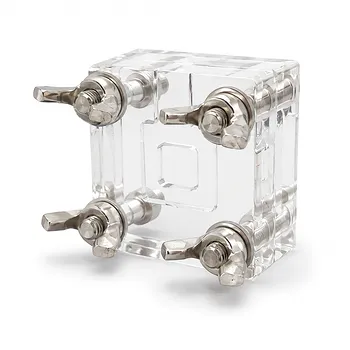
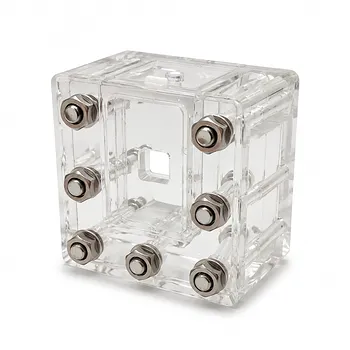
For flexible or compact solid-state zinc-air research, the solid-state zinc-air battery test fixture and flexible zinc-air mold provide transparent construction, compact assembly, reaction areas from 1 to 4 cm2, and 0.2 cm electrode spacing. Clear observation supports practical assessment of the experimental region while the customizable design enables adaptation to material dimensions and research requirements. This combination is relevant for groups working on flexible devices, gel or polymer electrolytes, solid-state air electrodes, and zinc-based energy-storage concepts where packaging and access are as important as the electrochemical materials themselves.
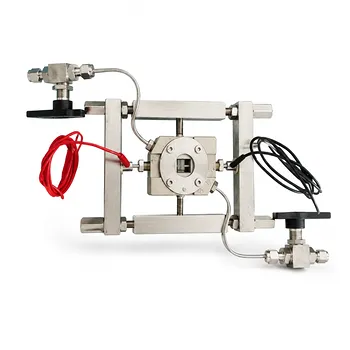
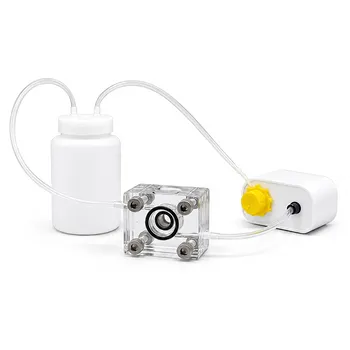
The reusable gasket-sealed electrolyte cell and metal fuel-cell reactor is designed for transparent zinc-air testing with external electrolyte circulation and oxygen experiments. Its reusable sealing approach supports repeated laboratory work, while circulation can help reduce anode passivation and minimize concentration polarization. In metal-air cells, stagnant electrolyte can contribute to local composition changes and hinder stable performance. Controlled circulation allows investigators to study how liquid transport affects reaction behavior, electrode stability, and cycling response. Selectable flow rates and storage capacities provide useful flexibility when the experimental objective changes from basic screening to more detailed mass-transport investigation.
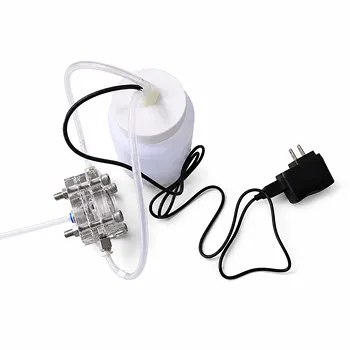
The rechargeable zinc-air electrolytic cell cycling test device expands this approach with a modular polypropylene reactor, reaction areas from 1 to 4.5 cm2, circulating electrolyte, forced oxygen supply, leak-resistant sealing, and customizable gas connections. It is intended for rechargeable zinc-air and metal fuel-cell programs where oxygen-management conditions need to be incorporated into the electrochemical design. Forced oxygen supply can assist work on air-electrode kinetics and controlled gas delivery, while the modular structure supports adjustments to the experimental configuration. The result is a more versatile foundation for comparing catalysts, membranes, electrolytes, zinc electrodes, and operating conditions.
The transparent rechargeable zinc-air electrolytic cell metal fuel-cell reactor uses corrosion-resistant PMMA construction, selectable reaction areas, stainless-steel hardware, and simple assembly. Transparent construction can support visible testing, making it easier to inspect electrolyte condition, electrode behavior, or assembly state during research. The quick-change zinc plate large-capacity zinc-air test cell adds rapid anode replacement, a 30 mL electrolyte capacity, adjustable reaction areas, and precise electrode spacing. This is valuable for workflows involving repeated zinc-anode comparisons, electrolyte screening, or systematic evaluation of discharge and recharge conditions.
Together, these systems support more than a single test type. They can be used to investigate oxygen reduction and oxygen evolution environments, zinc dissolution and deposition, electrolyte management, catalyst performance, passivation control, electrode architecture, and visual cell behavior. The appropriate cell depends on the chemistry, the analytical technique, the reaction area needed, whether circulation or forced oxygen is required, and the desired level of configurability.
Electrolyte Circulation for Better-Controlled Metal-Air Studies
Electrolyte circulation is not simply an accessory in many air-cell experiments. It can materially affect the chemical environment around the electrodes. During testing, local depletion, concentration gradients, accumulation of reaction products, and restricted mass transport may alter the apparent behavior of the cell. When those effects are uncontrolled, it can be difficult to separate intrinsic material performance from limitations imposed by the test arrangement.
KINTEK air fuel-cell test equipment electrolyte circulation pumps provide sealed acid- and alkali-resistant operation with four flow settings and a circulation range of 300 to 600 mL/min. These pumps are designed to support dependable liquid management in fuel-cell and metal-air research. By selecting an appropriate flow condition, researchers can investigate the influence of electrolyte transport on polarization, zinc-anode passivation, reaction-product removal, and long-duration stability. Convenient connections support integration into an external-loop experiment.
The practical advantage is control. A team can keep the electrolyte stagnant for one comparison, introduce circulation for another, adjust the flow condition according to the reactor configuration, and document the resulting electrochemical response. Used alongside transparent reactors and optical observation, circulation equipment can help build a more complete picture of how chemistry, transport, and electrode morphology interact.
Materials and Design Features That Support Repeatability
Battery test fixtures must be selected with their working environment in mind. KINTEK products in this category use application-appropriate materials and construction features such as polypropylene, PMMA, PEEK insulation, PTFE insulation, PI film windows, high-purity titanium components, stainless-steel hardware, gasket sealing, and corrosion-resistant structures. The exact material selection should always be matched to the electrolyte, potential range, gas environment, temperature, sample chemistry, and instrument requirements, but robust fixture construction provides a sound starting point for planning specialized experiments.
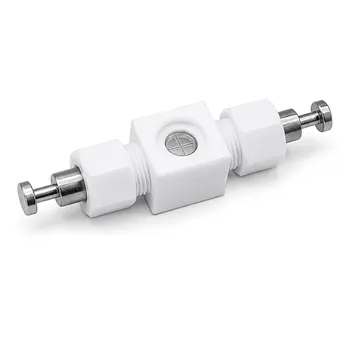
The aqueous battery testing fixture, for example, supports cells up to 20 mm internal diameter and 4 mm thickness, with a 50 mm clamp, PI film window, PEEK insulation, and high-purity titanium metal components. Its design is well suited to laboratory evaluation of aqueous electrochemical systems where insulation, optical access, and component compatibility need to be considered together. The PI film window provides a practical observation interface, while the clamp-based arrangement supports adaptable test-cell assembly.
Across the range, features such as defined electrode spacing, selectable reaction area, stable clamping, controlled electrolyte volume, leak-resistant sealing, and configurable ports help reduce unnecessary variation. These details matter because electrochemical measurements are sensitive to geometry. A change in exposed area can affect current density. A change in electrode spacing can alter ohmic resistance and transport behavior. A poorly controlled electrolyte volume may complicate comparison between experiments. A reproducible fixture creates a more defensible basis for evaluating the material under study.
Selecting the Right In-Situ Test Cell
The best in-situ Raman or battery characterization cell is determined by the scientific question, not by the analytical technique alone. Start by defining whether the primary interest is chemical evolution, morphology, phase behavior, mechanical response, gas interaction, electrolyte transport, or a combination of these. Then identify the chemistry and sample format: solid-state pellet, cross-sectional stack, aqueous cell, zinc-air reactor, flexible device, or cylindrical cell. Finally, consider the instrument geometry, optical path, mounting constraints, window requirement, pressure range, atmosphere, electrical connections, and required cycling protocol.
For Raman, microscopy, and infrared cross-section work, optical testing devices offer practical sample access for observing interfaces and material changes. For crystal-structure studies, the XRD solid-state battery device provides a dedicated fixture approach for compatible sample dimensions. For non-destructive structural inspection, the CT testing solid-state battery device supports compact research configurations. For zinc-air and metal-air programs, transparent reactors, external circulation, oxygen-management options, and adjustable reaction areas provide the control needed to study electrochemical and mass-transport effects. For routine aqueous-cell evaluation, the aqueous battery fixture supplies a focused laboratory platform with optical-window and insulated-component features.
It is also important to match the fixture to the intended level of experimental control. Early-stage material screening may need a simple, repeatable setup with defined area and spacing. Mechanistic research may need optical access, a transparent body, circulation, gas control, or compatibility with a particular instrument. A program moving toward publication-quality comparison or process development may require custom dimensions, sample holders, electrode interfaces, port locations, or sensor integration. KINTEK can help align the device configuration with the experimental objective.
From Mechanistic Insight to Better Cell Design
The value of in-situ characterization is ultimately practical. Observing a reaction is useful when it informs a better decision: selecting a more stable electrolyte, changing electrode porosity, modifying catalyst loading, optimizing stack pressure, improving separator design, refining the current-density window, or choosing an operating condition that reduces degradation. By correlating characterization results with electrochemical data, researchers can move beyond identifying that performance changed and begin to understand why it changed.
For battery developers, this can shorten iteration cycles. A visible dendrite trend may guide the next electrode formulation. A Raman signature may indicate a reaction pathway that requires a different voltage window or additive. XRD data may reveal a phase transition linked to capacity fade. CT inspection may expose a structural defect that cannot be inferred from cycling curves alone. In zinc-air research, transparent reactor observation and controlled circulation may distinguish a material issue from a passivation or transport issue. Each experiment contributes evidence that can refine both the material and the test method.
KINTEK's broader laboratory equipment experience also supports this systems perspective. Battery R&D rarely ends at characterization. Researchers may also require slurry mixing, coating, drying, pressing, pellet preparation, cell assembly, testing, and materials-processing equipment. Working with a supplier familiar with the workflow can help teams consider how sample preparation, mechanical processing, and electrochemical characterization affect one another.
Custom In-Situ Raman and Battery Test Cell Solutions
Standard fixtures provide an efficient starting point, but advanced research frequently requires an application-specific solution. KINTEK offers professional support and customizable test-cell configurations to address differences in sample size, electrode arrangement, optical access, reaction area, material compatibility, gas connections, electrolyte circulation, fixture mounting, and sensor integration. This is especially useful when adapting a device to a particular Raman microscope, infrared system, XRD platform, CT setup, potentiostat connection, or proprietary cell architecture.
A custom design discussion can focus on the parameters that determine whether a cell will produce useful data: the measurement zone, required window material, electrode dimensions, pressure or clamping approach, cell thickness, port placement, sealing method, electrolyte volume, circulation loop, oxygen or inert-gas connection, and the practical sequence for assembling and disassembling the fixture. Providing these requirements early allows the test cell to be designed around the measurement rather than modified after an experiment has already become constrained by the hardware.
For help selecting a standard platform or developing a customized in-situ Raman, microscopy, infrared, XRD, CT, zinc-air, or solid-state battery test cell, contact KINTEK through our inquiry form. Share your battery chemistry, sample dimensions, characterization method, instrument model, and target operating conditions, and our technical team will help identify a configuration that supports reliable, application-focused research.