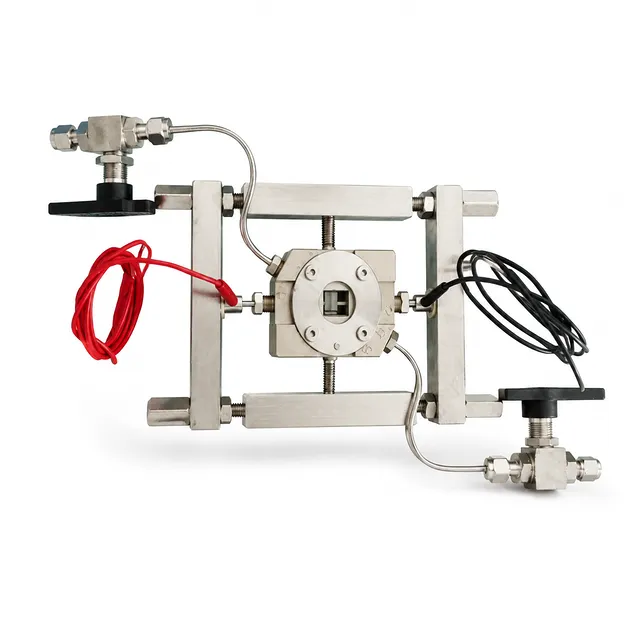
In-situ Raman Test Cell
Optical Testing Solid State Battery Device for Microscopy Raman and Infrared Cross Section Analysis
Item Number : BE11
Price varies based on specs and customizations
- Maximum battery inner diameter
- ≤10 mm standard configuration; ≤12 mm venting configuration
- Maximum battery thickness
- ≤3 mm standard configuration; ≤6 mm venting configuration
- Supported cross-section testing
- Optical microscope, Raman, and infrared; venting configuration supports gas-access optical testing

Shipping:
Contact us to get shipping details Enjoy On-time Dispatch Guarantee.
Why Choose Us
Easy ordering process, quality products, and dedicated support for your business success.
Product Overview
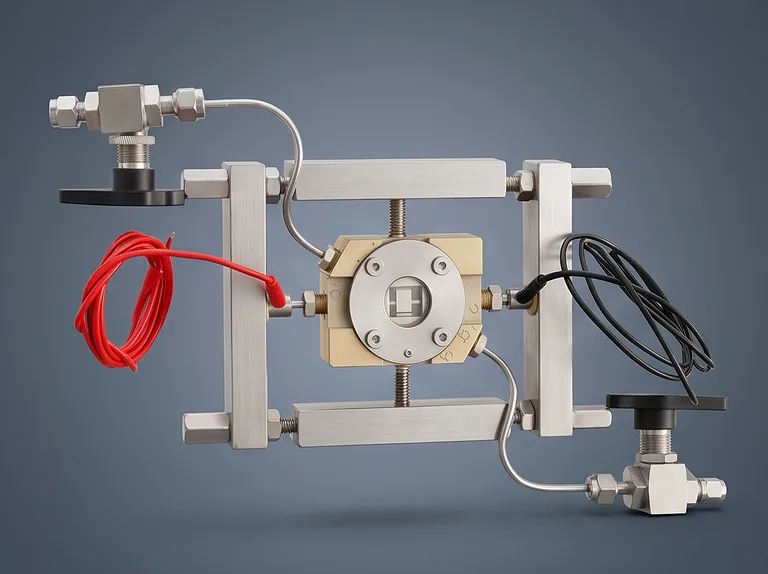
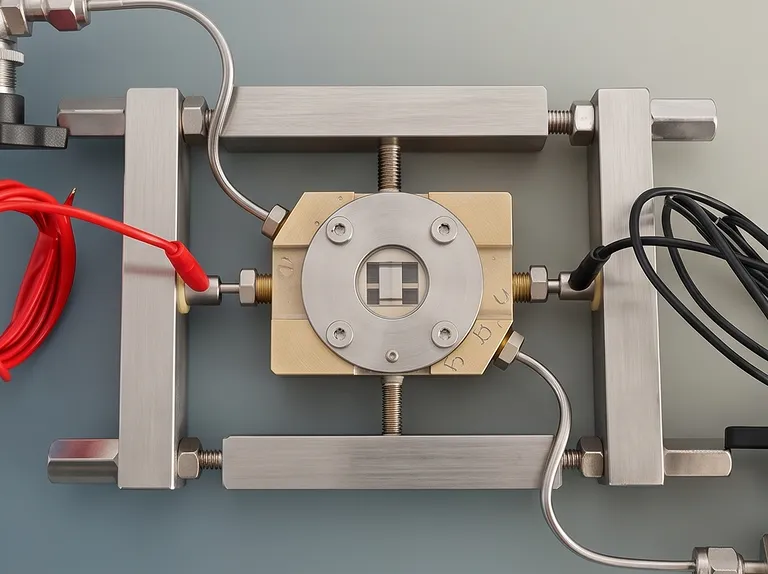
This optical testing solid state battery device is designed to hold solid-state battery samples during cross-section observation and spectroscopic characterization. The equipment supports optical microscopy, Raman analysis, and infrared analysis, giving research teams a practical fixture for examining battery structures through complementary optical methods. Its compact construction accommodates small-format battery samples while maintaining a defined fixture geometry for laboratory testing.
Two configurations are available for different sample and access requirements. The standard configuration accepts batteries with an inner diameter of up to 10 mm and a thickness of up to 3 mm. The venting configuration accepts batteries with an inner diameter of up to 12 mm and a thickness of up to 6 mm, while supporting optical testing with gas access. This makes the equipment suitable for solid-state battery development, advanced materials research, and laboratory-scale cell characterization.
The fixture dimensions are clearly defined for integration into optical testing workflows. A compact 115 mm long, 28 mm high, and 60 mm wide configuration is available for standard testing, while the venting configuration measures 188 mm long, 17.5 mm high, and 110 mm wide. These defined geometries help laboratories select the appropriate setup for their instruments, samples, and test procedures.
Key Features
-
Multimodal Optical Compatibility: The equipment is designed for cross-section testing with optical microscopes, Raman systems, and infrared instruments. This allows researchers to select the observation or analysis method that best matches the material or interface under investigation.
-
Solid-State Battery Testing Focus: The fixture is purpose-built for solid-state battery samples, supporting research workflows that require direct access to battery cross sections and internal material structures.
-
Two Sample Capacity Ranges: The standard configuration accommodates batteries with an inner diameter of up to 10 mm and a thickness of up to 3 mm. The venting configuration expands the supported range to an inner diameter of up to 12 mm and a thickness of up to 6 mm.
-
Venting-Compatible Configuration: The venting version is intended for optical microscopy, Raman, and infrared cross-section testing where gas access is required. Its dedicated configuration provides a practical option for experiments that cannot use a closed fixture arrangement.
-
Defined Fixture Geometry: Each configuration has specified length, height, and width dimensions. This supports equipment selection, laboratory layout planning, and compatibility assessment before installation or integration.
-
Compact Laboratory Format: The fixture format is suitable for small-scale battery research environments where sample handling, optical access, and efficient use of bench space are important operational considerations.
-
Direct Cross-Section Observation: The design supports examination of exposed battery cross sections rather than limiting characterization to external surfaces. Researchers can therefore use the fixture within workflows focused on internal layers, interfaces, and material distribution.
-
Flexible Research Utility: By combining microscopy and spectroscopic compatibility with two sample configurations, the equipment can serve battery development programs, materials investigations, and academic research projects with varying test requirements.
Applications
| Application | Description | Key Benefit |
|---|---|---|
| Solid-State Battery Cross-Section Testing | Position solid-state battery samples for direct examination of cross-sectional structures using laboratory optical methods. | Supports practical inspection of internal battery features during research and development. |
| Optical Microscopy | Use the fixture with an optical microscope to observe prepared battery cross sections and visible material interfaces. | Provides a dedicated holding solution for small battery samples during microscopic observation. |
| Raman Cross-Section Analysis | Apply Raman testing to solid-state battery cross sections for laboratory investigation of material regions and interfaces. | Enables the same sample fixture concept to support vibrational spectroscopy workflows. |
| Infrared Cross-Section Analysis | Integrate the equipment into infrared testing procedures for cross-sectional analysis of solid-state battery samples. | Broadens characterization options without requiring a separate sample-holding approach for each optical method. |
| Venting Optical Testing | Select the venting configuration when optical microscopy, Raman, or infrared cross-section testing requires gas access. | Supports test procedures that require a venting-compatible fixture arrangement. |
| Battery Materials Research | Use the equipment in advanced materials laboratories studying solid-state cell components and their cross-sectional characteristics. | Combines defined sample capacity with compatibility across multiple optical techniques. |
| Academic Cell Development | Support university and research-institute experiments involving small-format solid-state batteries and optical characterization. | Offers two fixture configurations to match different sample dimensions and experimental setups. |
Technical Specifications
The following specifications are organized by configuration so buyers can compare sample capacity, fixture size, and testing capability directly. The site-facing identifiers distinguish the two reference-backed variants by their documented functional difference.
| Specification | BE11 Standard Optical Testing Configuration | BE11 Venting Optical Testing Configuration |
|---|---|---|
| Configuration | Optical testing solid state battery device | Venting optical testing solid state battery device |
| Maximum battery inner diameter | ≤10 mm | ≤12 mm |
| Maximum battery thickness | ≤3 mm | ≤6 mm |
| Fixture length | 115 mm | 188 mm |
| Fixture height | 28 mm | 17.5 mm |
| Fixture width | 60 mm | 110 mm |
| Optical microscope cross-section testing | Available | Available with venting configuration |
| Raman cross-section testing | Available | Available with venting configuration |
| Infrared cross-section testing | Available | Available with venting configuration |
| Gas access | Not specified for this configuration | Venting type |
The standard configuration is the more compact option for samples within the 10 mm inner-diameter and 3 mm thickness limits. Its 115 mm by 28 mm by 60 mm fixture envelope provides a defined format for optical microscope, Raman, and infrared cross-section testing. This version is appropriate when the test procedure does not require the venting configuration described for the larger sample range.
The venting configuration is designed around a different combination of sample capacity and fixture geometry. It accepts batteries with an inner diameter of up to 12 mm and a thickness of up to 6 mm. Its fixture measures 188 mm long, 17.5 mm high, and 110 mm wide. In addition to optical microscopy, Raman, and infrared cross-section testing, this configuration supports venting-related optical test arrangements.
When selecting between the two versions, buyers should first verify the battery inner diameter and thickness. The standard version is limited to samples no larger than 10 mm in inner diameter and 3 mm in thickness. The venting version supports the larger documented limits of 12 mm inner diameter and 6 mm thickness. The required analytical method should then be confirmed, since both configurations support optical microscope, Raman, and infrared cross-section testing, while the venting version is intended for procedures requiring gas access.
The fixture dimensions should also be reviewed against the available microscope, Raman system, infrared instrument, stage, and laboratory working area. Length, height, and width are provided for both configurations to help procurement and engineering teams assess physical fit before ordering. These dimensional values are especially important when the equipment will be used with an existing optical platform or inside a controlled experimental setup.
For laboratories developing repeatable sample preparation and characterization procedures, using a dedicated fixture can make the testing workflow easier to define. The sample capacity limits establish an initial selection criterion, while the optical compatibility allows the same general equipment category to support several analysis methods. Researchers can therefore organize microscopy, Raman, and infrared examination around the configuration that matches their battery dimensions and venting requirements.
Why Choose This Product
-
Purpose-Matched Engineering: The equipment is designed specifically around optical cross-section testing for solid-state battery samples rather than serving as a generic holder with undefined application limits.
-
Clear Configuration Selection: Two documented variants make it easier to choose according to battery inner diameter, thickness, fixture envelope, and venting requirements. This reduces ambiguity during technical review and procurement.
-
Broad Analytical Compatibility: Support for optical microscopy, Raman, and infrared cross-section testing gives research teams flexibility when characterization requirements change between projects or sample types.
-
Defined Mechanical Footprint: Complete fixture dimensions are provided for both versions, helping laboratories evaluate instrument compatibility, bench placement, and integration requirements before purchase.
-
Practical Research Investment: By combining solid-state battery sample capacity with multiple optical testing options, the equipment can support ongoing battery R&D and advanced materials programs without limiting the laboratory to a single analysis method.
Choose the configuration that matches your sample dimensions and test environment, and contact us for a quotation or a technical solution aligned with your optical characterization workflow.
Trusted by Industry Leaders

REQUEST A QUOTE
Our professional team will reply to you within one business day. Please feel free to contact us!
Related Products
Solid-State Battery Laboratory Electric Hot Press Machine
Compact benchtop electric hot press for solid-state battery research, polymer lamination, and MEA fabrication. Features dual-plate independent heating up to 200°C, programmable pressure up to 1800 kgf. Oil-free electric servo drive ensures clean, high-repeatability pressing, integrated water cooling.
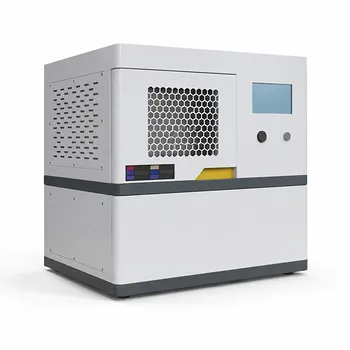
Solid State Battery Research Laboratory Hydraulic Hot Press Machine
Compact benchtop hydraulic hot press machine designed for solid-state battery research, featuring dual-zone independent heating up to 300°C, programmable pressure control with automatic replenishment, and integrated water cooling for rapid cycle times, suitable for electrolyte fabrication and electrode lamination.
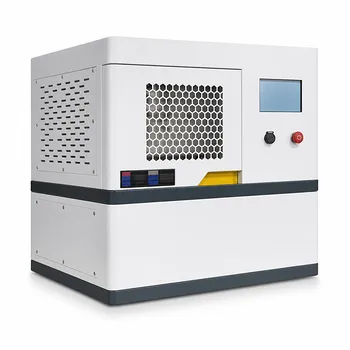
Solid-State Battery Research Laboratory Hydraulic Hot Press Machine
Designed for solid-state battery research, this laboratory hydraulic hot press features servo-driven pressurization up to 2 tons, dual-platen heating up to 300°C, programmable pressure cycles, and a 7-inch touch-screen controller for precise thermal compaction of electrolytes and electrodes.
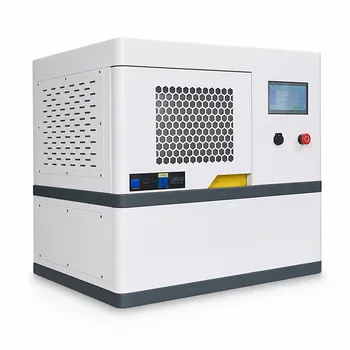
Solid-State Battery Laboratory Hydraulic Hot Press Machine
Precision laboratory hydraulic hot press machine for solid-state battery research; dual-platen independent heating up to 300°C, 30-ton hydraulic pressure with ±1% accuracy and automatic compensation, 7-inch touchscreen control, ideal for hot-pressing solid electrolyte sheets, polymer composites, and membrane electrode assemblies.
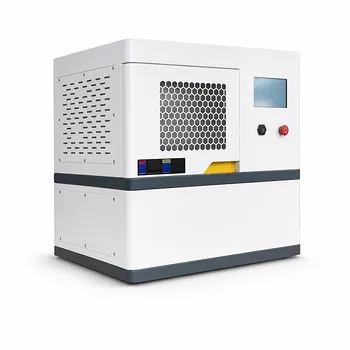
Solid State Battery Research Laboratory Hydraulic Hot Press Machine
High-precision thermal compression system for solid-state battery research with independent dual-platen heating up to 300°C, 30-ton hydraulic press, and automatic pressure compensation for precise sample fabrication. Ideal for electrolyte compaction and composite lamination. With programmable cooling and safety interlocks.
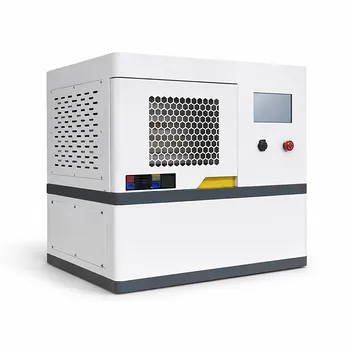
Solid-State Battery Research Laboratory Hydraulic Hot Press
Reliable laboratory hydraulic hot press for solid-state battery research offers independent dual-zone heating, programmable pressure with auto compensation, and a touchscreen interface, enabling precise pelletizing of electrolytes, polymer lamination, and composite fabrication up to 300°C and 20 tons.
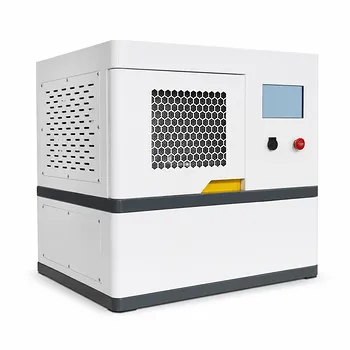
Solid State Battery Research Laboratory Hydraulic Hot Press Machine
Benchtop hydraulic hot press designed for solid-state battery research. Offers dual-platen heating to 500°C, 40-ton pressure with closed-loop control, and a 7-inch touchscreen. Supports electrolyte fabrication, electrode lamination, and polymer molding with safety shields and thermal cut-offs.
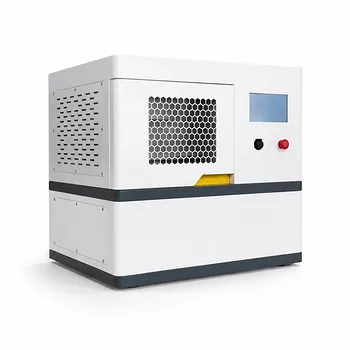
Solid-State Battery Laboratory Hydraulic Hot Press Machine
Precision laboratory hydraulic hot press for solid-state battery research. Features servo-driven 0-4 ton pressure, dual-plate independent heating up to 300°C, active water cooling, and 7-inch touchscreen control. Ideal for electrolyte and electrode fabrication. Ensures oil-free operation for reproducible results.

Warm Isostatic Press for Solid State Battery Research Warm Isostatic Press
KINTEK Warm Isostatic Press (WIP) for precision lamination in semiconductors & solid-state batteries. ASME-certified, 50-100°C control, high-pressure capabilities. Enhance material performance now!
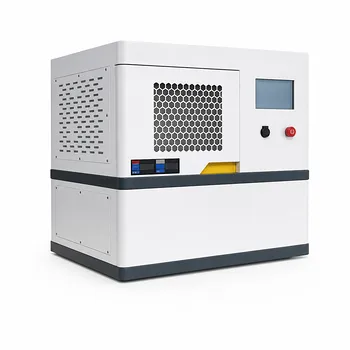
Solid-State Battery Electrolyte and Polymer Composite Laboratory Hot Press Machine
Compact high-precision thermal pressing system for solid-state battery electrolyte pellet preparation and polymer composite curing. Oil-free servo drive with dual independent programmable heating up to 300°C and precise pressure control up to 2 tons. Ideal for cleanroom research environments.
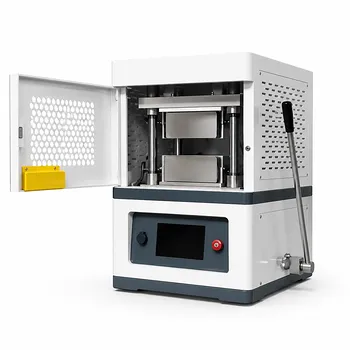
Laboratory Hydraulic Hot Press Machine for Solid-State Battery Research
Compact benchtop laboratory hydraulic hot press for solid-state battery research featuring independent dual-zone heating up to 300°C, 25-ton automatic pressure control, and integrated water cooling for precise compaction of electrolytes and polymer membranes in small-footprint design ideal for R&D applications.
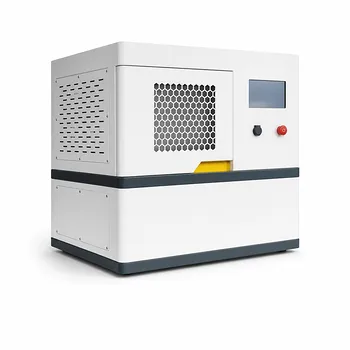
Compact Solid-State Battery Laboratory Hydraulic Hot Press
Compact benchtop hydraulic hot press designed for solid-state battery fabrication, polymer composite curing, and electrode lamination. Features programmable PID temperature control up to 500°C, automatic pressure maintenance with high-precision 0.2% sensor accuracy, and a 7-inch touchscreen interface for repeatable results.
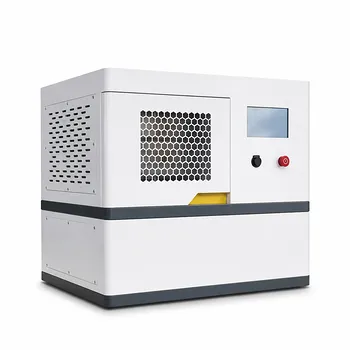
Laboratory Hydraulic Hot Press for Solid-State Battery Research
Compact benchtop hydraulic hot press for solid-state battery research, with dual heated platens, programmable touchscreen, and precise temperature control up to 300°C and 5 tons force. Ideal for electrolyte synthesis and electrode lamination, with automatic pressure holding. CE certified.
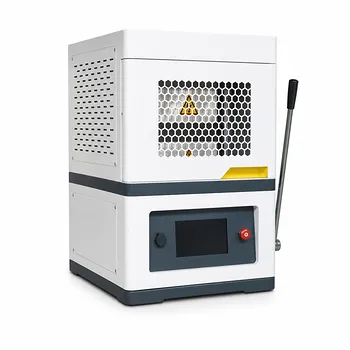
Solid State Battery Research Hydraulic Hot Press Machine
Benchtop hydraulic hot press for solid-state battery research. Precision temperature up to 300°C, 30-ton pressure, automatic holding, water cooling, touch-screen control. Ideal for electrolyte densification, electrode lamination, polymer membrane fabrication. Compact benchtop fits gloveboxes, customizable software, hardware, CE certified safety.
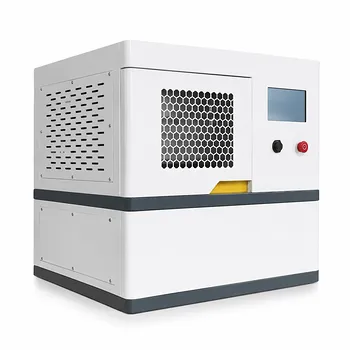
Solid State Battery Laboratory Hydraulic Hot Press Dual Zone Heating Programmable Pressure Control
High-precision hydraulic hot press for solid-state battery research, featuring dual-zone independent heating up to 200°C, 0-15 ton adjustable pressure, 8-stage programmable sequences, real-time data logging via 7-inch touchscreen, and active water cooling. Ideal for laboratory material development and research.
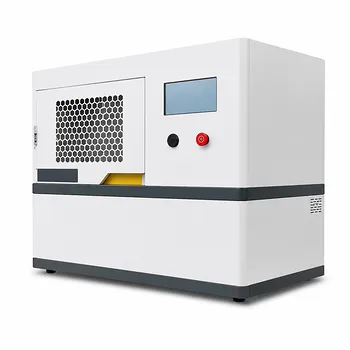
Solid-State Battery and Polymer Composite Fabrication Laboratory Hydraulic Hot Press Machine
Advanced laboratory hydraulic hot press for solid-state battery and polymer composite fabrication, featuring PID temperature control up to 200°C, 0-90 ton hydraulic pressure with ±0.2% sensor accuracy, 300x300mm heated platens, automatic pressure holding, and intuitive 7-inch touchscreen programming.
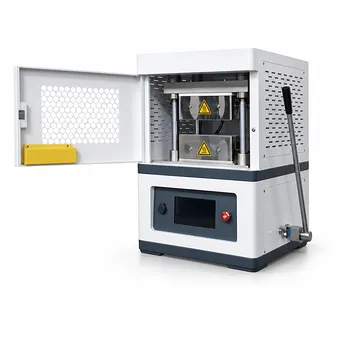
Laboratory Hydraulic Hot Press for Solid-State Battery and Polymer Electrolyte Research
Compact benchtop hydraulic hot press for solid-state battery and polymer electrolyte research with dual-zone heating, automatic pressure compensation, and active cooling system, ensuring uniform temperature up to 300°C and stable load for extended tests with CE certification and safety features.
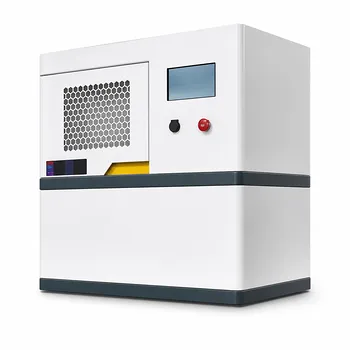
Programmable Laboratory Hydraulic Hot Press for Solid-State Battery Fabrication
Hydraulic hot press with 75 tons force programmable pressure control dual-zone heating up to 300°C ideal for solid-state battery electrolyte consolidation polymer composite curing electrode lamination features automatic pressure compensation adjustable ramp rates water cooling customizable options CE certified.
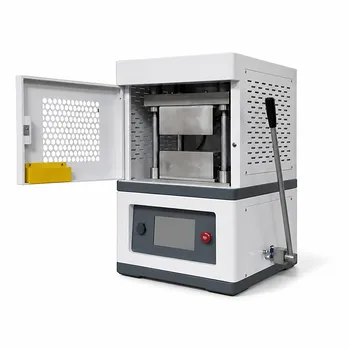
Laboratory Hydraulic Hot Press for Solid-State Battery and Advanced Membrane Research
Achieve reproducible results in solid-state battery research, membrane electrode assembly, and polymer film fabrication with this compact, programmable hydraulic hot press. Independent dual-plate heating to 300°C and automatic pressure holding up to 5 tons ensure precision and repeatability.
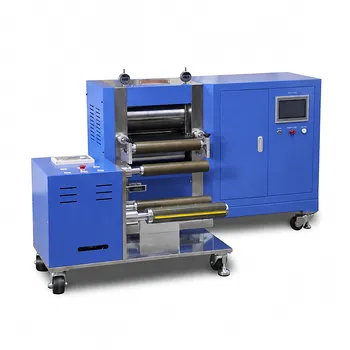
Automatic Laboratory Unwind Rewind Machine and Unwind Rewind Device for Battery Electrodes Optical Films and Functional Materials
Automatic laboratory unwind rewind machine with servo tension control optical web guiding and split structure for lithium battery electrodes optical films and functional roll materials delivering accurate continuous rewinding and slitting performance for demanding research and production workflows.