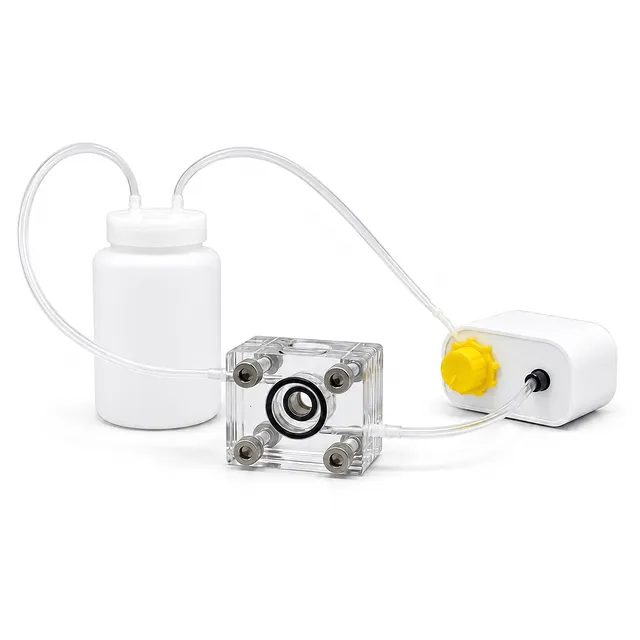
In-situ Raman Test Cell
Reusable Gasket Sealed Electrolyte Cell Metal Fuel Cell Reactor
Item Number : BE06
Price varies based on specs and customizations
- Reaction Area
- 1 / 2 / 3 / 4 / 4.5 cm²
- External Circulation Pump Flow Rate
- 3~10 ml/min or 20~65 ml/min
- Electrolyte Storage Bottle Capacity
- 100 / 250 / 500 ml

Shipping:
Contact us to get shipping details Enjoy On-time Dispatch Guarantee.
Why Choose Us
Easy ordering process, quality products, and dedicated support for your business success.
Product Overview
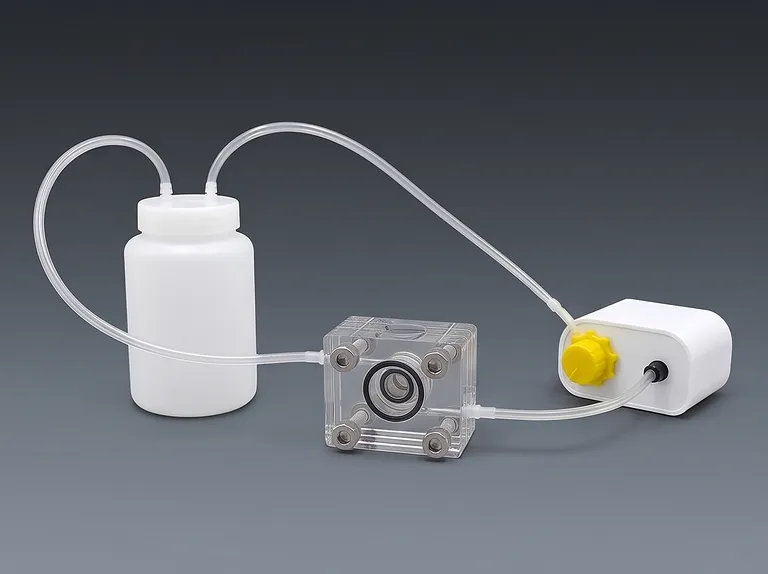
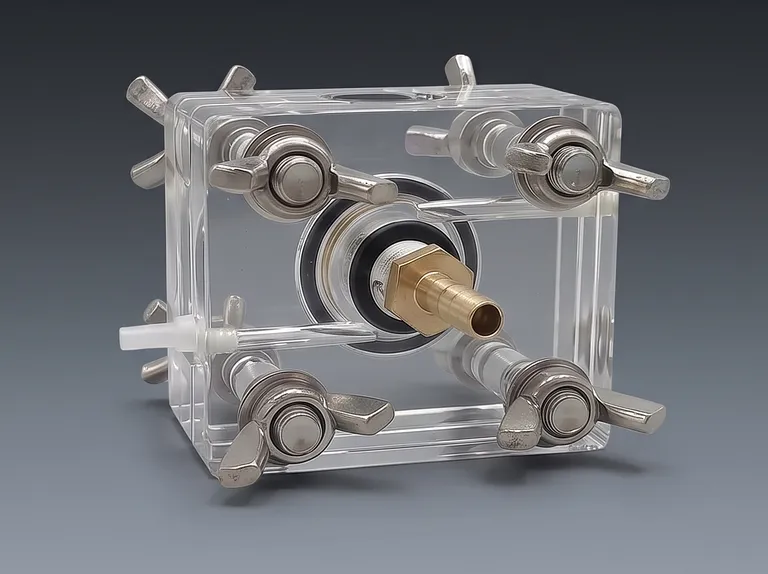
This reusable gasket-sealed electrolyte cell is a transparent zinc-air testing mold and metal fuel cell reactor designed for controlled electrochemical experiments. Its sealed configuration supports convenient tubing connections, while the transparent organic glass body allows researchers to observe the test assembly and electrolyte behavior during operation. The compact unit combines a defined reaction area with an external electrolyte circulation arrangement for repeatable laboratory testing.
The equipment is suited to zinc-air battery research, metal fuel cell development, electrolyte circulation studies, and oxygen-fed electrochemical experiments. It supports selectable reaction areas from 1 to 4.5 cm², multiple gas tube connector sizes, and external pump flow ranges suitable for different test conditions. The unit is applicable to battery laboratories, advanced materials research, academic electrochemistry programs, and development work involving circulating electrolytes.
The sealed design helps maintain a controlled test environment, while 304 stainless steel screws and nuts provide durable mechanical fastening. Continuous electrolyte circulation can replenish consumed ions, reduce negative-electrode passivation, and lower concentration polarization during high-current charging and discharging. These features support stable operation when researchers need consistent test conditions and practical access to the fluid circuit.
Key Features
-
Reusable Sealed Cell Design: The sealed structure provides a defined electrolyte chamber and convenient tubing connections for repeated zinc-air and metal fuel cell experiments. This configuration helps researchers establish consistent assembly conditions across multiple tests.
-
Transparent Organic Glass Construction: The organic glass mold allows direct visual inspection of the cell body and internal test environment. Its transparent construction is useful when observing electrolyte circulation, assembly condition, or visible changes during experimentation.
-
External Electrolyte Circulation: An external circulation pump moves electrolyte through the test system at selectable flow ranges of 3
10 ml/min or 2065 ml/min. The two flow options support different experimental requirements and circulation intensities. -
Improved Electrochemical Test Control: Continuous electrolyte circulation can replenish ions consumed during reaction and reduce concentration gradients. This helps limit negative-electrode passivation and concentration polarization during high-current charge and discharge testing.
-
Multiple Reaction Area Options: The available configurations provide reaction areas of 1, 2, 3, 4, and 4.5 cm². Researchers can select a suitable active area for screening, comparison testing, or experiments requiring different current densities.
-
Oxygen-Compatible Gas Connections: Gas tube connectors are available in 6, 8, and 10 mm sizes. The connection arrangement can support pure oxygen experiments when the laboratory test protocol requires oxygen-fed operation.
-
Durable Fastening Hardware: Screws and nuts are manufactured from 304 stainless steel. This hardware provides robust clamping and reliable mechanical support during repeated cell assembly and laboratory use.
-
Flexible Electrolyte Capacity: Storage bottle capacities of 100, 250, and 500 ml allow the working electrolyte volume to be matched to the test duration and circulation requirements. This gives laboratories practical flexibility for short screening tests and longer experiments.
-
Compact Laboratory Format: With a width and height of 7*6 cm, the unit occupies limited bench space while retaining the essential connections for sealed electrolyte and gas-flow testing. Its compact form supports integration into existing laboratory test setups.
Applications
| Application | Description | Key Benefit |
|---|---|---|
| Zinc Air Battery Testing | Evaluate zinc-air cell behavior using a transparent, sealed mold with controlled electrolyte circulation and defined cathode reaction areas. | Supports repeatable comparison of reaction performance while helping reduce ion depletion and electrode passivation effects. |
| Metal Fuel Cell Reactor Research | Use the unit as a compact reactor for investigating electrochemical reactions involving metallic fuel electrodes and circulating electrolyte. | Provides a practical laboratory platform with selectable active areas and external fluid management. |
| High Current Charge Discharge Studies | Circulate electrolyte during demanding charge and discharge experiments where concentration gradients may affect cell behavior. | Helps reduce concentration polarization and improves control of mass transport during high-current operation. |
| Pure Oxygen Electrochemical Experiments | Connect laboratory gas lines through the available 6, 8, or 10 mm tube fittings for oxygen-fed test protocols. | Enables controlled gas supply configurations for oxygen-related zinc-air and fuel cell research. |
| Electrolyte Circulation and Passivation Studies | Investigate how continuous electrolyte replacement influences consumed ions, negative-electrode passivation, and reaction stability. | Allows researchers to vary pump flow and storage capacity while monitoring electrochemical response. |
| Battery and Advanced Materials Laboratories | Integrate the equipment into academic, industrial, and materials research programs focused on electrochemical conversion and metal electrodes. | Combines compact dimensions, reusable construction, and several reaction-area options in one laboratory test format. |
Technical Specifications
| Parameter | Specification | Notes |
|---|---|---|
| Product identifier | BE06 | Site-facing identifier for this product |
| Product type | Reusable gasket-sealed electrolyte cell and transparent zinc-air testing mold | Suitable for metal fuel cell reactor research |
| Mold material | Organic glass | Transparent cell body |
| Width × height | 7*6 cm | Compact laboratory format |
| Positive and negative electrode distance | 1.4 cm | Defined spacing between electrodes |
| Gas tube connector | 6 / 8 / 10 mm | Can support pure oxygen experiments |
| External circulation pump flow rate option 1 | 3~10 ml/min | External pump configuration |
| External circulation pump flow rate option 2 | 20~65 ml/min | External pump configuration |
| Available reaction areas | 1 / 2 / 3 / 4 / 4.5 cm² | Selectable configuration options |
| Electrolyte storage bottle capacity | 100 / 250 / 500 ml | Maximum liquid capacity depends on selected bottle |
| Fastener material | 304 stainless steel | Applies to screws and nuts |
Variant Configuration
| Site-facing variant | Reaction area | Configuration note |
|---|---|---|
| BE06 TR1 | 1 cm² | Cathode reaction area is 1 cm²; the anode or zinc-electrode side has a 4.5 cm² reaction area. |
| BE06 TR2 | 2 cm² | Reaction area option referenced for the test mold. |
| BE06 TR3 | 3 cm² | Reaction area option referenced for the test mold. |
| BE06 TR4 | 4 cm² | Reaction area option referenced for the test mold. |
| BE06 TR4.5 | 4.5 cm² | Reaction area option referenced for the test mold. |
Operating and Care Notes
The organic glass plate must not be placed directly into ethanol or alcohol solution. Alcohol must also not be poured onto the surface, because this can cause surface cracking or damage. If oil or other contamination is present, clean the surface with a tissue lightly moistened with a small amount of alcohol rather than immersing or flooding the plate.
Ultrasonic cleaning must not be used on the organic glass plate. Following these handling requirements helps protect the transparent body and supports continued reuse of the equipment. Laboratory staff should also select tubing, pump flow, electrolyte capacity, and gas supply conditions according to the intended test protocol and the compatibility requirements of the experimental materials.
The circulation function is intended to continuously replenish ions consumed during reaction and improve electrolyte movement through the test system. It can also help reduce negative-electrode passivation and concentration polarization during high-current charging and discharging. Actual electrochemical results depend on the electrolyte, electrode materials, gas conditions, current, and other experimental variables established by the researcher.
Why Choose This Product
-
Controlled Experimental Architecture: The sealed cell body, defined electrode spacing, selectable reaction areas, and external circulation path give researchers practical control over key test variables.
-
Built for Repeated Laboratory Use: Reusable construction and 304 stainless steel fastening hardware provide a durable foundation for repeated assembly and electrochemical testing.
-
Adaptable Research Configuration: Multiple reaction areas, gas connector sizes, pump flow ranges, and electrolyte bottle capacities allow the system to be matched to different zinc-air and metal fuel cell programs.
-
Useful Under Demanding Test Conditions: Continuous electrolyte circulation addresses ion consumption, negative-electrode passivation, and concentration polarization concerns that can influence high-current experiments.
-
Practical Integration and Support: The compact format and convenient tubing connections make the equipment straightforward to incorporate into existing laboratory workflows, while application-specific configuration guidance can help align the setup with the intended experiment.
Contact KINTEK for a quotation and configuration recommendation tailored to your electrolyte circulation, gas supply, reaction area, and metal fuel cell testing requirements.
Trusted by Industry Leaders

REQUEST A QUOTE
Our professional team will reply to you within one business day. Please feel free to contact us!
Related Products
Solid-State Battery and Polymer Electrolyte Development Laboratory Hydraulic Hot Press Machine
High-precision benchtop hydraulic hot press for solid-state battery and polymer electrolyte research. Features dual heated platens up to 300°C, automatic pressure compensation up to 15T, and integrated water cooling for repeatable results. Ideal for electrolyte compaction and PEMFC pressing.
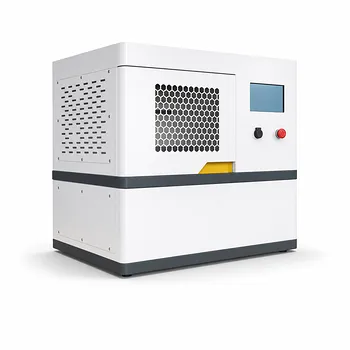
Laboratory Benchtop Hydraulic Hot Press for Solid State Battery Research
Explore the laboratory hydraulic hot press for solid-state battery research, featuring dual-platen heating, automated pressure profiling, and integrated water cooling for efficient, precise sample processing. Ideal for electrolyte pellet and membrane fabrication in a compact, glovebox-compatible benchtop design.
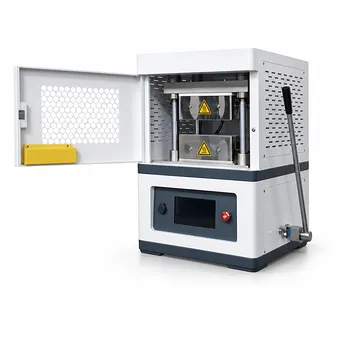
Laboratory Hydraulic Hot Press for Solid-State Battery and Polymer Electrolyte Research
Compact benchtop hydraulic hot press for solid-state battery and polymer electrolyte research with dual-zone heating, automatic pressure compensation, and active cooling system, ensuring uniform temperature up to 300°C and stable load for extended tests with CE certification and safety features.
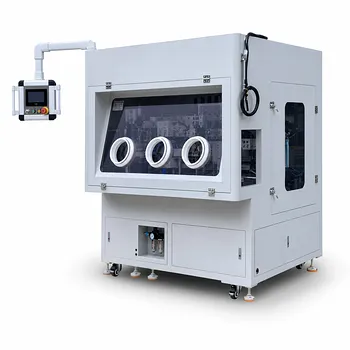
Isobaric High Precision Aluminum Shell Battery Liquid Injection Machine
Isobaric aluminum shell battery liquid injection machine for lithium battery production, supporting primary and secondary filling, vacuum pressure cycling, sealed positive pressure glovebox operation, accurate dosing, weighing, and stable high yield for demanding laboratory manufacturing workflows and advanced materials research.
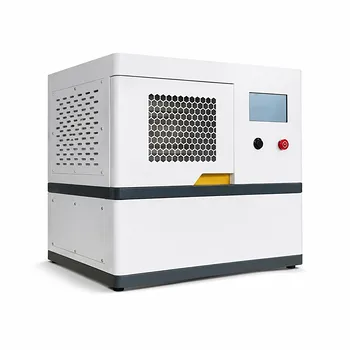
Laboratory Hydraulic Hot Press for Solid-State Battery Electrolytes and Polymer Composites
Explore advanced uniform thermal pressing for solid-state battery electrolytes and polymer composites using a laboratory hydraulic hot press featuring independent dual-platen precise PID temperature control up to 300°C, programmable pressure, and automatic force compensation for reliable consistent results.
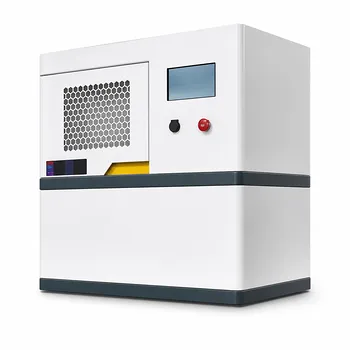
Programmable Laboratory Hydraulic Hot Press for Solid-State Battery Fabrication
Hydraulic hot press with 75 tons force programmable pressure control dual-zone heating up to 300°C ideal for solid-state battery electrolyte consolidation polymer composite curing electrode lamination features automatic pressure compensation adjustable ramp rates water cooling customizable options CE certified.
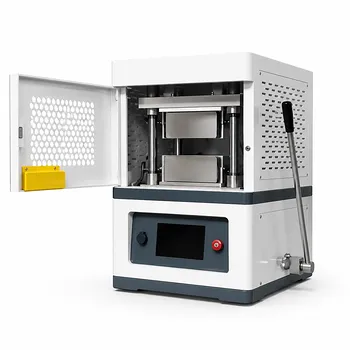
Laboratory Hydraulic Hot Press Machine for Solid-State Battery Research
Compact benchtop laboratory hydraulic hot press for solid-state battery research featuring independent dual-zone heating up to 300°C, 25-ton automatic pressure control, and integrated water cooling for precise compaction of electrolytes and polymer membranes in small-footprint design ideal for R&D applications.
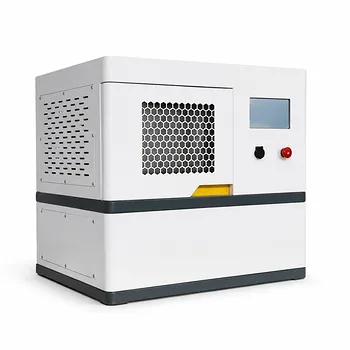
Laboratory Hydraulic Hot Press for Solid State Battery and MEA Fabrication
Compact laboratory hydraulic hot press with independent dual platen heating up to 300°C and programmable 50 ton pressure for solid state battery electrolyte compaction and membrane electrode assembly fabrication, featuring water cooling and safety shields, suitable for advanced material research.
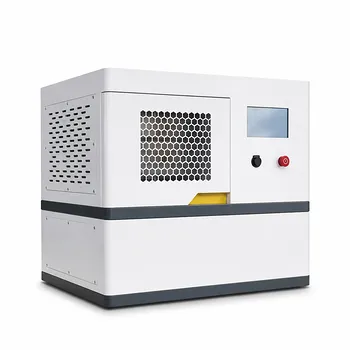
Laboratory Hydraulic Hot Press for Solid-State Battery Research
Compact benchtop hydraulic hot press for solid-state battery research, with dual heated platens, programmable touchscreen, and precise temperature control up to 300°C and 5 tons force. Ideal for electrolyte synthesis and electrode lamination, with automatic pressure holding. CE certified.
Solid State Battery Research Laboratory Hydraulic Hot Press Machine
High-precision thermal compression system for solid-state battery research with independent dual-platen heating up to 300°C, 30-ton hydraulic press, and automatic pressure compensation for precise sample fabrication. Ideal for electrolyte compaction and composite lamination. With programmable cooling and safety interlocks.

Button Battery Sealing Press Machine for Lab
Boost button battery production with KINTEK's Electric Sealer – precision sealing, 300-600 pieces/hour, intelligent pressure control. Enhance yield now!
Single Head Electrolyte Filling Pump Precision Ceramic Metering System
Single head electrolyte filling pump provides precise low volume metering for lithium ion batteries pharmaceuticals food chemicals and adhesive fluids with durable ceramic valve technology easy cleaning reliable programmable operation for demanding production environments and flexible OEM integration
Solid State Battery Research Laboratory Hydraulic Hot Press Machine
Benchtop hydraulic hot press designed for solid-state battery research. Offers dual-platen heating to 500°C, 40-ton pressure with closed-loop control, and a 7-inch touchscreen. Supports electrolyte fabrication, electrode lamination, and polymer molding with safety shields and thermal cut-offs.
Solid-State Battery Laboratory Hydraulic Hot Press Machine
Precision laboratory hydraulic hot press for solid-state battery research. Features servo-driven 0-4 ton pressure, dual-plate independent heating up to 300°C, active water cooling, and 7-inch touchscreen control. Ideal for electrolyte and electrode fabrication. Ensures oil-free operation for reproducible results.

Lab Button Battery Tablet Press Sealing Mold
Precision Sealing Die for button battery assembly & analysis. Durable hardened steel, CR16-CR30 compatible. Enhance battery integrity & performance. Get yours now!

Lab Button Battery Disassembly and Sealing Mold
KINTEK's precision button battery sealing molds ensure airtight, contamination-free results for labs and production. Boost efficiency with durable, high-performance solutions.
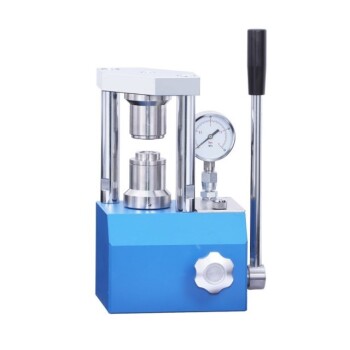
Manual Button Battery Sealing Machine for Battery Sealing
Manual Button Battery Sealer for precise, affordable lab sealing. Ideal for CR2032, LR44 batteries. Enhances safety & extends battery life. Get yours now!
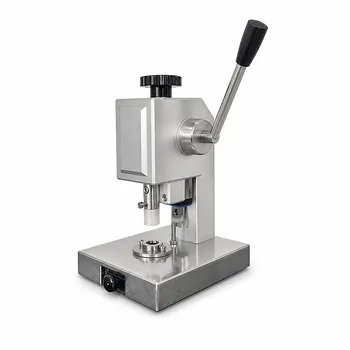
Coin Cell Electrode Sheet Punching Machine
Coin cell electrode sheet punching machine for precision die cutting of battery cathodes anodes separators and thin materials with compact operation flexible die sizes and glovebox compatible handling for laboratory research workflows consistent clean edges in demanding battery development applications.
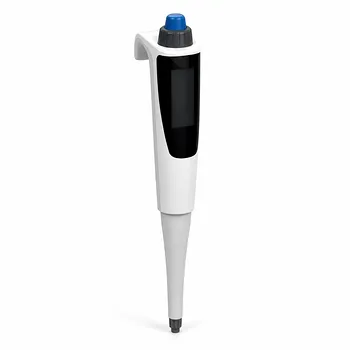
Single Channel Adjustable Electronic Micropipette
Rechargeable single channel electronic micropipette with adjustable volume, ergonomic lightweight design, LCD operation, variable aspiration and dispensing speeds, and high accuracy for consistent laboratory liquid handling across battery research, materials science, analytical testing, and routine sample preparation workflows.