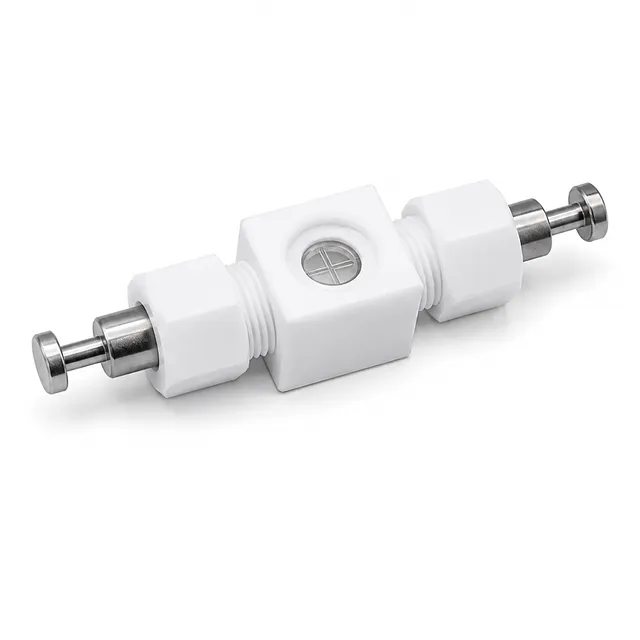
In-situ Raman Test Cell
Optical Testing Cross Section Aqueous Battery Device for Microscopy Raman and Infrared Analysis
Item Number : BE13
Price varies based on specs and customizations
- Compatible Battery Inner Diameter
- ≤12 mm
- Compatible Battery Thickness
- ≤6 mm
- Fixture Dimensions
- 120 mm long × 28 mm high × 26 mm wide

Shipping:
Contact us to get shipping details Enjoy On-time Dispatch Guarantee.
Why Choose Us
Easy ordering process, quality products, and dedicated support for your business success.
Product Overview
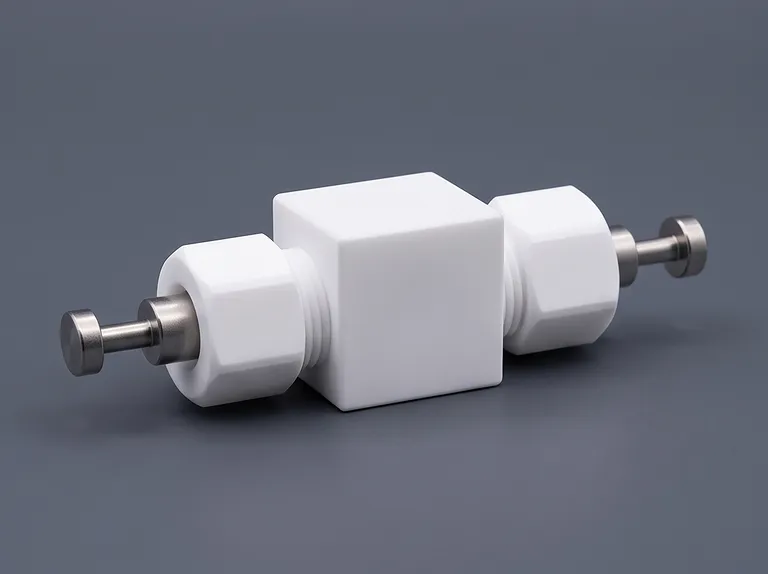
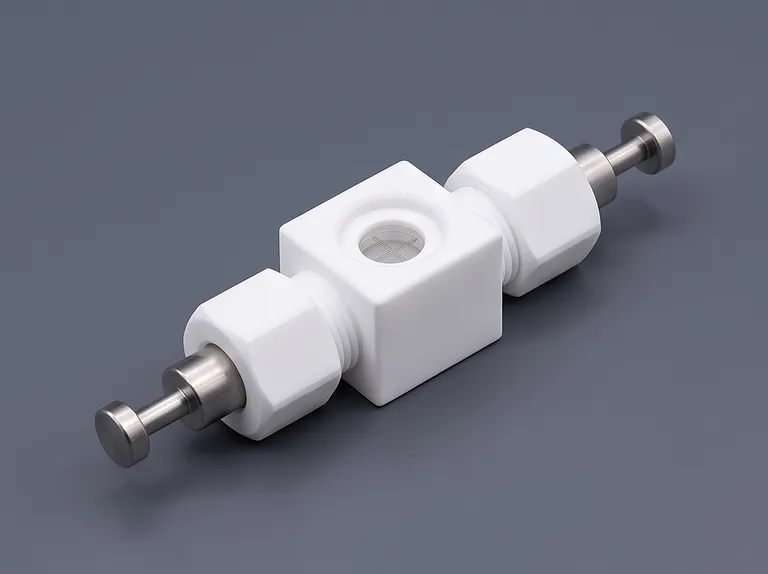
This optical testing cross-section aqueous battery device is designed for controlled examination of aqueous battery components and interfaces. Its compact fixture accommodates battery specimens with an inner diameter of ≤12 mm and a thickness of ≤6 mm, creating a practical platform for cross-sectional characterization. The structure is configured for use with optical microscopy, Raman spectroscopy, and infrared analysis, allowing researchers to investigate physical and chemical changes through complementary techniques.
The equipment is suited to battery R&D laboratories, university research groups, materials science departments, and analytical facilities studying aqueous electrochemical systems. Its wrapped cylindrical design helps prevent dendrite growth on the metal surface and can reduce the influence of impedance from the metal, supporting more meaningful observations during interface and conductivity studies.
A defined 6 mm diameter electrode contact area also supports conductivity calculations by providing a clear basis for area-related measurement work. The 120 mm long, 28 mm high, and 26 mm wide fixture provides a compact form for integration into microscopy and spectroscopy workflows where access, repeatability, and controlled positioning are important.
Key Features
-
Cross Section Testing Capability: The unit is configured for cross-sectional testing of aqueous battery specimens, helping researchers examine internal structures, interfaces, and localized changes through compatible analytical instruments.
-
Multi-Method Instrument Compatibility: The design can be used with optical microscopes, Raman systems, and infrared instruments. This supports complementary visual, vibrational, and infrared characterization within a single research workflow.
-
Defined Specimen Envelope: The equipment accommodates batteries with an inner diameter of ≤12 mm and a thickness of ≤6 mm. These stated dimensional limits help laboratories screen samples before testing and improve workflow planning.
-
Wrapped Cylindrical Structure: The cylindrical body is wrapped to avoid dendrite growth on the metal surface. This design consideration helps limit an unwanted surface-growth influence during aqueous battery observation.
-
Reduced Metal Impedance Interference: The structural arrangement can reduce, to a certain extent, interference caused by impedance from the metal. This is valuable when researchers are assessing electrochemical behavior or related conductivity characteristics.
-
Defined Electrode Contact Area: The contact electrode section has a 6 mm diameter. A defined contact dimension makes it easier to calculate area when measuring conductivity and supports clearer comparison between test results.
-
Compact Fixture Geometry: Measuring 120 mm in length, 28 mm in height, and 26 mm in width, the fixture provides a compact format for laboratory setups that require controlled access to a specimen cross section.
-
Selectable Inner Diameter Options: The inner diameter can be selected as 12 mm, 14 mm, or 16 mm according to the referenced configuration options. This gives laboratories a choice when planning compatible fixture geometry for their test program.
Applications
| Application | Description | Key Benefit |
|---|---|---|
| Aqueous Battery Cross Section Analysis | Position aqueous battery specimens for cross-sectional examination using a compatible optical or spectroscopic setup. | Supports direct study of internal structures and interfaces. |
| Optical Microscopy Observation | Use the fixture with an optical microscope to inspect visible features across the battery cross section. | Provides a practical route for visual assessment of localized changes. |
| Raman Spectroscopy of Battery Interfaces | Combine the unit with Raman analysis to examine material characteristics in selected cross-sectional regions. | Enables complementary chemical or structural investigation. |
| Infrared Cross Section Testing | Use the device with infrared instrumentation for analysis of suitable aqueous battery cross-sectional areas. | Adds infrared characterization to the battery research workflow. |
| Dendrite Growth Research | Study aqueous battery behavior while the wrapped cylindrical structure helps avoid dendrite growth on the metal surface. | Reduces a potential surface-related disturbance during observation. |
| Conductivity Measurement Studies | Use the 6 mm diameter electrode contact area as the defined area basis for conductivity calculations. | Simplifies area-related calculation and improves measurement clarity. |
| Advanced Materials Research | Apply the unit in university, industrial, or institutional laboratories investigating aqueous electrochemical materials. | Brings microscopy and spectroscopy access into a compact test fixture. |
Technical Specifications
| Parameter | Specification |
|---|---|
| Product Item Number | BE13 |
| Product Type | Optical testing cross-section aqueous battery device |
| Compatible Battery Inner Diameter | ≤12 mm |
| Compatible Battery Thickness | ≤6 mm |
| Fixture Length | 120 mm |
| Fixture Height | 28 mm |
| Fixture Width | 26 mm |
| Structural Design | Wrapped cylindrical structure |
| Dendrite-Related Design Function | Helps avoid dendrite growth on the metal surface |
| Metal Impedance Function | Can reduce, to a certain extent, interference from metal impedance |
| Contact Electrode Diameter | 6 mm |
| Conductivity Measurement Function | The contact electrode area facilitates area calculation during conductivity measurement |
| Optical Testing Compatibility | Optical microscope |
| Spectroscopic Testing Compatibility | Raman and infrared instruments |
| Optional Inner Diameter | 12 mm, 14 mm, 16 mm |
The dimensional limits define the primary specimen envelope for the referenced configuration. Before ordering, laboratories should compare their battery geometry with the stated inner diameter and thickness requirements. For projects involving the optional 12 mm, 14 mm, or 16 mm inner diameter selections, the required configuration should be confirmed according to the intended specimen and instrument setup.
The fixture dimensions are also important for equipment integration. With a length of 120 mm, height of 28 mm, and width of 26 mm, the unit can be considered during microscope-stage access planning, spectroscopy alignment, sample handling, and enclosure design. These dimensions provide the reference points needed for laboratory engineers to assess clearance around the test area and to coordinate the device with existing analytical equipment.
The 6 mm contact electrode diameter is a functional measurement reference rather than a general dimensional detail. When conductivity is being evaluated, the defined contact area helps researchers calculate the relevant area more consistently. This can improve the transparency of calculation methods and make it easier to compare measurements generated across related tests, provided that the laboratory applies its established measurement procedure.
The wrapped cylindrical structure is intended to address a specific testing concern: dendrite growth on the metal surface. By avoiding this growth to a certain degree, the design helps reduce the possibility that a metal-surface feature will be mistaken for a battery-related observation. The same structural concept can also reduce, to a certain extent, interference caused by metal impedance. These functions are particularly relevant when researchers need to interpret cross-sectional observations alongside conductivity or other electrochemical data.
The device does not limit testing to a single analytical method. Optical microscopy can provide direct visual information, while Raman and infrared methods can add complementary material characterization. Using the same general fixture concept across these techniques can help laboratories organize a more coherent examination sequence, especially when a project requires visual inspection followed by spectroscopic analysis of a related cross-sectional region.
For procurement teams, the most important selection points are specimen compatibility, fixture envelope, contact electrode diameter, and analytical instrument compatibility. The battery must meet the referenced inner diameter and thickness limits for the primary configuration. The laboratory should also identify whether the required inner diameter is 12 mm, 14 mm, or 16 mm when selecting an available option. Instrument access and the 120 mm by 28 mm by 26 mm fixture size should be reviewed before installation.
This equipment is intended for controlled laboratory research rather than unrestricted battery handling. Test planning should account for the sample condition, the selected analytical instrument, the required cross-sectional exposure, and the laboratory’s established safety procedures for aqueous battery materials. Those procedures remain the responsibility of the operating organization and should be matched to the specific battery chemistry and test method.
Why Choose This Product
-
Purpose-Built Analytical Geometry: The compact fixture combines a defined specimen envelope, controlled contact area, and cross-sectional access for focused aqueous battery research.
-
Multi-Instrument Research Value: Compatibility with optical microscopy, Raman, and infrared testing allows one product concept to support several complementary characterization methods.
-
Measurement-Oriented Design: The 6 mm diameter contact electrode provides a clear area reference for conductivity calculations, helping researchers document their measurement approach more consistently.
-
Focused Interference Control: The wrapped cylindrical structure is designed to avoid dendrite growth on the metal surface and can reduce metal impedance interference to a certain extent.
-
Configuration Flexibility: Optional inner diameter selections of 12 mm, 14 mm, and 16 mm help laboratories align the fixture with their planned specimen and research setup.
Contact us for a quotation, configuration confirmation, or a tailored solution for your aqueous battery cross-section testing workflow.
Trusted by Industry Leaders

REQUEST A QUOTE
Our professional team will reply to you within one business day. Please feel free to contact us!
Related Products
Automatic Laboratory Unwind Rewind Machine and Unwind Rewind Device for Battery Electrodes Optical Films and Functional Materials
Automatic laboratory unwind rewind machine with servo tension control optical web guiding and split structure for lithium battery electrodes optical films and functional roll materials delivering accurate continuous rewinding and slitting performance for demanding research and production workflows.
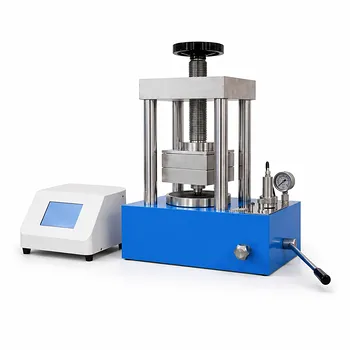
Manual Heating Press with Precision Temperature Control and Hydraulic Pressure
Discover our manual heating press with precise temperature control up to 300°C, hydraulic pressure up to 24 tons, water cooling, and touchscreen interface for consistent lab pressing applications including battery research and material testing. Request a quote today!
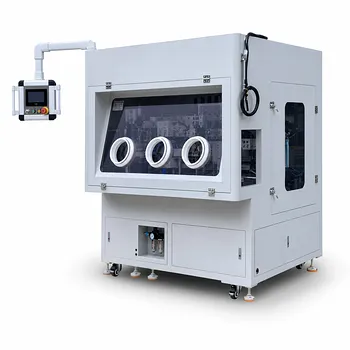
Isobaric High Precision Aluminum Shell Battery Liquid Injection Machine
Isobaric aluminum shell battery liquid injection machine for lithium battery production, supporting primary and secondary filling, vacuum pressure cycling, sealed positive pressure glovebox operation, accurate dosing, weighing, and stable high yield for demanding laboratory manufacturing workflows and advanced materials research.
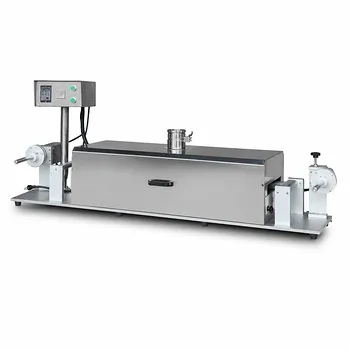
Desktop Continuous Film Coating Testing Machine for 18650 Cylindrical Batteries
Desktop continuous coating machine for lithium battery electrodes 18650 cylindrical cell research ceramic films crystal films and nanofilms offering adjustable coating width precise thickness control automatic rewinding and independent PID oven temperature regulation for university laboratories and small scale production
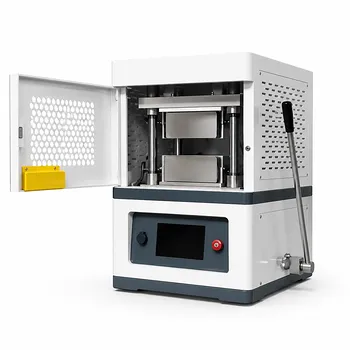
Laboratory Hydraulic Hot Press Machine for Solid-State Battery Research
Compact benchtop laboratory hydraulic hot press for solid-state battery research featuring independent dual-zone heating up to 300°C, 25-ton automatic pressure control, and integrated water cooling for precise compaction of electrolytes and polymer membranes in small-footprint design ideal for R&D applications.
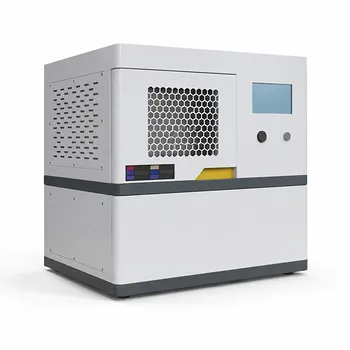
Solid State Battery Research Laboratory Hydraulic Hot Press Machine
Compact benchtop hydraulic hot press machine designed for solid-state battery research, featuring dual-zone independent heating up to 300°C, programmable pressure control with automatic replenishment, and integrated water cooling for rapid cycle times, suitable for electrolyte fabrication and electrode lamination.
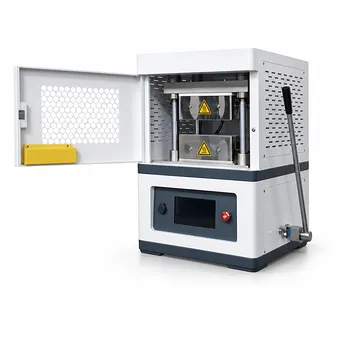
Laboratory Hydraulic Hot Press for Solid-State Battery and Polymer Electrolyte Research
Compact benchtop hydraulic hot press for solid-state battery and polymer electrolyte research with dual-zone heating, automatic pressure compensation, and active cooling system, ensuring uniform temperature up to 300°C and stable load for extended tests with CE certification and safety features.
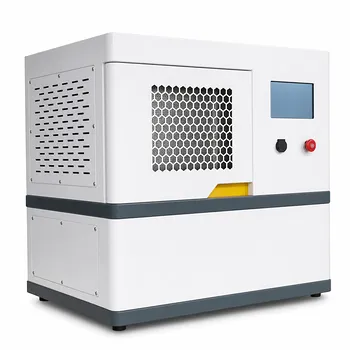
Solid-State Battery Laboratory Hydraulic Hot Press Machine
Precision laboratory hydraulic hot press for solid-state battery research, with dual-plate heating up to 300°C, 50-ton active pressure holding, programmable touchscreen control, and robust benchtop design, ideal for academic and industrial laboratories compacting electrolyte pellets and laminating electrodes.
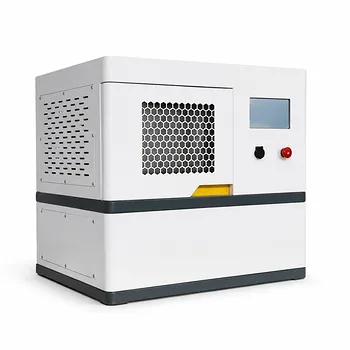
Laboratory Hydraulic Hot Press for Solid State Battery and MEA Fabrication
Compact laboratory hydraulic hot press with independent dual platen heating up to 300°C and programmable 50 ton pressure for solid state battery electrolyte compaction and membrane electrode assembly fabrication, featuring water cooling and safety shields, suitable for advanced material research.
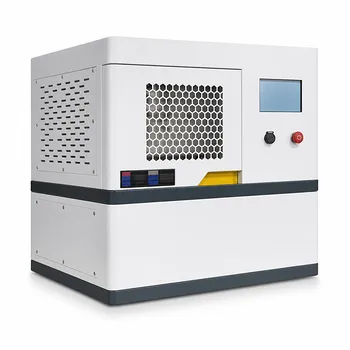
Solid-State Battery Research Laboratory Hydraulic Hot Press Machine
Designed for solid-state battery research, this laboratory hydraulic hot press features servo-driven pressurization up to 2 tons, dual-platen heating up to 300°C, programmable pressure cycles, and a 7-inch touch-screen controller for precise thermal compaction of electrolytes and electrodes.
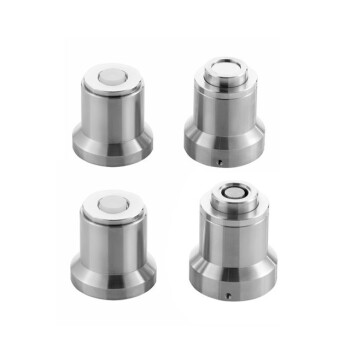
Lab Button Battery Disassembly and Sealing Mold
KINTEK's precision button battery sealing molds ensure airtight, contamination-free results for labs and production. Boost efficiency with durable, high-performance solutions.
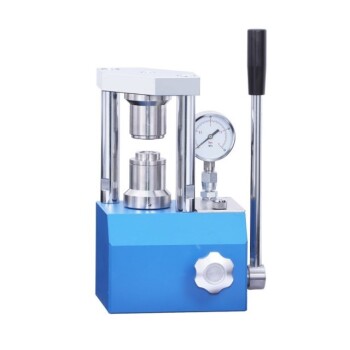
Manual Button Battery Sealing Machine for Battery Sealing
Manual Button Battery Sealer for precise, affordable lab sealing. Ideal for CR2032, LR44 batteries. Enhances safety & extends battery life. Get yours now!
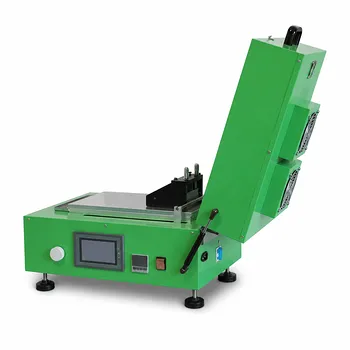
Benchtop Slot Die Flat Plate Coater Battery Laboratory Coating Machine
Precision benchtop slot die flat plate coater and battery laboratory coating machine delivers uniform films, sealed syringe feeding, vacuum fixation, adjustable speed, controlled heating, and repeatable electrode coating for advanced research lithium ion solar polymer and OLED materials research.
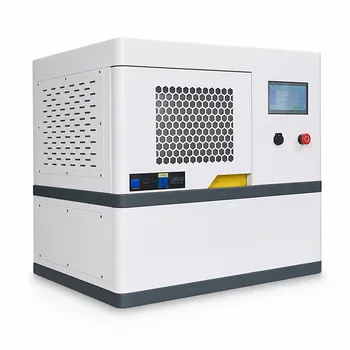
Solid-State Battery Laboratory Hydraulic Hot Press Machine
Precision laboratory hydraulic hot press machine for solid-state battery research; dual-platen independent heating up to 300°C, 30-ton hydraulic pressure with ±1% accuracy and automatic compensation, 7-inch touchscreen control, ideal for hot-pressing solid electrolyte sheets, polymer composites, and membrane electrode assemblies.
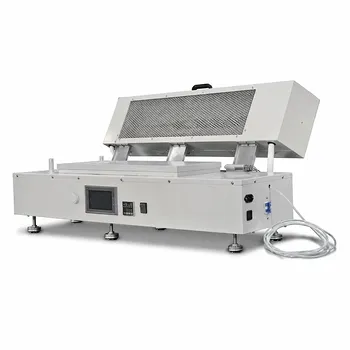
Automatic Coating Film Drying Machine Lithium Battery Laboratory Coating Machine
Automatic coating film drying machine and lithium battery laboratory coating machine with 130°C heating, adjustable coating speed, vacuum plate, precision scraper, programmable drying timer for 18650 electrode research smooth reproducible coatings across varied substrates compact bench scale development applications
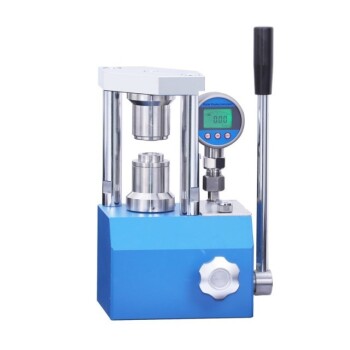
Button Battery Sealing Machine for Button Batteries
KINTEK's Manual Button Battery Sealer ensures precise, airtight sealing for CR2032, LR44 batteries. Ideal for labs, R&D, and small production. Boost efficiency now!
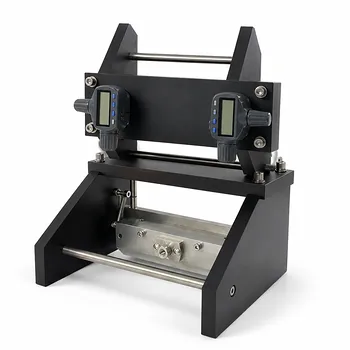
Laboratory Dual Mode Extrusion Slot Die and Doctor Blade Coating Applicator for Battery Film Research
High precision laboratory dual mode slot die and doctor blade coating applicator engineered from SUS630 stainless steel. Delivers 1 micron digital micrometer adjustment and under 4 micron lip straightness for lithium battery research OLEDs and functional thin films.
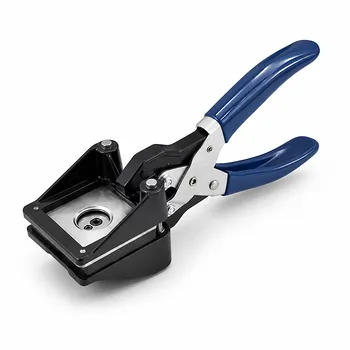
Handheld Circular Cutting Machine for Lithium Battery Electrode Samples
Handheld circular cutting machine for lithium battery electrodes delivers one stroke cutting with burr free smooth edges and customizable dies for precise laboratory sample preparation and repeatable research workflows across pilot development and advanced materials laboratories with dependable operation
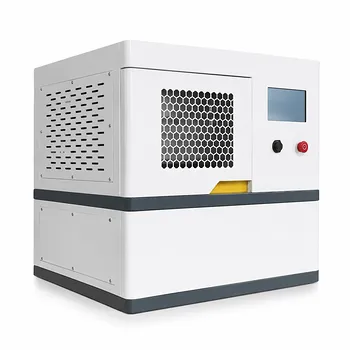
Solid State Battery Laboratory Hydraulic Hot Press Dual Zone Heating Programmable Pressure Control
High-precision hydraulic hot press for solid-state battery research, featuring dual-zone independent heating up to 200°C, 0-15 ton adjustable pressure, 8-stage programmable sequences, real-time data logging via 7-inch touchscreen, and active water cooling. Ideal for laboratory material development and research.
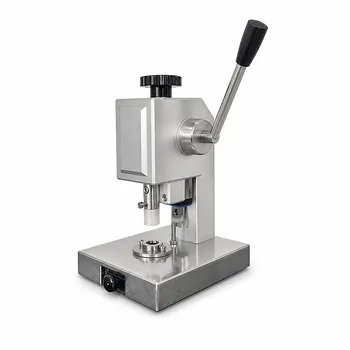
Coin Cell Electrode Sheet Punching Machine
Coin cell electrode sheet punching machine for precision die cutting of battery cathodes anodes separators and thin materials with compact operation flexible die sizes and glovebox compatible handling for laboratory research workflows consistent clean edges in demanding battery development applications.