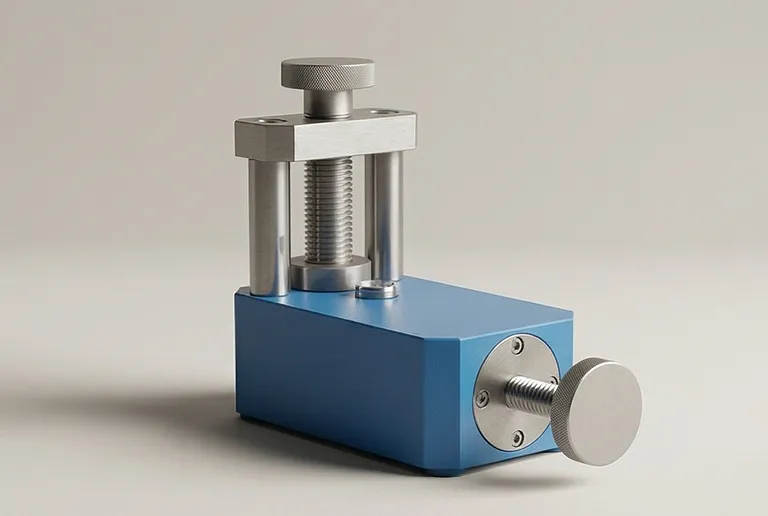
The Invisible Barrier to Insight
In the study of Copper(II) complexes, the greatest obstacle to truth is often not the chemistry, but the air.
Raw solid powders are inherently chaotic. They are collections of refractive surfaces that reflect, deflect, and scatter light. When an infrared beam meets this "cloud," the data returns as noise—a rising baseline that masks the very molecular vibrations a scientist is trying to measure.
To see through the metal, we must first make the medium disappear.
The Engineering of a "Window"
A laboratory hydraulic press does not simply crush material; it performs a phase-merging ritual. By mixing a Copper(II) complex with Potassium Bromide (KBr) and applying tons of force, we eliminate the internal voids that cause light scattering.
The goal is to reach a state of "glass-clarity." Under sufficient pressure, the KBr matrix flows and encapsulates the sample, creating a uniform, dense solid phase that is transparent to infrared radiation.
The Physics of the Pellet
- Eliminating Interfaces: High pressure removes the air-solid interfaces where light scattering occurs.
- Uniform Density: Stable tonnage ensures the infrared beam travels a consistent path length, vital for Beer-Lambert Law compliance.
- Matrix Integration: KBr, being IR-transparent, becomes the invisible carrier for the colored sample.
Why Copper(II) Demands Precision
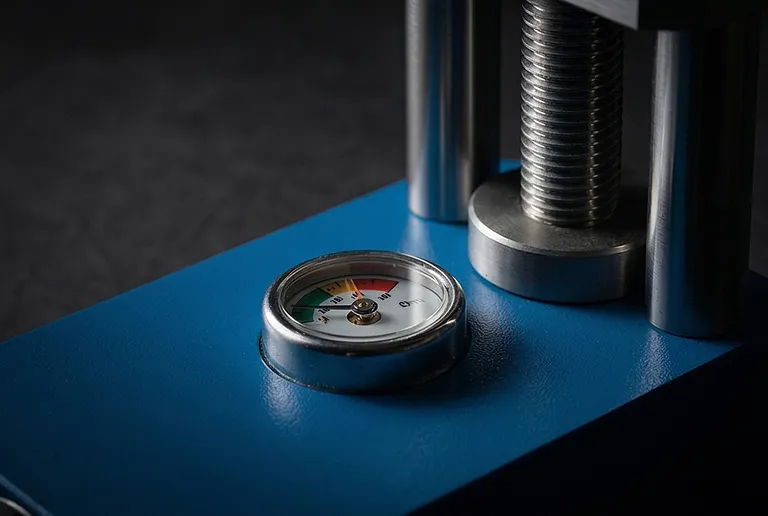
Copper(II) complexes are structurally sophisticated. They often feature terpyridine ligands and complex anionic coordination sites that yield subtle, high-frequency signals.
If the pellet is "cloudy," these delicate features are the first to be lost in the background noise.
| Factor | Spectroscopic Impact | Necessity for Copper(II) |
|---|---|---|
| Air Voids | Causes "noise" and baseline drift | Masks subtle coordination peaks |
| Tonnage Stability | Affects peak intensity consistency | Crucial for comparing different formulations |
| Vacuum Capability | Removes moisture/air trapping | Protects ligand features from water interference |
The hydraulic press resolves the "terpyridine problem" by providing the stable baseline required to identify the specific ligand vibrations and the presence of interacting anions.
The Psychological Trap of Lab Manuals
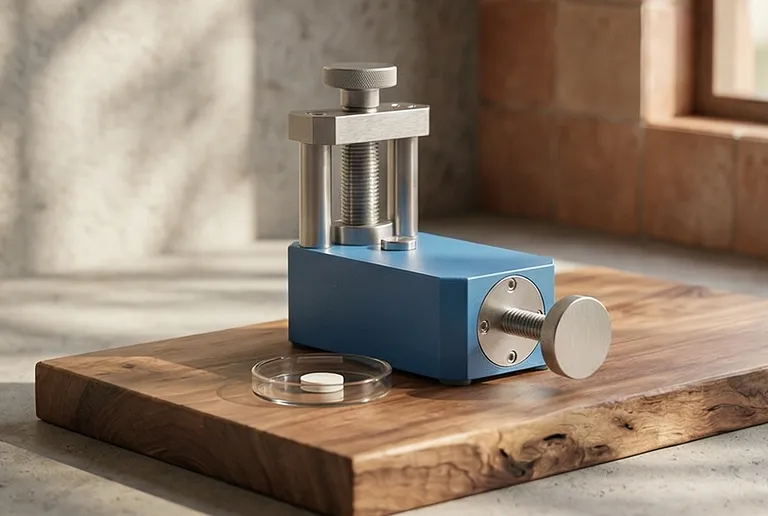
The most common failure in sample preparation is not a lack of effort, but a misunderstanding of limits.
- The Hygroscopic Race: KBr is hungry for water. Every second it sits in humid air, it absorbs moisture. This results in "ghost peaks" that mimic chemical changes in the copper complex.
- The Pressure Paradox: Too little pressure leaves the pellet opaque. Too much pressure can damage precision-ground steel dies or, more subtly, force a polymorphic change in the sample itself.
- The Ratio Bias: There is a temptation to use more sample to get a "stronger" signal. In reality, a 1:100 ratio is the golden standard. Excess sample results in a "dark" pellet that the IR beam simply cannot penetrate.
Mastering the Solid-State Environment
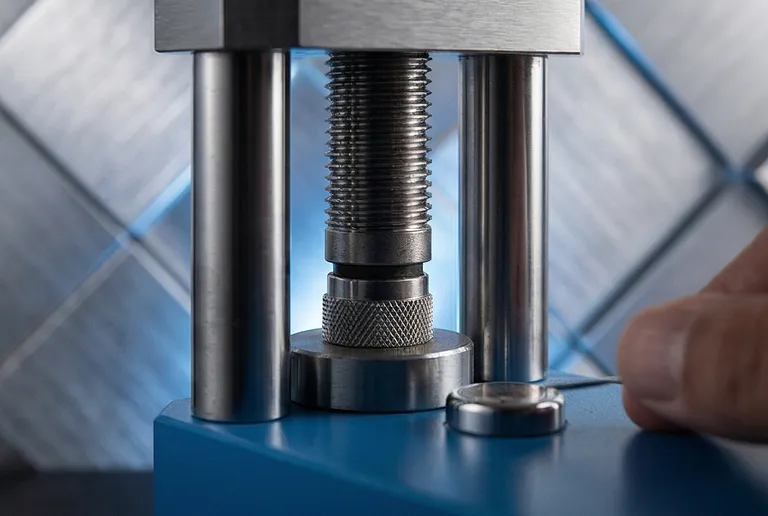
Achieving high-fidelity data requires a tool that removes human variability from the equation. Whether you are identifying coordination sites or assessing molecular stability, the press is the primary filter between raw material and meaningful data.
For those working within the rigors of modern inorganic chemistry, the equipment must offer more than just force—it must offer control.
KINTEK specializes in comprehensive laboratory pressing solutions designed for the exactitudes of research. From manual presses for rapid prototyping to automatic and glovebox-compatible models for oxygen-sensitive complexes, we provide the platform for spectroscopic excellence. Our range includes:
- Manual & Automatic Presses: Engineered for repeatable tonnage and long-term durability.
- Isostatic Presses (Cold/Warm): Ideal for uniform density in battery and advanced material research.
- Heated & Vacuum Dies: Essential for maintaining sample integrity and removing atmospheric interference.
The difference between a noisy spectrum and a breakthrough discovery often comes down to a few tons of perfectly applied pressure.
Related Products
- Laboratory Hydraulic Press Lab Pellet Press Button Battery Press
- Laboratory Hydraulic Press 2T Lab Pellet Press for KBR FTIR
- Laboratory Hydraulic Press Lab Pellet Press Machine for Glove Box
- 24T 30T 60T Heated Hydraulic Lab Press Machine with Hot Plates for Laboratory
- Automatic Laboratory Hydraulic Press Lab Pellet Press Machine
Related Articles
- The Architecture of Density: Why Pressure is the Silent Architect of Solid-State Batteries
- The Architecture of Heat: Why Sample Density Dictates the Truth in Metal Hydride Research
- The Geometry of Ionic Flow: Why Precision Pressing Dictates Material Truth
- The Geometry of Electrons: Why Surface Precision is the Silent Partner in SECM Research
- The Architecture of Density: Why Pressure is the Foundation of Precision



















