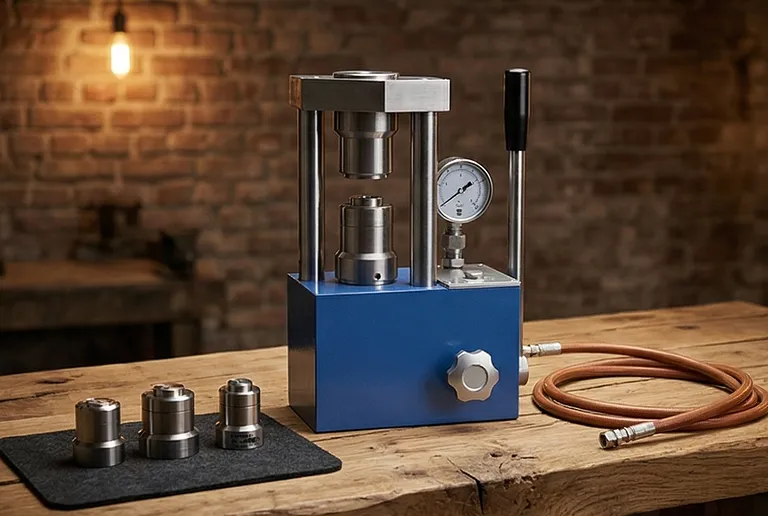
The Illusion of "More"
In the laboratory, we are often conditioned to believe that intensity correlates with results. If a little pressure works, more must work better.
In the world of sintering platelet alumina, this intuition is a trap.
When an engineer ramps a hydraulic press beyond 15 MPa, they aren't just compacting powder; they are charging a microscopic battery of compressed gas. This "invisible debt" is collected the moment the pressure is released.
The Mechanics of the "Spring-Back"
To understand why 10 MPa is the golden mean, we must look at what happens at the grain boundaries.
At high temperatures, gases become trapped within the alumina structure. When we apply excessive force—typically exceeding 15 MPa—we compress these gas pockets into high-pressure nodes.
The Decompression Betrayal
The failure doesn't happen during the heat or the press. It happens during the relief.
- Compression: External force holds the pores shut.
- Release: As hydraulic pressure drops, the internal gas pressure remains.
- Expansion: If the internal pressure exceeds the material’s grain boundary strength, the pores "spring back."
The result is a material that has literally inhaled itself to death, creating a network of microscopic voids that ruin density and clarity.
The Cost of Excessive Force
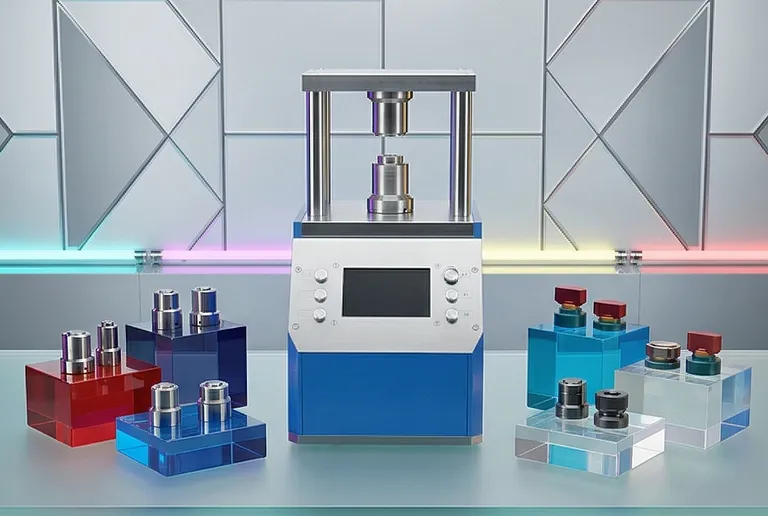
The difference between 10 MPa and 20 MPa isn't just a number on a dial; it is the difference between a functional ceramic and a failed experiment.
Loss of Optical Clarity
For transparent ceramics, pores are the enemy. Even tiny voids create refractive index mismatches. These mismatches scatter light, turning what should have been a clear window into an opaque wall.
The Density Drop
A sample may look solid while under the ram. But the "pore expansion" phenomenon ensures that the final relative density will never reach its theoretical maximum. You lose the very thing you were trying to achieve through high pressure.
Finding the Equilibrium
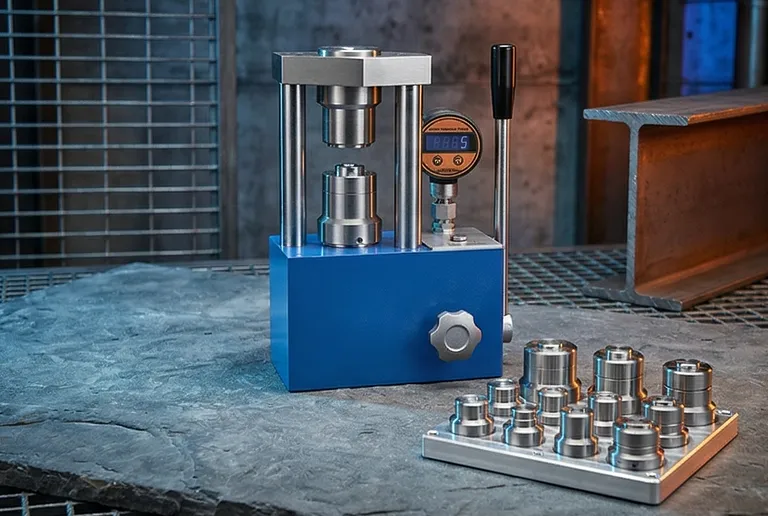
The challenge is that 10 MPa is a "sweet spot." Press too lightly (below 10 MPa), and the platelets never align; the material remains weak and porous. Press too hard, and you trigger the spring-back.
Success in material science is rarely about raw power. It is about the precision of control.
| Feature | 10 MPa (The Sweet Spot) | >15 MPa (The Danger Zone) |
|---|---|---|
| Pore Behavior | Voids eliminated; gases stable | High-pressure gases trapped |
| Decompression | Permanent densification | "Spring-back" expansion |
| Final Density | Near theoretical maximum | Reduced by micro-voids |
| Optical Clarity | High transparency | Low (Light scattering) |
| Risk Factor | Requires precision control | High risk of structural defects |
Engineering the Solution
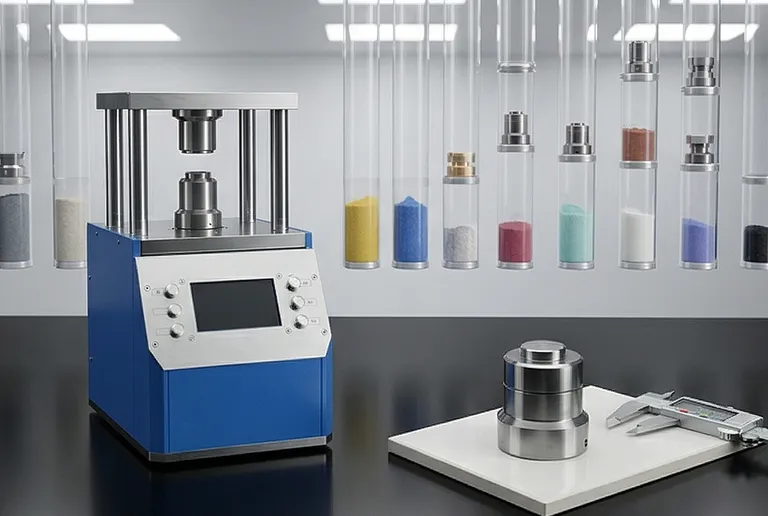
Achieving a consistent 10 MPa requires more than a simple hand pump. It requires a system that understands the nuance of the "soak."
In battery research and advanced ceramics, the margin for error is shrinking. Whether you are working within a glovebox environment or performing high-temperature isostatic pressing, the stability of the hydraulic system is your most critical variable.
At KINTEK, we design our pressing solutions—from manual and automatic lab presses to Cold and Warm Isostatic Presses (CIP/WIP)—to provide the exactitude required for these delicate balances.
We don't just provide force; we provide the control necessary to ensure your densification is permanent.
Stop fighting against the physics of pore expansion and start working with the precision your research deserves. Contact Our Experts
Related Products
- Automatic High Temperature Heated Hydraulic Press Machine with Heated Plates for Lab
- Split Automatic Heated Hydraulic Press Machine with Heated Plates
- Laboratory Manual Heated Hydraulic Press Machine with Hot Plates
- Laboratory Split Manual Heated Hydraulic Press Machine with Hot Plates
- 24T 30T 60T Heated Hydraulic Lab Press Machine with Hot Plates for Laboratory
Related Articles
- The Architecture of Slow: Why Physical Precision Dictates Chemical Destiny
- The Architecture of Certainty: Why the Laboratory Press is the Anchor of Material Science
- The Vanishing Boundary: The Hidden Thermodynamics of LTCC Lamination
- The Alchemy of 160°C: Why Precision Pressing is the Silent Backbone of Rubber Science
- The Invisible Forge: Why the Laboratory Press is the Soul of Nano-Composites



















