
The Tyranny of the Rigid Die
In traditional metallurgy, we are taught to value the rigid. We think of precision as a steel wall that refuses to move. But when dealing with titanium alloys like Ti-6Al-4V, rigidity is often the enemy of integrity.
When you press powder into a rigid die, you are fighting a losing battle against friction. The powder near the walls stays put; the powder in the center moves. This creates "dead zones"—microscopic variations in density that act as ticking time bombs.
During sintering, these density gradients transform into warps, cracks, and structural failures. In high-stakes fields like aerospace or medical implants, "almost uniform" is a synonym for "failed."
Pascal’s Law as a Design Principle
Isostatic pressing replaces the brute force of a piston with the elegant symmetry of Pascal’s Law. It posits that pressure exerted anywhere in a confined incompressible fluid is transmitted equally in all directions.
The flexible rubber mold is the silent protagonist in this system. It acts as a deformable membrane, a bridge between the hydraulic medium and the raw powder.
The Mechanism of Omnidirectional Force
- Eliminating Friction: Because the mold moves with the powder, the friction between the container and the material is virtually eliminated.
- Efficient Rearrangement: Under isotropic pressure, particles don't just compress; they dance. They overcome internal friction to find the most efficient packing arrangement.
- The End of Dead Zones: Force is applied to every surface simultaneously. The result is a green compact with a density so consistent it appears monolithic even before it hits the furnace.
The Invisible Barrier: Protection Through Encapsulation
A flexible mold is more than a shape; it is a sanctuary. Titanium is a "hungry" element—it wants to react with everything, especially the fluids used to transmit pressure.
The rubber mold serves as an "envelope die." It provides a vacuum-sealed environment that isolates the Ti-6Al-4V powder from water or silicone oil. This encapsulation ensures that the only thing the powder feels is the pressure, never the chemistry of the medium.
This isolation is the difference between a high-purity aerospace component and a contaminated piece of scrap.
The Trade-off: Precision vs. Integrity
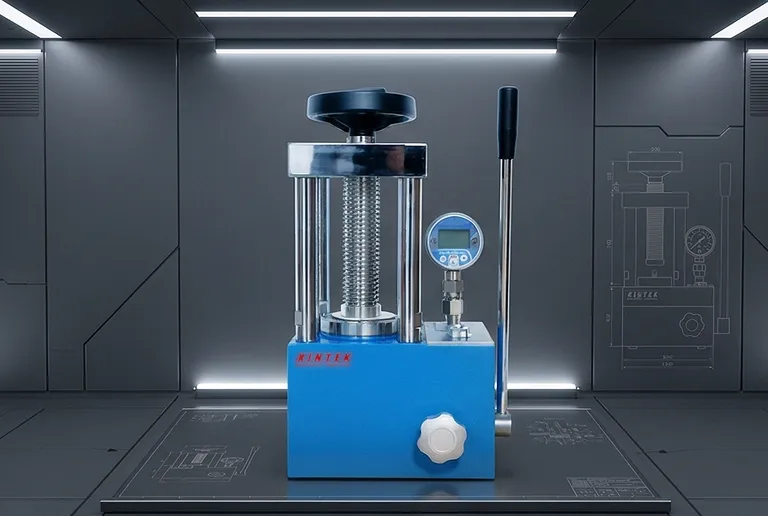
In engineering, every gain has a price. The psychological hurdle of isostatic pressing is the loss of "near-net-shape" control.
| Feature | Rigid Die Pressing | Isostatic Pressing (Flexible Mold) |
|---|---|---|
| Density Uniformity | Low (High Gradients) | Exceptional (Near Zero Gradients) |
| Geometric Precision | High (Fixed Walls) | Moderate (Requires Post-Processing) |
| Contamination Risk | Medium | Low (Sealed Membrane) |
| Internal Stress | High | Minimal |
While a rubber mold ensures the internal structure is perfect, the external dimensions may require post-process machining. You are trading dimensional convenience for structural certainty. For a critical battery component or a bone implant, that is a trade most engineers are willing to make.
The Engineering of the Interface
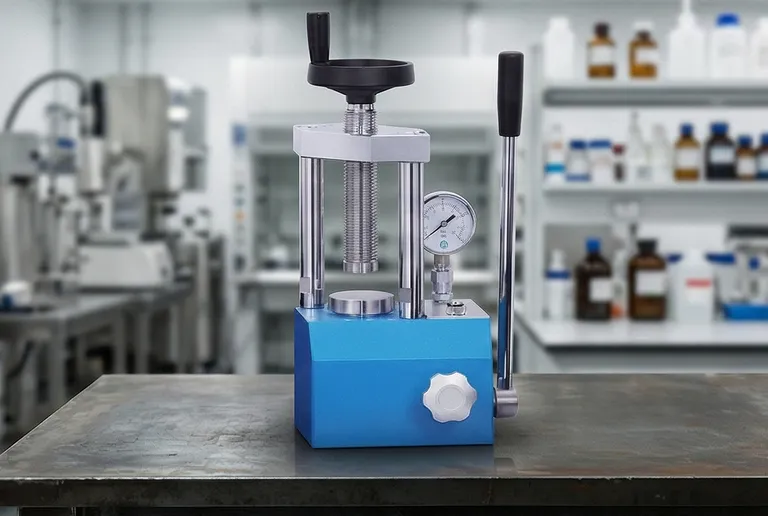
Designing these molds is an exercise in "engineer’s romance." It requires calculating non-uniform shrinkage—predicting how a soft rubber jacket will behave as it collapses under thousands of bars of pressure.
The goal is to create a green body with enough mechanical strength to be handled, machined, and finally sintered into its ultimate form. It is the transition from a pile of dust to a structural masterpiece.
Systems That Understand Pressure
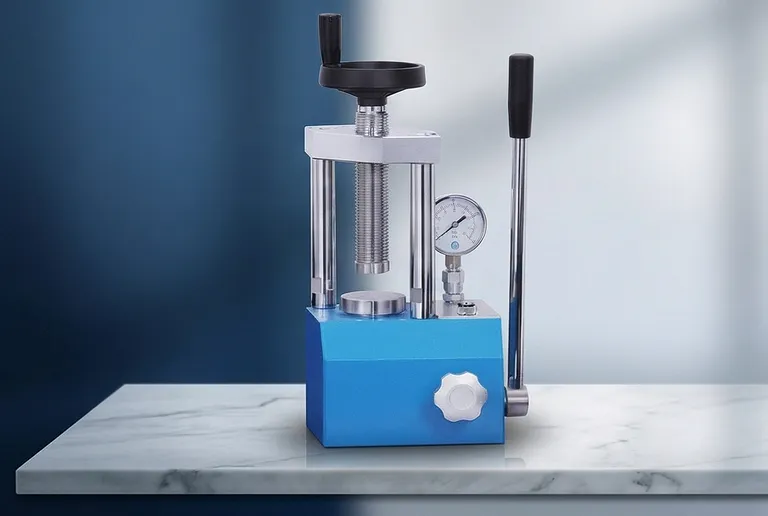
At KINTEK, we don't just see a press; we see a system designed to master the physics of compression. Whether it is Cold Isostatic Pressing (CIP) for maximum density or Warm Isostatic Pressing (WIP) for specialized research, the equipment must be as reliable as the laws of physics it utilizes.
Our laboratory solutions—from glovebox-compatible models to high-capacity automatic systems—are built to handle the complexities of Ti-6Al-4V and beyond. We provide the tools that turn the theory of isotropic pressure into the reality of high-performance materials.
Related Products
- Warm Isostatic Press for Solid State Battery Research Warm Isostatic Press
- Electric Lab Cold Isostatic Press CIP Machine
- Automatic Lab Cold Isostatic Pressing CIP Machine
- Lab Isostatic Pressing Molds for Isostatic Molding
- Manual Cold Isostatic Pressing CIP Machine Pellet Press
Related Articles
- How Warm Isostatic Pressing Transforms High-Performance Manufacturing
- How Warm Isostatic Pressing Optimizes Material Performance for Industrial Applications
- The Pressure to Be Perfect: How Hot Isostatic Pressing Achieves Absolute Material Integrity
- The Physics of Patience: Why Hot Isostatic Pressing Trades Speed for Certainty
- The Enemy Within: How Hot Isostatic Pressing Forges Perfect Material Integrity



















