The Invisible Flaw in Precision
In the world of high-performance materials, the most dangerous defects are the ones you cannot see.
When fabricating Bi2212 superconducting tubular substrates, the challenge isn't just the chemistry; it is the physics of compaction. A loose oxide powder is a chaotic collection of air and matter. To transform it into a functional "green" body, you must apply pressure.
But pressure, if misapplied, becomes a source of failure.
In traditional uniaxial pressing, force moves in one direction. Friction against the die walls creates a "pressure shadow." This leads to density gradients—regions where the powder is packed tightly and regions where it remains porous. During the fire of sintering, these gradients manifest as cracks, warps, and lost conductivity.
The Architecture of Isotropic Pressure
Cold Isostatic Pressing (CIP) solves the problem of "directionality" by removing the die entirely.
By submerging a flexible mold into a fluid medium, CIP applies equal force from every possible angle simultaneously. This is the Isotropic Imperative: ensuring that a tubular or conical shape receives the same 2 GPa of force at its center as it does at its edge.
Why Isotropic Pressure Changes the Outcome
- Geometric Freedom: Unlike mechanical dies, CIP does not care about aspect ratios. Whether the substrate is a thin rod or a wide-diameter tube, the density remains constant.
- Void Elimination: High-pressure fluid compaction forces air out of the microscopic gaps, creating a coherent structure that acts as a single unit.
- Structural Memory: Because the density is uniform, the material "remembers" its shape during heat treatment, preventing the distortion that ruins complex geometries.
The Crucible: Surviving the Sinter
The true value of CIP is realized not in the press, but in the furnace.
Superconducting materials like Bi2212 are prone to "retrograde densification." During the partial-melt stage, if the initial density is low or uneven, gas bubbles expand. These bubbles act as insulators, breaking the path of the electrons.
A high-density "green" body, forged via CIP, suppresses this expansion. It creates a seamless interface between the superconducting oxide and the silver stabilizers.
| Feature | Impact of Cold Isostatic Pressing (CIP) | The Final Result |
|---|---|---|
| Pressure Distribution | 360-degree fluid transmission | Zero density gradients in complex tubes |
| Compaction Limit | Up to 2 GPa | Maximum "green" density before sintering |
| Interface Quality | Superior oxide-to-metal bonding | Enhanced thermal and electrical stability |
| Current Path | Consistent particle connectivity | Maximized Critical Current Density ($J_c$) |
Engineering the Future of Current
The difference between a laboratory curiosity and a functional superconducting component is reliability.
If the internal density of a Bi2212 substrate is inconsistent, its ability to carry current—its $J_c$—will always be capped by its weakest link. CIP ensures that there are no weak links. It is the systematic solution to the inherent chaos of powder metallurgy.
Strategic Recommendations
- For High-Field Applications: Prioritize pressures above 1.5 GPa to eliminate the smallest voids that cause gas-bubble expansion.
- For Large-Scale Substrates: Use CIP to overcome the friction limitations that make traditional mechanical pressing impossible for elongated tubes.
- For Complex Geometries: Leverage flexible elastomer molds to achieve shapes that a steel die simply cannot produce.
Precision Beyond the Surface
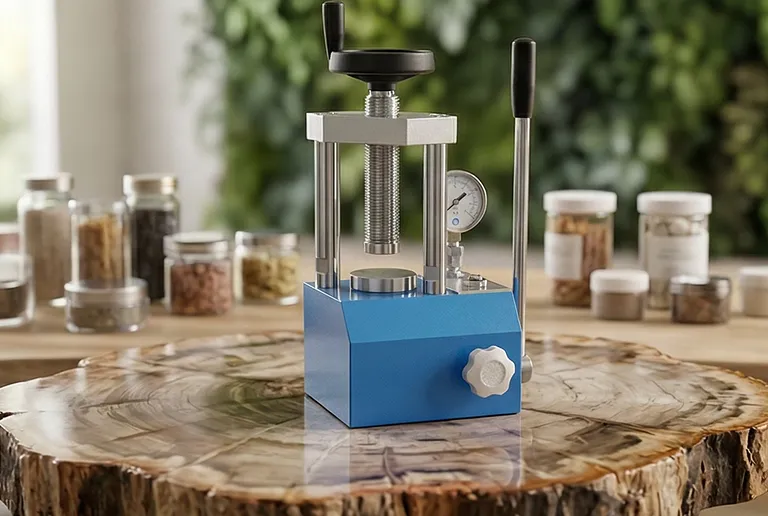
At KINTEK, we understand that the integrity of your research depends on the tools that manage these invisible forces. Our comprehensive range of isostatic presses is designed to provide the precision required for the most demanding applications in superconductivity and battery research.
From manual laboratory models to advanced automatic isostatic systems, we provide the technology that turns loose powders into high-performance realities.
Explore how our pressing solutions can redefine your material performance: Contact Our Experts
Related Products
- Electric Lab Cold Isostatic Press CIP Machine
- Electric Split Lab Cold Isostatic Pressing CIP Machine
- Automatic Lab Cold Isostatic Pressing CIP Machine
- Manual Cold Isostatic Pressing CIP Machine Pellet Press
- Lab Isostatic Pressing Molds for Isostatic Molding
Related Articles
- Shaping vs. Perfecting: The Strategic Divide Between Cold and Hot Isostatic Pressing
- Beyond Brute Force: The Elegant Physics of Cold Isostatic Pressing
- The Architecture of Uniformity: Why Omnidirectional Pressure Defines Ceramic Destiny
- The Silent Geometry of Density: Why Isotropic Pressure is the Soul of Advanced Ceramics
- How Isostatic Pressing Delivers Superior Performance in Critical Industries
















