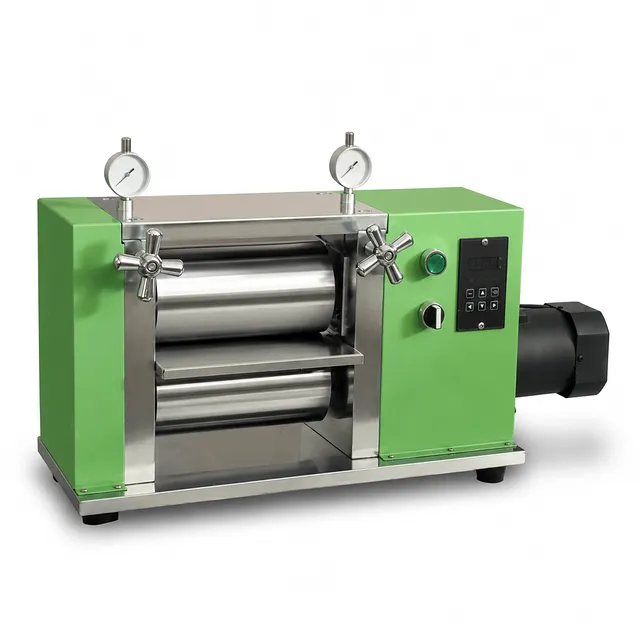
Electrode Calendering / Rolling Presses
Laboratory Electric Vertical Two Roll Mill 100mm 200mm 300mm Width
Item Number : DG05
Price varies based on specs and customizations
- Sheet Rolling Width
- 0 to 100 mm, 0 to 200 mm, or 0 to 300 mm
- Rolling Thickness
- 0 to 2 mm adjustable gap
- Roll Cylindricity
- ≤±2 µm

Shipping:
Contact us to get shipping details Enjoy On-time Dispatch Guarantee.
Why Choose Us
Easy ordering process, quality products, and dedicated support for your business success.
Product Overview
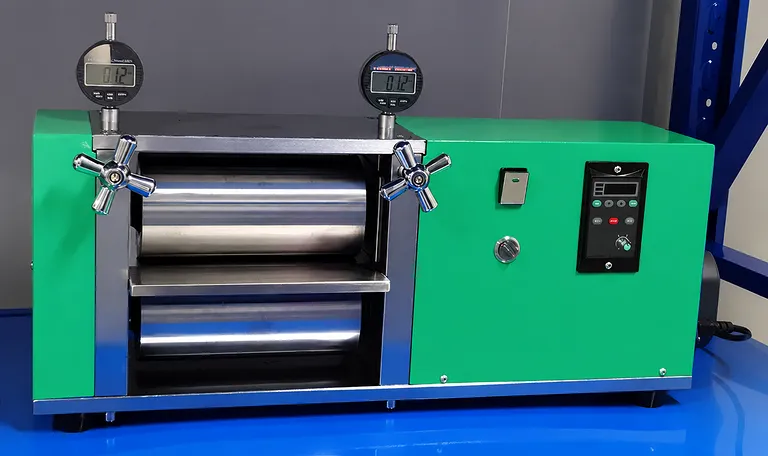
This laboratory electric vertical two roll mill is designed for controlled thinning and density enhancement of battery materials, lithium battery electrode sheets, and other clean energy materials. Its geared transmission drives two counter-rotating rolls for stable, repeatable rolling, while the adjustable roll gap allows users to set the required sheet thickness for different material conditions and research protocols. The vertical arrangement supports convenient feeding of sheet and strip materials into the rolling zone.
The equipment is suited to battery R&D laboratories, clean energy material development, powder processing studies, and academic materials research. It provides a compact and flexible solution for electrode densification, thickness reduction, and process parameter evaluation where laboratory floor space, adjustment accuracy, and operational convenience are important.
High roll hardness, hard-chrome surface treatment, fine roll cylindricity, and direct digital adjustment support dependable processing under demanding laboratory workloads. The compact structure is easy to operate and reposition, while the geared drive and protected transmission are built to deliver consistent performance over repeated development cycles.
Key Features
-
High-Hardness Working Rolls: The rolls are hardened to HRC62 and finished with hard chrome plating. This treatment improves surface durability and provides rust resistance, helping preserve working quality during repeated laboratory use.
-
High Roll Cylindricity: Roll cylindricity is controlled to ≤±2 µm, supporting uniform contact across the working width and reducing variation during electrode and sheet-material processing.
-
Adjustable Rolling Gap: A wedge-block adjustment mechanism provides self-locking performance and precise gap control. The left and right adjustment handwheels allow users to set the rolling clearance according to the required material thickness.
-
Direct Digital Indication: The sheet thickness and rolling gap are shown by digital gauges, making adjustment more precise, visible, and repeatable during setup and process development.
-
Geared Two-Roll Transmission: Gear transmission directly drives the two rolls, providing a practical and stable rolling mechanism for laboratory-scale material reduction and densification.
-
Vertical Feeding Configuration: The vertically positioned rolls make it convenient to introduce sheet and strip materials into the rolling zone, supporting efficient handling in compact laboratory workspaces.
-
Adjustable Rolling Thickness: The rolling gap is adjustable from 0 to 2 mm. This range enables controlled thickness reduction and process comparison across different battery material formulations.
-
Controlled Feed Speed: Feed speed can be adjusted from 0 to 40 mm/s, helping researchers coordinate material handling with rolling conditions and evaluate the effect of processing speed.
-
Compact Electric Operation: Electric operation simplifies routine use, while the compact form factor supports flexible deployment in battery laboratories, materials research facilities, and pilot development areas.
-
Protected Drive Components: The gear transmission is equipped with protective covers and hazard markings. These features help limit access to moving drive components during normal operation, subject to proper laboratory safety procedures.
Applications
| Application | Description | Key Benefit |
|---|---|---|
| Lithium Battery Electrode Densification | Compress and reduce the thickness of lithium battery electrode sheets after coating or material preparation. | Improves control of electrode thickness and material density during cell development studies. |
| Battery Material Process Development | Compare rolling gaps, feed speeds, and material responses across experimental batches. | Provides repeatable adjustment and direct digital readings for process evaluation. |
| Clean Energy Material Research | Process sheet-form materials used in emerging energy-storage and clean-energy research programs. | Supports flexible laboratory experimentation within a compact footprint. |
| Electrode Strip Rolling | Feed strip or sheet materials through vertically arranged rolls for controlled compression. | Simplifies material entry and supports efficient handling of continuous or segmented samples. |
| Powder Metallurgy Research | Study the rolling and densification behavior of powder-based materials formed into sheets or strips. | Enables controlled thickness reduction and repeatable laboratory-scale comparisons. |
| Advanced Materials Development | Evaluate the effect of compression, thickness, and rolling speed on experimental material structures. | Combines adjustable operating conditions with precision roll geometry. |
| Academic Materials Science | Support teaching laboratories and university research involving sheet processing and material densification. | Offers straightforward electric operation and visible adjustment readings for practical experimentation. |
Technical Specifications
| Parameter | DG05 100 mm | DG05 200 mm | DG05 300 mm |
|---|---|---|---|
| Roll diameter | Φ100 mm | Φ100 mm | Φ100 mm |
| Roll cylindricity | ≤±2 µm | ≤±2 µm | ≤±2 µm |
| Roll hardness | HRC62 | HRC62 | HRC62 |
| Roll surface finish | 0.4 or better | 0.4 or better | 0.4 or better |
| Rolling thickness | 0 to 2 mm adjustable gap | 0 to 2 mm adjustable gap | 0 to 2 mm adjustable gap |
| Sheet rolling width | 0 to 100 mm | 0 to 200 mm | 0 to 300 mm |
| Roll placement | Vertical | Vertical | Vertical |
| Sheet thickness display | Digital gauge display; digital display and adjustment for precise, clear operation | Digital gauge display; digital display and adjustment for precise, clear operation | Digital gauge display; digital display and adjustment for precise, clear operation |
| Operating method | Electric | Electric | Electric |
| Voltage and frequency | AC220V/50Hz | AC220V/50Hz | AC220V/50Hz |
| Power | 120 W | 200 W | 200 W |
| Feed speed | 0 to 40 mm/s | 0 to 40 mm/s | 0 to 40 mm/s |
| External dimensions | L520 mm × W220 mm × H350 mm | L620 mm × W220 mm × H350 mm | L720 mm × W220 mm × H350 mm |
| Equipment weight | 60 kg | 85 kg | 105 kg |
| Standard accessories | One set of hexagon socket wrenches; two digital gauges; one feeler gauge | One set of hexagon socket wrenches; two digital gauges; one feeler gauge | One set of hexagon socket wrenches; two digital gauges; one feeler gauge |
The 100 mm, 200 mm, and 300 mm configurations share the same 100 mm roll diameter, ≤±2 µm roll cylindricity, HRC62 roll hardness, 0 to 2 mm adjustable rolling thickness, vertical roll placement, and 0 to 40 mm/s feed speed. Selection should be based primarily on the required sheet rolling width and available laboratory space. The wider configurations provide greater working coverage, while the narrower configuration offers a smaller external footprint for limited bench or floor areas.
For routine preparation, the roll surfaces should be carefully wiped with a soft cloth moistened with alcohol before each operation. Gear transmission areas should be lubricated to maintain smooth movement. Compressed-air cleaning should not be used because dust may enter the bearings and affect operating precision. When the unit will remain unused for an extended period, the rolls should be cleaned and coated with rust-preventive oil to protect the working surfaces from corrosion.
Regular inspection of screws, nuts, pins, and other fasteners is required to reduce the risk of loosening and maintain safe operation. When adjusting the roll gap, both handwheels should be moved evenly to avoid damage to internal components. After the adjustment is complete, the digital gauge may be removed to prevent accidental impact during production use.
Operators must keep hands and other body parts away from the roll and gear-transmission hazard zones during operation. The machine is intended for operation by one person at a time. Protective covers and hazard markings are provided around the gear transmission, but they do not replace established laboratory safety procedures. When wiping the rolls, the operator should stand behind the operating side and prevent the cloth or hands from becoming caught in moving parts. Gloves must not be worn when wiping rotating equipment.
Operators should wear close-fitting clothing, and personnel with long hair should wear a suitable cap. External or unauthorized personnel should not dismantle or adjust the equipment. Electrical components must not be removed or modified without authorization. These operating and maintenance practices help preserve roll accuracy, protect the equipment, and support safe long-term use.
Why Choose This Product
-
Precision Manufacturing: ≤±2 µm roll cylindricity, HRC62 hardness, and a 0.4 or better surface finish provide a strong foundation for consistent laboratory rolling results.
-
Process Control: The self-locking wedge-block adjustment and digital gauge display make gap setting clear, precise, and repeatable across experimental batches.
-
Durable Construction: Hard-chrome roll surfaces resist wear and rust, while geared transmission provides stable mechanical drive for repeated material-processing work.
-
Configuration Flexibility: Three working-width options, from 100 mm through 300 mm, allow research teams to select capacity according to sample dimensions, process goals, and available workspace.
-
Practical Laboratory Support: Standard adjustment tools, digital gauges, and a feeler gauge are included to support installation, setup, and routine operation.
Contact us for a quotation, configuration guidance, or a customized rolling solution matched to your electrode materials and research workflow.
Trusted by Industry Leaders

REQUEST A QUOTE
Our professional team will reply to you within one business day. Please feel free to contact us!
Related Products
Electric Isostatic Pressing Machine 40 Tons Automatic Laboratory Powder Compacting Press
Optimize materials research with this premium electric isostatic pressing machine for laboratory powder compaction featuring a smart touch screen control and integrated safety shield for consistent high density specimen fabrication across diverse industrial sectors and advanced academic research environments.

Laboratory Hydraulic Split Electric Lab Pellet Press
KINTEK Split Electric Lab Press: Precision sample preparation for research. Compact, versatile, with advanced pressure control. Ideal for material studies.
Automatic Hot Press 2 Ton 150x150mm Oil Free
Explore KINTEK's automatic servo-electric hot press: 2-ton force, ±2kg accuracy, 150x150mm platens, oil-free for cleanrooms, dual-zone programmable heating to 300°C, CE certified. Get a quote today. Ideal for battery research, polymer lamination, and semiconductor encapsulation.

Lab Cylindrical Press Mold for Laboratory Use
Precision cylindrical press molds for lab sample prep. Durable, high-performance, and customizable for XRF, battery research, and material testing. Get yours today!
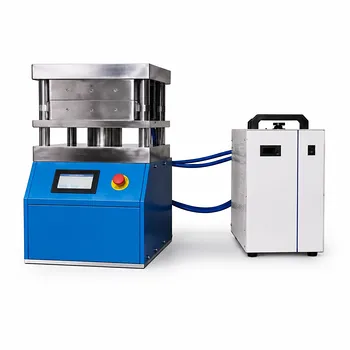
25 Ton Automatic Laboratory Hot Press Machine 300x300mm Dual Heated Platens Rapid Cooling CE Certified
The 25-ton automatic laboratory hot press offers 300x300mm dual heated platens, rapid cooling, and CE certification. Achieve uniform heating up to 300°C with closed-loop pressure control. Ideal for advanced materials research. Contact us for a competitive quote and custom solutions.
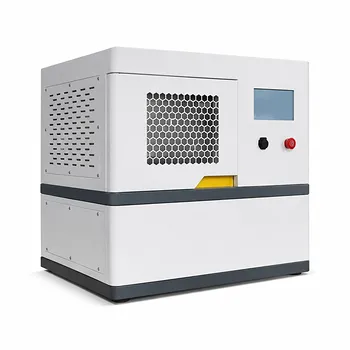
Solid State Battery Laboratory Hydraulic Hot Press
Benchtop laboratory hot press for precise thermo-compression of advanced materials. Features dual-zone independent programmable heating, servo-driven force control, and 7-inch touchscreen interface for repeatable solid-state battery research, electrode fabrication, and composite lamination with built-in over-temperature and over-pressure protection.

Automatic Laboratory Hydraulic Press Lab Pellet Press Machine
Upgrade your lab with KINTEK's Automatic Lab Press – precision, efficiency, and versatility for superior sample preparation. Explore models now!

Lab Round Bidirectional Press Mold
Precision Round Bidirectional Press Mold for lab use, high-density compaction, Cr12MoV alloy steel. Ideal for powder metallurgy & ceramics.

Lab Double Plate Heating Mold for Laboratory Use
Precision Double Plate Heating Mold for labs, featuring dual-zone temperature control, rapid cooling, and uniform heating. Ideal for material testing and sample preparation.
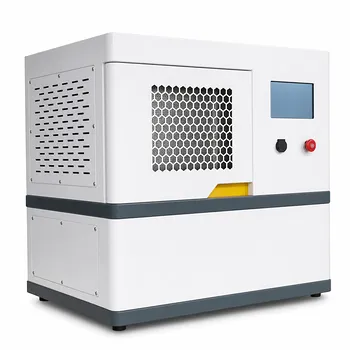
Solid-State Battery Laboratory Hydraulic Hot Press Machine
Precision laboratory hydraulic hot press for solid-state battery research, with dual-plate heating up to 300°C, 50-ton active pressure holding, programmable touchscreen control, and robust benchtop design, ideal for academic and industrial laboratories compacting electrolyte pellets and laminating electrodes.
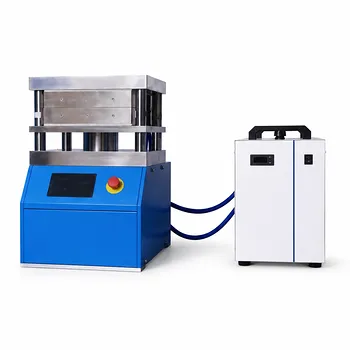
25-Ton Automatic Laboratory Hot Press with Dual Programmable Heating Platens 250x250 mm CE Certified
Precision benchtop automatic hydraulic hot press with 25-ton force, independently heated dual platens up to 300°C, 250x250 mm pressing area, programmable touchscreen control, and CE certified safety for material research and sample preparation. Designed for polymers, composites, and battery research.
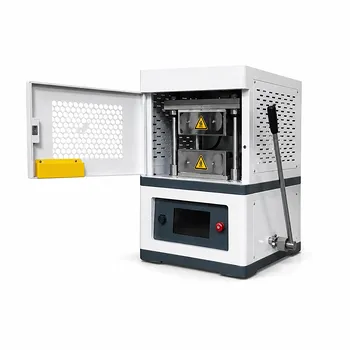
Laboratory Hydraulic Hot Press Machine for Solid-State Battery Research
Compact benchtop laboratory hydraulic hot press machine designed for solid-state battery research, featuring independent dual-platen heating up to 300°C, programmable multi-step temperature and pressure profiles, automated pressure holding, and water cooling for advanced materials processing and battery electrode lamination.

Automatic Laboratory Hydraulic Press for XRF and KBR Pellet Pressing
KinTek XRF Pellet Press: Automated sample prep for precise XRF/IR analysis. High-quality pellets, programmable pressure, durable design. Boost lab efficiency today!

Automatic Heated Hydraulic Press Machine with Hot Plates for Laboratory
KINTEK Automatic Lab Heat Press: Precision heating, programmable control, and rapid cooling for efficient sample preparation. Enhance lab productivity today!

Split Automatic Heated Hydraulic Press Machine with Heated Plates
KINTEK Split Automatic Heated Lab Press: Precision hydraulic press with 300°C heating for efficient sample preparation. Ideal for research labs.
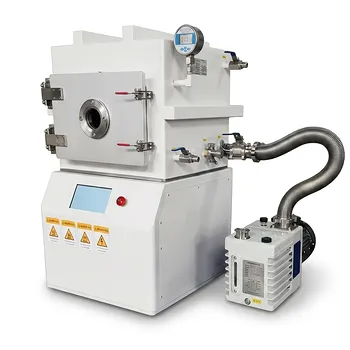
Precision Servo Driven Electric Vacuum Hot Press for Battery Research and Advanced Material Processing
Precision servo-driven electric vacuum hot press with compact 260mm chassis, programmable 7-inch touchscreen, oil-free actuation, and high-temperature capability for battery research and advanced material consolidation. Ideal for producing dense, uniform films and solid-state electrolytes with precise pressure and temperature control.
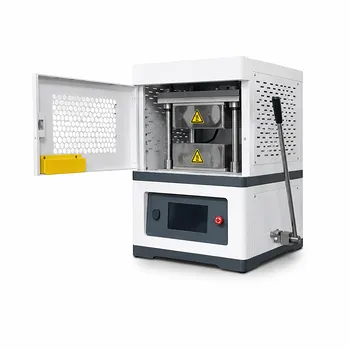
Solid-State Battery Laboratory Hydraulic Hot Press
The benchtop hydraulic hot press for solid-state battery labs delivers independent dual-platen heating up to 300°C, 10-ton force, and rapid water cooling for precise material consolidation, thermal laminating, and sample preparation. Ideal for solid-state electrolyte pressing and composite laminating.
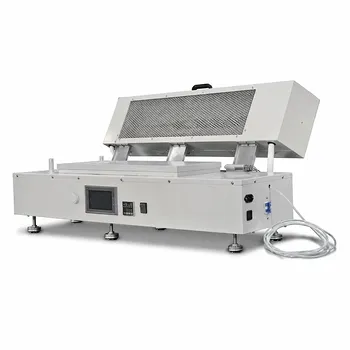
Automatic Coating Film Drying Machine Lithium Battery Laboratory Coating Machine
Automatic coating film drying machine and lithium battery laboratory coating machine with 130°C heating, adjustable coating speed, vacuum plate, precision scraper, programmable drying timer for 18650 electrode research smooth reproducible coatings across varied substrates compact bench scale development applications

Laboratory Hydraulic Pellet Press for XRF KBR FTIR Lab Press
KINTEK Lab Press Machines: Precision hydraulic presses for sample prep. Automatic, heated, and isostatic models for research labs. Get expert advice now!
Laboratory Hydraulic Hot Press for Solid-State Battery Electrolytes and Polymer Composites
Explore advanced uniform thermal pressing for solid-state battery electrolytes and polymer composites using a laboratory hydraulic hot press featuring independent dual-platen precise PID temperature control up to 300°C, programmable pressure, and automatic force compensation for reliable consistent results.