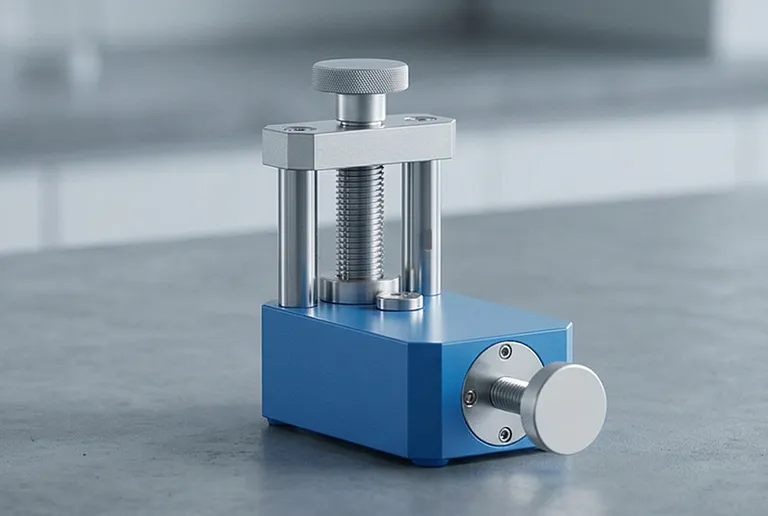
In the world of structural engineering, there is a profound difference between a pile of ingredients and a finished product.
Consider a mat of loose wood strands. On their own, they are fragile, chaotic, and incapable of carrying a load. But through the application of synchronized heat and pressure, they undergo a metamorphosis. They become Oriented Strand Lumber (OSL)—a structural titan.
This transformation is not an accident. It is a calculated act of thermomechanical processing facilitated by a heated laboratory press.
The Psychology of the Bond
At its core, material science is about managing relationships. In OSL, the relationship is between wood fibers and phenolic resins.
Left to themselves at room temperature, these components do nothing. They exist in a state of potential. The heated laboratory press acts as the external "will" that forces these materials to commit to a permanent structure.
The Thermal Catalyst
Heat is the primary motivator. To achieve the chemical cross-linking required for structural integrity, phenolic resins must reach a specific thermal threshold—typically around 180°C.
Without this precise temperature, the resin remains a passive liquid. With it, the resin molecules dance, reach out, and form rigid covalent bonds that lock the wood strands into place forever.
The Physical Compaction
If heat provides the motivation, pressure provides the discipline.
Applying ~10 MPa of pressure does more than just flatten the mat. It eliminates the "internal voids"—the microscopic pockets of air that act as failure points. High pressure ensures the resin doesn't just sit on the surface but is driven deep into the wood's microscopic textures, creating a mechanical interlock.
Precision Control: The Engineer’s Guardrail
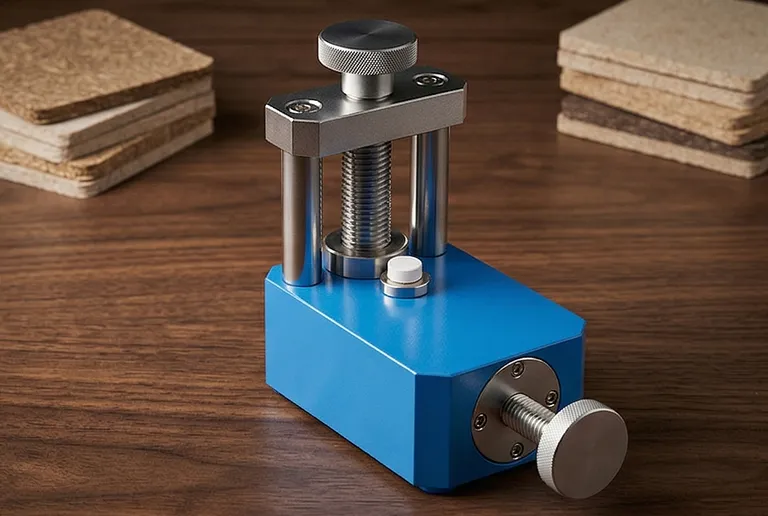
In a laboratory setting, the difference between a breakthrough and a failure is often a matter of a few degrees or a few seconds of "dwell time."
Balancing the Trade-offs
Engineers face a constant psychological battle against two extremes:
- Thermal Degradation: Too much heat, or heat applied for too long, breaks down the cellular structure of the wood. The lumber becomes brittle, losing its ability to bend before it breaks.
- Internal Rupture: Applying pressure too quickly can trap steam inside the mat. When the press opens, this trapped energy explodes outward, causing a "blowout" that ruins the sample.
| Parameter | The Mechanism | The Resulting Material Property |
|---|---|---|
| Controlled Heat (~180°C) | Chemical Cross-linking | Maximum Internal Bond Strength |
| High Pressure (~10 MPa) | Densification | Uniform Load Distribution |
| Mechanical Stops | Geometric Precision | Dimensional Stability & Accuracy |
| Dwell Time Management | Thermal Equilibrium | Prevention of Brittle Failure |
Creating Predictability in a Chaotic Material
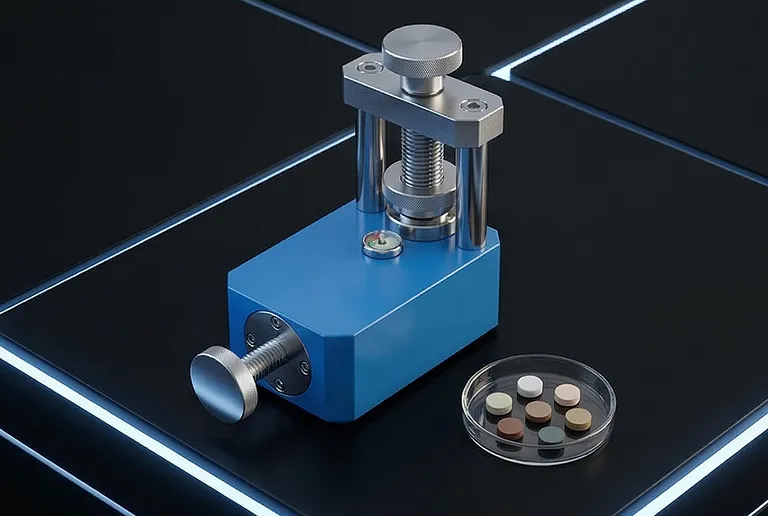
Wood is biological, which means it is inherently inconsistent. The heated laboratory press is the tool we use to impose order on that biology.
By using precision platens and programmable pressure cycles, researchers can ensure a uniform density profile from the surface of the OSL to its core. This uniformity is what allows a structural beam in a skyscraper to behave exactly how the architect predicted it would.
The KINTEK Solution: Precision as a Standard
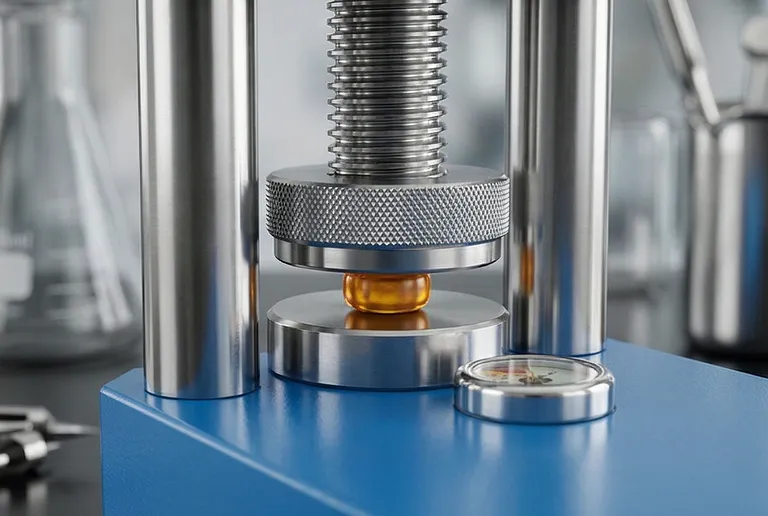
At KINTEK, we understand that the laboratory press is the bridge between a theoretical design and a physical reality. Our equipment is designed for the engineer who views precision not as an luxury, but as a requirement.
We offer a comprehensive suite of pressing solutions tailored for the rigors of material research:
- Heated Manual & Automatic Presses: For precise control over OSL curing cycles.
- Multifunctional & Glovebox-compatible Models: For specialized environments and advanced chemical handling.
- Isostatic Presses (Cold/Warm): Expanding the horizons of battery and composite research.
Whether you are optimizing the shear strength of a new structural composite or exploring the limits of wood-resin interaction, your results are only as reliable as your equipment’s consistency.
Refine your material morphology and achieve structural excellence with KINTEK’s industry-leading technology. Contact Our Experts
Related Products
- 24T 30T 60T Heated Hydraulic Lab Press Machine with Hot Plates for Laboratory
- Heated Hydraulic Press Machine with Heated Plates for Vacuum Box Laboratory Hot Press
- Automatic Heated Hydraulic Press Machine with Hot Plates for Laboratory
- Laboratory Split Manual Heated Hydraulic Press Machine with Hot Plates
- Automatic Heated Hydraulic Press Machine with Heated Plates for Laboratory
Related Articles
- The Invisible Forge: Why the Laboratory Press is the Soul of Nano-Composites
- The Architecture of Slow: Why Physical Precision Dictates Chemical Destiny
- The Architecture of Density: Why Pressure is the Silent Architect of Solid-State Batteries
- The Physics of Transparency: Why Pressure is the Silent Architect of Spectroscopic Clarity
- The Architecture of Certainty: Why the Laboratory Press is the Anchor of Material Science



















