The Hidden Variable
In the high-stakes world of polymer science, we often believe we are testing chemistry. We analyze cross-link densities, monodisperse distributions, and elemental ratios.
But there is a ghost in the machine: geometry.
If a fluoroelastomer specimen is supposed to be 2.0 mm thick but measures 2.1 mm, the thermal aging profile shifts. The heat conduction changes. The mass loss data, once thought to be a reflection of molecular stability, becomes a reflection of a physical irregularity.
Precision is not just a preference; it is the boundary between signal and noise.
The Architecture of Accuracy
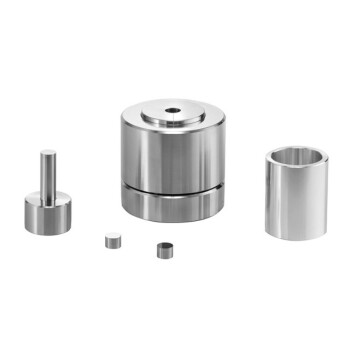
Precision metal molds are the silent architects of reliable data. They transform raw elastomer into a standardized "physical constant."
In surface elemental determination, the margin for error is razor-thin. When analyzing how thermal aging penetrates a material, a standardized thickness—exactly 1 mm or 2 mm—is the only way to ensure that depth profiling is comparable across different batches.
Eliminating Geometric Interference
- Heat Conduction: Uniform thickness ensures that thermal energy travels through the specimen at a predictable rate.
- Mass Loss: Standardized surface-area-to-volume ratios prevent skewed oxidation results.
- Comparative Integrity: If the physical dimensions are identical, any delta in the test results must be chemical.
The Psychology of the Edge
An engineer looks at a tensile bar and sees a shape. A failure analyst looks at the edge of that bar and sees a story.
A microscopic nick or a jagged edge from an inferior mold is more than a cosmetic flaw. In mechanical testing—tensile, flexural, or impact—these irregularities act as stress concentrators. They are the seeds of premature failure.
When a specimen fails because of a burr rather than its inherent formulation, the entire R&D cycle is misled. High-precision molds, such as those meeting ASTM D-638, ensure that the material's structural integrity is tested, not the mold’s deficiencies.
The Cost of Friction
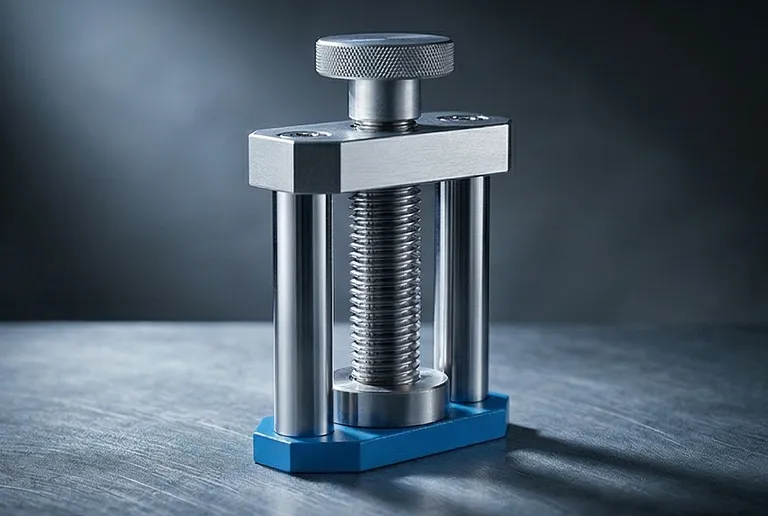
Precision carries its own set of demands. Metal molds require a level of maintenance that borders on the ritualistic.
Oxidation or surface degradation can transfer microscopic defects to the elastomer. Furthermore, certain high-performance fluoroelastomers exhibit "stiction"—a tendency to bond with the metal.
Without proper release agents or precise stripping techniques, the act of extracting a sample can cause mechanical injuries. These subtle tears can invalidate microstructure analysis before the specimen even reaches the microscope.
Strategic Selection: A Framework

To achieve repeatable results, the molding strategy must align with the analytical goal.
| Testing Focus | Critical Requirement | Analytical Impact |
|---|---|---|
| Thermal Stability | Strict Thickness (1mm/2mm) | Uniform heat penetration; accurate mass loss. |
| Mechanical Strength | Burr-Free Edges (ASTM) | Prevents eccentric loading and premature failure. |
| Chemical Analysis | Polished Surfaces | Eliminates impurity transfer and contamination. |
| Electromagnetic | Absolute Flatness | Eliminates air gaps; ensures reflection loss accuracy. |
The KINTEK Perspective
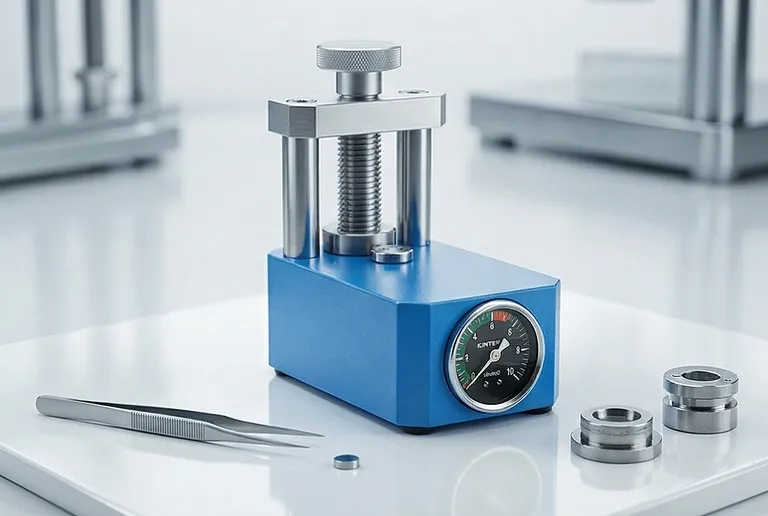
In the laboratory, the press is the forge where data is born. KINTEK approaches specimen preparation with a specialized focus on reducing experimental variance.
Standardization is the bedrock of discovery. By utilizing advanced heated presses and cold isostatic solutions, researchers can ensure that their specimens are not just "close enough," but mathematically exact.
Whether you are working in the volatile frontier of battery research or the rigors of aerospace seals, your data should reflect your chemistry—not the flaws of your process.
Ensure your specimens meet the highest standards of analytical truth. Contact Our Experts
Related Products
- Lab Anti-Cracking Press Mold
- Lab Polygon Press Mold
- XRF KBR Steel Ring Lab Powder Pellet Pressing Mold for FTIR
- XRF KBR Plastic Ring Lab Powder Pellet Pressing Mold for FTIR
- Lab Double Plate Heating Mold for Laboratory Use
Related Articles
- The Geometry of Energy: Why Graphite is the Soul of Advanced Sintering
- Beyond the Part Number: The Psychology of Sourcing Lab Press Components
- The Glass Transition Ritual: Why Heat is the Secret Language of High-Density Materials
- The Architecture of Contact: Why 360 MPa is the Threshold of Truth in Battery Research
- The Geometry of Resilience: Why High-Strength Molds Define Geopolymer Success