The Paradox of Biomass
In material science, there is a recurring tension between the chaotic and the controlled.
Seaweed particles are inherently messy. They are low-density, irregular, and chemically volatile. Yet, the goal of thermo-compression is to turn this "soft" organic matter into a "hard" structural board—a material with the predictability of engineered wood.
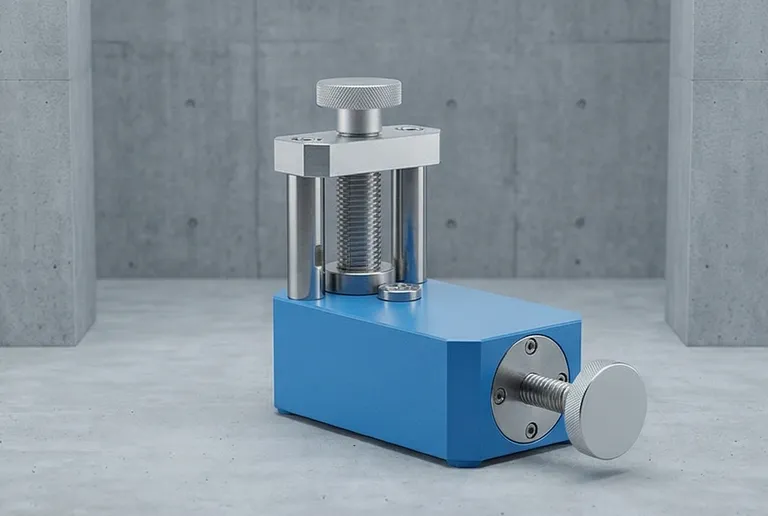
To bridge this gap, the equipment cannot be an afterthought. The mold is not merely a container; it is a high-precision pressure vessel where chemistry and physics meet under duress.
The Problem of Empty Space
Seaweed particles, in their raw state, are mostly air. Their bulk density is incredibly low, meaning they occupy a vast volume compared to their final form.
A standard flat press won't work. The material would simply squeeze out the sides like water from a sponge.
This is why the three-piece mold design is a systemic necessity:
- The Sleeve: It provides the "walls" to contain the initial high-volume load.
- The Base and Plunger: They act as the floor and ceiling, trapping the biomass in a sealed environment.
- The Compression Path: This setup allows the plunger to travel deep into the mold, slowly removing the air and forcing the particles into a dense composite.
The Psychology of High Tonnage
In engineering, as in life, things change under pressure.
To transform seaweed into a board with a thickness of 2.5 to 3.0 mm, we apply forces between 40 and 100 MPa. At these levels, "ordinary" metals behave like plastic. They flex, they bow, and eventually, they fail.
Why High-Strength Steel?
If a mold deforms by even a fraction of a millimeter, the internal structure of the particle board is compromised. You get "edge effect" defects or internal delamination.
High-strength steel provides the rigidity required to resist permanent deformation. It ensures that 100% of the hydraulic force is directed into the material, rather than being wasted on stretching the metal.
The Thermal Orchestra

Compression is only half the battle. To create a permanent bond, we need heat.
Seaweed contains natural polymers that act as binders, but they only "activate" when the temperature is uniform throughout the entire sample.
Steel is an exceptional conductor. It acts as a thermal bridge, rapidly moving heat from the hydraulic press platens to the core of the biomass. This prevents the "toasted sandwich" effect—where the outside is burnt while the inside remains loose and uncured.
| Feature | Engineering Function | Result for Research |
|---|---|---|
| High-Strength Steel | Resists 40-100 MPa | Zero mold deformation; consistent samples |
| Three-Piece Design | Volumetric containment | Manages low-density powder without spill |
| Polished Surfaces | Friction reduction | Clean demolding; no surface chipping |
| Thermal Conductivity | Rapid heat transfer | Uniform internal curing and bonding |
The Hidden Enemy: Chemistry
Engineers often forget that biomass is chemically active. When you heat seaweed, it releases moisture and, occasionally, acidic compounds.
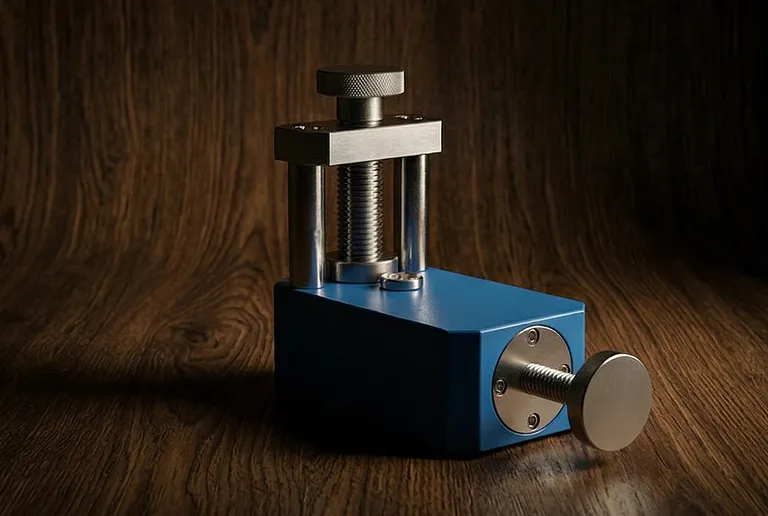
Using standard carbon steel is a recipe for failure. Over several cycles, the moisture causes oxidation (rust), and the acids cause pitting. This ruins the polished surface, making it nearly impossible to remove the finished board without breaking it.
The solution is high-grade stainless steel. It offers the same strength but adds a layer of chemical immunity, ensuring that the hundredth board you press is as perfect as the first.
Precision as a Strategy
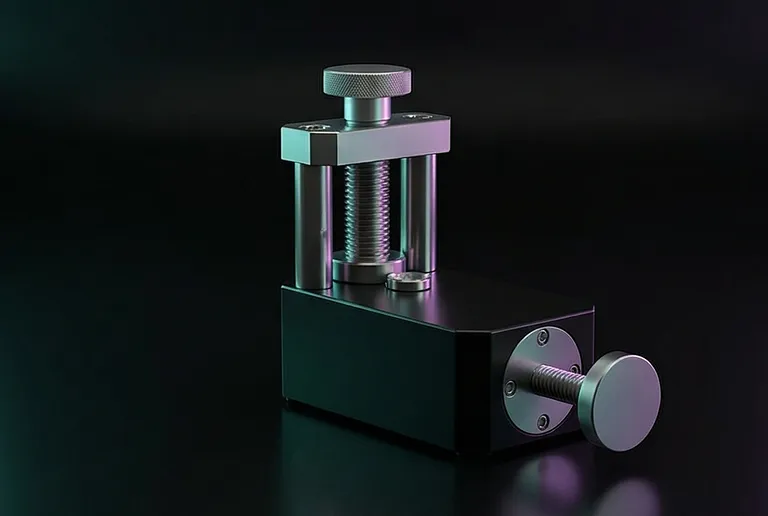
In the laboratory, the goal is repeatability. If your mold cannot maintain a uniform thickness of 2.5 mm across its entire surface, your data on tensile strength or moisture absorption becomes noise.
At KINTEK, we design pressing solutions for the researchers who know that the "small" details—the alloy of the mold, the polish of the plunger, the stability of the heat—are actually the most important factors in the room.
Whether you are working on the next generation of sustainable packaging or advanced battery electrolytes in a glovebox, the physics of the press remains the same: Excellence requires a rigid foundation.
Our range of manual, automatic, and heated presses is built to provide the exact environment your materials need to transform.
Achieve the precision your research deserves. Contact Our Experts
Related Products
- Lab Anti-Cracking Press Mold
- Lab Ring Press Mold for Sample Preparation
- Lab Polygon Press Mold
- Lab Round Bidirectional Press Mold
- Special Shape Lab Press Mold for Laboratory Applications
Related Articles
- The Geometry of Energy: Why Graphite is the Soul of Advanced Sintering
- Beyond the Part Number: The Psychology of Sourcing Lab Press Components
- The Glass Transition Ritual: Why Heat is the Secret Language of High-Density Materials
- The Architecture of Contact: Why 360 MPa is the Threshold of Truth in Battery Research
- The Tyranny of the Millimeter: Why Geometric Precision Dictates Fluoroelastomer Truth










