The Architecture of Certainty
In the pursuit of energy density, the laboratory is a place of forced isolation. We attempt to strip away the noise of the world to listen to the signal of a single material.
When working with $Li_4Ti_5O_{12}$ (LTO) half-cells, the primary obstacle to truth isn't the material's chemistry—it is the air we breathe.
To assemble a battery is to create a closed system. If that system is born in a room with even trace humidity, the data it produces is no longer a reflection of the material. It is a record of environmental contamination.
The Reactive Soul of Lithium
In an LTO half-cell, the counter electrode is almost always metallic lithium foil. Lithium is a material in a constant state of chemical tension.
The Kinetic Cost of an Oxide
The moment lithium meets oxygen or water vapor, it constructs its own prison. A passivation layer of lithium oxide ($Li_2O$) or hydroxide ($LiOH$) forms instantly.
- Interfacial Resistance: This film acts as a barrier to ion transport.
- Voltage Drift: Your readings will reflect the energy required to punch through the oxide, not the intrinsic kinetics of the LTO.
- Heat & Hazard: At a systemic level, these reactions are exothermic and unpredictable.
A high-purity argon glovebox is not just a workspace; it is a shield that preserves the "clean" surface necessary for authentic electrochemical exchange.
The Electrolyte’s Hidden Enemy
If the lithium foil is the heart of the cell, the electrolyte is the blood. Most modern cells rely on $LiPF_6$ (lithium hexafluorophosphate) salts.
The HF Chain Reaction
$LiPF_6$ has a fatal flaw: it is obsessively moisture-sensitive. When a single molecule of water enters the system, it triggers the production of hydrofluoric acid ($HF$).
- Hydrolysis: $LiPF_6 + H_2O \rightarrow POF_3 + 2HF + LiF$.
- Corrosion: $HF$ attacks the LTO active material and the metal current collectors.
- Decomposition: The organic solvents break down, leading to gas evolution and premature cell death.
By keeping moisture below 0.1 ppm, we ensure that the electrolyte remains a passive medium for ions rather than a corrosive agent for the cell components.
Engineering the Void: The 0.1 PPM Threshold
Why do engineers obsess over 0.1 parts per million (ppm)? Because in the world of battery research, small numbers have large consequences.
| Component | Risk of Exposure | The Argon Solution |
|---|---|---|
| Lithium Anode | Passivation ($Li_2O$) | Maintains active surface activity |
| Electrolyte ($LiPF_6$) | $HF$ Acid formation | Prevents chemical decomposition |
| LTO Material | Structural attack by acid | Guarantees long-term cyclic stability |
| Research Data | Artificial capacity loss | Ensures results reflect intrinsic properties |
A glovebox provides the repeatability that science demands. It removes the "weather" from the experiment.
The Engineer’s Trade-off
Maintaining a perfect vacuum of impurities is an exercise in systemic vigilance. It requires more than just a box; it requires a cycle of constant purification.
- Complexity: Working through thick rubber gloves slows the assembly process, demanding a higher level of technician skill.
- Maintenance: Catalyst regeneration and sensor calibration are the "hidden taxes" of high-end research.
- The Trap of False Positives: If a sensor drifts and oxygen creeps to 5 ppm, the researcher might blame the LTO's capacity fade on the chemistry, when the culprit was a faulty seal.
Precision Beyond the Atmosphere
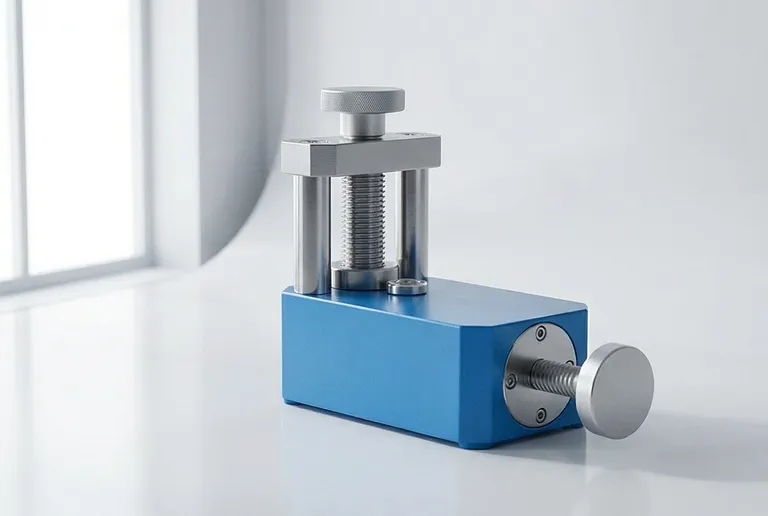
The environment handles the chemistry, but the physical assembly handles the performance. Even in a perfect argon atmosphere, the physical contact between the LTO and the current collector must be absolute.
This is where the tools of the trade meet the environment. At KINTEK, we understand that the integrity of your research depends on the harmony between environmental control and physical precision.
We provide the specialized laboratory pressing solutions—from manual and automatic presses to glovebox-compatible and isostatic models—designed to operate within the strict confines of your inert sanctuary. Whether you are optimizing LTO density or exploring the next generation of solid-state interfaces, your data is only as strong as the environment in which the battery was born.
To ensure your next breakthrough is built on a foundation of chemical truth, Contact Our Experts.
Related Products
Related Articles
- The Physics of Transparency: Why Pressure is the Silent Architect of Spectroscopic Clarity
- The Architecture of Density: Why Pressure is the Silent Architect of Solid-State Batteries
- The Geometry of Electrons: Why Surface Precision is the Silent Partner in SECM Research
- The Geometry of Ionic Flow: Why Precision Pressing Dictates Material Truth
- The Architecture of Heat: Why Sample Density Dictates the Truth in Metal Hydride Research
