High-purity zinc foil functions as the sacrificial anode within Zinc-Nitrate (Zn-NO3-) battery systems. Its primary role is to act as the electron source, undergoing oxidative dissolution during the discharge phase to release electrons. These electrons travel through an external circuit to the cathode, effectively driving the nitrate reduction reaction required to generate power.
By serving as a highly conductive and stable sacrificial material, high-purity zinc ensures the battery maintains efficient energy conversion and a consistent power output throughout its operation.
The Electrochemical Role of Zinc
Oxidative Dissolution
The core function of the zinc foil is to act as the system's fuel. During the discharge cycle, the zinc undergoes oxidative dissolution.
This means the physical zinc material breaks down chemically. This process releases the electrons necessary to create an electrical current.
Driving Nitrate Reduction
The electrons released by the zinc anode do not remain at the source. They are transferred via an external circuit to the cathode.
Once at the cathode, these electrons facilitate the reduction of nitrate (NO3-). Without the electron flow initiated by the zinc anode, this critical reaction cannot occur.
Performance Characteristics
Ensuring Stable Potential
A key requirement for any battery system is reliability. The high-purity zinc foil provides a stable potential output.
This stability prevents erratic voltage fluctuations. It ensures the battery delivers steady power to the connected load.
Maximizing Conductivity
Efficiency in a battery is often dictated by how easily electrons can move. The zinc foil offers excellent conductivity.
This property minimizes internal resistance. Consequently, it ensures high efficiency during energy conversion, reducing energy loss as heat.
Understanding the Operational Trade-offs
The Cost of Being "Sacrificial"
The term "sacrificial anode" implies a fundamental limitation. The zinc foil is physically consumed during the discharge process.
As the battery operates, the anode gradually dissolves. This eventual depletion limits the cycle life or requires the replacement of the anode material in certain system designs.
Reliance on Purity
The system's performance is tightly coupled with the quality of the material. The reference specifically specifies high-purity zinc.
Lower-grade zinc with impurities would likely compromise the "excellent conductivity" and "stable potential" cited as key benefits. Impurities could introduce resistance or inconsistent reaction rates.
Optimizing for Battery Efficiency
To maximize the effectiveness of a Zinc-Nitrate system, consider the following based on your specific performance goals:
- If your primary focus is Energy Efficiency: Prioritize the highest possible purity of zinc foil to maximize conductivity and reduce internal resistance during electron transfer.
- If your primary focus is Output Stability: Rely on the inherent chemical properties of the zinc anode to maintain a consistent voltage potential throughout the discharge phase.
High-purity zinc foil is not just a structural component; it is the active consumable fuel that dictates the efficiency and stability of the entire Zinc-Nitrate reaction.
Summary Table:
| Feature | Function in Zn-NO3- Battery |
|---|---|
| Primary Role | Sacrificial Anode (Electron Source) |
| Chemical Process | Oxidative Dissolution during discharge |
| Key Benefit | High Conductivity & Low Internal Resistance |
| Voltage Stability | Maintains consistent potential for steady power |
| Material Quality | High-purity zinc prevents erratic reaction rates |
Elevate Your Battery Research with KINTEK Precision
At KINTEK, we specialize in providing comprehensive laboratory pressing solutions that are essential for advanced energy storage research. Whether you are developing Zinc-Nitrate systems or next-generation battery technologies, our range of manual, automatic, heated, and glovebox-compatible presses, alongside our isostatic pressing equipment, ensures your materials reach peak performance.
Why choose KINTEK?
- Precision Engineering: Ideal for preparing high-purity anodes and electrolyte interfaces.
- Versatile Solutions: Equipment tailored for both standard lab settings and specialized glovebox environments.
- Expert Support: We help battery researchers achieve uniform material density and superior conductivity.
Ready to optimize your lab's output? Contact KINTEK today to find the perfect pressing solution for your research needs!
References
- Ming Mu, Wei Song. Insights into interfacial water and key intermediates on Cu <sub>95</sub> Co <sub>5</sub> aerogels for electrocatalytic nitrate-to-ammonia conversion. DOI: 10.1039/d5sc04633e
This article is also based on technical information from Kintek Solution Knowledge Base .
Related Products
- Lab Cylindrical Press Mold for Laboratory Use
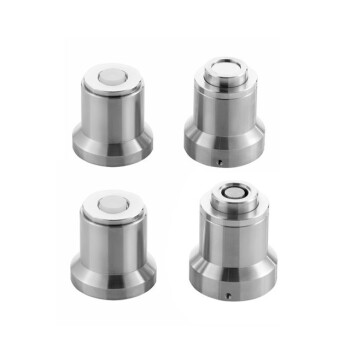
- Lab Button Battery Disassembly and Sealing Mold
- Warm Isostatic Press for Solid State Battery Research Warm Isostatic Press
- Lab Double Plate Heating Mold for Laboratory Use
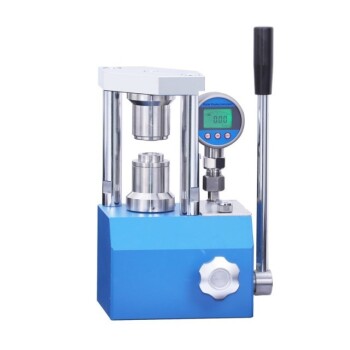
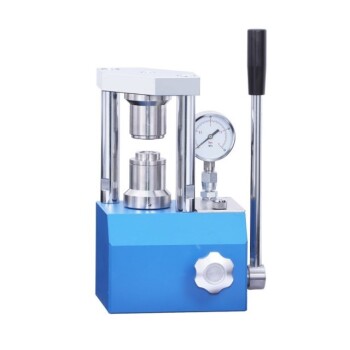
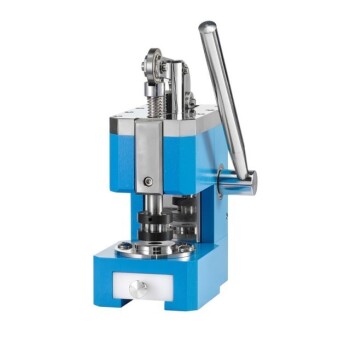
- Button Battery Sealing Machine for Button Batteries
People Also Ask
- What is the purpose of incorporating cartridge heaters into a lab press mold for MLCC block compression? Optimize Results
- Why is precise cooling management of the lab press mold necessary? Protect Core Integrity in Thermoforming
- What is the function of a pressing tool in thermoplastic panels? Master Precision Shaping & Fusion Bonding
- Why is a high-performance laboratory molding press critical for in-situ electrolyte formation? Unlock Battery Success
- How does the geometry of laboratory molds influence mycelium-based composites? Optimize Density and Strength