The fundamental role of an inert gas environmental protection chamber is to create a controlled, oxygen-free environment that prevents the chemical degradation of sensitive precursors. In the specific context of nano-pyrite synthesis, this sealed system—typically filled with argon—serves as a critical barrier against the oxidation of sodium polysulfide solutions.
The chamber is not merely a storage vessel; it is an active quality control tool. By strictly excluding oxygen, it ensures the chemical stability of precursors throughout the entire process, directly guaranteeing the purity and stoichiometric accuracy of the final nano-pyrite product.
The Mechanism of Precursor Protection
Shielding Polysulfide Solutions
The primary chemical challenge in synthesizing nano-pyrite is the high reactivity of sodium polysulfide solutions.
When exposed to air, these solutions oxidize rapidly. The inert gas chamber eliminates this risk by replacing the reactive atmosphere with a stable gas like argon.
Stability During Heating
The risk of oxidation increases significantly as temperatures rise during synthesis.
The chamber maintains a protective environment not only during room temperature storage but also during the critical heating process. This ensures that the precursors remain stable even as thermal energy is added to drive the reaction.
Impact on Material Quality
Guaranteeing Stoichiometry
To create high-quality nano-pyrite, the ratio of elements (stoichiometry) must be precise.
If oxygen infiltrates the system, it alters the composition of the polysulfide solution. The inert chamber preserves the integrity of the reactants, ensuring the final product maintains the correct sulfur-to-iron ratio.
Ensuring Product Purity
Contaminants introduced during synthesis can ruin the electrochemical or physical properties of nanomaterials.
By preventing the formation of unwanted oxides, the chamber ensures the final nano-pyrite is chemically pure. This purity is essential for the material's performance in its intended application.
Common Pitfalls to Avoid
The Risk of Incomplete Sealing
While the concept of an inert chamber is sound, its effectiveness relies entirely on the integrity of the seal.
If the system is not perfectly sealed, argon may leak out and oxygen may seep in. Even trace amounts of oxygen can compromise the chemical stability of the polysulfide solution, rendering the chamber ineffective.
Overlooking the Storage Phase
A common mistake is focusing on the inert atmosphere only during the active heating reaction.
However, degradation can occur before the reaction even begins. The reference emphasizes that protection is critical during room temperature storage as well to prevent pre-reaction oxidation.
Making the Right Choice for Your Synthesis
To ensure the successful synthesis of nano-pyrite, you must treat the atmospheric control as a variable as critical as temperature or time.
- If your primary focus is Phase Purity: Verify the seal integrity of your chamber before every run to strictly exclude oxygen from the sodium polysulfide solution.
- If your primary focus is Reproducibility: Ensure the inert environment is maintained consistently during both the storage of precursors and the active heating phases.
Rigorous environmental control is the baseline requirement for producing high-quality, stoichiometric nano-pyrite.
Summary Table:
| Feature | Role in Nano-Pyrite Synthesis | Benefit to Final Material |
|---|---|---|
| Atmosphere Control | Replaces oxygen with Argon gas | Prevents oxidation of sodium polysulfide |
| Thermal Protection | Maintains inertness during heating | Ensures stability at high reaction temperatures |
| Storage Security | Shields precursors at room temperature | Prevents pre-reaction chemical degradation |
| Stoichiometry Guard | Preserves sulfur-to-iron ratios | Guarantees precise chemical composition |
| Seal Integrity | Blocks trace oxygen infiltration | Ensures consistent product purity & quality |
Elevate Your Material Research with KINTEK Precision
Achieving stoichiometric accuracy in nano-pyrite synthesis requires more than just chemistry—it requires a flawless environment. KINTEK specializes in comprehensive laboratory pressing and environmental solutions designed for the most sensitive applications, including battery research and advanced nanomaterials.
From glovebox-compatible models to manual and automatic heated presses, our equipment is engineered to integrate seamlessly into your inert gas workflows. Don't let oxidation compromise your results.
Ready to optimize your synthesis process? Contact our experts today to find the perfect solution for your lab's unique requirements.
References
- Brijesh Kaler, Mainak Das. Nano‐pyrite as a plant hormone regulator: Emulating seed hormopriming. DOI: 10.1002/moda.23
This article is also based on technical information from Kintek Solution Knowledge Base .
Related Products
- Laboratory Hydraulic Press Lab Pellet Press Machine for Glove Box
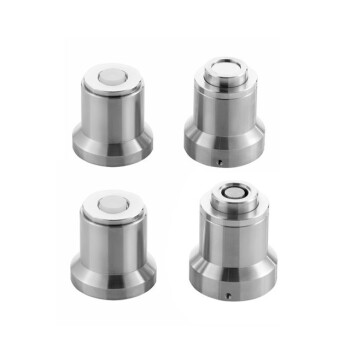
- Lab Button Battery Disassembly and Sealing Mold
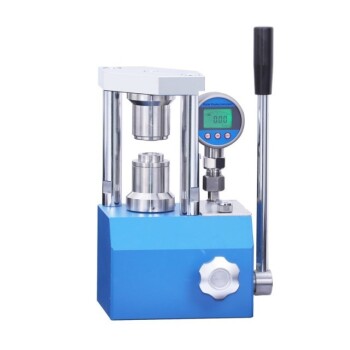
- Button Battery Sealing Press Machine for Lab
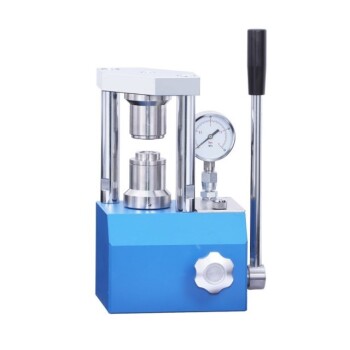
- Button Battery Sealing Machine for Button Batteries
- Heated Hydraulic Press Machine with Heated Plates for Vacuum Box Laboratory Hot Press
People Also Ask
- How does a laboratory hydraulic press contribute to the preparation of Li3-3xScxSb samples? Optimize Ionic Conductivity
- What is the function of a laboratory hydraulic press in FT-IR of curcumin-coated MWCNTs? Achieve Optical Clarity.
- Why is a laboratory hydraulic press required for compression molding boron-siloxane? Solve High-Loading Density Challenges
- What role does a laboratory hydraulic press play in the preparation of piezoelectric ceramic discs for DC-PG? | KINTEK
- What role does a laboratory hydraulic press play in reaction pellets? Optimizing Lunar Soil and Metal Fuel Density