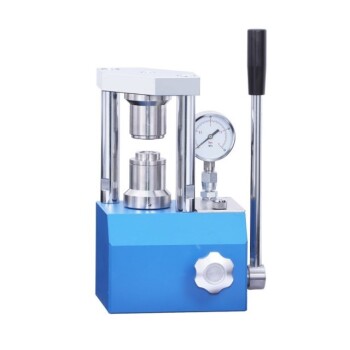
The defining trend in Cold Isostatic Pressing (CIP) technology is the aggressive integration of advanced automation and real-time control systems. This shift is most prominent in high-volume "dry-bag" processes, where sophisticated algorithms and sensors are replacing manual oversight to drive precision and efficiency.
As CIP technology matures, the industry is moving from static, operator-dependent cycles to dynamic, self-correcting systems. By leveraging real-time data to control pressure and temperature, manufacturers are significantly reducing error rates and manual intervention.
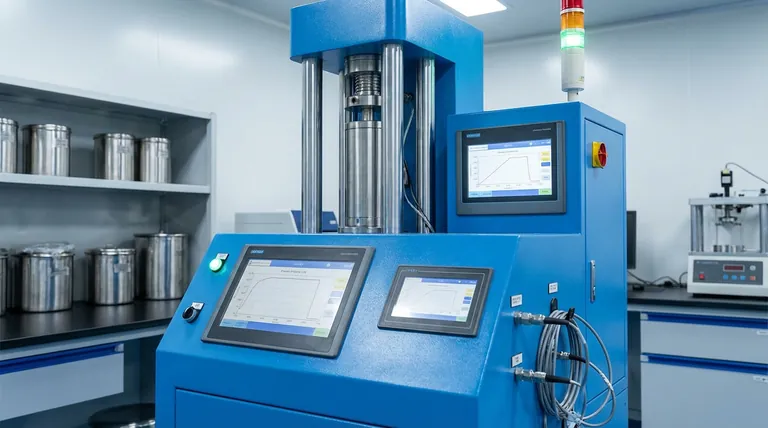
The Evolution of Process Control
Sophisticated Sensor Integration
The modern CIP landscape is characterized by the deployment of highly sensitive monitoring devices. These advanced sensors provide a continuous stream of data regarding the internal conditions of the pressure vessel.
Real-Time Algorithmic Adjustments
Data collection is now paired with control algorithms capable of instant reaction. These systems monitor critical parameters—specifically pressure and temperature—and automatically adjust settings in real-time to maintain optimal conditions.
Eliminating Manual Variability
The primary goal of these control systems is the reduction of manual intervention. By automating adjustments, manufacturers ensure that every cycle mirrors the last, removing the inconsistencies inherent in human operation.
Impact on High-Volume Manufacturing
Optimizing the Dry-Bag Process
This trend is having the greatest impact on the "dry-bag" process, which is designed for high-volume production. Automation allows this method to achieve faster cycle times while maintaining strict quality standards.
Precision at Scale
For mass production, slight deviations in pressure can result in significant scrap rates. Automated controls lock in precision, ensuring uniform density and structural integrity across thousands of parts.
Understanding the Trade-offs
Complexity and Upfront Cost
While automation enhances performance, it raises the initial barrier to entry. Implementing advanced sensors and control logic requires a higher capital investment compared to traditional, manually operated systems.
Maintenance and Technical Expertise
The shift toward digital control introduces new maintenance challenges. Facilities must ensure they have the technical expertise to troubleshoot complex sensor loops and software algorithms, rather than just mechanical components.
Making the Right Choice for Your Goals
Deciding whether to invest in these advanced systems depends largely on your production scale and tolerance for variability.
- If your primary focus is high-volume consistency: Prioritize "dry-bag" systems with integrated algorithmic controls to minimize cycle time and eliminate human error.
- If your primary focus is low-volume, custom prototyping: Evaluate whether the high cost of advanced automation offers a necessary ROI, or if manual precision is sufficient for your throughput.
Embracing this trend enables a transition from reactive manufacturing to proactive, data-driven process assurance.
Summary Table:
| Aspect of Automation | Traditional System | Modern Automated System |
|---|---|---|
| Process Control | Static, operator-dependent cycles | Dynamic, self-correcting, real-time adjustments |
| Key Driver | Manual oversight | Sophisticated algorithms and sensors |
| Impact on Consistency | Prone to human variability | High repeatability and uniformity |
| Best Suited For | Low-volume prototyping | High-volume 'dry-bag' manufacturing |
| Primary Benefit | Lower upfront cost | Precision at scale, reduced error rates |
Ready to achieve precision at scale with your Cold Isostatic Pressing?
At KINTEK, we specialize in advanced lab press machines, including automated isostatic presses designed for high-volume consistency. Our systems integrate the sophisticated sensors and control logic detailed above, helping you eliminate manual variability and reduce scrap rates.
Let's discuss how our automated CIP solutions can drive efficiency and quality in your laboratory or production line.
Contact our experts today for a personalized consultation!
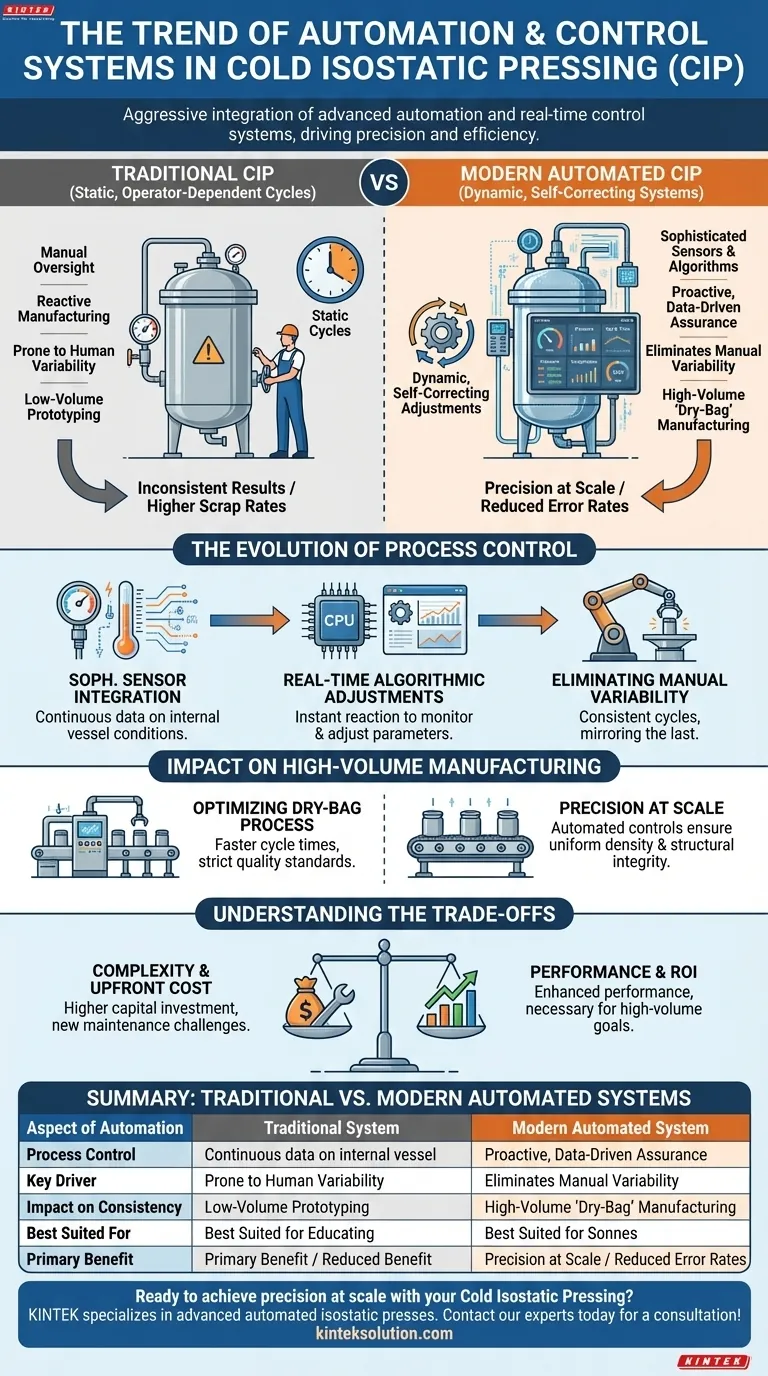
Visual Guide
Related Products
- Electric Lab Cold Isostatic Press CIP Machine
- Electric Split Lab Cold Isostatic Pressing CIP Machine
- Automatic Lab Cold Isostatic Pressing CIP Machine
- Manual Cold Isostatic Pressing CIP Machine Pellet Press
- Heated Hydraulic Press Machine with Heated Plates for Vacuum Box Laboratory Hot Press
People Also Ask
- What are the applications of electric lab cold isostatic presses in research settings? Advance Material R&D with High-Pressure CIPs
- What role do electric lab cold isostatic presses play in industrial contexts? Bridge R&D and Manufacturing with Precision
- How does electrical Cold Isostatic Pressing (CIP) contribute to cost savings? Unlock Efficiency and Reduce Expenses
- What are some research applications of electric lab CIPs? Unlock Uniform Powder Densification for Advanced Materials
- What are the characteristics of standard off-the-shelf electric lab CIP solutions? Achieve Immediate, Cost-Effective Processing