The Invisible Barrier: Voids and the Physics of Failure
In the laboratory, loose powder is a state of chaos. For MONC(Li) electrolytes, this chaos is the enemy of performance.
At the microscopic level, electrolyte powders are filled with air gaps. These macroscopic voids are more than just "empty space"; they are physical barriers that halt the migration of lithium ions.
To transform this powder into a functional component, we must eliminate the noise. This is where the laboratory press transcends being a simple tool and becomes a precision instrument of architecture.
The Geometry of Ion Transport
For a lithium ion to move, it requires a continuous pathway.
When we apply a specific, constant pressure—often calibrated precisely to 10 MPa—we aren't just squishing material. We are inducing plastic deformation.
- Particle Rearrangement: Forcing micron-sized particles to fill the gaps.
- Interface Reduction: Minimizing contact resistance by bonding particles together.
- The Highway Effect: Creating rapid migration channels for ions to travel through a dense, homogeneous solid.
Without precise control, the "highway" is broken. You end up with "noisy" data—electrochemical measurements that reflect the flaws of the pellet rather than the potential of the material.
The Paradox of the Brittle Barrier
The ideal solid electrolyte is a paradox: it must be incredibly thin to reduce resistance, yet robust enough to act as a physical shield.
Lithium dendrites are the "ghosts in the machine." They grow through microscopic pores, seeking a path to short-circuit the cell.
A dense, high-strength pellet—achieved through controlled densification—is the only defense.
| Requirement | Impact on MONC(Li) Pellet | Research Benefit |
|---|---|---|
| Densification | Eliminates macroscopic voids | Maximizes ion migration rates |
| Particle Contact | Induces plastic deformation | Minimizes interface resistance |
| Structural Strength | Creates a robust physical barrier | Prevents dendrite short circuits |
| Precision Control | Uniform thickness; no cracks | Yields repeatable, accurate data |
The Psychology of Repeatability
In research, the most dangerous variable is "almost the same."
Success in the lab is rarely about the single, perfect result. It is about the ability to produce that result 100 times in a row.
A manual press relies on the "feel" of the operator. An automatic, high-precision press relies on the physics of the machine. By removing human variability, you ensure that every MONC(Li) pellet has the same density, the same thickness, and the same structural integrity.
This is not just about efficiency; it is about the integrity of the scientific record.
Navigating the Mechanical Limits
There is a fine line between densification and destruction.
Excessive pressure leads to micro-fractures in brittle ceramics. Insufficient pressure leaves you with a "green" pellet—fragile, porous, and prone to failure.
Mastering the trade-offs:
- For Conductivity: Focus on constant, precise 10 MPa loads for a void-free microstructure.
- For Safety: Prioritize maximum densification to inhibit dendrite penetration.
- For Interface Stability: Use wide-range regulation to bond metallic anodes without crushing the electrolyte.
Engineering the Perfect Equilibrium
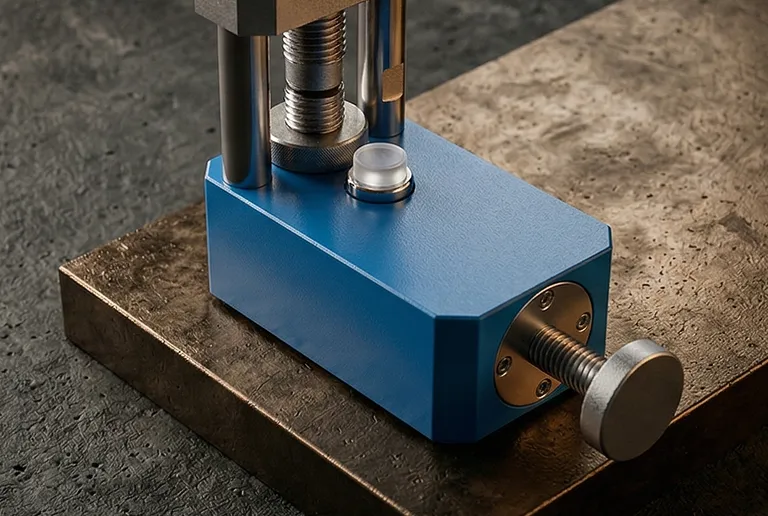
Precision is the backbone of high-performance electrolyte development. At KINTEK, we understand that the difference between a breakthrough and a failure often comes down to a few megapascals of pressure.
Our suite of laboratory pressing solutions—from glovebox-compatible manual models to advanced isostatic presses—is designed to eliminate the variables that compromise your research. We provide the tools to turn your powder into power, ensuring that your MONC(Li) pellets provide the electrochemical performance and mechanical reliability your work deserves.
Related Products
- Warm Isostatic Press for Solid State Battery Research Warm Isostatic Press
- Button Battery Sealing Press Machine for Lab
- Laboratory Hydraulic Press Lab Pellet Press Button Battery Press
- Lab Infrared Press Mold for Laboratory Applications
- Electric Lab Cold Isostatic Press CIP Machine
Related Articles
- How Warm Isostatic Pressing Transforms High-Performance Manufacturing
- How Warm Isostatic Pressing Optimizes Material Performance for Industrial Applications
- The Pressure to Be Perfect: How Hot Isostatic Pressing Achieves Absolute Material Integrity
- The Physics of Patience: Why Hot Isostatic Pressing Trades Speed for Certainty
- The Enemy Within: How Hot Isostatic Pressing Forges Perfect Material Integrity