Lithium metal foil is the preferred material for direct contact prelithiation because its physical structure ensures complete, uniform coverage of the negative electrode. While lithium metal powder suffers from handling difficulties and material loss, foil provides a stable, continuous format with controllable thickness (e.g., 100 micrometers) that simplifies the process by eliminating the need for additional solvents.
The Core Insight Optimizing prelithiation is less about the material chemistry and more about process control. Foil is preferred because it turns a complex distribution problem into a simple mechanical application, guaranteeing consistent ion intercalation without the volatility of powders.
Achieving Uniformity and Performance
The Power of Continuous Form
The primary advantage of lithium foil is its flat and continuous physical form.
Because it is a solid sheet rather than a collection of particles, it covers the negative electrode surface completely. This physical consistency is critical for ensuring that lithium is available to every part of the active material.
Ensuring Even Intercalation
Uniform contact leads directly to uniform lithium-ion intercalation.
When the lithium source is uneven—as can happen with powders—hotspots or dead zones can occur. Foil ensures that the prelithiation process proceeds evenly across the entire surface area of the electrode, maximizing battery performance.
Manufacturing and Handling Efficiency
Eliminating Solvent Complexity
A major operational benefit of foil is that it requires no additional solvents.
Lithium metal foil can be applied directly to the electrode. In contrast, powder-based methods often require suspension in solvents or complex binders to adhere to the electrode, adding steps and chemical variables to the manufacturing line.
Precision Through Thickness Control
Foil allows manufacturers to select a specific, controllable thickness, such as 100 micrometers.
This precise dimensioning acts as a metering system, ensuring the exact amount of lithium required is introduced to the cell. This level of dosage control is significantly harder to achieve with loose particulate matter.
Common Pitfalls: The Challenges of Powder
Handling Stabilized Lithium Metal Powder (SLMP)
While powder (SLMP) is an alternative, it introduces significant handling difficulties.
The primary reference notes that SLMP is difficult to manipulate effectively in a production environment. The particulate nature of the material makes it harder to transport and apply with the same rigor as a solid roll of foil.
The Risk of Material Loss
Powders are inherently prone to loss during processing.
Because SLMP consists of fine particles, a percentage of the material can be lost to the environment or processing equipment during application. This not only wastes expensive lithium but also creates inconsistency in the final prelithiation dosage.
Making the Right Choice for Your Goal
To maximize the efficiency of your prelithiation process, align your material choice with your manufacturing priorities.
- If your primary focus is Process Simplicity: Choose lithium foil to eliminate the need for solvent management and complex handling equipment.
- If your primary focus is Electrochemical Consistency: Rely on foil’s continuous surface to ensure uniform ion intercalation across the entire electrode.
By utilizing specific thickness foil, you replace the variability of powder distribution with the precision of engineered components.
Summary Table:
| Feature | Lithium Metal Foil | Lithium Metal Powder (SLMP) |
|---|---|---|
| Physical Form | Continuous, flat sheet | Fine particulate matter |
| Coverage | Complete and uniform | Prone to hotspots and gaps |
| Solvent Use | None (Dry application) | Often requires solvent suspension |
| Dose Control | High (via specific thickness) | Low (prone to material loss) |
| Handling | Simple mechanical application | Difficult; requires specialized equipment |
Maximize Your Battery Research Precision with KINTEK
Transitioning from lab-scale concepts to high-performance battery prototypes requires the right equipment and materials. KINTEK specializes in comprehensive laboratory pressing solutions, providing the tools necessary to achieve uniform contact and precise pressure for electrode manufacturing.
Whether you are working with lithium foil application or developing next-generation energy storage, our range of manual, automatic, heated, and glovebox-compatible presses, alongside our isostatic press models, ensures your battery research is consistent and scalable.
Ready to elevate your battery manufacturing process? Contact us today to find the perfect solution for your research needs!
References
- Minji Kang, Cheol-Hwi Ryu. Study on Direct-Contact Prelithiation of Soft Carbon Anodes Using Lithium Foil for Lithium-Ion Capacitors. DOI: 10.3390/en18092276
This article is also based on technical information from Kintek Solution Knowledge Base .
Related Products
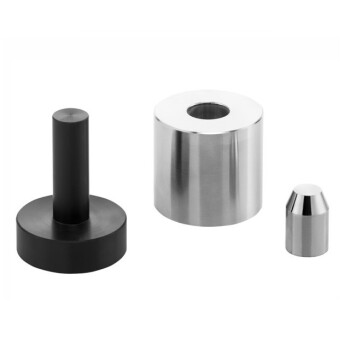
- Lab Cylindrical Press Mold for Laboratory Use
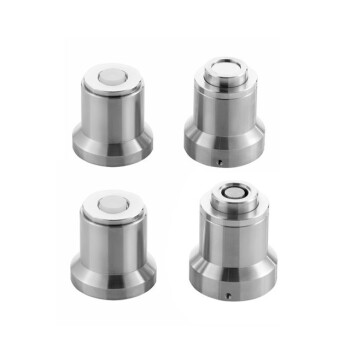
- Lab Button Battery Disassembly and Sealing Mold
- Warm Isostatic Press for Solid State Battery Research Warm Isostatic Press
- Lab Double Plate Heating Mold for Laboratory Use
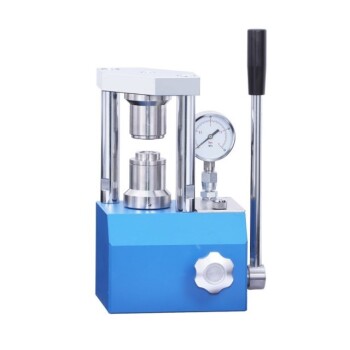
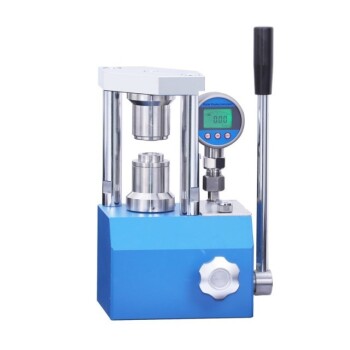
- Manual Button Battery Sealing Machine for Battery Sealing
People Also Ask
- What is the purpose of incorporating cartridge heaters into a lab press mold for MLCC block compression? Optimize Results
- What is the function of a pressing tool in thermoplastic panels? Master Precision Shaping & Fusion Bonding
- Why is precise cooling management of the lab press mold necessary? Protect Core Integrity in Thermoforming
- Why is a high-performance laboratory molding press critical for in-situ electrolyte formation? Unlock Battery Success
- How does the geometry of laboratory molds influence mycelium-based composites? Optimize Density and Strength