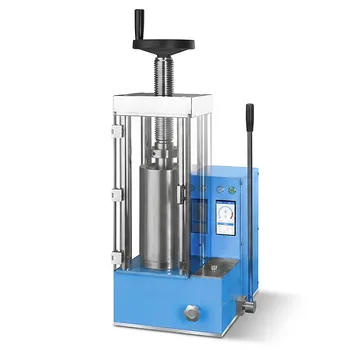
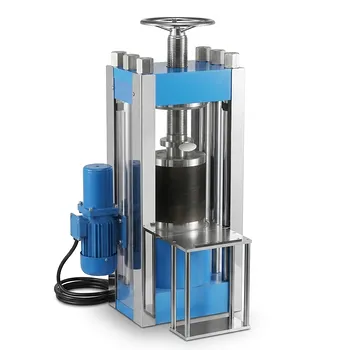
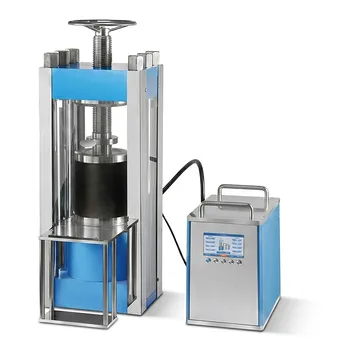
The Cold Isostatic Pressing (CIP) process ensures predictable shrinkage fundamentally by creating a highly uniform density throughout the unsintered "green" part. Unlike other methods that may leave density gradients, CIP applies high pressure from all directions, compacting the material evenly. This uniformity guarantees that when the part contracts under heat, it does so consistently, preserving the intended shape and dimensions.
Core Insight: The root cause of warping and unpredictable deformation during sintering is uneven density in the pre-fired stage. CIP solves this by ensuring the material is compacted isotropically, locking in dimensional stability before the heating process even begins.
The Mechanics of Uniform Compaction
Achieving Isostatic Pressure
To understand shrinkage, you must first look at how the powder is compacted. CIP applies pressure equally from every angle using a fluid medium.
This eliminates the friction and pressure gradients typically found in uniaxial die pressing, where pressure is applied from only one or two directions.
Eliminating Density Gradients
The primary result of this multi-directional pressure is a green part with consistent density from the core to the surface.
Because the material is packed tightly and evenly, there are no "loose" or "dense" spots within the internal structure. This homogeneity is the critical factor for controlling behavior during thermal processing.
From Green State to Final Form
Consistent Material Contraction
Sintering causes material to densify and pores to close, leading to volume reduction. If the initial density varies, high-density areas shrink less than low-density areas, causing distortion.
With CIP, the uniform starting density ensures that the rate of contraction is identical throughout the entire geometry.
Maintaining Dimensional Accuracy
Because the shrinkage is uniform, it becomes mathematically predictable.
Engineers can calculate the exact scaling factor required for the mold, knowing the final product will adhere to those dimensions without warping or cracking.
Accelerating the Sintering Cycle
In addition to stability, CIP products exhibit high green strength—the structural integrity of the part before firing.
This strength allows for more aggressive, faster sintering schedules compared to other methods, improving overall production efficiency without risking the part's integrity.
Understanding the Trade-offs
Predictable Does Not Mean Zero
It is crucial to distinguish between predictable shrinkage and zero shrinkage. CIP parts will still shrink significantly as they densify.
The advantage is not that the dimensions remain static, but that they change in a way that can be accurately forecasted and compensated for during the design phase.
Process Dependencies
While CIP improves sintering speed, the quality of the result still depends on the quality of the powder and the fill.
If the initial powder distribution in the mold is poor, CIP cannot completely correct for voids or segregation, which would reintroduce unpredictability during sintering.
Making the Right Choice for Your Goal
When evaluating whether CIP will solve your manufacturing challenges, consider your specific priorities:
- If your primary focus is dimensional precision: Rely on CIP to create the uniform density required to prevent warping and ensure the final part matches your specific geometric tolerances.
- If your primary focus is production efficiency: Leverage the high green strength of CIP parts to implement faster sintering cycles, effectively reducing your overall processing time.
By stabilizing the density of the green part, you transform sintering from a variable risk into a controlled, calculable step in your manufacturing line.
Summary Table:
| Feature | Cold Isostatic Pressing (CIP) | Uniaxial Die Pressing |
|---|---|---|
| Pressure Direction | Equal from all directions (Isostatic) | One or two directions |
| Density Gradient | High uniformity throughout the part | Significant gradients (loose/dense spots) |
| Sintering Result | Predictable, uniform contraction | Risk of warping and distortion |
| Green Strength | High (allows for faster sintering) | Moderate to low |
| Shape Capability | Complex and large-scale geometries | Limited to simple, shallow shapes |
Achieve Unmatched Dimensional Precision with KINTEK
Don’t let unpredictable shrinkage compromise your research or production. KINTEK specializes in comprehensive laboratory pressing solutions designed to eliminate density gradients and ensure structural integrity. Whether you are working on advanced battery research or high-performance ceramics, our range of manual, automatic, heated, and glovebox-compatible models, alongside our Cold and Warm Isostatic Presses (CIP/WIP), provides the isotropic compaction you need for flawless sintering.
Ready to transform your manufacturing process into a controlled, calculable success? Contact us today to find the perfect pressing solution for your lab!
Related Products
- Electric Lab Cold Isostatic Press CIP Machine
- Automatic Lab Cold Isostatic Pressing CIP Machine
- Electric Split Lab Cold Isostatic Pressing CIP Machine
- Manual Cold Isostatic Pressing CIP Machine Pellet Press
- Electric Isostatic Pressing Machine 40 Tons Automatic Laboratory Powder Compacting Press
People Also Ask
- What are the applications of electric lab cold isostatic presses in research settings? Advance Material R&D with High-Pressure CIPs
- What role do electric lab cold isostatic presses play in industrial contexts? Bridge R&D and Manufacturing with Precision
- How does electrical Cold Isostatic Pressing (CIP) contribute to cost savings? Unlock Efficiency and Reduce Expenses
- What are some research applications of electric lab CIPs? Unlock Uniform Powder Densification for Advanced Materials
- What are the characteristics of standard off-the-shelf electric lab CIP solutions? Achieve Immediate, Cost-Effective Processing