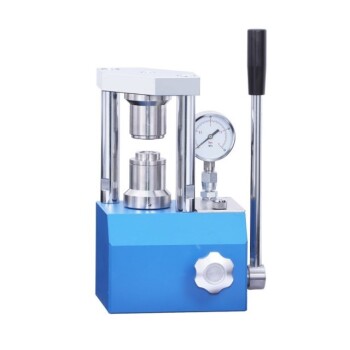
3mol% Yttria-Stabilized Zirconia (YSZ) powder is the premier choice for high-performance ceramics because of its exceptional balance of physicochemical properties. Upon forming and sintering, this specific composition delivers high hardness, superior fracture toughness, and outstanding mechanical strength, making it the standard for demanding structural applications.
Core Takeaway 3mol% YSZ is not merely a raw material; it is a foundational matrix that allows for the creation of defect-free, fully dense ceramics. Its selection is driven by its ability to maintain structural integrity and respond perfectly to advanced processing techniques like Cold Isostatic Pressing (CIP).
The Physicochemical Advantage
Unmatched Mechanical Properties
The primary reason engineers select 3mol% YSZ is its mechanical resilience. After the sintering process, this material exhibits exceptional mechanical strength and high hardness, rendering it suitable for environments where durability is paramount.
Superior Fracture Toughness
Unlike many conventional ceramics which are brittle, 3mol% YSZ possesses superior fracture toughness. This property prevents catastrophic failure under stress, a critical requirement for safety-critical components in structural engineering and biomaterials.
Synergy with Advanced Processing
Optimization for Cold Isostatic Pressing (CIP)
3mol% YSZ serves as an ideal matrix for studying and utilizing Cold Isostatic Pressing (CIP). This powder is specifically capable of achieving tighter and more uniform particle packing when subjected to omnidirectional high pressure.
Eliminating Structural Defects
Standard die pressing often creates internal pressure imbalances and density gradients due to mold wall friction. 3mol% YSZ powder, when processed via CIP (at pressures such as 200 MPa), eliminates these gradients.
Achieving Full Density
The interaction between 3mol% YSZ and high-pressure processing is critical for final performance. This combination allows for the creation of fully dense, defect-free substrates. This density is essential for maximizing properties like ionic conductivity and overall structural integrity.
Understanding the Process Dependencies
The Limitation of Raw Material Alone
While 3mol% YSZ powder has superior intrinsic properties, it cannot overcome poor processing on its own. The raw material relies on uniform pressure application to realize its potential.
The Risk of Density Gradients
Without a process like CIP to complement the powder, the ceramic block risks retaining density gradients. These inconsistencies can lead to internal weaknesses, undermining the very mechanical advantages (strength and toughness) that defined the material choice in the first place.
Making the Right Choice for Your Goal
If your primary focus is Structural Integrity: Prioritize 3mol% YSZ for its high fracture toughness and hardness, ensuring the material can withstand significant mechanical loads without failure.
If your primary focus is Manufacturing Optimization: Utilize 3mol% YSZ in conjunction with Cold Isostatic Pressing (CIP) to eliminate mold friction defects and ensure a uniform, fully dense final product.
If your primary focus is Material Research: Use this specific composition as a stable baseline matrix to isolate and analyze the effects of pressure and sintering variables on ceramic performance.
By combining the right material composition with precise processing, 3mol% YSZ transforms from a simple powder into a high-performance engineering solution.
Summary Table:
| Property | Benefit of 3mol% YSZ | Impact on Performance |
|---|---|---|
| Mechanical Strength | High hardness and resilience | Long-lasting durability in structural use |
| Fracture Toughness | Superior resistance to cracking | Prevents catastrophic failure under stress |
| Particle Packing | Optimized for Cold Isostatic Pressing | Eliminates density gradients and defects |
| Material Density | Enables full densification | Enhances ionic conductivity and structural integrity |
Elevate Your Material Research with KINTEK
Precision in material science starts with the right equipment. KINTEK specializes in comprehensive laboratory pressing solutions designed to unlock the full potential of 3mol% YSZ and other high-performance powders.
Whether you are developing next-generation solid-state batteries or high-strength biomaterials, our range of manual, automatic, heated, and glovebox-compatible presses, alongside our industry-leading cold and warm isostatic presses (CIP/WIP), ensures your ceramic blocks achieve perfect density and zero defects.
Ready to achieve superior structural integrity? Contact us today to find the perfect pressing solution for your lab's needs.
References
- Noratiqah Syahirah BT Mohd Zarib, Muhammad Syazwan Bin Mazelan. Effect of Input Parameter of Cold Isostatic Press (CIP) Towards Properties of Zirconia Block. DOI: 10.35940/ijeat.a3026.109119
This article is also based on technical information from Kintek Solution Knowledge Base .
Related Products
- Electric Lab Cold Isostatic Press CIP Machine
- Electric Split Lab Cold Isostatic Pressing CIP Machine
- Automatic Lab Cold Isostatic Pressing CIP Machine
- Manual Cold Isostatic Pressing CIP Machine Pellet Press
- Heated Hydraulic Press Machine with Heated Plates for Vacuum Box Laboratory Hot Press
People Also Ask
- What role do electric lab cold isostatic presses play in industrial contexts? Bridge R&D and Manufacturing with Precision
- What are the applications of electric lab cold isostatic presses in research settings? Advance Material R&D with High-Pressure CIPs
- How does electrical Cold Isostatic Pressing (CIP) contribute to cost savings? Unlock Efficiency and Reduce Expenses
- What are some research applications of electric lab CIPs? Unlock Uniform Powder Densification for Advanced Materials
- What are the characteristics of standard off-the-shelf electric lab CIP solutions? Achieve Immediate, Cost-Effective Processing